
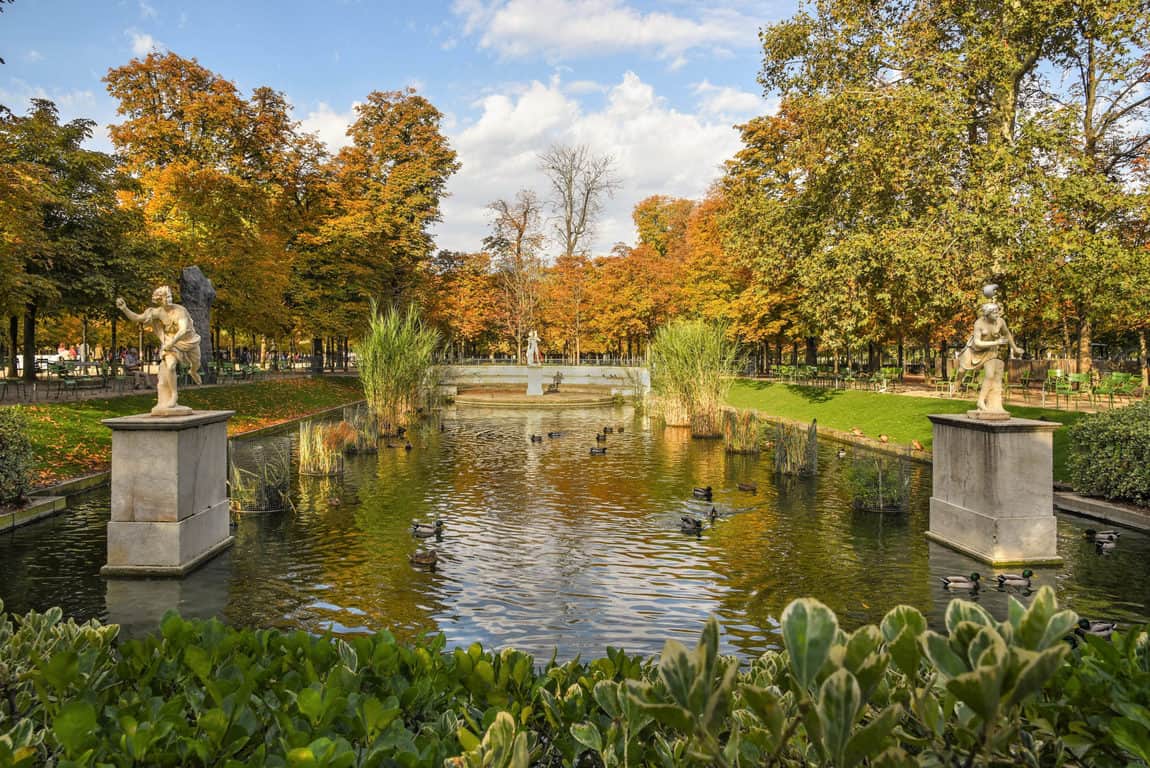
Paris is the most photographed city in the world. It is impossible to lose sight of its beauty and landscapes, even for a moment. It is a city of monumental power that forces visitors to constantly look around them. A city where, if you turn off your camera for a moment, you miss a whole world.
Through the lens of a camera, Paris always looks incredibly photogenic. The cameras here work overtime. It's a continuous photographic celebration that can't be stopped or missed. That's why when I travel in Paris, my camera is always with me. I'm on camera alert. I know that this is where I have the opportunity to take larger-than-life pictures.
The question is, how do you optimally take photos in the City of Lights so that you can return home with the best photo album? Of course, you can do what everyone else does – take pictures of the Eiffel Tower from the viewing terrace of the Palais de Chaillot, the facade of Notre Dame, the Arc de Triomphe , and the magnificent view from the steps of the Sacré-Cœur.
But Paris is much more than that, and when it comes to quality photography, there are other ways to do it. You can try to be different, original, and unique, photographing special sites, photographing in different light conditions, at different times of the year, and from unusual angles. In general, photograph as many sites, moments, and angles as possible that other photographers don't. In this article, we'll explore a number of such options.
Combine old and new
Many people ask me why I think Paris is so addictive, what is the secret of its charm? There are many answers to this question. It certainly depends on who you ask. My answer is, because it is a city of contrasts, a city of many faces, old versus new, historical versus futuristic.

I highly recommend that you take a frame that combines these contrasts, the differences, the old versus the new in one image. Some examples: the Stravinsky fountain near the Pompidou Center with the old Saint-Marie church in the background, the pyramid at the entrance to the Louvre Museum (and don't forget to do this from a special, non-banal angle) with the old museum building in the background, the zebra columns in the courtyard of the Palais Royal with the palace in the background, the new, modern roof of the Le Halle Center with the wonderful Saint-Eustache church in the background.
Small details from large buildings
Sometimes it is especially interesting to shoot in a closed frame or get very close to buildings. This way, for example, you can emphasize small details found on famous and special buildings. Certain well-lit details inside a building or on its facade can serve as a source for very beautiful and interesting photographs.

This topic is endless. Use your creativity. The sky is the limit and the results are sometimes impressive. Almost any church, museum and ancient building can be a target for this. For example, I photographed the Hebrew inscription on the facade of the Saint-Sulpice Church , the ancient clock on the Conciergerie building , parts of the impressive city hall, sculptures on the roof of the Opera building , the impressive upper part of the Carrousel Gate, sculptures on the east facade of the Louvre Museum, the clock in front of the Luxembourg Palace, the statues of saints at the entrance to the Notre Dame Church , reliefs above the entrance to the French Institute, and much more.
Insert an object in the foreground of landscape photos
Landscape photography in Paris is virtually endless. You can add a lot of interest to a landscape photo by including a close-up object in the foreground.

This way I took quite a few pictures, such as: the Eiffel Tower combined with the Statue of Liberty , a landscape photo reflected from Montmartre Hill with a decorated street lamp in the foreground, the Arc de Triomphe with the addition of a large, green tree in the foreground, the Church of Saint-Eustache with the statue of “The Listener” in front of it, a magnificent lake and trees in the Bois de Vincennes with a giant swan in the foreground, the Luxembourg Palace with a sailboat in the pond in front of the palace, the Alexander Bridge with a ship in the Seine River , the Palais Royal reflected beyond the ball statue in its courtyard.
Activate your sense of creativity and take advantage of opportunities in the field. In this field, the sky is the limit.
Photograph water sources
Paris is characterized by an abundance of water sources – the well-maintained Seine River, vast and magnificent lakes in forests and parks, and ancient and modern fountains on almost every street corner.
The diverse water sources in Paris are a very strong motif of attraction for both local residents and casual tourists. Water symbolizes life and provides a solid and lasting foundation for the city's existence.

A lot of water appears in the most central places in the life of the City of Lights, especially around the river that crosses it from east to west. The Seine, therefore, is always a great subject for photography. Try to photograph it from original angles.
In addition to the river, you can take special and spectacular water photos at the city's various lakes - the lakes of the Bois de Boulogne to the west of the city and the Bois de Vincennes to the east are quite photogenic. The lakes of Parc des Buttes-Chaumont and Parc Monsoury also take great photos.
The effect of flowing water is always good and interesting in photography. I recommend that you take plenty of photos of the city's fountains in Paris. Particularly recommended options: the Fountain of the Four Parts of the World (at the edge of the 6th arrondissement, south of the Luxembourg Gardens ), the powerful fountains in the Trocadero Gardens, the fountains in the Place de la Concorde , the fountain in the Place Saint-Michel, and the beautiful, powerful and unique fountains in the Gardens of Versailles .
Low angle shot
Most visitors to Paris rush to the Eiffel Tower or the Montparnasse Tower and take general panoramic photos of the city, a kind of 'aerial photos' where everything in the pictures looks too small and not very interesting. This is not wrong, but it is not unique, not original and not always attractive.
Many people return home with a set of 500 photos taken from the third floor of the Eiffel Tower, and sometimes they are very disappointed. Most of the buildings we were excited about look tiny in the photos and don't attract the viewer's attention.

I recommend, therefore, trying to photograph Paris from an ant's perspective, from a low and unusual angle that will make some of the photographed objects look different from what our visual angle is used to perceive. This is how I photographed the set of the Tour de France race , the Paris Marathon, and of course many sites from a different angle, such as the city's bridges from ground level and the magnificent lakes of Paris from water level.
Immortalize street life
A surprise awaits us on almost every street corner in Paris. Use your camera to capture the city's vibrant and unique street life. Urban photography often includes strong statements about life, the photographs convey important messages, often overt and sometimes even hidden. Sometimes we only have one second, or even less, to capture the right moment and press the camera button. A second before or a second after is no longer the same image, not the same story, not the same message.

To 'capture the moment', activate your intuition. This is how you will also create artistic photographs. Remember that a special shooting angle almost always causes a twist in the image and the plot. Don't be afraid to try to go wild. The Parisian street is a huge and amazing scene of events - take advantage of it. The photo of the old man feeding the pigeons in the Pompidou Center Square is a classic example of a unique and fascinating activity on the street. If you make a little effort and especially if you are alert and curious, you will return home with a treasure trove of exciting situations against the backdrop of the most beautiful city in the world.
More on the subject

Thanks for all the tips! Now we just have to wait until we can return to beautiful Paris
I thought to myself that in Paris every photo is automatically especially chic. It turns out that even in Paris you have to know how to take pictures and you can't rely on the beauty of the city to do the work for you.
I enjoy the articles so much, I always learn something new..
Thank you
Glad to hear
Great tips! And I'm in love with Paris so I also earned photos
Wonderful on the way. Thank you