in short
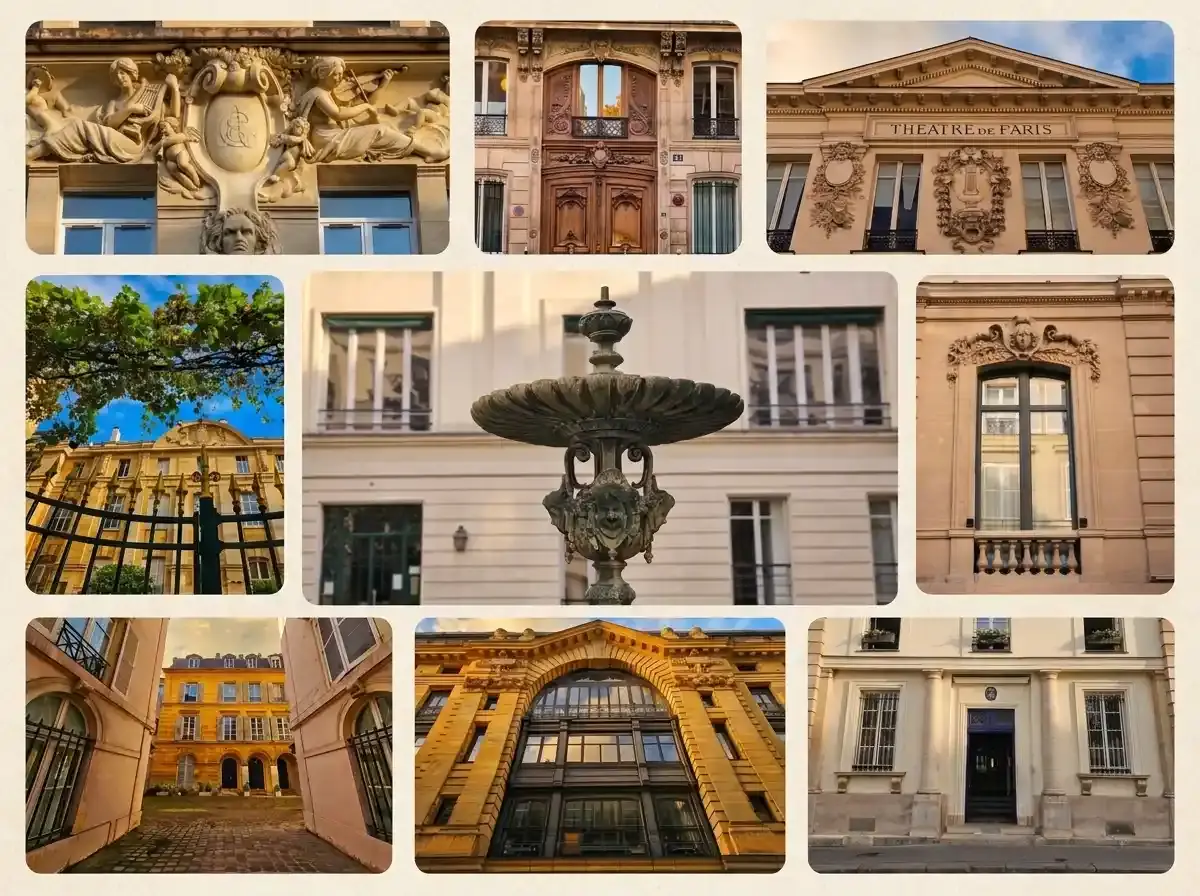
- What's on the route: 18 stations in Nouvelle Athènes, the district where the actors of the Comédie Française, the court painters and Chopin lived, and in the 20th century also Johnny Alliday.
- Where to start: 16 rue Chaptal, at the Museum of Romantic Life, exactly where the route ends in Pigalle.
- Where do you finish: La Trinité Church, near the Trinité – d'Estienne d'Orves metro station.
- How long: Two and a half hours, and a whole day if you go to both museums.
- When: Every day except Monday, when both museums are closed. Early afternoon is the best light.
- The highlight: Square d'Orléans, the private courtyard where Chopin and Georges Sand lived in two separate buildings.
- And bonus: Two museum houses that were painters' homes, and one of them has free admission.
The name Nouvelle Athènes was given to this small district by the newspaper Journal des débats in 1823. In the 1820s, land belonging to the convent of Montmartre was divided into plots here, and dozens of houses with columns, cornices and Greek-style vases were built on them. To Parisians, it looked like a little Athens growing on a hill, hence the name.
The first to buy houses here were the actors of the Comédie Française, followed by painters, and then musicians. Within twenty years, the two greatest actors of the period, the king's battle painter, his son-in-law, and in one private courtyard, Frederic Chopin and Georges Sand were crowded into three short streets. It is one of the densest concentrations of talent ever to have existed in Paris, and it has been preserved almost entirely.
This route starts exactly where the route ends in the northern 9th arrondissement , in front of the green gate of the Museum of Romantic Life at 16 rue Chaptal. You can do both in succession on the same day, or you can do each one separately. 18 stops, about two and a half hours, and this time two museums that you can enter, not just facades.
So just before we set off, let's talk about what you'll find in this article. First, the practical information: how to get there, what days to go, and how much time to allocate. Then the route itself, stop by stop, in the order in which you encounter them on foot. Finally, a section on accommodation in the area, and answers to questions I get about this neighborhood.
Practical information for the route in Nouvelle Athènes
How to get there
The starting point is 16 rue Chaptal, and can be reached from the Saint-Georges metro station on line 12, about a five-minute walk up rue Notre-Dame-de-Lorette, or from the Blanche station on line 2. Those doing both routes in succession simply continue from the last stop of the previous one.
The finish is at La Trinité church, right next to the Trinité – d'Estienne d'Orves station on line 12. The entire route is within a square of less than a kilometer, and is almost entirely downhill.
What days to go?
Both museums on the route are closed on Mondays, so Monday is the only day when there is no point in doing it. The Museum of Romantic Life is a municipal museum and admission to its permanent collection is free, and the Gustave Moreau Museum is a national museum with a fee.
The streets themselves are quiet at all hours, which is the big difference between this route and the previous one. There is no nightlife, no tourists, and during working hours you will mostly meet fashion school students and people walking dogs. Saturday afternoon is the quietest time.
How long, and when to come?
The walk itself is short, about an hour. With a stop at each station, allow two and a half hours, and if you go into both museums it becomes a full day. I recommend choosing one of them and not both in the same visit, because they are just as different as they are similar: both are a painter's house, and one of them is very sad and the other is very light.
The best time is early afternoon, when the light enters the courtyards of rue de la Tour-des-Dames from the west. In the morning, these courtyards are in the shade, and they are exactly what you came to see.
Route: 18 stops from rue Chaptal to La Trinité Church
The route descends from north to south, turns east, and finally returns slightly west. It begins at a painter's house, continues down a street where the most famous actors and painters in France in the 1820s lived opposite each other, passes through a private courtyard that can only be entered through an iron gate, and ends in front of the church of La Trinité.
Instead of a map: Under the title of each station is its address, and each address is a link. Click on it, and the place will immediately open in Google Maps.
The house where everyone who was someone was welcomed
The painter Ary Scheffer (1795–1858) bought this house in 1830 and lived there until his death. He was a Dutchman who came to Paris as a child, became court painter to the Orléans family and taught painting to the children of Louis Philippe (king from 1830–1848), and on his Friday evenings George Sand (1804–1876), Frédéric Chopin (1810–1849), Franz Liszt (1811–1886), Eugène Delacroix (1798–1863), the singer Pauline Viardot (1821–1910) and Rossini gathered here.
The two studios in the courtyard were built specifically for work and receiving guests, one for painting and one for entertaining. The house was inherited by his niece, who married the writer and historian Ernest Renan (1823–1892) in 1856, and has since been named after both of them. Since 1987, it has housed the Museum of Romantic Life.
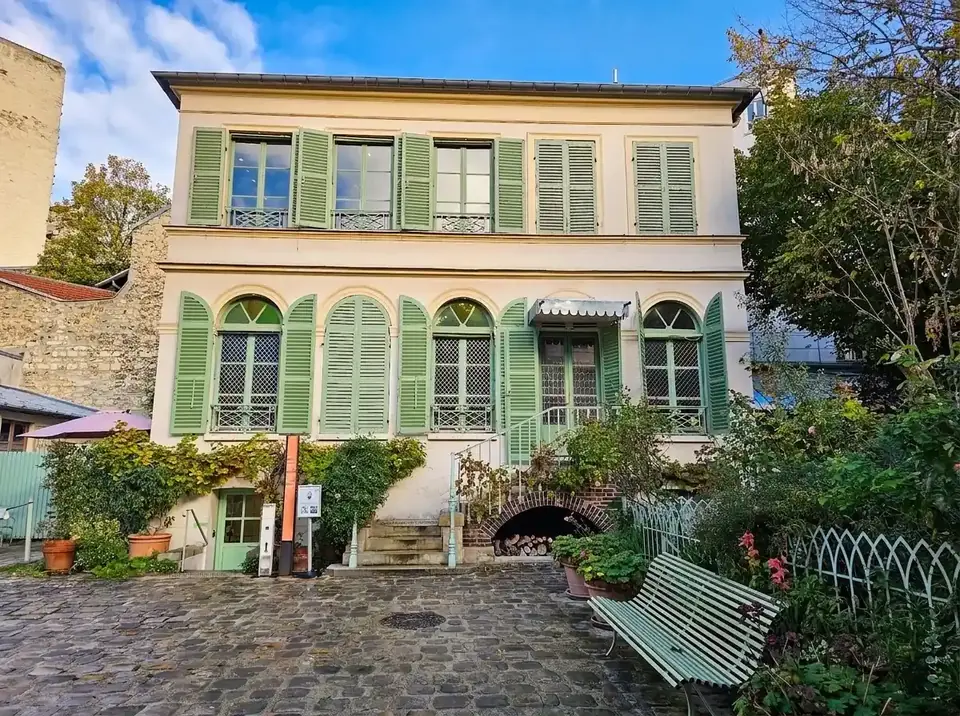
If you come here straight from the previous route, now is the time to sit in the garden. The tea house that operates there in the warm season is one of four or five courtyards in Paris where you can completely forget you're in the city.
The house where the Nawabs were born
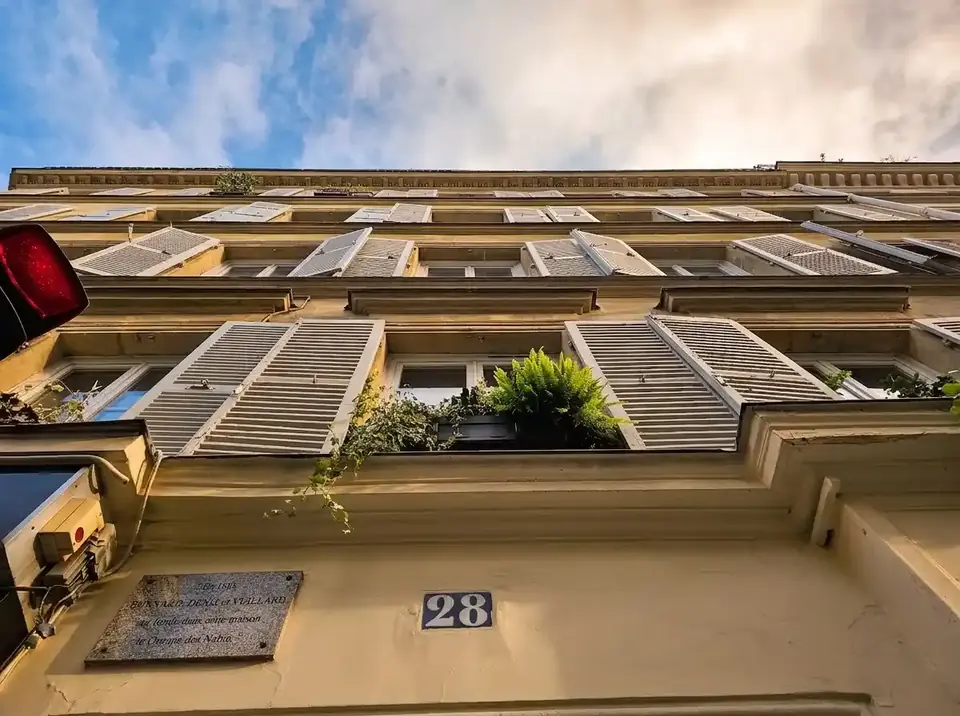
A short detour east from rue Chaptal, and well worth it. In this building, in the 19s, three young painters shared a studio: Pierre Bonnard (1867–1947), Édouard Vuillard (1868–1940) and Maurice Denis (1870–1943).
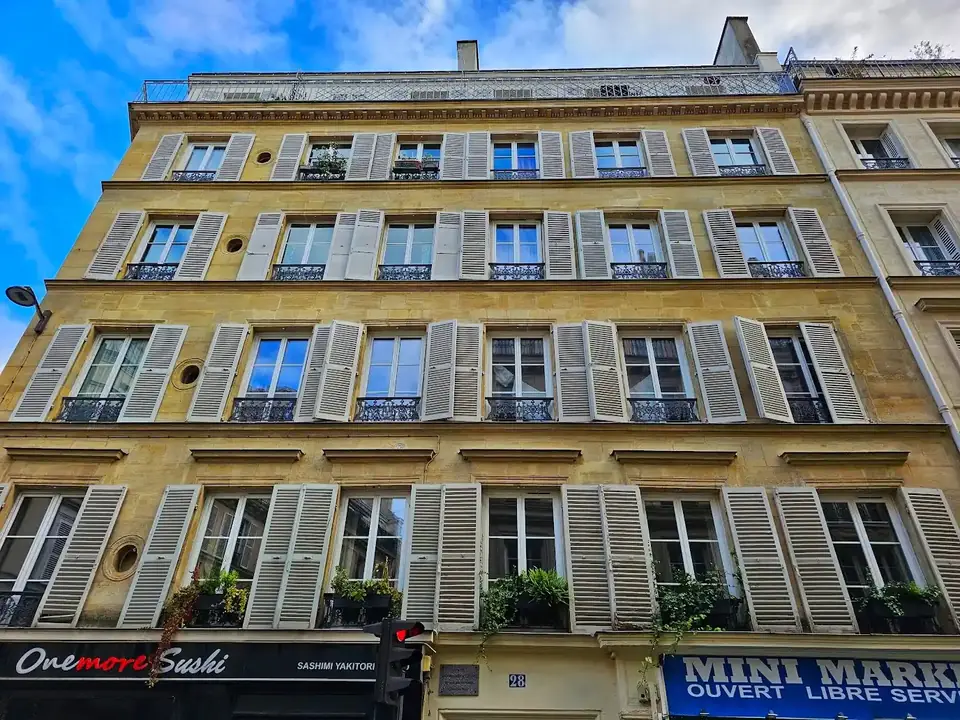
They called themselves the Naves, from the Hebrew word for prophets, and they meant it seriously: they saw themselves as the harbingers of the next step after Impressionism. Instead of chasing light, they painted flat surfaces of color, and applied it to everything: oil paintings, curtains, posters, and theater sets. The memorial plaque on the facade notes 1893 as the year of its founding.
The German Church of 1911
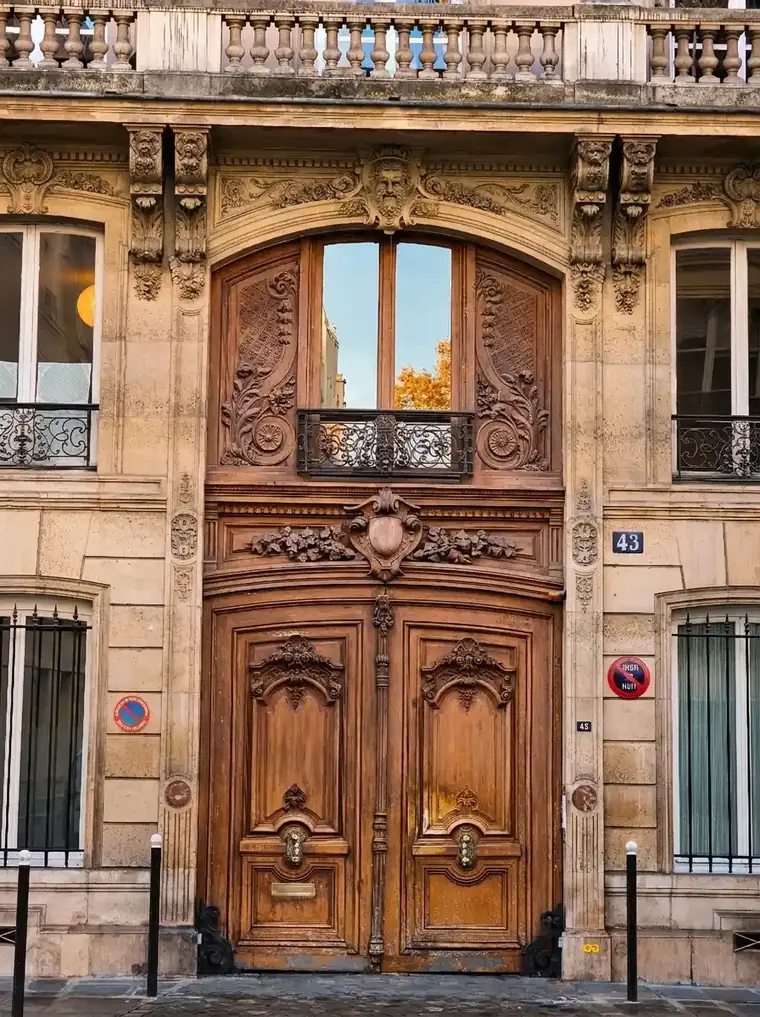
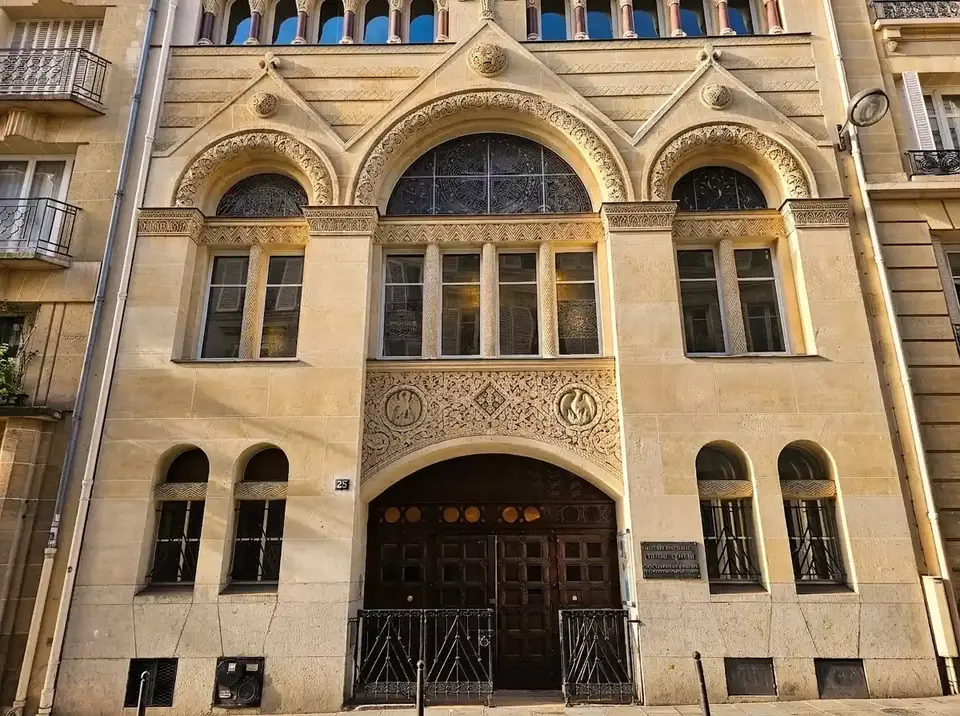
After leaving rue Chaptal and turning south, the first facade that catches the eye is that of the Christuskirche, the German Protestant church of Paris. The facade was built in 1911 according to plans by the architect Karl Mohrmann (1857–1927), under the direction of Édouard-Jean Niermans (1859–1928).
It's worth pausing on the date. In 1911, relations between France and Germany were already at a point where everyone knew what was going to happen, and it was at that time that a German church facade in a distinctly neo-Gothic style was completed in Paris. The German community in the city was larger than is commonly thought, and this building is one of the few signs of it left on the street.
The house of the publisher of “Carmen”
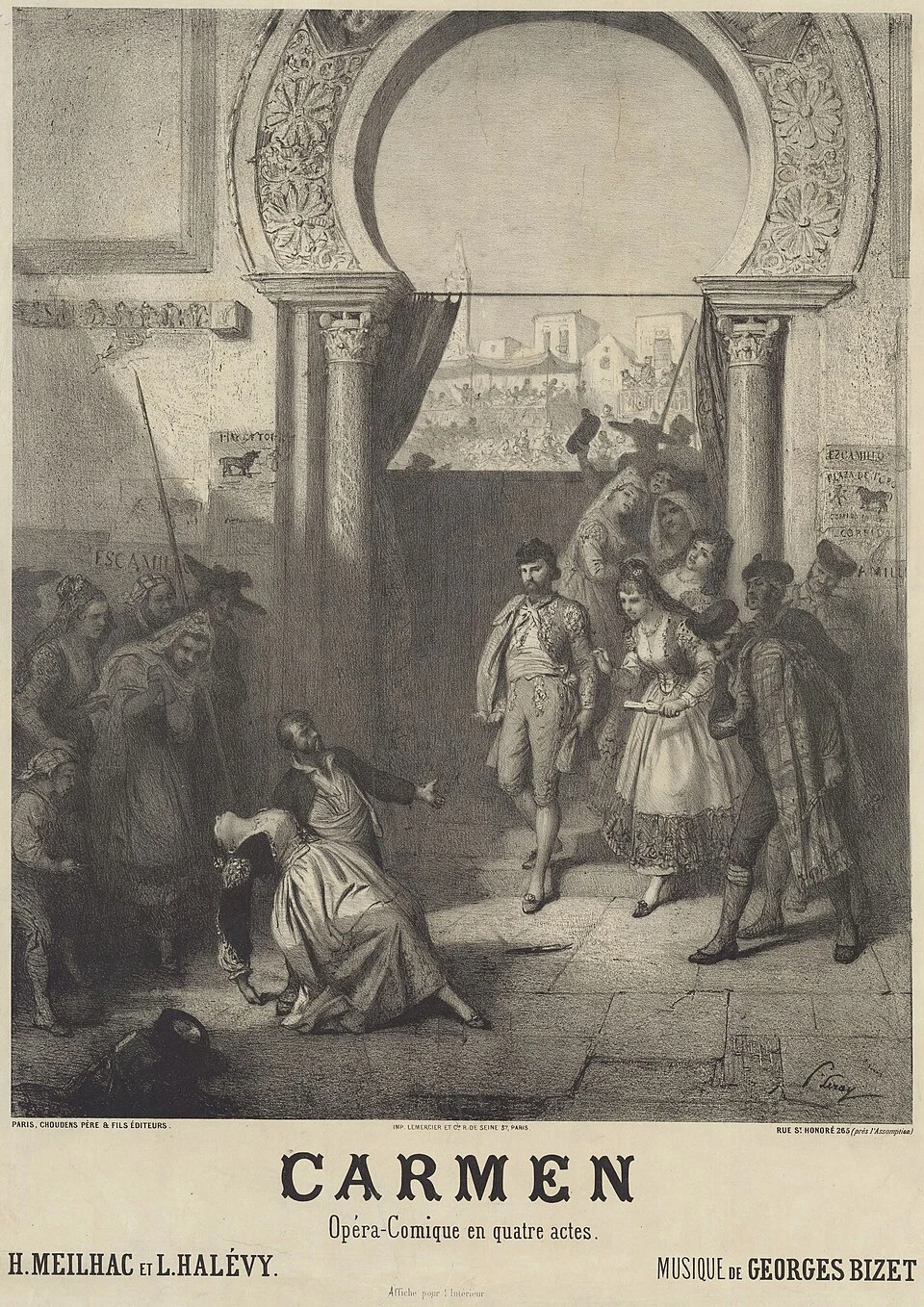
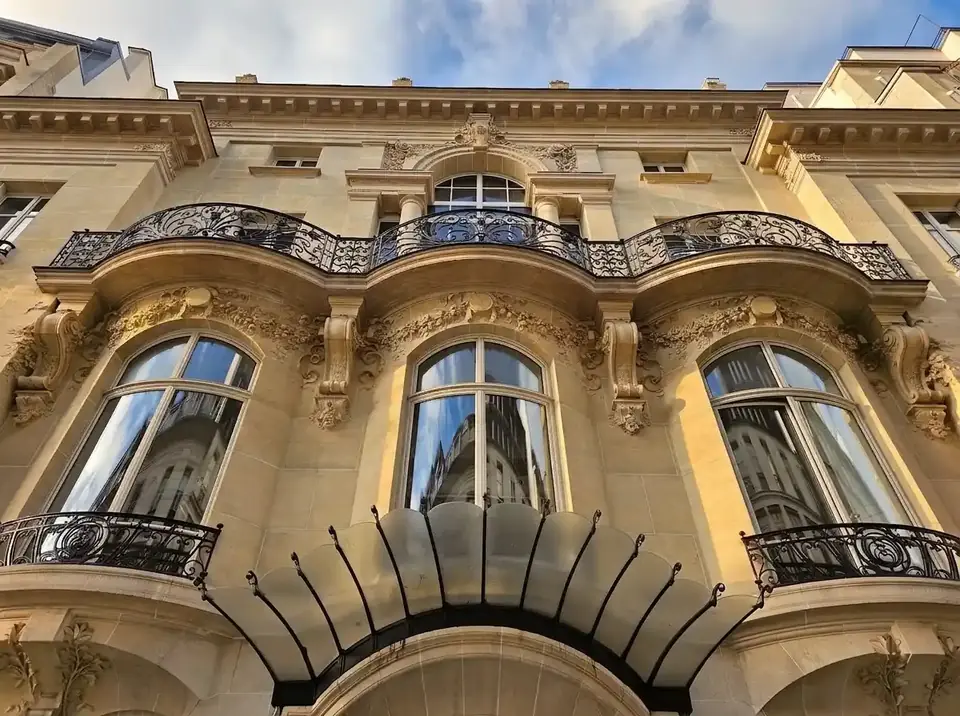
This private hotel was built in 1901 by Charles Girault (1851–1932), the architect of the Petit Palais, for the music publisher Paul de Choudens (1850–1925). It was Choudens who published Georges Bizet’s “Carmen,” and thus this house closes the circle with the previous stop on the route, in the building where the opera was composed and where the composer died three months after a premiere that was considered a failure.
From 1942 to 1997, the National School of Theatre Arts, which in professional parlance was simply called “Rue Blanche,” was located here. An entire generation of French actors still says to this day, “I studied at Rue Blanche,” referring to this building. Later, a technology company moved in, and today it houses a private club.
By the way, you can read about the opera itself and how the failure became the most performed work in the world in Shlomi Keinan's lecture, The Story of "Carmen . "
The General's Hotel
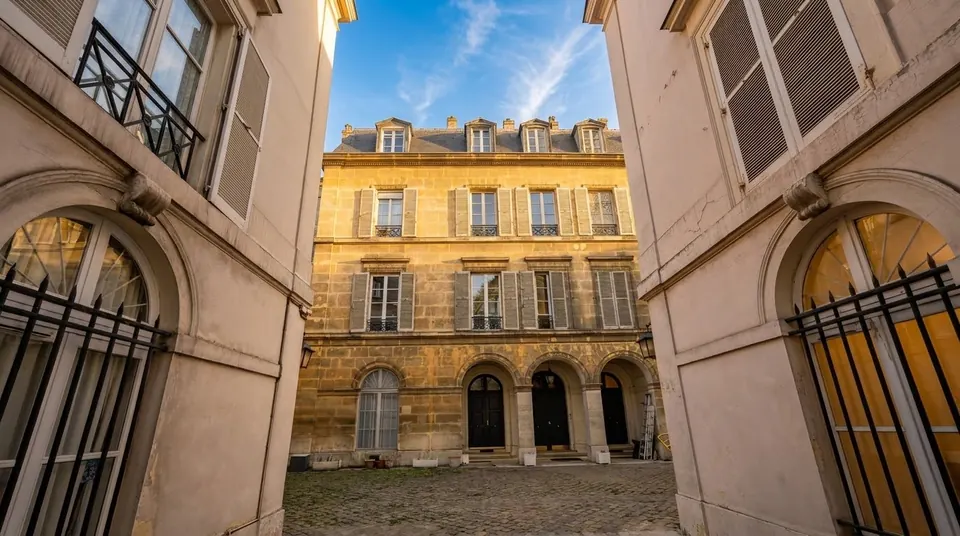
The neighboring building was built in 1829 for the general and politician Jean Le Marois (1776–1836), and is still named after him. Le Marois was one of the first men to join Napoleon I, served as a witness at his wedding to Joséphine, and survived all the upheavals without losing his position.
This building is a good example of what happened here in the 1820s: the officers of the empire who got rich, the actors who became famous, and the painters who sold out bought lots in the same new neighborhood, and built houses side by side that looked the same from the outside.
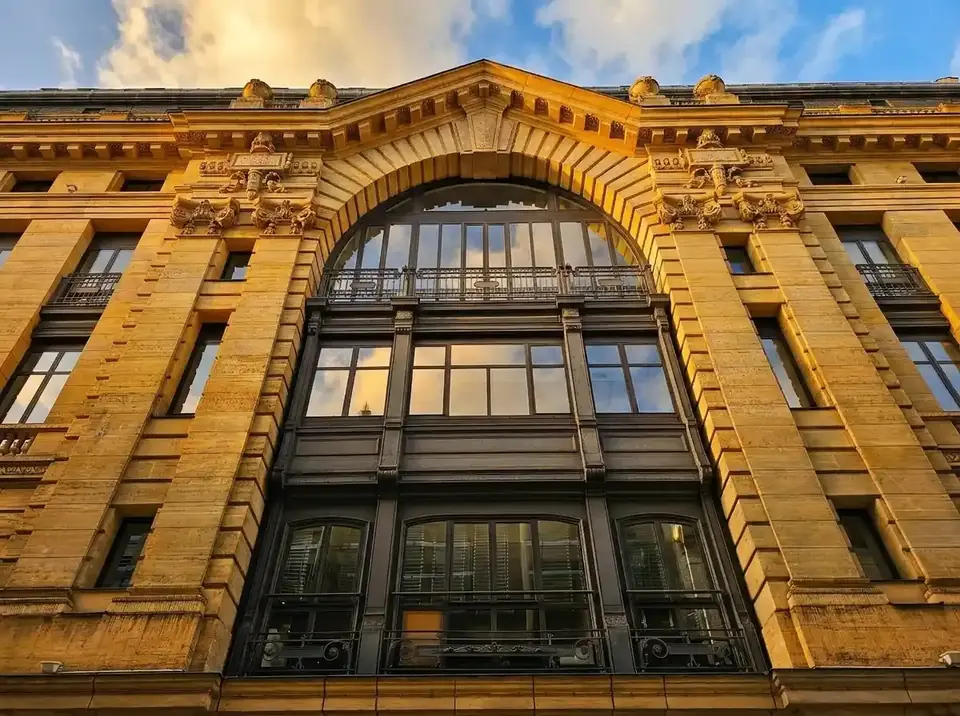
On the way to number 15, it's hard to miss number 19: a huge arch of glass and iron that breaks the line of the street's stone facades. It's worth looking up at even if it doesn't have a famous story.
The theater that sits on the amusement parks
Underneath the Théâtre de Paris lie layers. In the 18th century, this was the summer residence of Marshal-Duke Richelieu (Louis-François-Armand de Vignerot du Plessis, 1696–1788), the cardinal's infamous cousin (responsible for the invention of mayonnaise ). In the early 19th century, the grounds became the Tivoli Gardens, and later a giant roller rink called Le Skating.
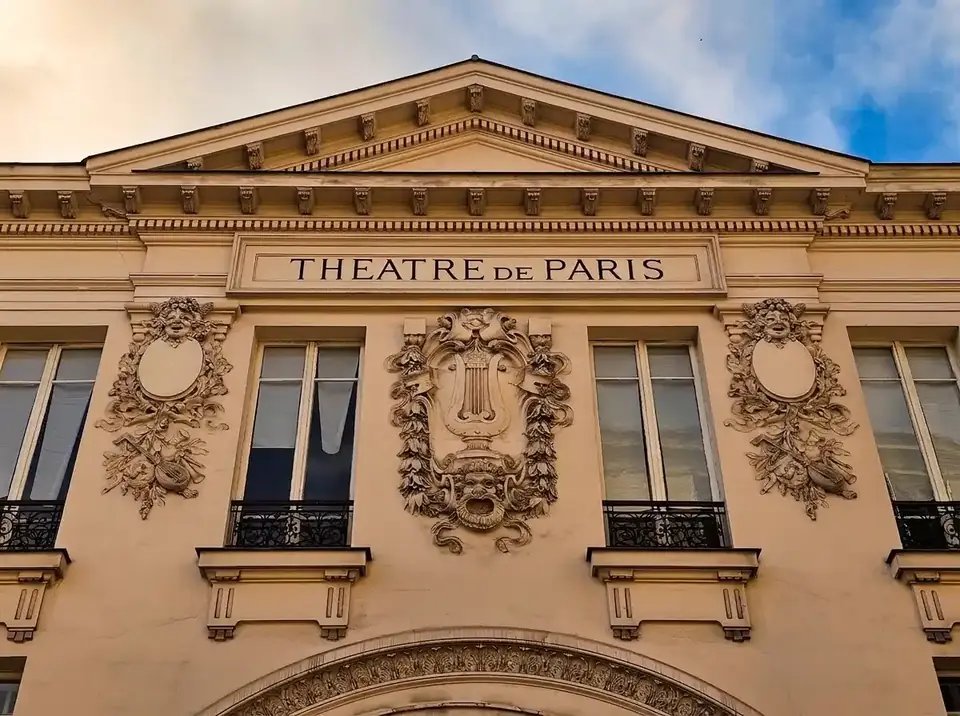
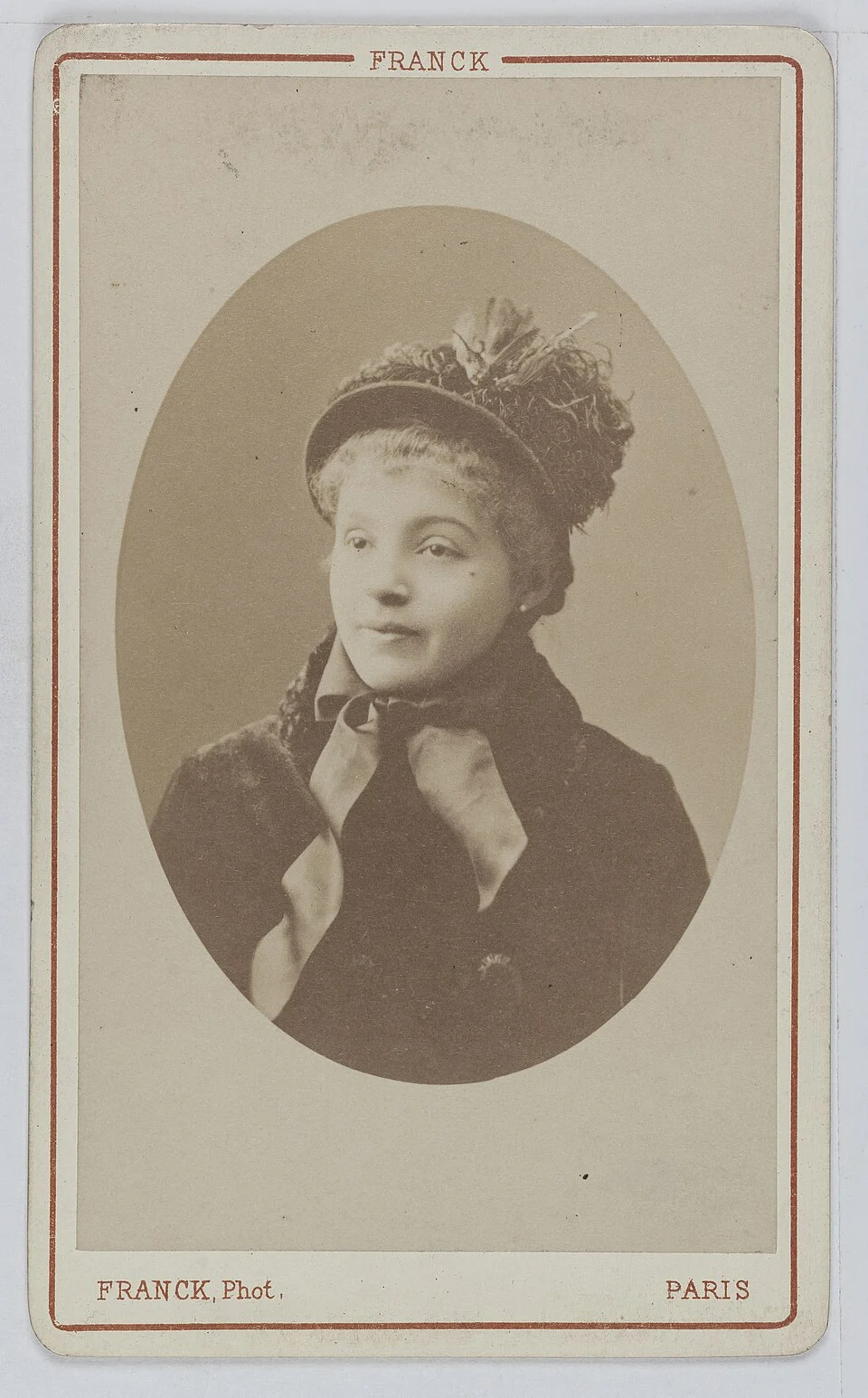
In 1891, what remained of the roller rink was demolished and the Nouveau-Théâtre was built in its place. The first director was the actor Lugné-Poe (1869–1940), who introduced Ibsen and Strindberg to Paris and turned this small hall into the center of symbolist theater. Between 1906 and 1913, it was managed by the actress Réjane (1856–1920), and the hall was named after her.
The façade and auditorium have been protected as a heritage site since 1977, and the theatre is still in operation today. If you're looking for an evening of French-language theatre in the area, this is the place to be, and the shows here tend to be mainstream rather than experimental.
The house where Johnny Alliday grew up
The first house we stop at on rue de la Tour-des-Dames belongs to a completely different era than the rest of the route. In 1958, a family of dancers and actors returned to Paris and settled here, along with a boy named Jean-Philippe Smet, who you probably know as Johnny Hallyday (1943–2017).
He was born in 1943 not far from here, in a clinic in the cité Malesherbes. His Belgian father abandoned the family when the boy was a baby, and his mother, unable to raise him alone, entrusted him to his father's sister, the actress and dancer Hélène Mar. He traveled with her and her two dancing daughters throughout Europe, and as a child he began singing and acting in the music hall shows in which they performed.
One of the girls married the American dancer Lee Ketcham (1927–2023), who went by the stage name Lee Halliday. It was he who began calling the boy “Johnny,” and when the boy chose a career as a rock singer, he also took the name Halliday from him. On the cover of his first record, released by Vogue Records in March 1960, the name was mistakenly printed with a y instead of an i, and this spelling remained.
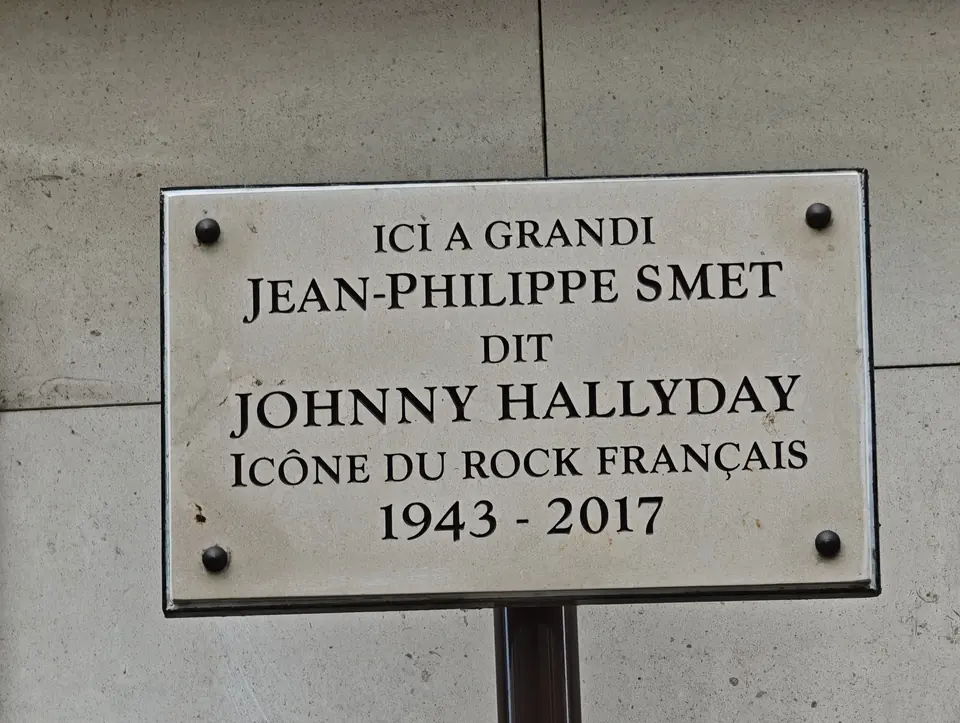
The sign on the building was unveiled in December 2023, six years after his death. Note its wording: “Here grew up Jean-Philippe Smet, known as Johnny Alliday.” The real name comes first, and the stage name only comes after.
If you would like to know the full story of his life, I highly recommend you read Dr. Orna Lieberman's article Johnny Alliday: A Brief History of the French Rock Idol 1943-2017.
The tower that gave the street its name
2 and 4 rue de la Tour-des-Dames
The street name does not refer to women but to the nuns of the Montmartre convent, who maintained a stone tower here that served as a turnpike and a mill. The tower already appeared on a map of Tourgos from the mid-18th century, standing roughly next to number 4, and it was demolished around 1820 when the street was divided into lots. The only thing that survives of it is the name.
The large building at number 2 is the Hôtel de Lestapis, which was built in 1819 for the Prince of Württemberg and completed in 1823, when it was bought by the politician Claude Baillot (1771–1836). It bears the name of the family that lived there between 1838 and 1870.
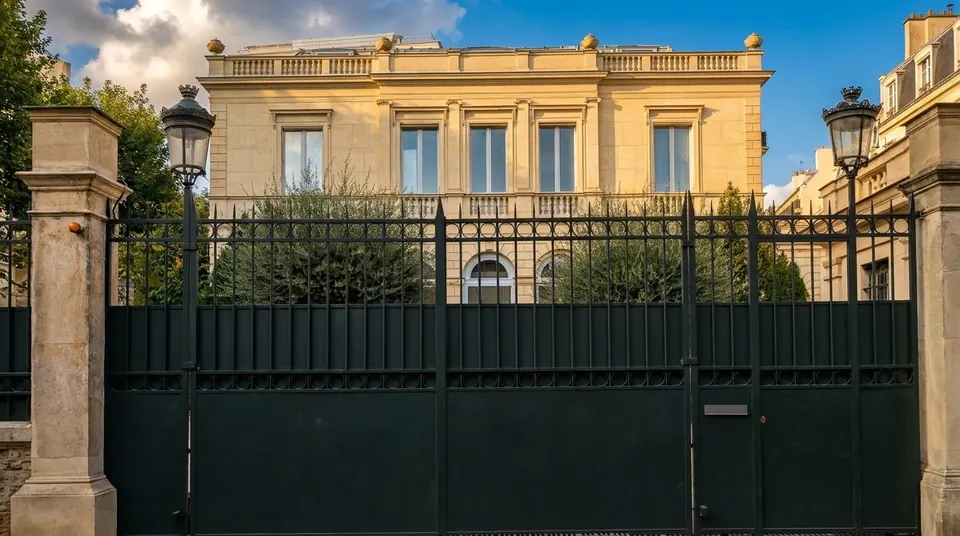
The house next to it, at number 4, was built in 1822 and sold four years later to Count Étienne de Cambacérès, nephew of Napoleon I's archchancellor. Note the even-numbered side of the street as a whole: the houses there are larger and more impressive, while the odd-numbered side, which we are now going to, is built entirely of small, private hotels.
The father-in-law and the son-in-law, facing each other
5 and 7 rue de la Tour-des-Dames
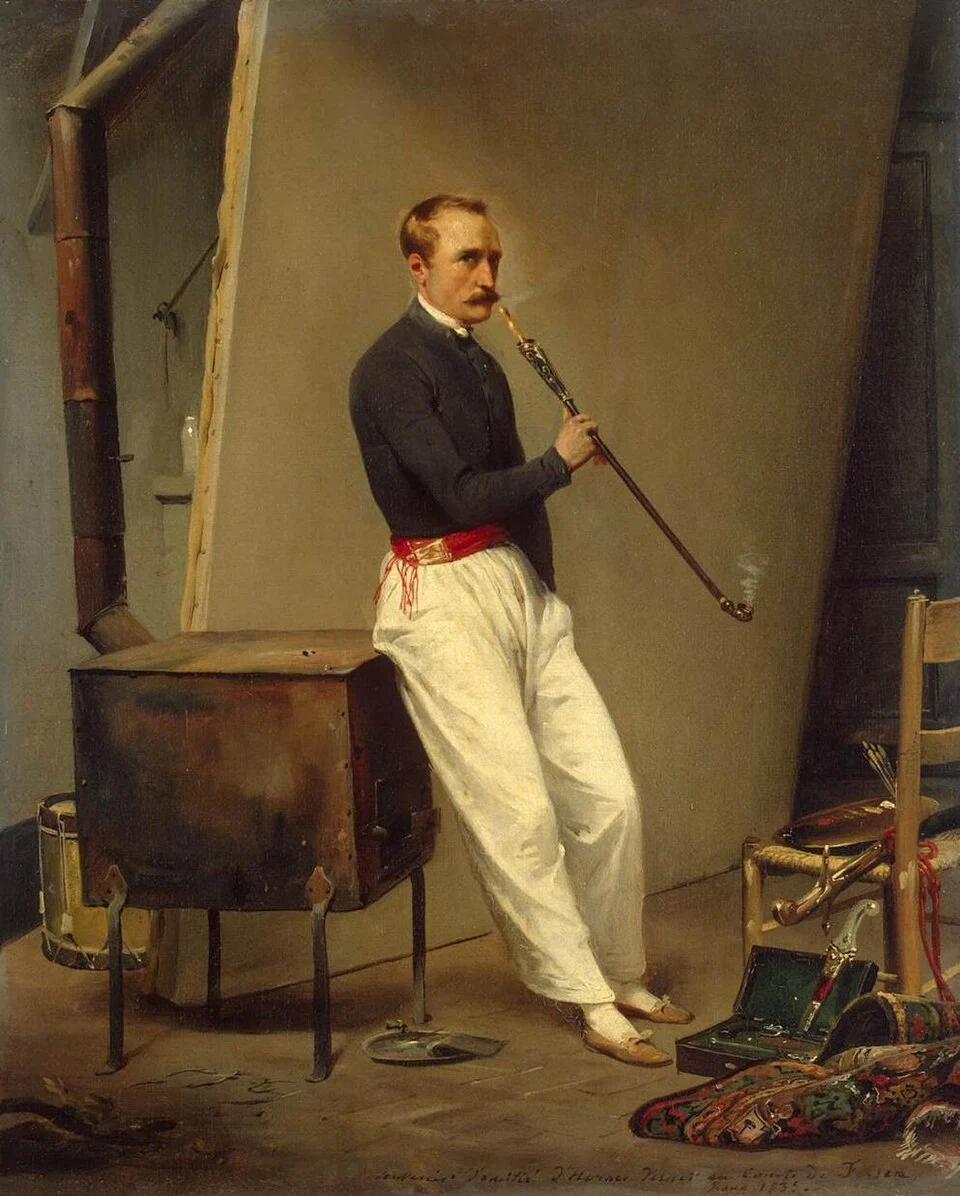
Number 5 was home to the painter Horace Vernet (1789–1863), the third generation of a dynasty of painters and the most painted of them all. He painted battles commissioned by the state, traveled to Algeria and returned with landscapes and figures that became fashionable, and his house was built according to plans by the architect Louis-Pierre Haudebourt (1788–1849).
The house next door, at number 7, belonged to the painter Paul Delaroche (1797–1856), who was both his neighbor and his son-in-law: he married Louise, Verna’s daughter. Delaroche specialized in dramatic historical scenes, and it was he who painted “The Execution of Lady Jane Grey,” one of the most photographed paintings in the National Gallery in London.
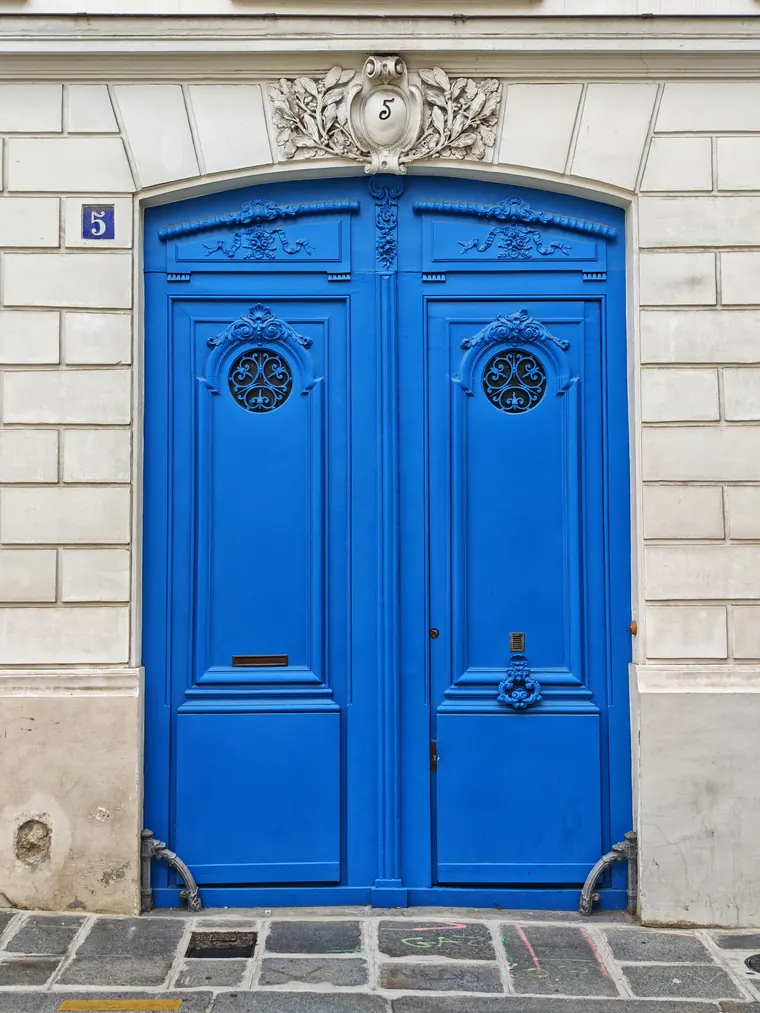
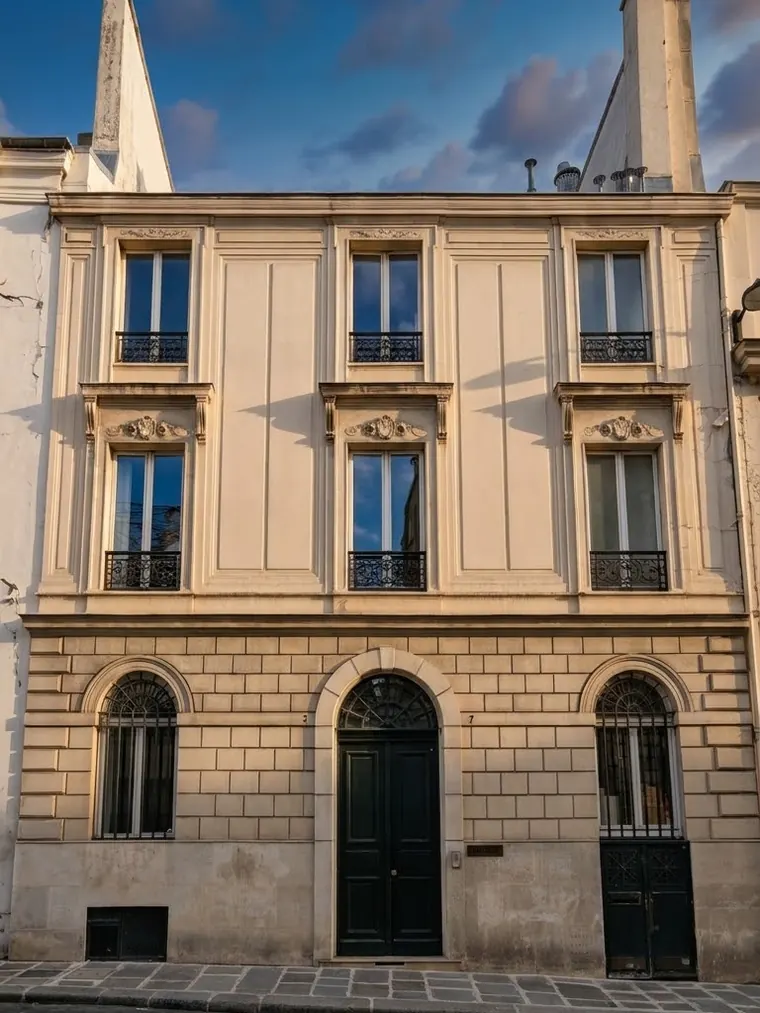
This marriage ended badly. Louise died in 1845, and Delaroche, who never recovered, gradually left the street. We will meet his house at 58 rue Saint-Lazare later in the route, and there the story ends.
The actor Napoleon loved
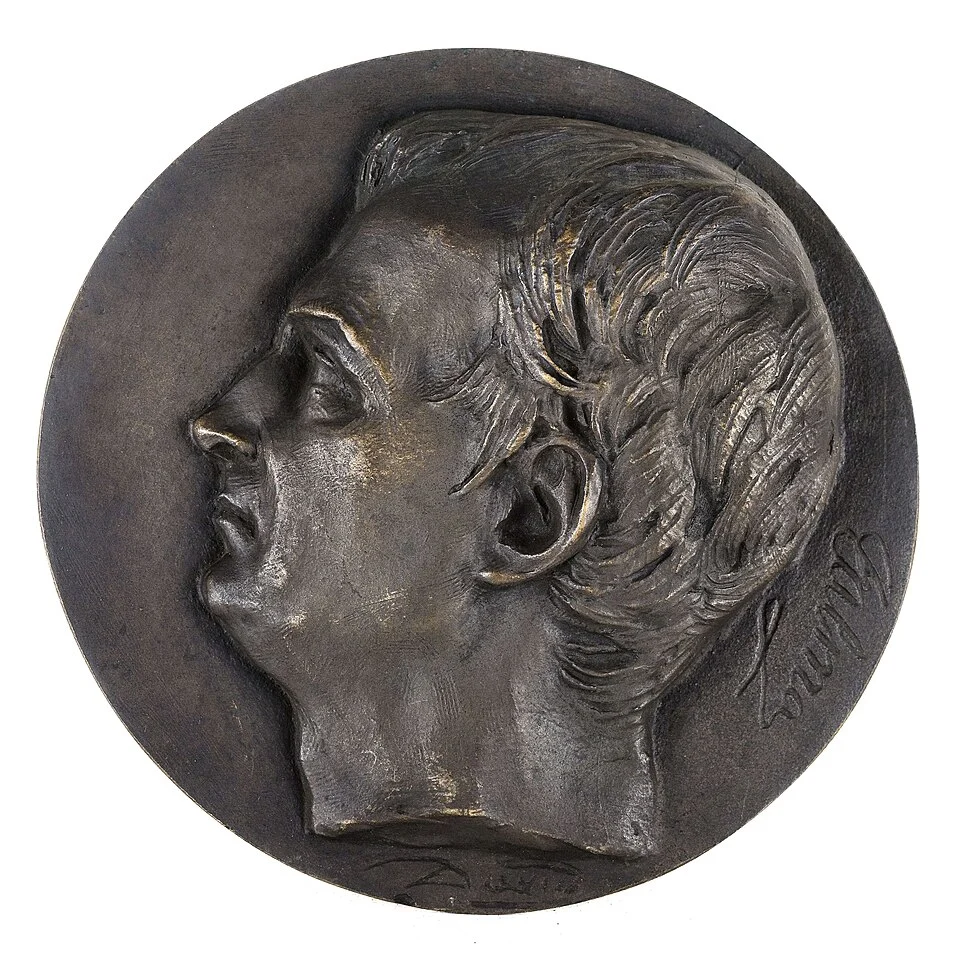
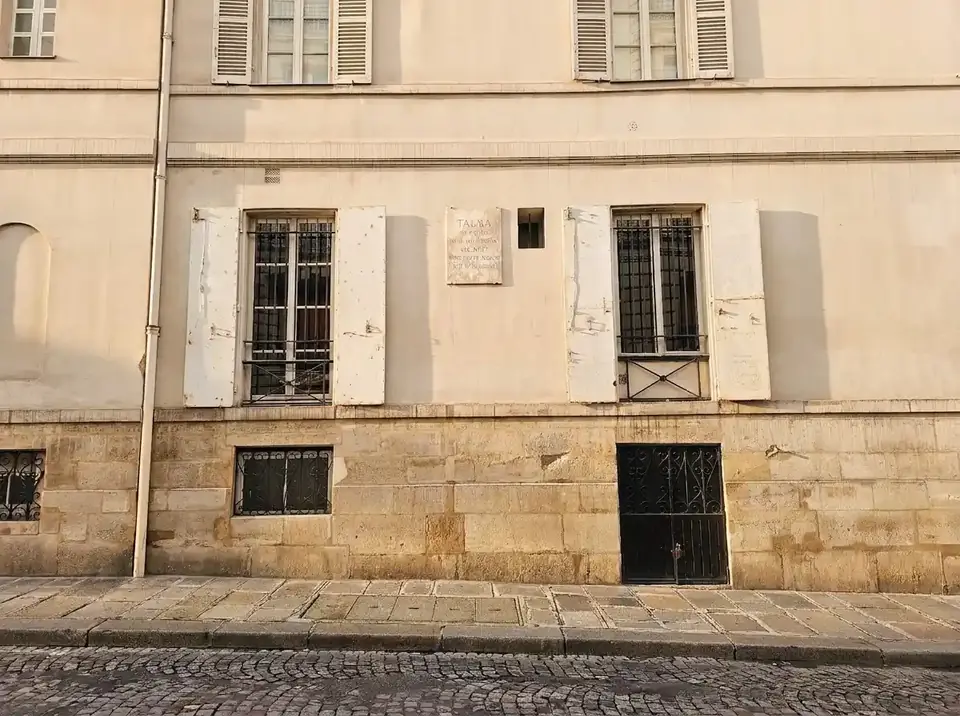
Hôtel Talma is the home of François-Joseph Talma (1763–1826), the great actor of the period and the only stage person whom Napoleon I treated as an equal. It was Talma who replaced the costumes of the 18th century with togas and hairstyles based on ancient sources, which sounds technical today but at the time was a real revolution in French theater.
The house has been protected as a heritage site since 1975, and the protection applies to the facades and Madame Thelma's bedroom with all its decoration.
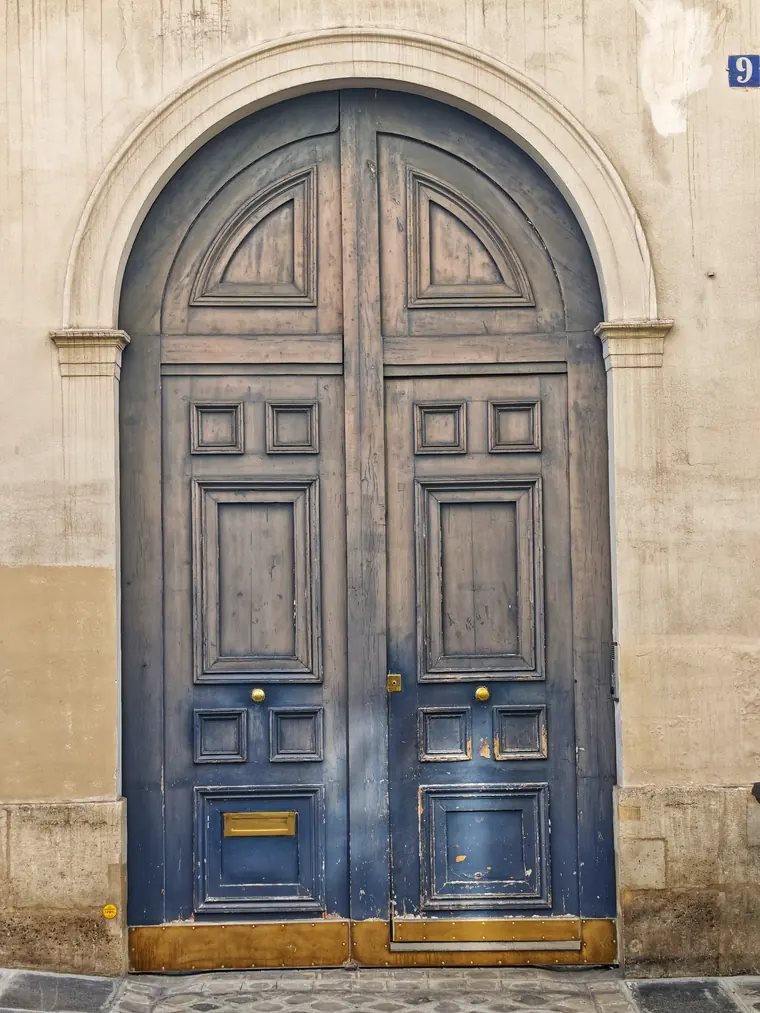
Thelma died here in 1826, and her funeral became a street demonstration: tens of thousands of Parisians accompanied her, without a religious ceremony, because the church refused to bury an actor.
The living room of the tragic actress who lost
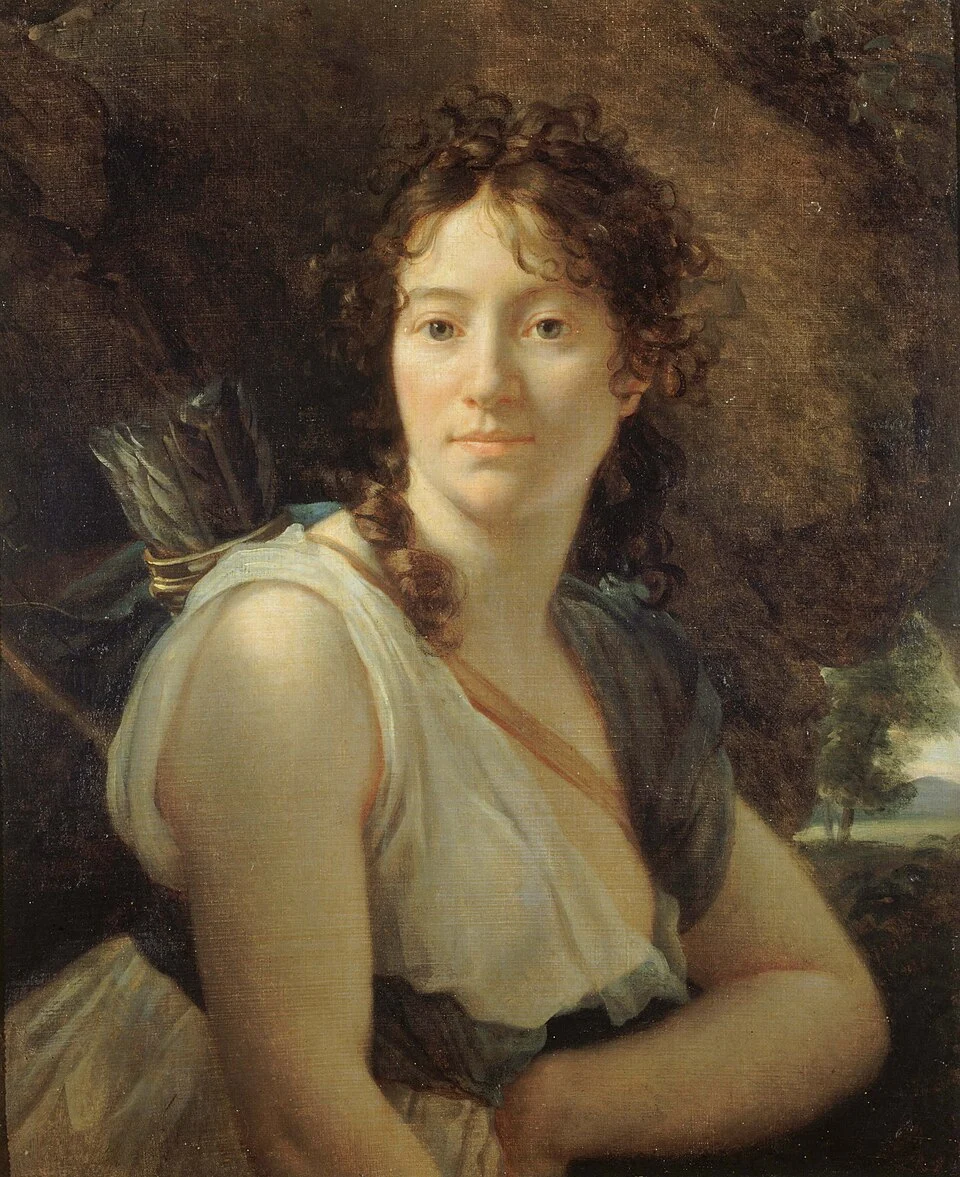
The house was built in 1820 for the tax collector general of the province of Hesse, and in 1822 it was bought by the tragic actress Catherine-Joséphine Duchesnois (1777–1835). She was an unattractive actress in an era that demanded beauty, and she captivated audiences with her voice and presence alone. Her house became a salon for literary figures, and Victor Hugo was a frequent visitor.
The end was swift. Her rival Mademoiselle George (1787–1867) pushed her out of major roles, and in 1833 she was forced to retire from the theater, and a year later she sold the house. She died in 1835, less than two years after leaving it.
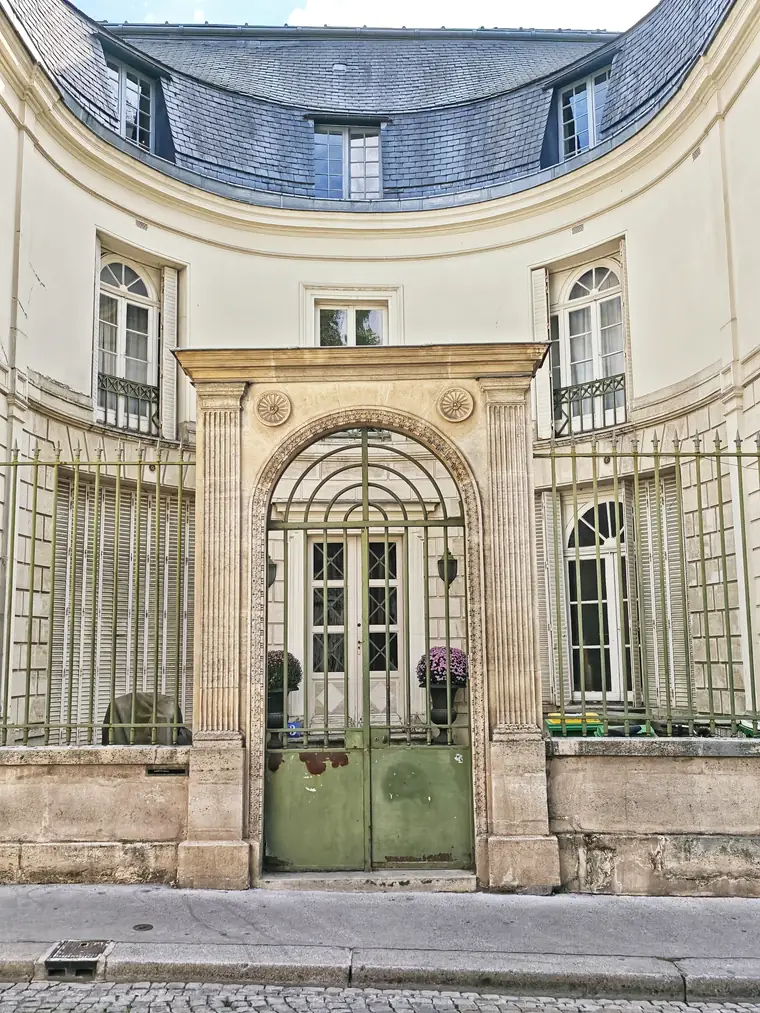
The building has been protected as a heritage site since 1927, and the protection also includes an 18th-century bedroom that was moved into it.
The most beautiful house in the district
1 rue de la Tour-des-Dames , and at the second entrance 7 rue Catherine-de-La Rochefoucauld
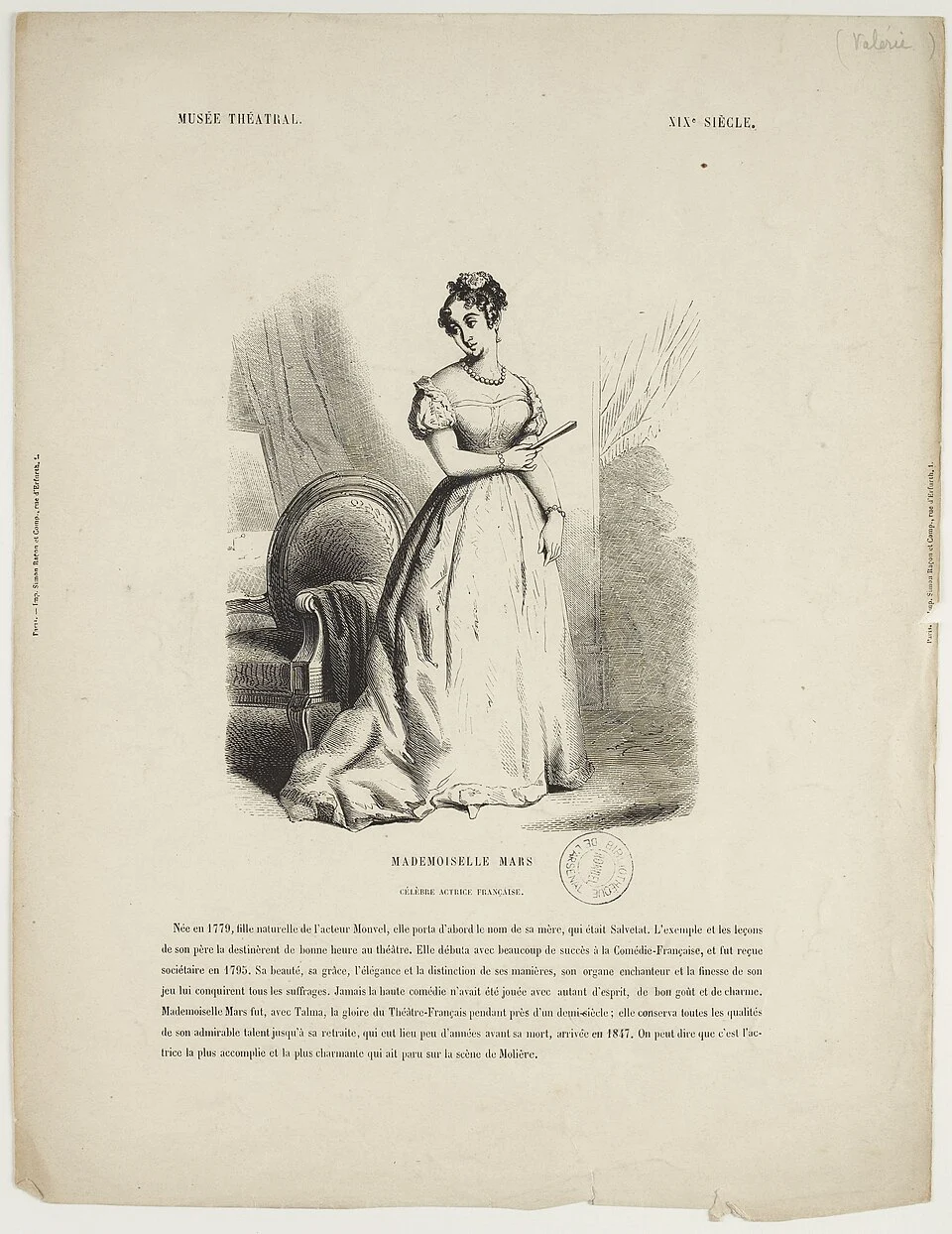
Contemporaries wrote that it was the most beautiful house in Nouvelle Athènes, and they came especially to see it. It was built in 1746, and before the actress arrived, the governor of the islands, Mahé de La Bourdonnais (1699–1753), the explorer Louis-Antoine de Bougainville (1729–1811), and Marshal Gouvion Saint-Cyr (1764–1830) also lived in it.
Mademoiselle Mars (1779–1847) bought it in 1824 and renovated it from the ground up. She was the highest-paid actress in France, and she was also a sharp businesswoman at a time when women hardly managed their own fortunes. She lived here until 1838.
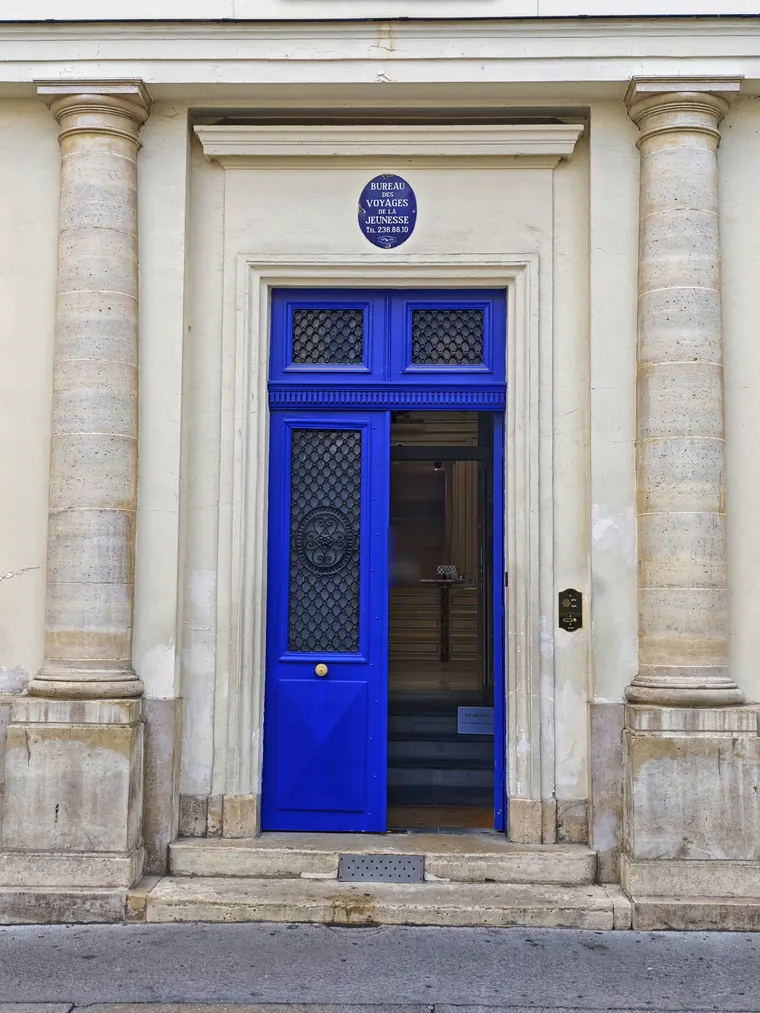
The detail that makes this house the crossroads of the entire route is actually a real estate transaction: in 1829, she sold a plot of land she owned three minutes away to an English architect named Edward Cressey, and he built the square d'Orléans on it. In other words, one of the last stops of the route exists thanks to the owner of this house.
The house the painter turned into a museum while he was still alive
12 and 14 rue Catherine-de-La Rochefoucauld
Go up fifty meters north. At number 12 today sits ESMOD, the world's oldest fashion design school, founded in 1841. The students sitting on the sidewalk with drawing bags are the only reason there is traffic here in the morning.
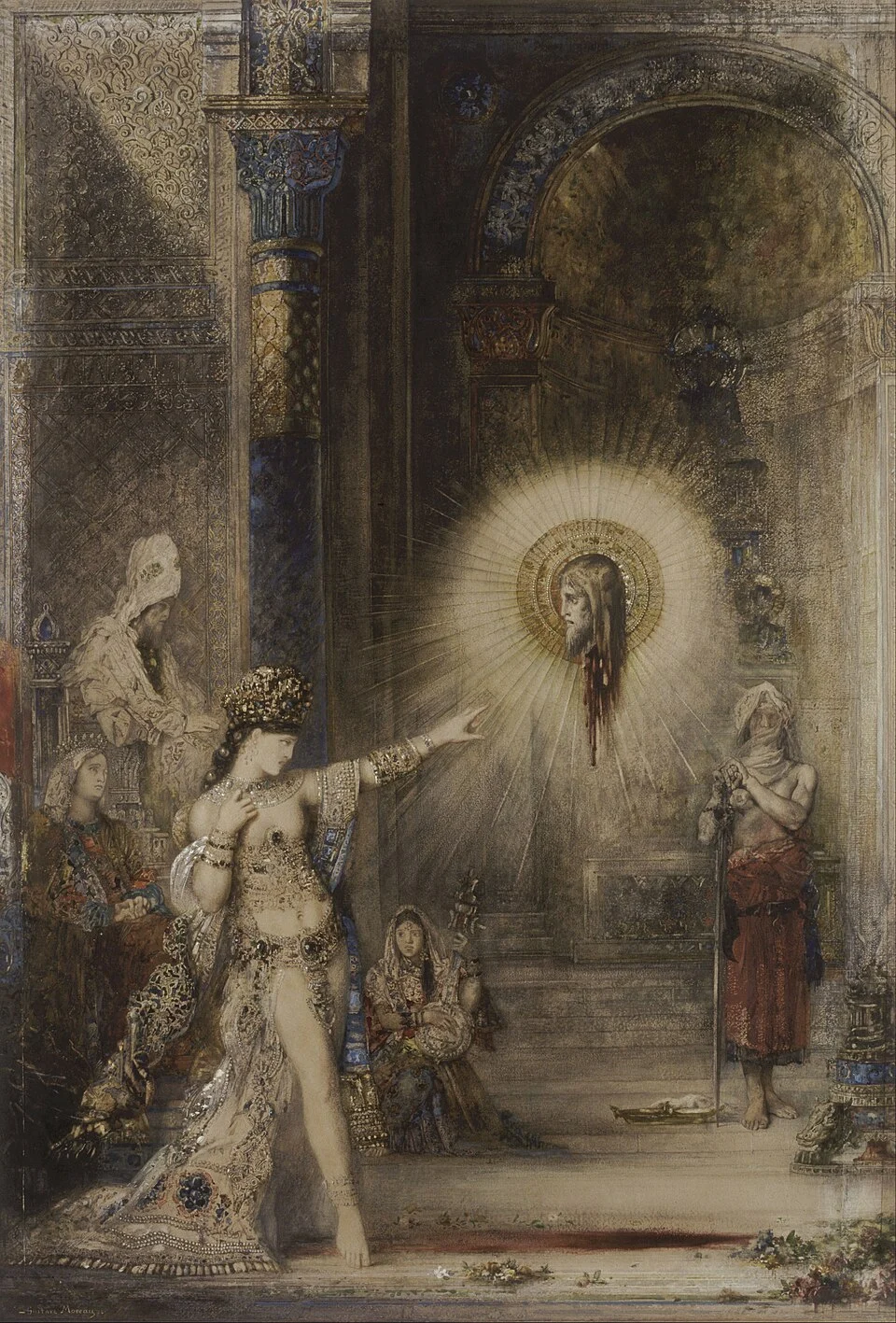
At number 14 is the Gustave Moreau Museum, the head of the Symbolist school. Moreau (Gustave Moreau, 1826–1898) lived here in his parents' house, and had a small studio on the third floor. After his parents died, he demolished the second and third floors in 1895 and built two huge halls in their place, connecting them with a spiral staircase that became one of the most photographed staircases in Paris.
Moreau did all this with one stated intention: to turn the house into his own museum. He bequeathed it to the state, and the museum opened in 1903. It contains nearly 1,200 paintings and watercolors and thousands of drawings in open cabinets, as well as the family apartment, which has been preserved as it was. It is a place where you feel the obsession of one man, and that is precisely the reason to visit it.
The gallery that sold paintings to America
6 rue Catherine-de-La Rochefoucauld
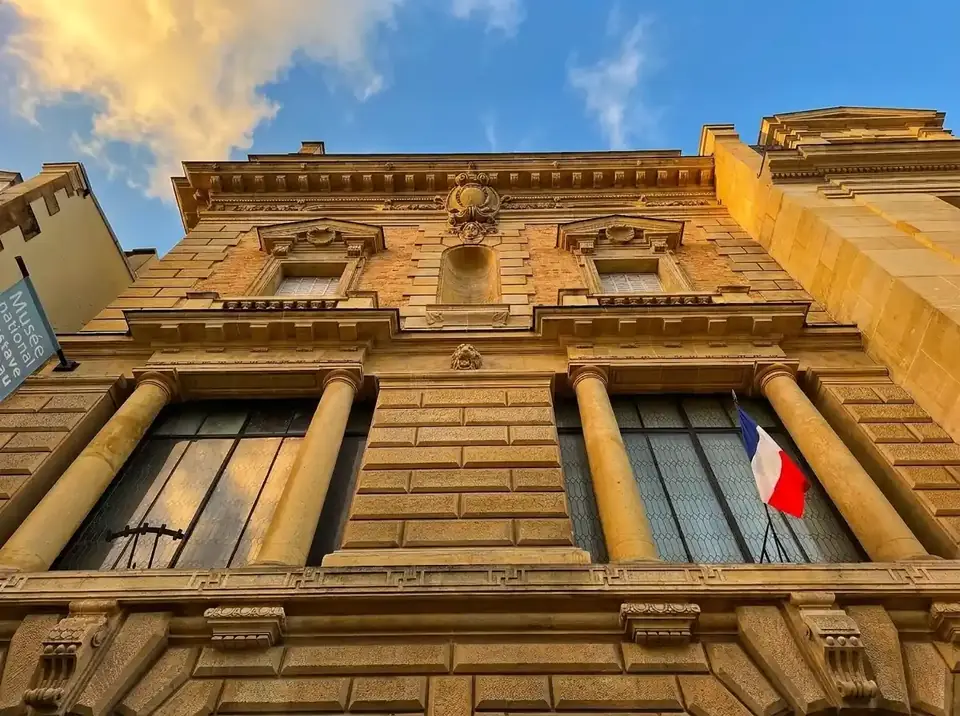
Returning south, the private hotel at number 6 belonged to Madame de Sensy, the dame de honneur of the Empress Eugénie (1826–1920), and later passed into the hands of the art dealer Charles Sedelmeyer (1837–1925).
Sedelmayer was a Viennese who came to Paris and built one of the most efficient vending machines in the history of the art market. He opened a gallery in the building next door, bought entire collections, and was one of the first to realize that the big money was with American industrialists. A significant portion of the European painting that now hangs in museums in New York and Philadelphia passed through this street.
Delaroche's Tuscan House
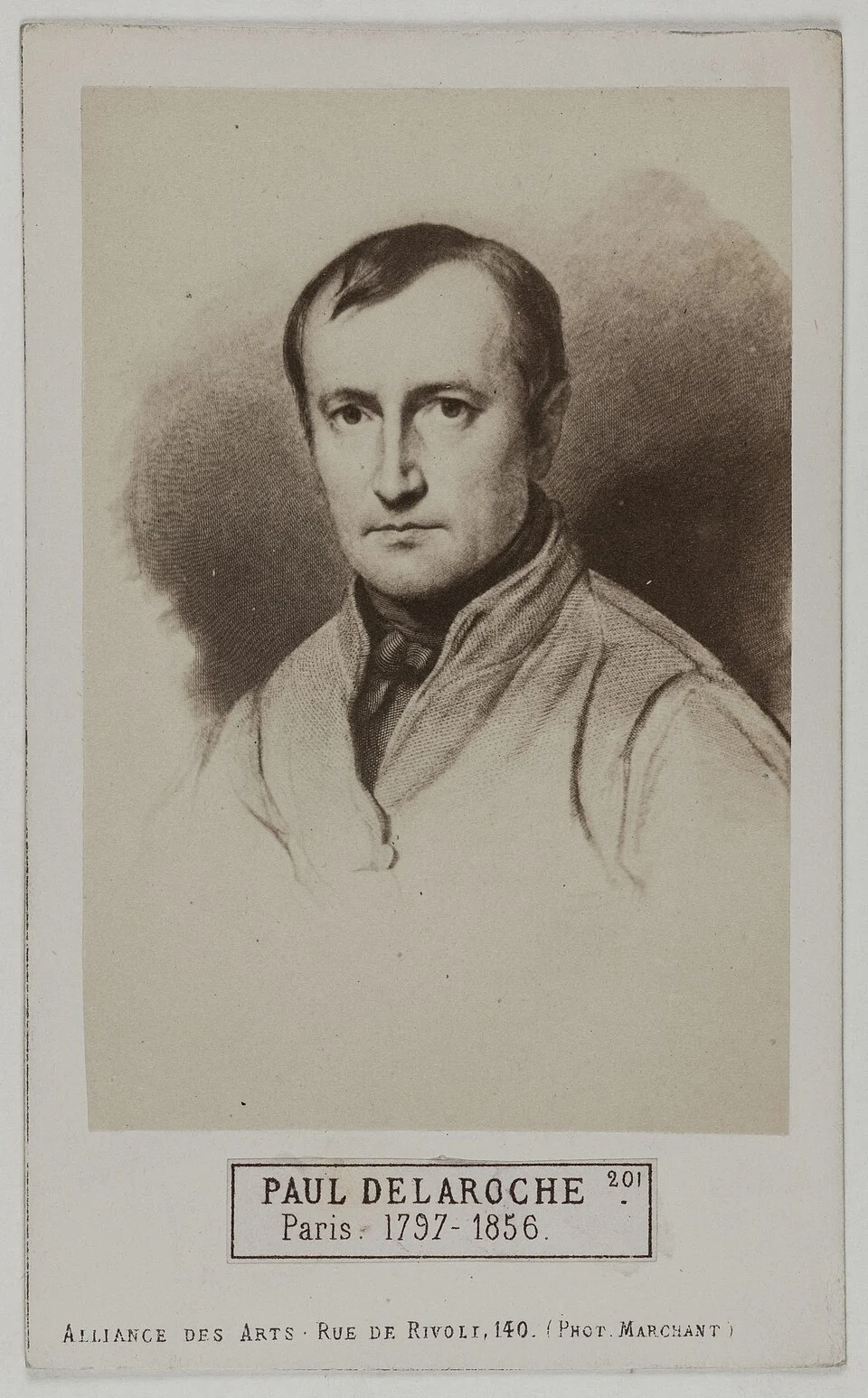
This is where the story that began at 7 rue de la Tour-des-Dames ends. Paul Delaroche built himself a Tuscan-style house in 1829, lived in it for ten years, and at the time it was considered the place every young painter wanted to enter.
The recent renovation restored the original polychromy to the facade, which is rare in Paris: most houses from the period lost their color and remained gray.
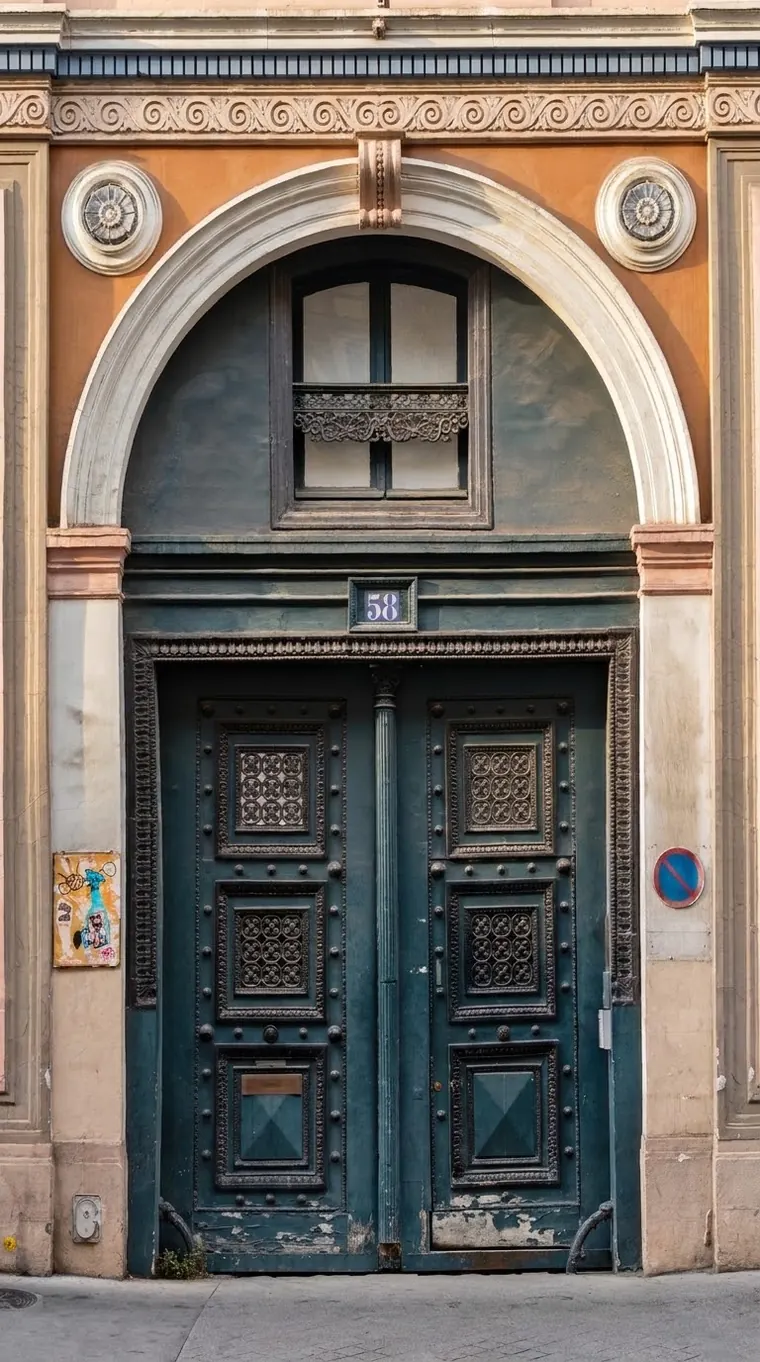
Now turn east on rue Saint-Lazare. The numbers drop, the street becomes more commercial and uglier, and that's part of the point: the next stop is hidden behind a gate that you could pass by a hundred times without noticing.
The gate behind which the courtyard is hidden
This is the entrance to the square d'Orléans, and it's worth knowing in advance that this is a private courtyard. The gate opens and closes at the discretion of the residents, and for years there was a tradition that on Saturday mornings you could enter. Don't plan your day around this, and if the gate is open when you pass by, go in.
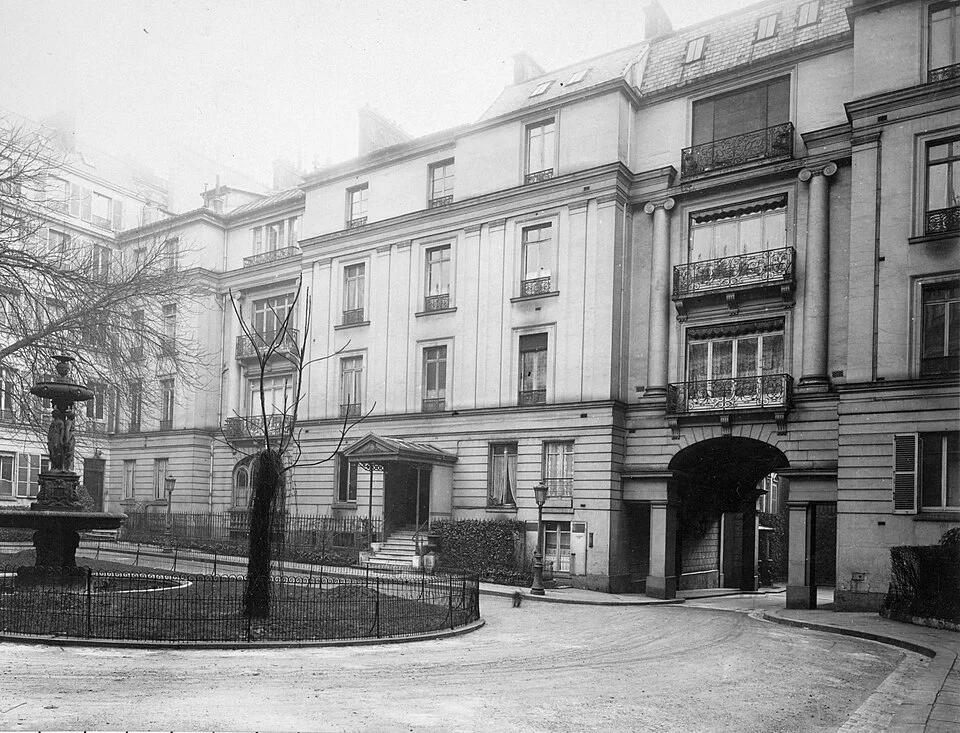
The complex was designed and built between 1829 and 1841 by an English architect named Edward Cresy (1792–1858), who bought the land from Mademoiselle Mars. He built six low buildings around three courtyards connected by arched passages, exactly according to the model of London squares. The original entrance was from 36 rue Saint-Lazare. The complex has been protected as a heritage site since 1977.
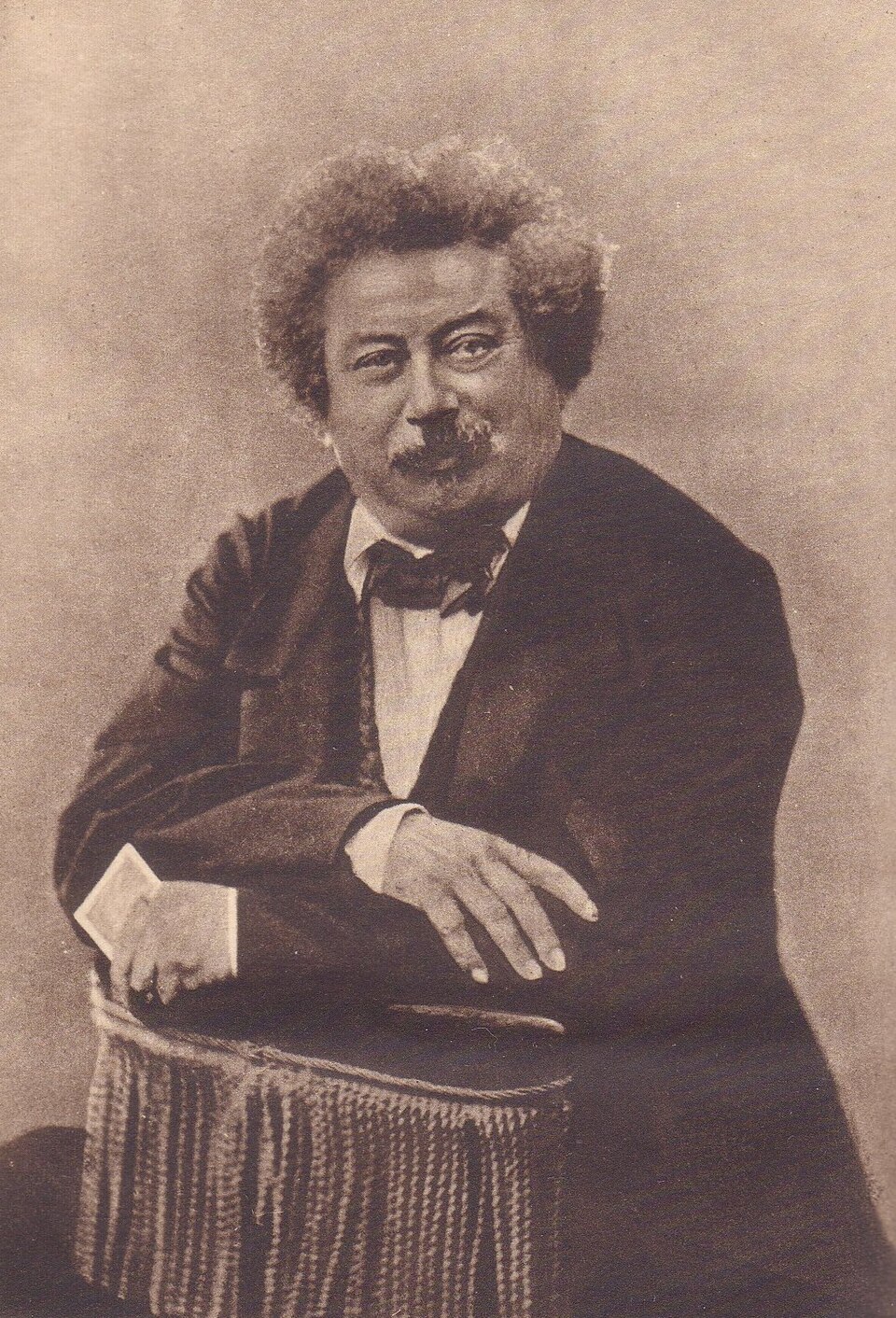
The first famous resident was Alexandre Dumas (1802–1870), who moved here in March 1833. That same year, he produced a costume ball here that remains in Parisian memory: he also rented his neighbor's apartment to have space, and asked Delacroix and other painters to paint scenes from his works and those of the guests on the walls.
The courtyard of Chopin and George Sand
Contemporaries called this place the artists’ phalanx, and they were not exaggerating. Writers, painters, a dancer, a sculptor, and pianists lived in these three courtyards at the same time, and they used to move from apartment to apartment in the evening without going out into the street. The land originally belonged to the family of the composer Daniel Auber (1782–1871), which may have explained why musicians were drawn here.
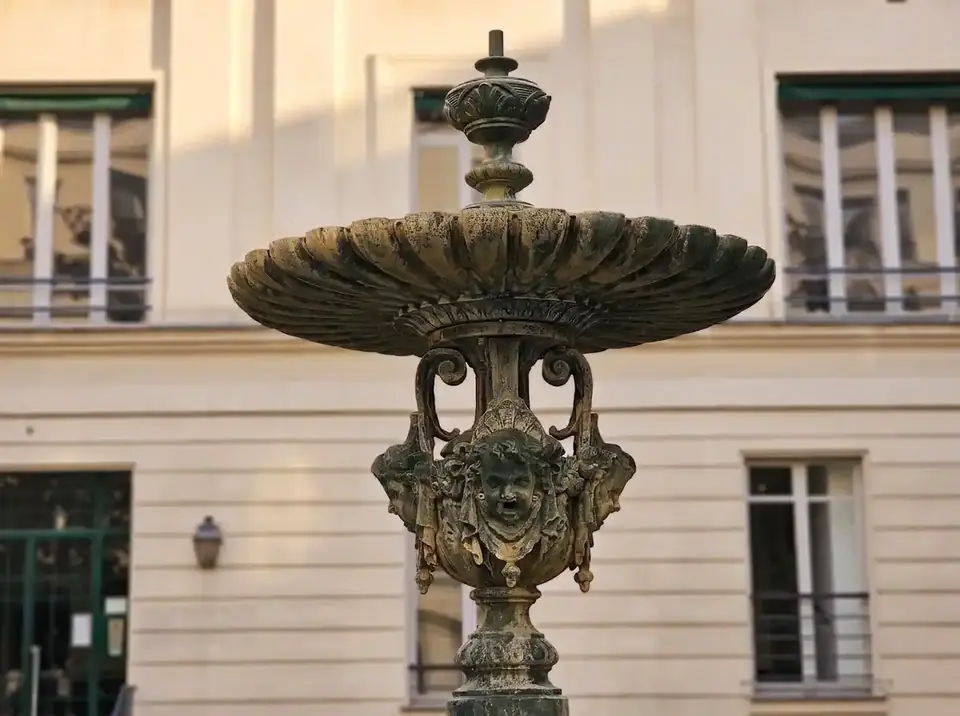
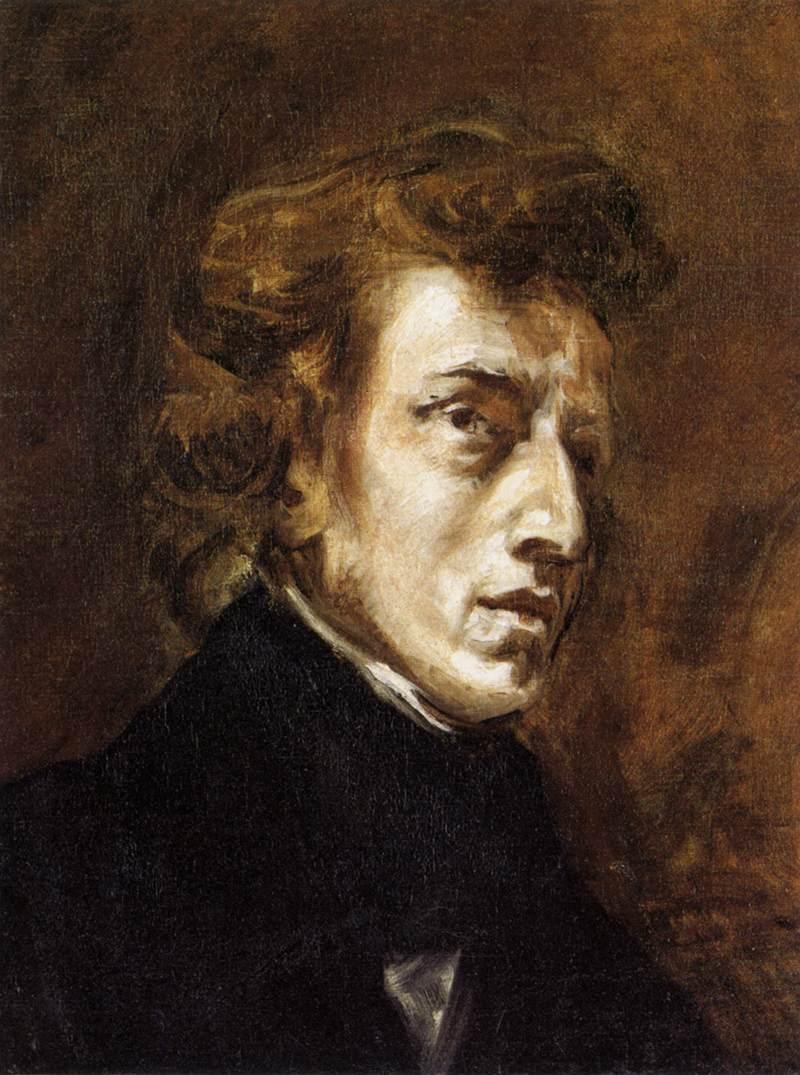
Chopin rented a small apartment on the mezzanine floor of building number 9 in the autumn of 1842, a room and a living room one after the other, and remained there until 1849. He preferred to play in private salons to large halls, and most of those who heard him play heard him here. A year after leaving this apartment he died, aged 39.
Georges Sand lived on the first floor of building number 5, from the autumn of 1842 until their separation in 1847. Between the two buildings lived their friends the Marliani couple, who kept a common table around which everyone ate. Sand herself described this arrangement in a letter:
Je demeure dans le même corps de logis que la famille Marliani, Chopin dans le pavillon suivant, de sorte que, sans sortir de cette grande cour d'Orléans, bien éclairée et bien sablée, nous courons le soir des uns chez les autres, comme de bons voisins de province.
That is:
I live in the same wing as the Marliani family, Chopin in the next pavilion, and so, without leaving this large, well-lit, gravel-covered Orléans courtyard, we run past each other in the evening like good neighbors in the province.
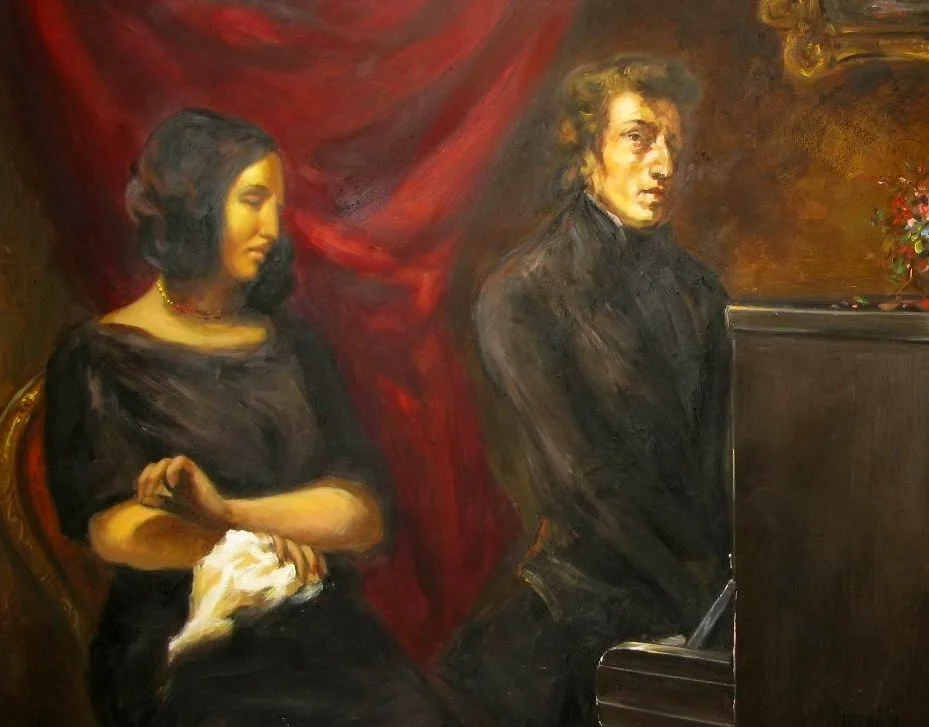
Eugène Delacroix, who was a friend of both, painted them together in one painting: Chopin at the piano and Sand behind him listening. After Delacroix's death, someone cut it in half and sold each half separately. Chopin is now in the Louvre and Sand in a museum in Denmark, and the two halves have not met since. If you're looking for a symbol of the end of this story, here it is.
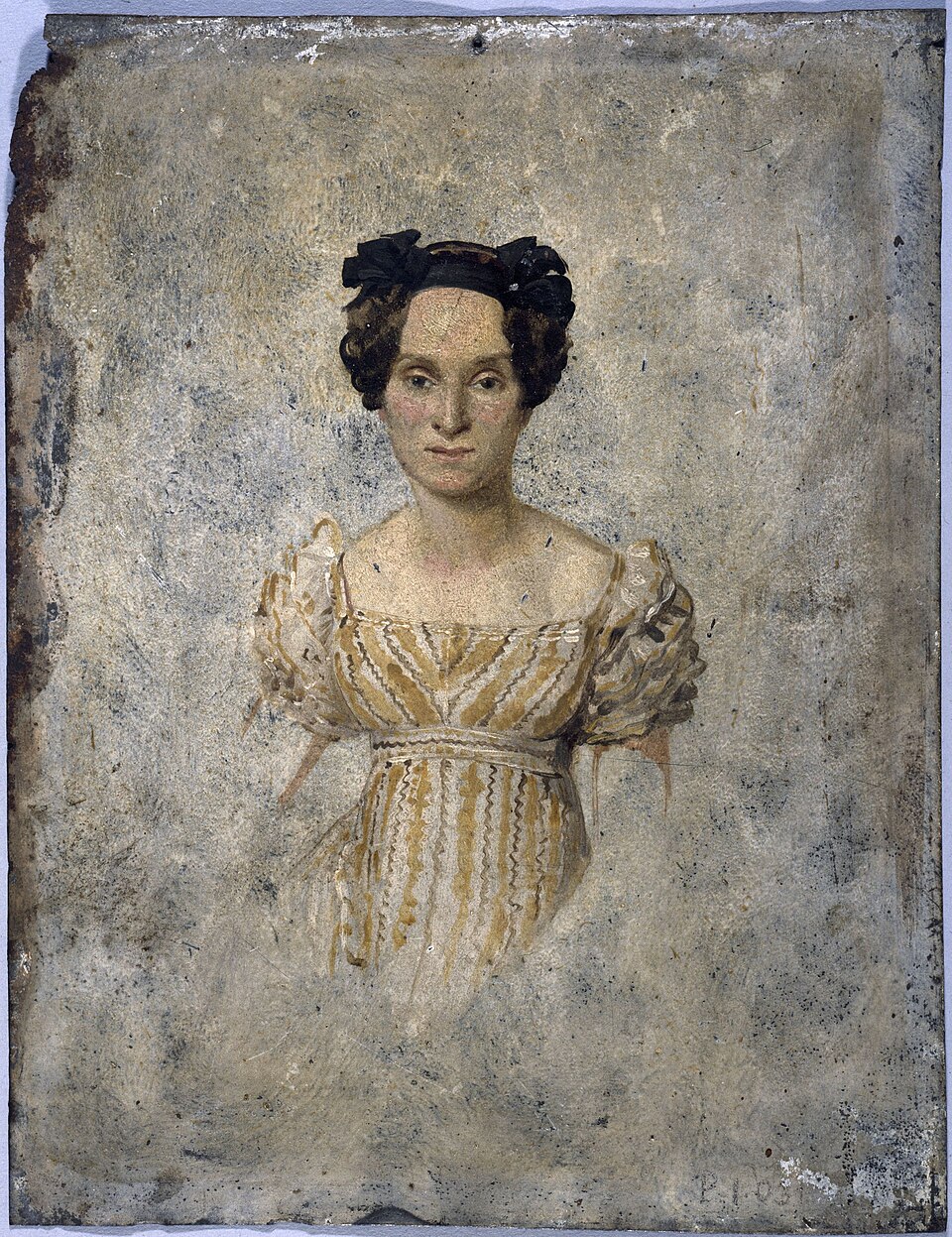
In building number 2 lived the dancer Marie Taglioni (1804–1884), who invented the tiptoe dance and was the great star of romantic ballet. The pianist Pierre-Joseph Zimmerman (1785–1853) occupied two floors here for forty years and ran a musical salon where Liszt, Rossini, Berlioz and Chopin played.
Today it's an ordinary residential courtyard, with a fountain in the center and tenants who aren't necessarily happy to see you. The most you'll see is twenty meters of light stone, tall windows, and silence. Those who know what was here between 1842 and 1847 don't need more than that, and those who don't will see a nice courtyard and move on. You already know.
Church of La Trinité
From the square d'Orléans, return to rue Saint-Lazare and walk west for about five minutes, past Delaroche's house, until the street opens onto a square with a garden. In this square, everything comes in threes, like the name of the church that stands in it: three fountains, and on them statues of the three Christian virtues, faith, hope, and charity. You have already seen the church tower when you went down rue Blanche, because it closes the street from the south.
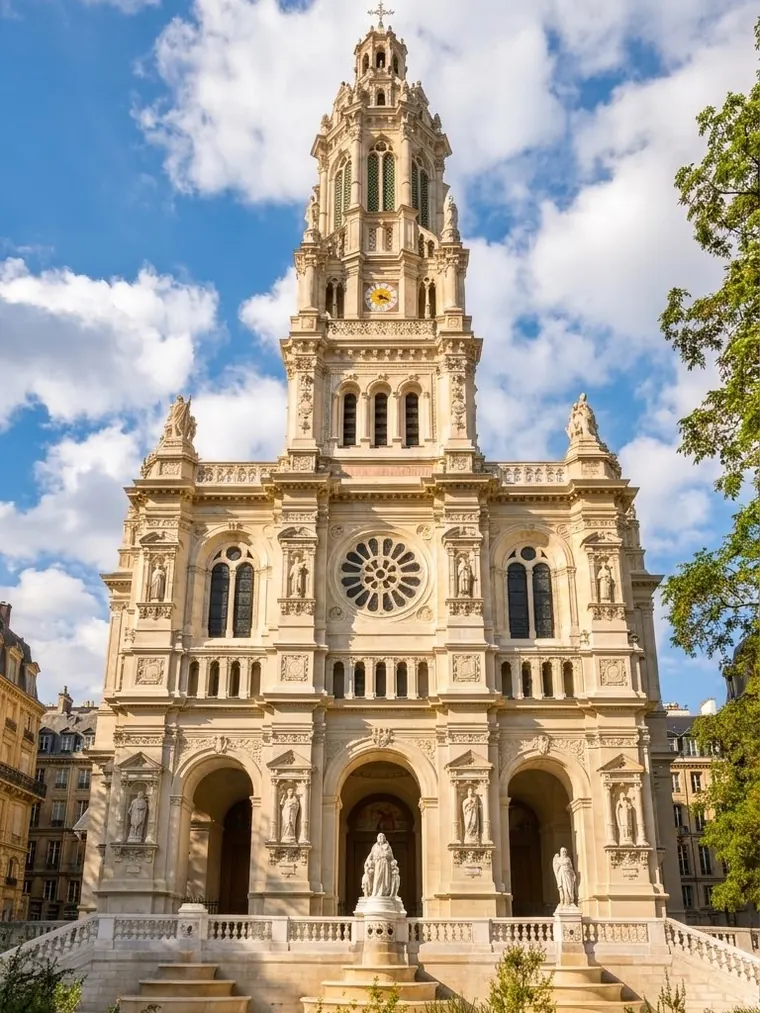
The Church of the Holy Trinity (Église de la Sainte-Trinité), which Parisians simply call La Trinité, was designed by Théodore Ballu (1817–1885) and built between 1861 and 1867. He is the same architect who was later commissioned to rebuild the Paris City Hall (you can see the house where he lived and died at 78 rue Blanche, on the northern avenue of the 9th arrondissement). The style is neo-Renaissance inspired by the Italian Renaissance, and the tower rises to a height of 65 meters.
This church hosted the funerals of three composers: Gioachino Rossini (1792–1868), Hector Berlioz (1803–1869), and Georges Bizet (1838–1875), who died three months after the failed premiere of “Carmen .” And speaking of music, composer Olivier Messiaen (1908–1992) was the church’s permanent organist for 61 years, from 1931 until his death.
The church has been covered in scaffolding since 2018, and from the beginning of 2026 they will gradually come down and the main facade will be revealed after a major renovation. The renovation includes cleaning all the facades and replacing damaged stones and statues, as part of which the four large statues of the Gospel writers will be replaced with identical copies. As of September 2026, the church is still closed to the public. However, there is also something to look at from the outside, and the garden in the square has benches where it is convenient to end the walk. The Trinité – d'Estienne d'Orves metro station is right here.
Where to stay in the Nouvelle Athènes area
These three hotels sit on the metro line or just a few minutes away, and all are within the 9th arrondissement. They're also close enough to metro stations on lines 2 and 12 that you don't have to start every morning changing.
-
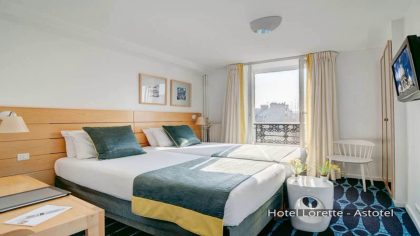
Hotel Lorette
At 36 rue Notre-Dame-de-Lorette, about two hundred meters from the last stop of the route. This is the hotel from which you can leave in the morning and start the walk without taking the metro at all, and it belongs to a chain that provides free drinks and snacks in the lobby throughout the day.
-
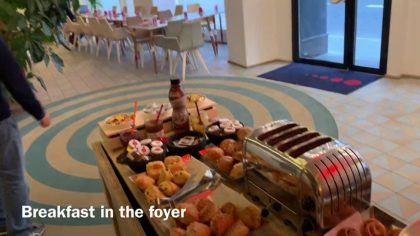
Hotel Joke
At 69 rue Blanche, on the same street where four of the tram stops pass. It sits exactly in the middle between the two trams, so anyone doing both will exit twice in opposite directions. The design is young and a bit noisy, and this is not a hotel for those who want absolute silence.
-
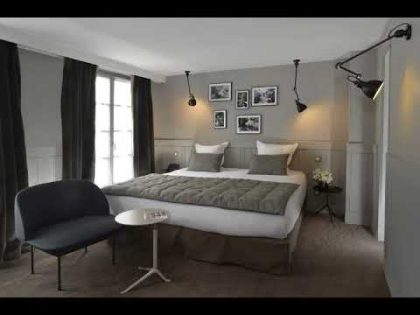
Hotel Helios Opera
At 75 rue de la Victoire, about a ten-minute walk south of the route and within touching distance of the opera and the Haussmann Street department store. The balanced option of the three for those who want both the quiet quarter and the commercial center.