in short
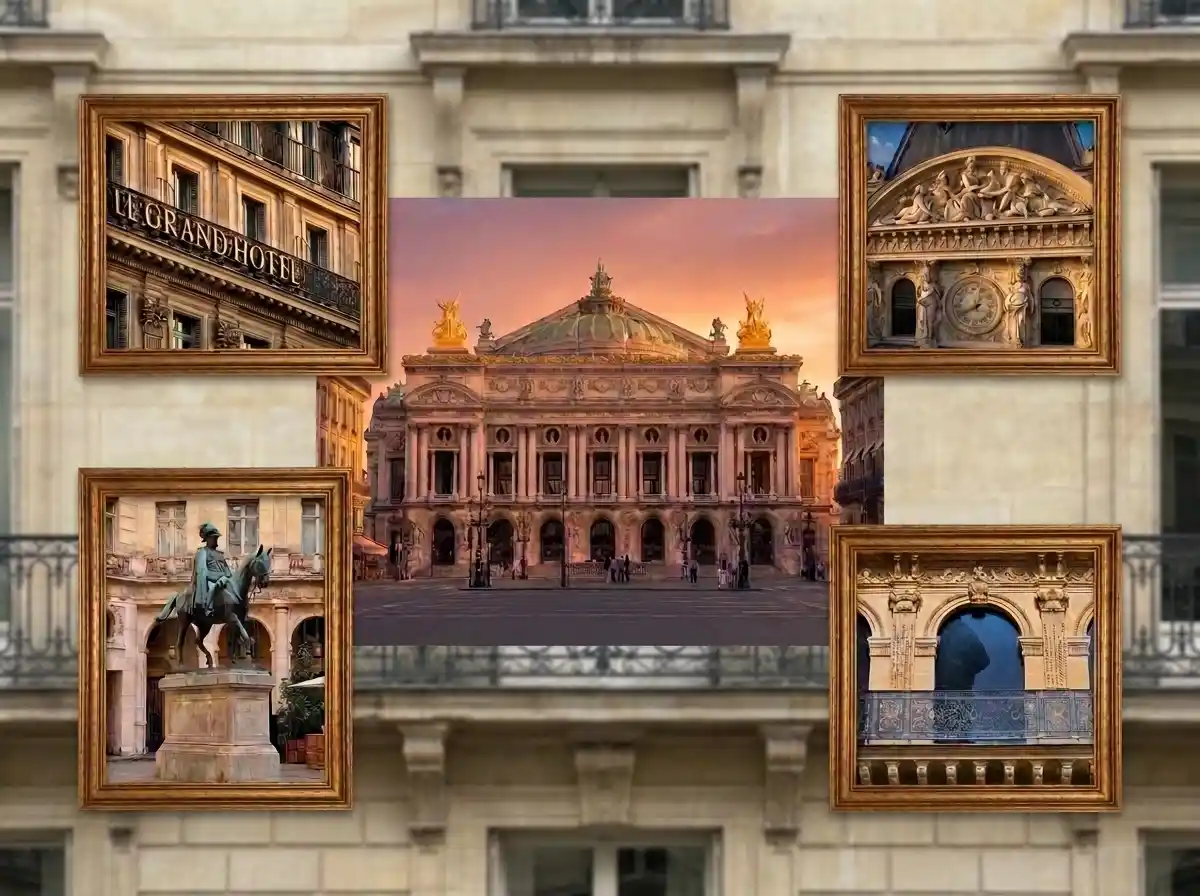
- What's there: Opera Garnier, Olympia, Drouot Auction House, Graben Museum and two covered arcades
- § × × : Place de la Madeleine, Madeleine metro station on lines 8, 12 and 14
- End point: passage Verdeau, near Grands Boulevards station
- How long: About two and a half hours walk, a full day with admission to the opera and the wax museum
- When: Midweek and in the morning, on Sundays most of the shops in the arcades are closed.
- Tickets: Opera Garnier by reservation only, 15 euros for Europeans and 25 euros for others
- And bonus: In the basement of 14 boulevard des Capucines, the first paid film in history was screened.
The Madeleine Church stands at the western end of the grand boulevards, and from there begins an almost straight line that passes through everything that 19th-century Paris knew how to do best: theaters, cafes where everyone sat, auction halls, and one basement where a pay-per-view film was first shown. In short, if you want to get to know the glittering and joyful Paris of the 19th century, this is the route for you.
The route has 13 stations and is about three kilometers long, and it passes through the oldest music hall in Paris that is still in operation, a small square named after an English king, the Charles Garnier Opera House, the oldest auction house in the world, and ends in two covered passages that opened in the 1840s and have not changed much since.
So before we set off, let's talk about what you'll find in this article. I'll start with the practical information: how to get to the starting point, what days are best to go, and how much time to allocate. This is followed by the 13 stations in the order in which you encounter them on foot, each with its own story. At the end, there's an accommodation section with hotels along the route, and answers to questions I get about the area.
Practical information for the route on the major boulevards
How to get to the starting point
I did this hike on one of my last visits to Paris when I was staying at Audi's apartment on Rue Royale, which is a few minutes' walk from the starting point of this trail. However, if you don't happen to live there, you'll be happy to know that the Madeleine metro station is located under the square, where the hike will begin, and is served by three lines: 8, 12, and 14. The exit leads directly to the church steps, from where the trail begins.
Those who prefer to travel above ground will also find bus lines 42, 45, 52, 84 and 94 at Madeleine station. Line 84 comes from the Luxembourg Gardens and line 94 from Montparnasse, and both travel through a beautiful part of the city.
What days should you go?
Sunday is the most problematic day on this route. The two arcades at the end of the road are open to traffic, but most of the shops inside are closed, and the town hall on rue Drouot is closed on weekends. On Sunday, however, the boulevards themselves are emptier and it is easier to see the facades.
If you want to see the area in action, go midweek. These days, the auctions are held at Drouot and admission is free, the shops in the arcades are open, and you can also go inside the town hall and take a look.
How long, and when to come?
The walk itself, without entrances to the sites, takes about two and a half hours at a leisurely pace. If you add a visit to the Opera Garnier, add an hour and a half, and if you also enter the wax museum at the end of the route, it's already a full day.
The best time to go is around 10 a.m. The light then falls directly on the southern facades of the boulevards, the arcades open up, and if you finish the route at noon you will find yourself in the very area where it is worth eating. The comfortable seasons are spring and autumn, and in winter there is a surprising advantage: the arcades were originally built to protect shoppers from the rain.
The itinerary between the Madeleine and Boulevard Montmartre
The entire walk is from west to east, and that's no coincidence. The boulevards were paved on the line of the old city walls of Charles V (reigned between 1364 and 1380), and they continue to act like a single line: as long as you're on it, you can't get lost. Only two small deviations depart from it, both to the north, and I mark them on the spot.
Instead of a map: Under the title of each station is its address, and each address is a link. Click on it, and the place will immediately open in Google Maps.
Place de la Madeleine

The cornerstone of the building you see was laid in 1763, and it was only inaugurated in 1842. Eighty-nine years of interruptions, changes of government, and changes of purpose: at one point it was proposed to turn the skeleton into a stock exchange, and at another point into Paris' first train station.
In December 1806, Napoleon I decided that a temple to the glory of the Grande Armée would stand here. Eighty architects participated in the competition he held, and the emperor himself chose Pierre-Alexandre Vignon (1763–1828), against the opinion of the Academy. His reasoning for rejecting the competing proposal has been preserved and explains everything: he wanted a temple, not a church.
After the Russian campaign of 1812, Napoleon I abandoned the idea of a temple of glory, and the Restoration returned the building to its religious purpose. Vignon died in 1828 and the work was completed by Jean-Jacques-Marie Huvé (1783–1852). The result is the only building in Paris that looks like a Roman temple: 52 Corinthian columns, 108 meters long, no bell tower and no cross visible from the square.
In 1849, the funeral of Frédéric Chopin (1810–1849) was held here, during which his own funeral march was played. Since then, the church has become the address for the funerals of famous Parisians, from Camille Saint-Saëns (1835–1921), who also played its organ, to Edith Piaf, Joséphine Baker and Delilah. After him, Gabriel Fauré (1845–1924) also played there.

If you would like to read more about this church, you are welcome to visit the article about the Church of the Magdalene.
The legendary concert hall of Paris
Cross the square to the east and enter boulevard des Capucines. At number 28 stands the Olympia, the oldest music hall in Paris that is still in operation. Its story begins with a roller coaster.
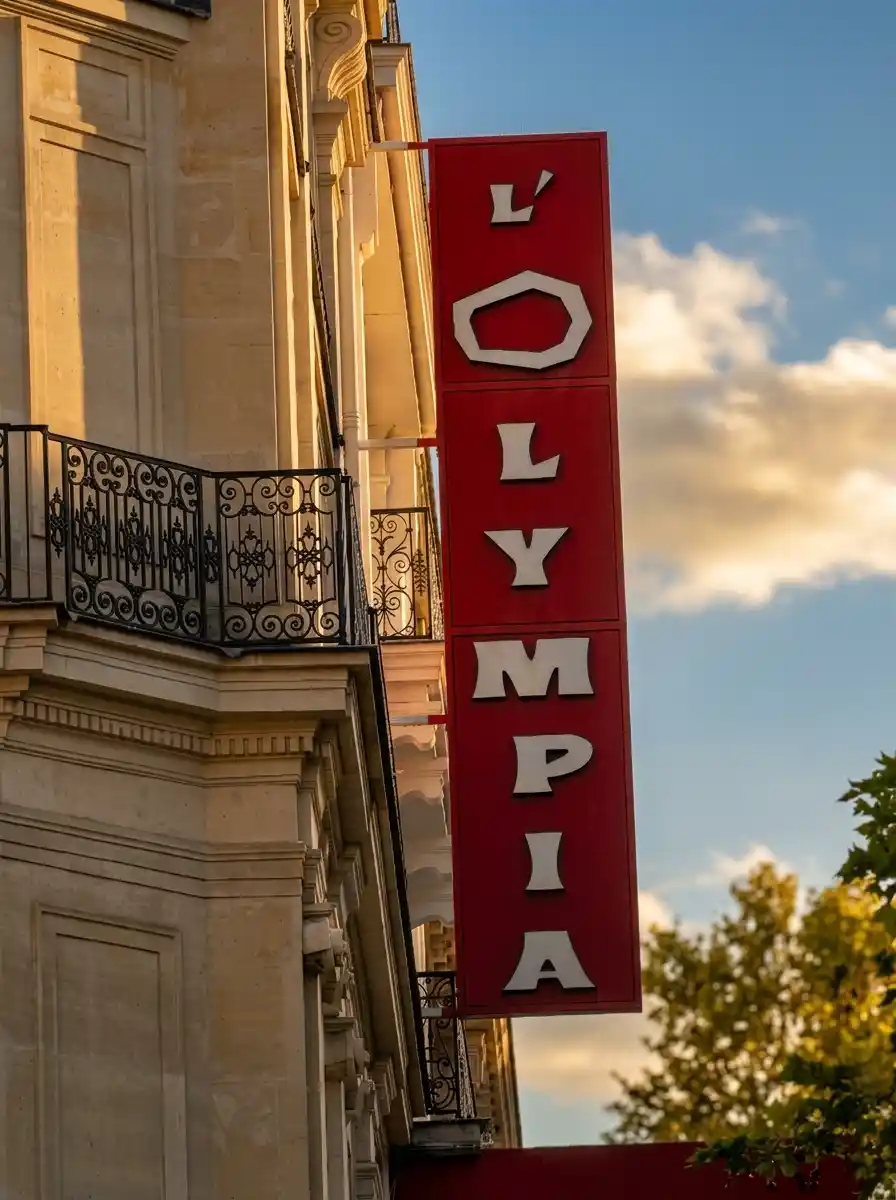
In 1888, Joseph Oller (1839–1922) installed a wooden roller coaster here. Oller, who invented horse racing betting and had founded the Moulin Rouge the year before with Charles Zidler (1831–1897), was the man who gave Paris the big entertainment business.
The police disallowed the wooden train for fear of a fire and demanded that it be dismantled. Undaunted, Oller brought in the architect Léon Carle (1843–1899) and built a concert hall on the site, which opened on April 12, 1893. He called it Olympia, and in keeping with the Anglomania that dominated Paris at the time, he defined it as a music hall rather than a café concert, a term that had been accepted until then. The stars of the first evening were La Goulue, the can-can dancer from the Moulin Rouge, and the Italian artist Leopoldo Fregoli (1867–1936).
The Olympia did not survive the film competition and became a cinema in 1929. Its revival came in 1954, when impresario Bruno Coquatrix (1910–1979) restored the venue to its original purpose and transformed it into the most important stage in France. Edith Piaf sang her last performances here, and in January 1964 the Beatles played a series of concerts here that shook Paris. The building you see today is not the original: in 1997 the hall was demolished and rebuilt, preserving the facade and the famous red hall.
The basement where cinema was born
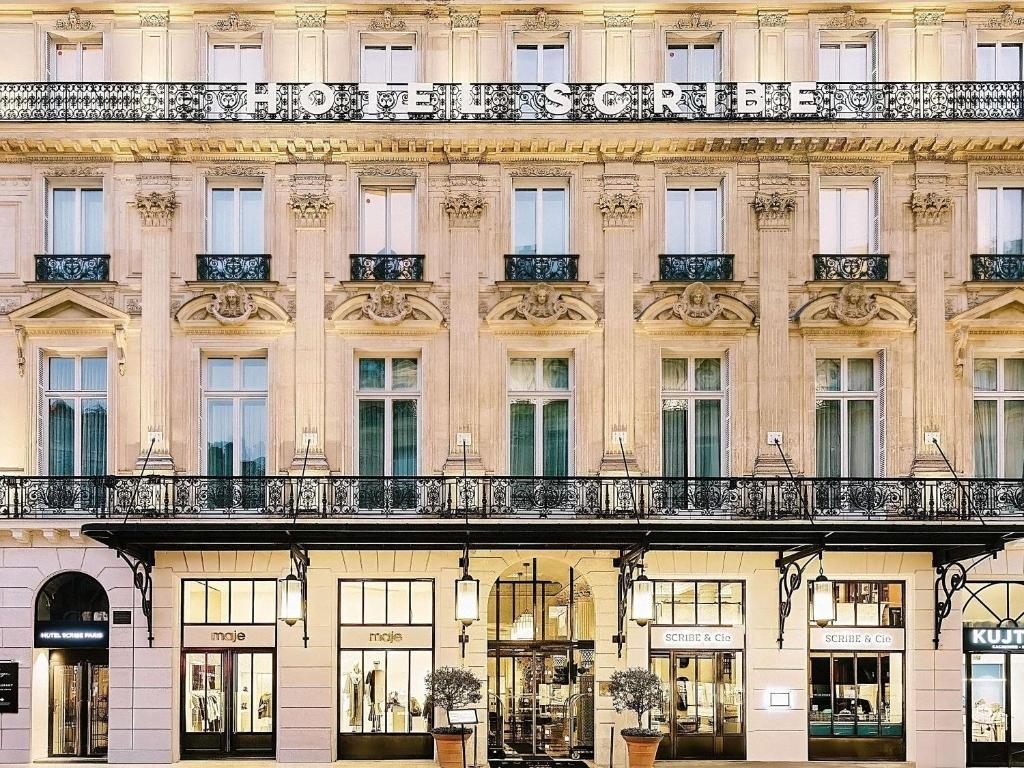
About a hundred meters further east, on the corner of rue Scribe, stands the Hotel Scribe today . At the end of the 19th century, the Grand Café stood on this site, which had a basement that was previously used as a billiard room and was called the Salon indien.
On December 28, 1895, the brothers Louis Lumière (1864–1948) and Auguste Lumière (1862–1954) rented the small room there and showed the first public screening for a fee in history. Their father, Antoine Lumière (1840–1911), hosted the evening. Ten short films were shown, the ticket price was one franc, and the hall was filled with 33 spectators.
The journalists didn't bother to come, and the event was barely mentioned in the press the next day. A few weeks later, thousands of spectators a day were coming to the basement, and the line stretched along the sidewalk. Today there's nothing to see there except a memorial plaque on the wall, and yet I stop here every time. The entire world's film industry came out of one billiard room under this sidewalk.
Place Edouard VII
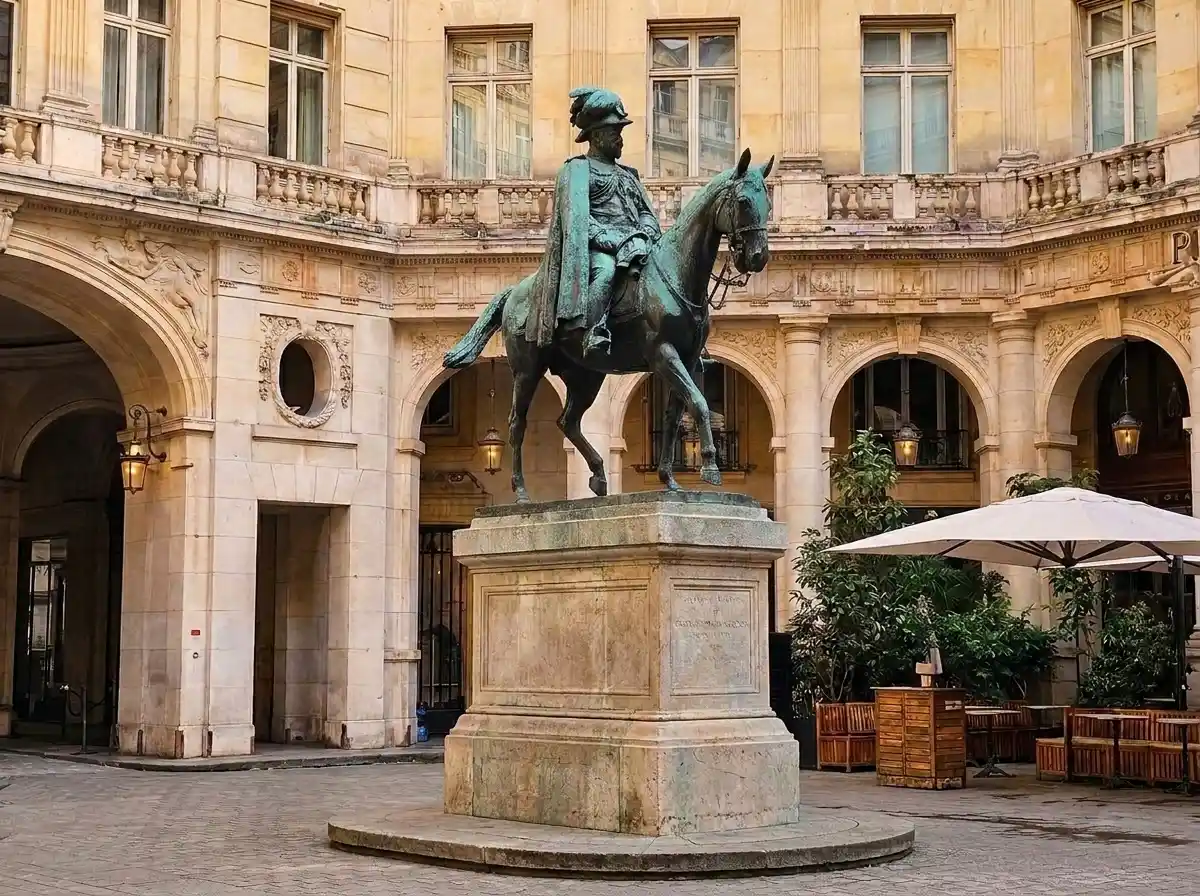
From the boulevard, you enter north onto rue Edouard VII, a small, cobbled street that opened in 1911 on the site of the stables and garage of the municipal carriage company. The site was previously home to 500 horses and 200 carriages, and today it is one of the quieter areas in the area.
The street and square are named after Edward VII of England (king from 1901 to 1910), who was called the most Parisian king of England in Paris, and who was one of the architects of the Entente Cordiale, the agreement that brought France and Britain closer together. The surrounding houses were designed by Henri-Paul Nénot (1853–1934), the architect who also built the new Sorbonne.
In the center of the square stands an equestrian statue of the king, the work of Paul Landowski (1875–1961), the sculptor who also created the statue of Christ the Redeemer above Rio de Janeiro and the statue of Saint Genevieve on the La Tournel Bridge. Opposite it stands the theater that bore the king's name, designed by the English architect William Sprague (1863–1933) and opened in 1913 as a cinema.
The hall became a theater in 1916, and in October 1920, Sacha Guitry (1885–1957) staged his play “Je t'aime” (I Love You), starring his wife Yvonne Printemps (1894–1977). Guitry's ten seasons shaped the character of the place, and to this day the theater bears his name.
Opéra Garnier
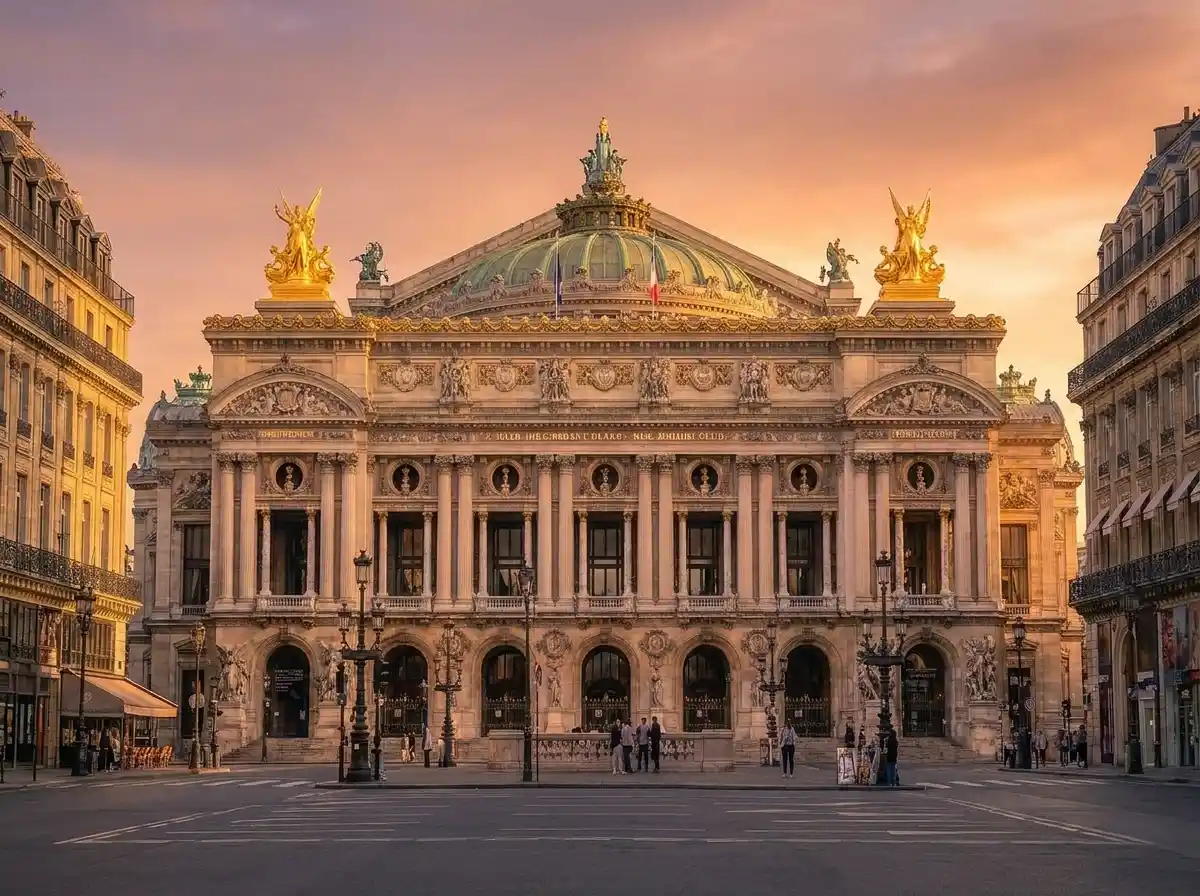
The story of the Opéra Garnier begins with an assassination attempt. In 1858, bombs were thrown at Napoleon III's carriage at the entrance to the old opera house on rue Le Peletier, and the emperor decided he wanted a new building, with his own protected entrance. The design competition was opened, and a 35-year-old architect who no one knew won: Charles Garnier.

Charles Garnier (1825–1898) worked on the building for fourteen years, from 1861 to 1875, with the Franco-Prussian War of 1870 stopping the work in the middle. When Empress Eugénie (Empress from 1853–1870) remarked to him that the style was not Greek, not Louis XIV, or even Louis XVI, he replied that these styles had taken their toll, and what she saw was the style of Napoleon III.
The inauguration took place on January 5, 1875, and was quite ironic: the most imperial building in Paris was opened in a ceremony of the Third Republic, in the presence of President Patrice de Mac-Mahon (1808–1893). Napoleon III had already died in exile two years earlier and never saw the finished building. Garnier himself was not officially invited, and had to pay for his seat at the inauguration of his building.
On May 20, 1896, during a performance of “Faust,” a counterweight from the hall’s chandelier broke loose and fell on the audience. One woman was killed and others were injured, and the story was included a few years later in the book “The Phantom of the Opera” by Gaston Leroux (1868–1927). Leroux also did not invent the lake beneath the building: during construction, the workers encountered groundwater, and the solution was a huge reservoir that stabilizes the foundations and exists to this day.
The ceiling above the hall is by Marc Chagall (1887–1985), who painted it in 1964 at the request of the Minister of Culture André Malraux (1901–1976). The original painting was not erased: Chagall's canvas was hung below it.
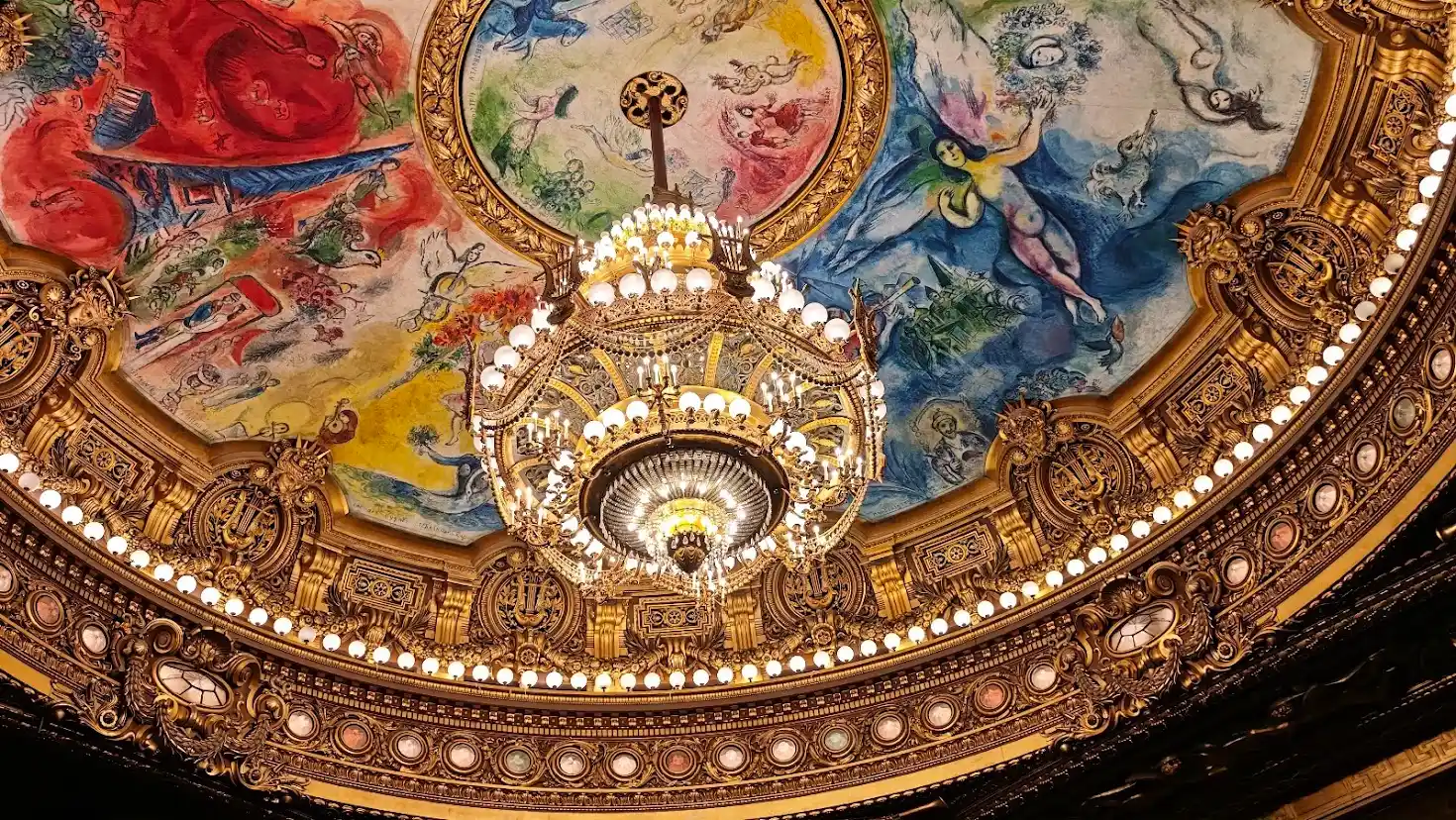
You can make do with the front, but if you go in, pay attention to a few details. The independent visit costs 15 euros for EU citizens and 25 euros for visitors outside of it, including Israelis. Advance booking is mandatory and tickets are not sold at the box office. The entrance for visitors is at the corner of rue Scribe and rue Auber. The building is usually open from 10:00 to 17:00 and the last entry is an hour before closing. Rehearsals sometimes close the performance hall, and there is no ticket that guarantees entry.
Le Grand Hôtel and Café de la Paix
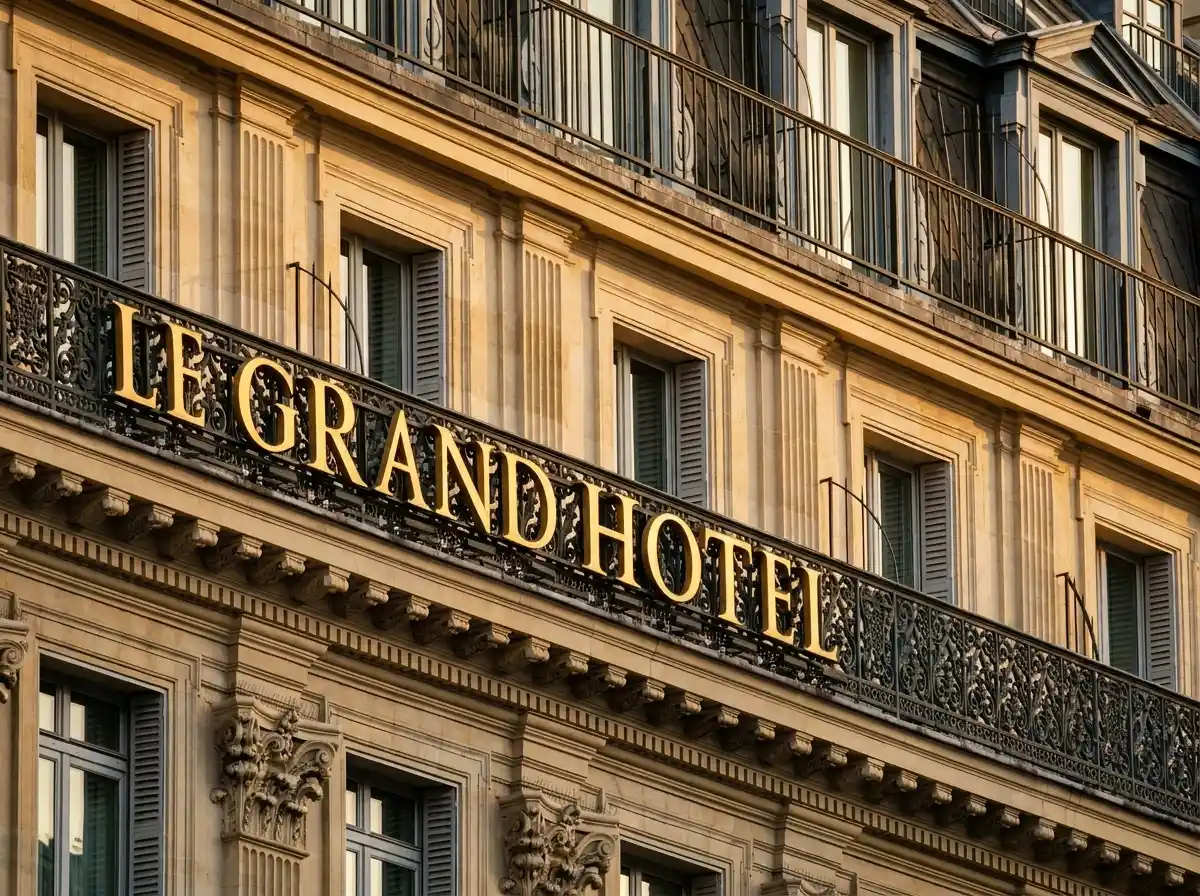
On the east side of the square, opposite the Opera, stands a single building that takes up an entire block. The brothers Émile Péreire (1800–1875) and Isaac Péreire (1806–1880), bankers who financed much of Second Empire Paris, built it between 1861 and 1862 in preparation for the Universal Exhibition that was to open in the city in 1867.
The architect was Alfred Armand (1805–1888), and the Empress Eugénie inaugurated the hotel on May 5, 1862. It is said that after touring the salons, she said that it was just like home, at Compiègne or Fontainebleau. The hotel officially opened to the public on June 30, 1862 with 800 rooms, an unprecedented number in Paris at the time.
On the ground floor, in the corner, the Café de la Paix opened that same year. It was a place to go after the opera, and regulars included Guy de Maupassant (1850–1893), Oscar Wilde, and Marcel Proust (1871–1922). Émile Zola (1840–1902) located the death of Nana, the heroine of his novel, in a room on the fourth floor of this hotel.
The prices at the café today are what you would guess, and the crowd is more or less all tourists. However, the original decoration has been preserved, and the hall with its decorations has been listed as a protected heritage site (monument historique) since 1975. A coffee standing at the bar costs less than sitting down, and it's my solution when I want to see the place without paying for the view.
Offenbach's house
Continue east, passing the small numbers of the boulevard. Jacques Offenbach lived at number 8 from 1876, and died there.
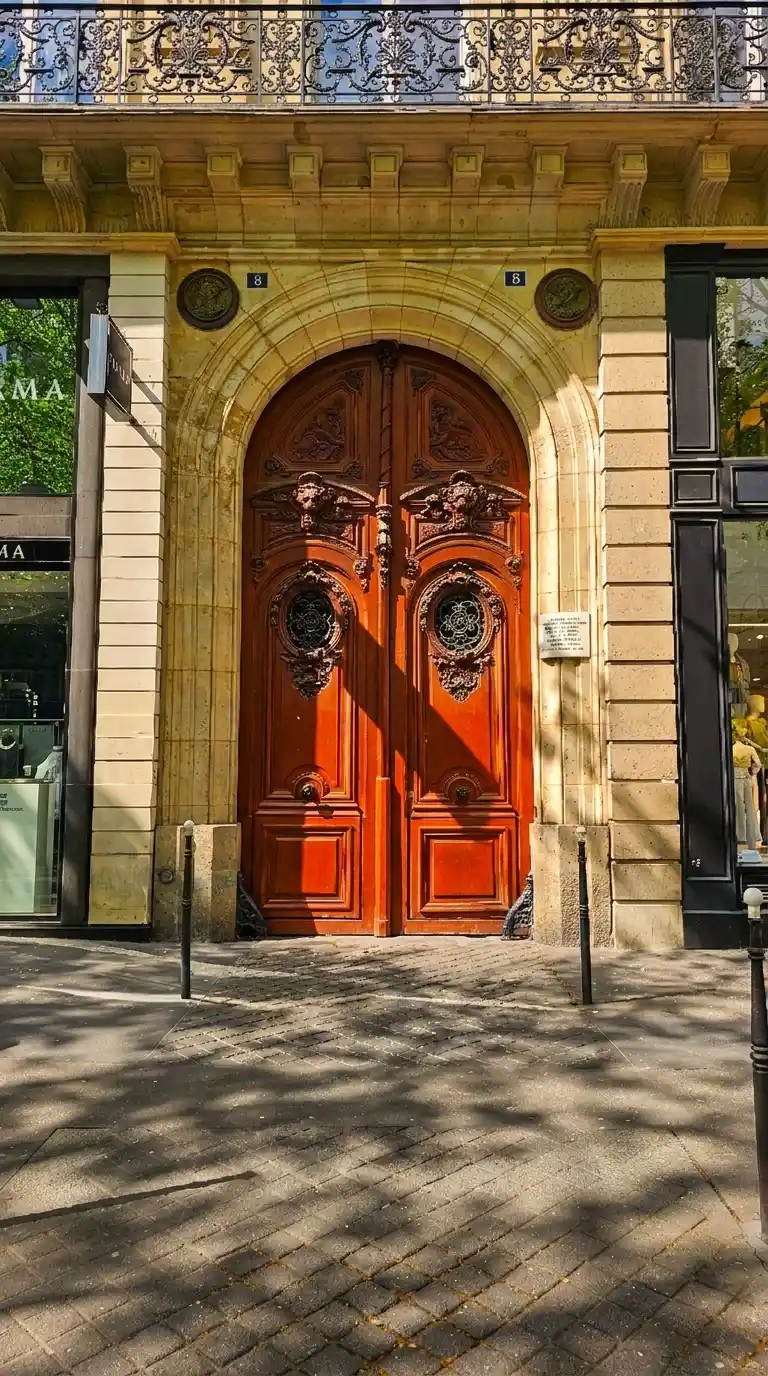
Jacques Offenbach (1819–1880) was the composer who set the tone for Paris during the Second Empire, with “Orpheus in Hades” and “The Beautiful Helen.” In his final years, he wanted to write one serious opera that would remain after him.
On May 18, 1879, he organized an abridged performance of Les Contes d'Hoffmann in his living room, with a piano instead of an orchestra. Among the guests were the director of the Opéra Comique and the director of the Vienna Ringtheater, and the goal was clear: to get a production. On the night of October 4, 1880, Offenbach died in this apartment, four months before the work's premiere, which took place on February 10, 1881. The orchestration was completed by Ernest Guiraud (1837–1892).
Want to enjoy Offenbach's wonderful music? I've embedded one of the best performances of "The Tales of Hoffmann" here:
A few steps further east, on the corner of rue de la Chaussée-d'Antin, stood the Théâtre du Vaudeville, designed by Auguste-Joseph Magne (1816–1885), from 1868. The Paramount Company bought it at the end of 1924, the theater closed in April 1925 and was demolished despite protests, and on November 24, 1927, a cinema with about 1,900 seats opened in its place. It is still there, spacious and modern, and is the clearest sign of what happened to the Boulevards: what was shown in the basement of the Grand Café eventually swallowed up the theaters around it.
The most expensive coffee in the 19th century
After the Opera Square, the street changes its name and becomes the boulevard des Italiens, after the theater where the Italian troupe performed. During the Restoration, the street was called the boulevard de Gand, after the Belgian city to which Louis XVIII (king from 1814 to 1824) went into exile, and the dandies who walked along it were called Gandins. In the 19th century, this was the most important boulevard in Paris, and anyone who wanted to be seen had to be seen here.
At number 19 you will find the Hôtel des Italiens, best known as the historic headquarters of the Crédit Lyonnais bank. It is one of Paris's most outstanding architectural masterpieces from the second half of the 19th century.
Designed by architect William Bouwens van der Boijen and inaugurated in 1883, the building was erected during the heyday of eclectic architecture and the Belle Époque. It replaced a complex of older buildings, including the famous Italian theater that operated on the site, and became a symbol of the economic power and modernization that France was undergoing at the time.
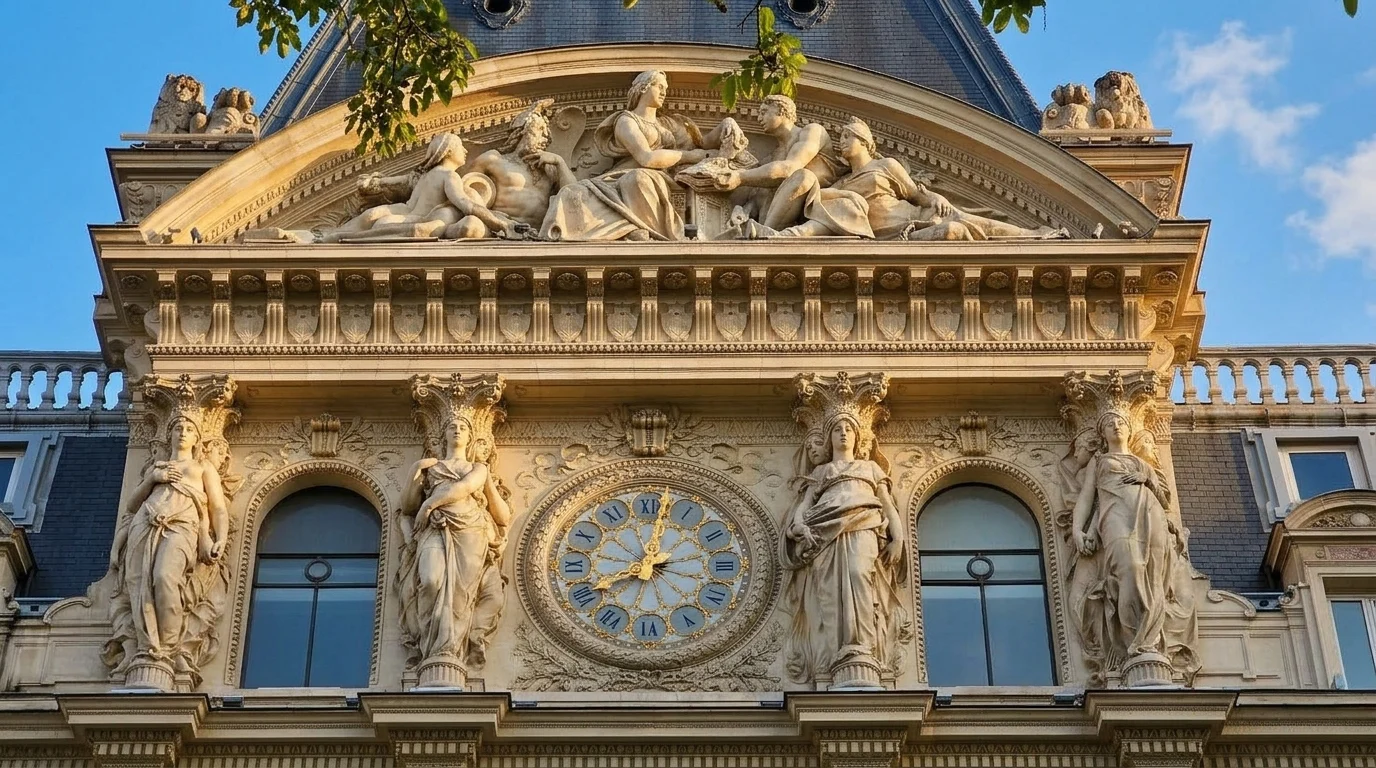
The most impressive design element on the facade, which can be seen in the photo, is the central clock pavilion. This design was directly influenced by the royal architecture of the Louvre Palace (“Pavillon de l'Horloge”). Above the clock stands a magnificent gable decorated with allegorical statues representing the branches of the economy, trade and industry. The clock itself is surrounded by four impressive caryatids (statues of women serving as supporting columns) by the sculptor Jean-Paul Aubé, representing the hours of the day and completing the dramatic appearance of the building.
The even numbers were a series of cafes and restaurants that were institutions in their own right. At number 22 stood Tortoni, which sold ice cream and sorbet and was the equivalent of today's Barthillon. At number 16 stood Café Riche, and at number 20 stood Café Hardy, which was considered the most expensive place in the city. Hence the phrase that the newspapers of the time liked to quote: You have to be very rich to eat at Hardy's, and very brave to eat at Rich's.
In 1839, Café Hardy was demolished, and in its place, architect Victor Lemaire erected a neo-Renaissance building where La Maison Dorée opened, the most expensive and sought-after restaurant in Paris for more than half a century. It was divided into two: a hall facing the Boulevard de la Fayette for all to see, and private rooms on the rue Laffitte side for those who wanted to dine without being seen.
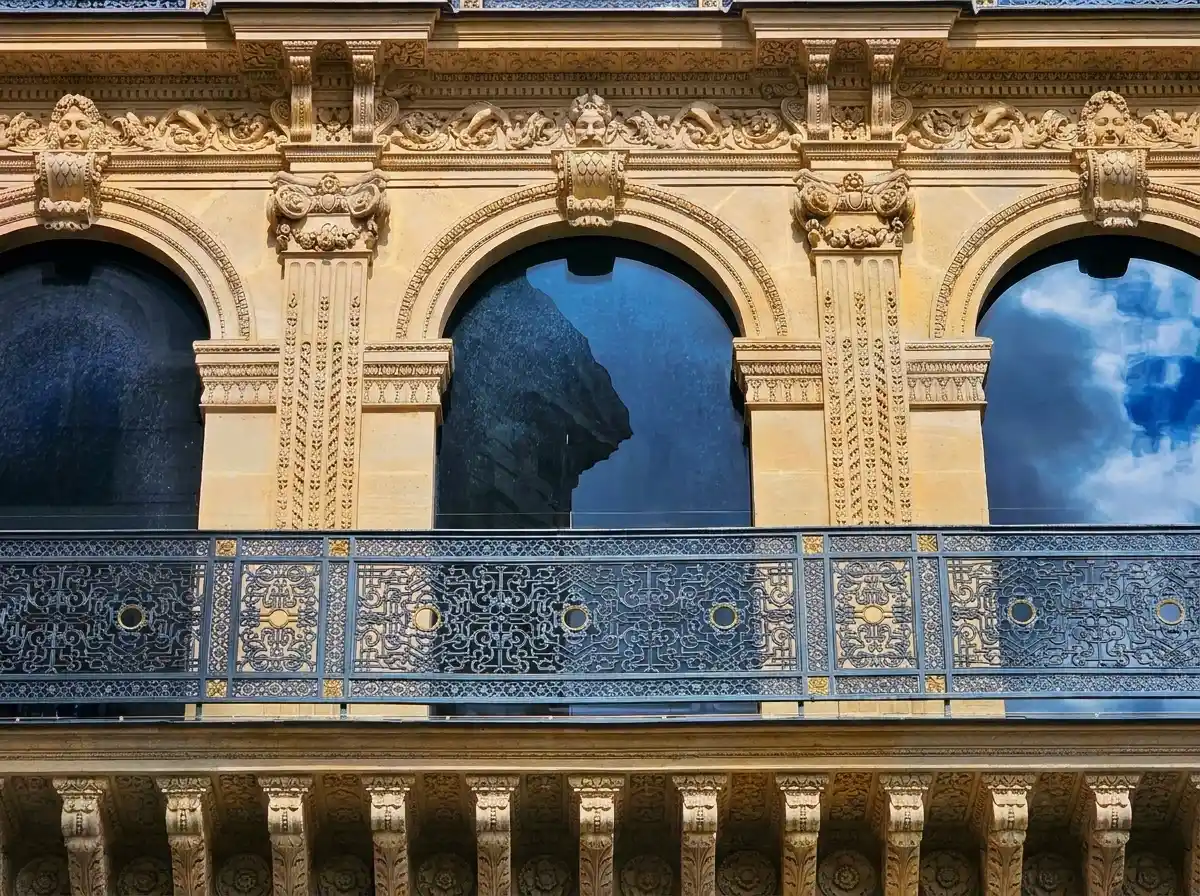
The restaurant closed in 1902, and in 1974 the BNP bank bought the building and planned to demolish it. The Minister of Culture, Maurice Druon (1918–2009), stopped the demolition at the last minute, and the architect Pierre Dufau (1908–1985) built a modern office building behind the original facade. Stop in front of number 20 and look up: the carved stones, the balconies and the frieze that surrounds the building are all that remains.
The hall that burned twice
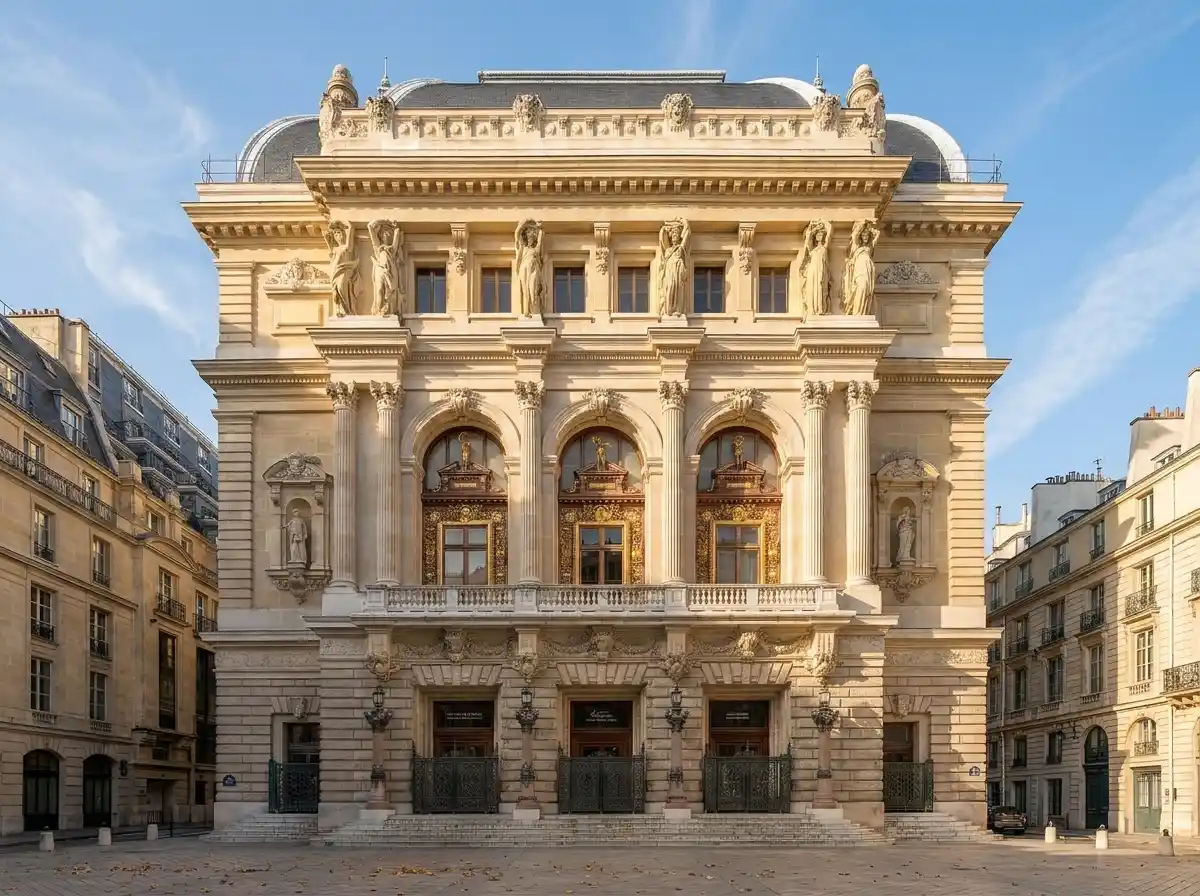
A short detour south of the boulevard leads to the Place Boieldieu and the Opéra-Comique, also called the Salle Favart after the playwright Charles Simon Favart (1710–1792). The hall you see is the third in the place, and this is not a curiosity but the result of two fires.
The first hall was inaugurated in 1783 in the presence of Marie Antoinette (queen from 1774 to 1792), and burned down on the night of January 14, 1838, after a performance of “Don Giovanni,” due to a malfunction in the heating system. The second hall opened in 1840, and it was where several of the most important works in the French repertoire were first performed: “Carmen” by Georges Bizet (1838–1875) on March 3, 1875, followed by “Les Contes de Hoffmann,” “Lacme,” and “Manon.”
On May 12, 1887, the Minister of the Arts was asked in the Assembly of Deputies about the safety of theaters, and replied that there was no theater that had not burned down, and therefore it was likely that the Opéra-Comique would burn down as well. The minutes note laughter in the hall. Thirteen days later, on May 25, 1887, at nine o’clock in the evening, during the first act of “The Minion,” the gaslight above the stage ignited the scenery. 84 people were killed.
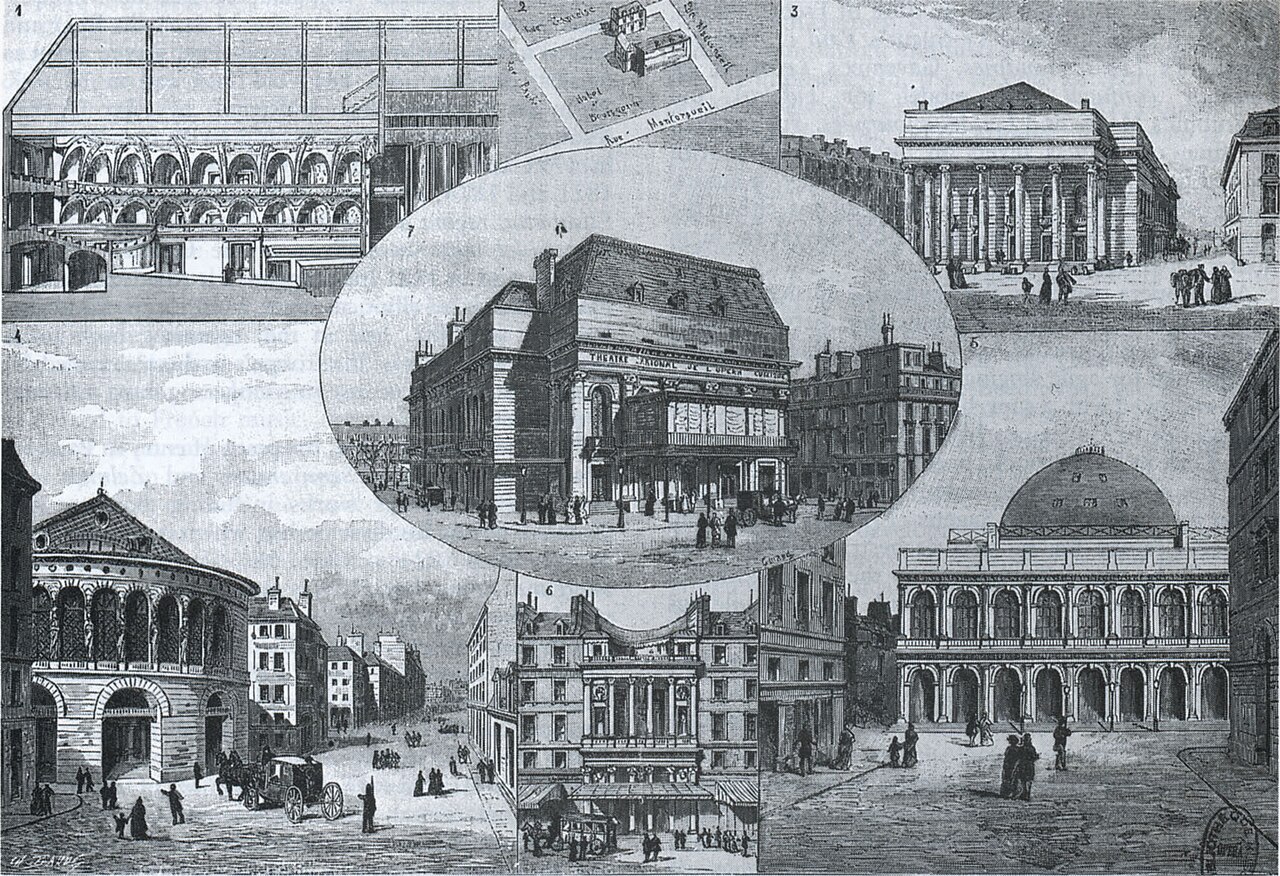
The theater's director, Léon Carvalho (1825–1897), was prosecuted and acquitted on appeal, and following the disaster, electric lighting and an iron screen were made mandatory in every theater in France. The third theater, designed by Louis Bernier (1845–1919), was inaugurated on December 7, 1898, in the presence of President Félix Faure (1841–1899), and is the one that still stands today.
The auction house and the municipality
9 rue Drouot , and opposite 6 rue Drouot
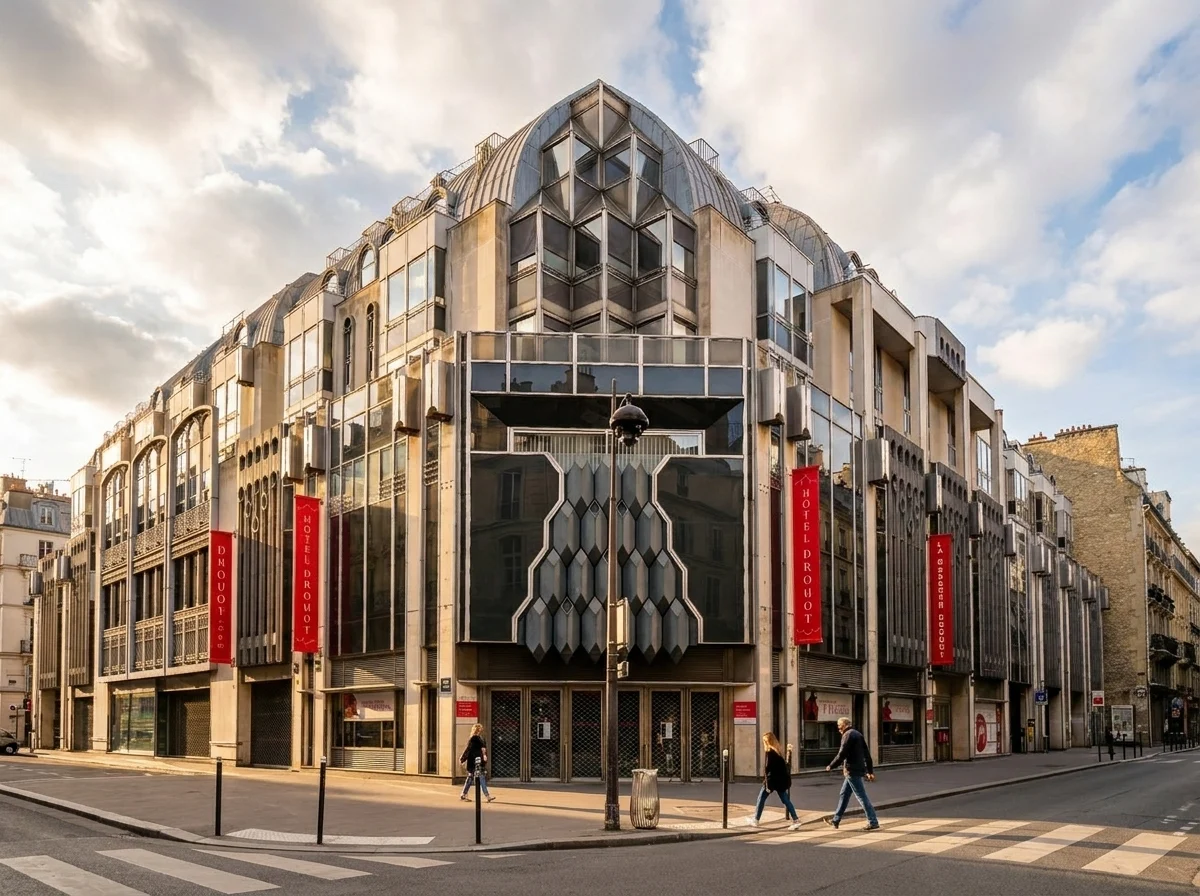
At number 9 stands Hôtel Drouot, the world's oldest auction house still in operation. The Paris Chamber of Jury Valuers was founded in 1801 on the initiative of Napoleon I, and it was they who purchased this plot of land in 1850 and built a central auction hall on it. The building opened on June 1, 1852 with 14 rooms, and is named after the street, which was named after General Antoine Drouot (1774–1847), Napoleon I's third lieutenant, who accompanied him to Elba.
Everything that was sold in France passed through here: Ingres' estate in 1867, Courbet's in 1881, Manet's in 1884, the Goncourt brothers' collection in 1897, and Degas's studio in 1918. During the years of the German occupation, Jewish property that had been looted was sold here, and from July 1941, Jews were banned from entering the building. In the 1920s, the house embarked on extensive research efforts to reconstruct the origin of these items.
The original building was demolished in 1974 and the sales moved to the empty Orsay train station for five years before it was converted into a museum. The current building, designed by Jean-Jacques Fernier (1931–2020) and André Biro (1926–2017), was inaugurated on May 13, 1980, and was described by its designers as a surrealist interpretation of Haussmannian architecture. You may not like it, but admission is free and you can wander the halls and see a real sale taking place, which is an experience in itself.
Three houses down the street, at number 6, stands an 18th-century hotel that now houses the 9th arrondissement town hall. It was built between 1746 and 1748 for Alexandre Estienne, baron d'Augny (died 1798), a tax collector who was one of the few in that position not to be executed during the Revolution. He simply remained locked up in his house.
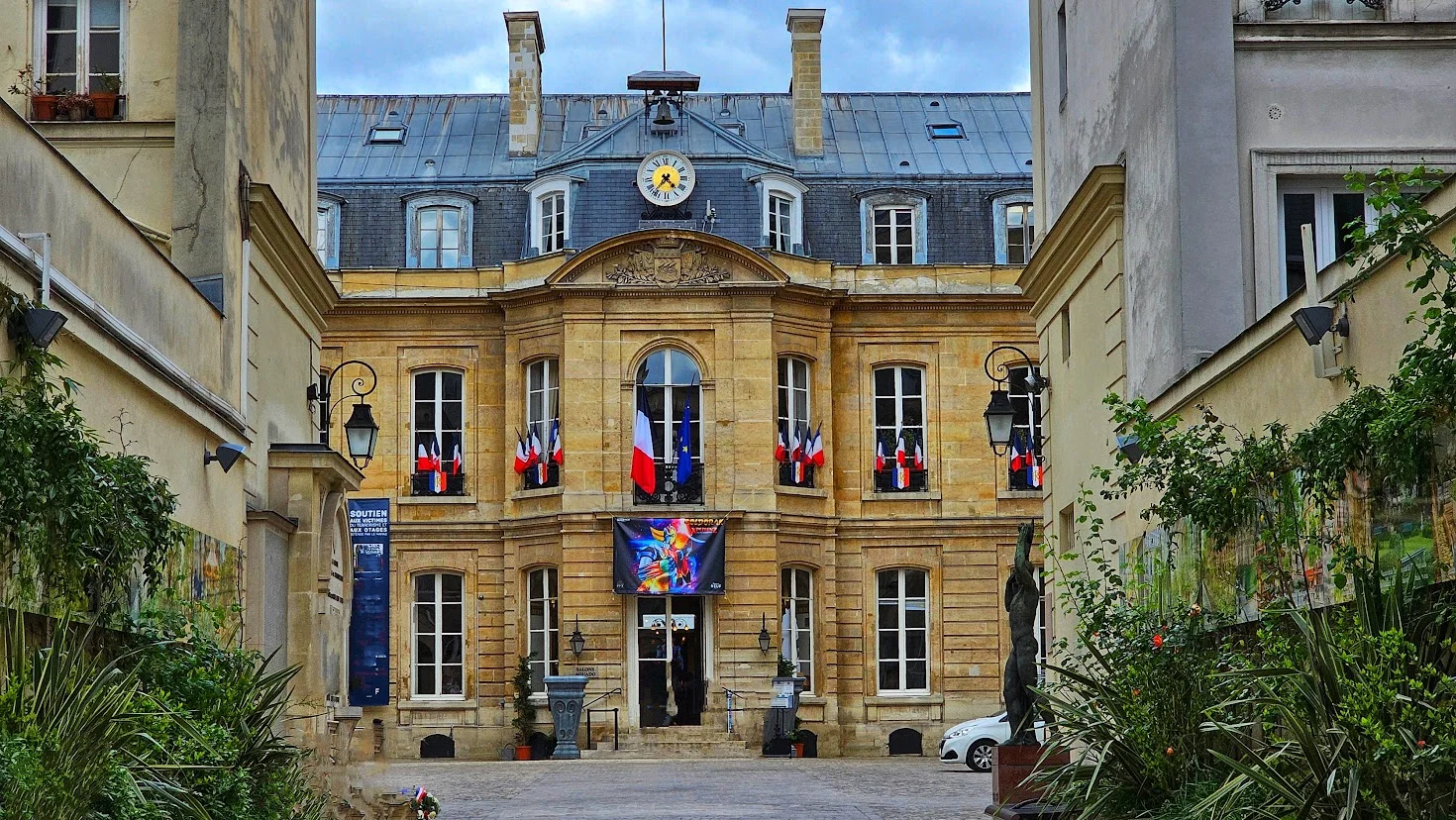
After his death, the house became the Cercle des Étrangers, one of the most famous gambling houses in Europe, where people came to attend masquerades. Anonymity and cards are a dangerous combination: one of Joséphine's court ladies lost so much money there that she was expelled from the Tuileries. In 1829, the house was purchased by the banker Alexandre Aguado (1784–1842), banker to the King of Spain and Rossini's patron, and the city acquired it in 1849. Among its young clerks in 1864 was a 20-year-old clerk named Paul Verlaine (1844–1896).
Passage Jouffroy and the Graben Museum
At 10 Boulevard Montmartre, the Passage Geoffroy was opened , and it was built between 1845 and 1846 and opened to the public on February 17, 1847. It was carved out of the very garden of the same hotel on rue Drouot that we saw a moment ago, and at that time part of the garden was sold to the company that initiated it.
Two innovations made it a sensation. It is the first Parisian arcade built entirely of iron and glass, and the first to be heated through the floor. It is 140 meters long and four meters wide, and the small steps in the middle are not a whim but a solution to the height differences in the three lots on which it was built.
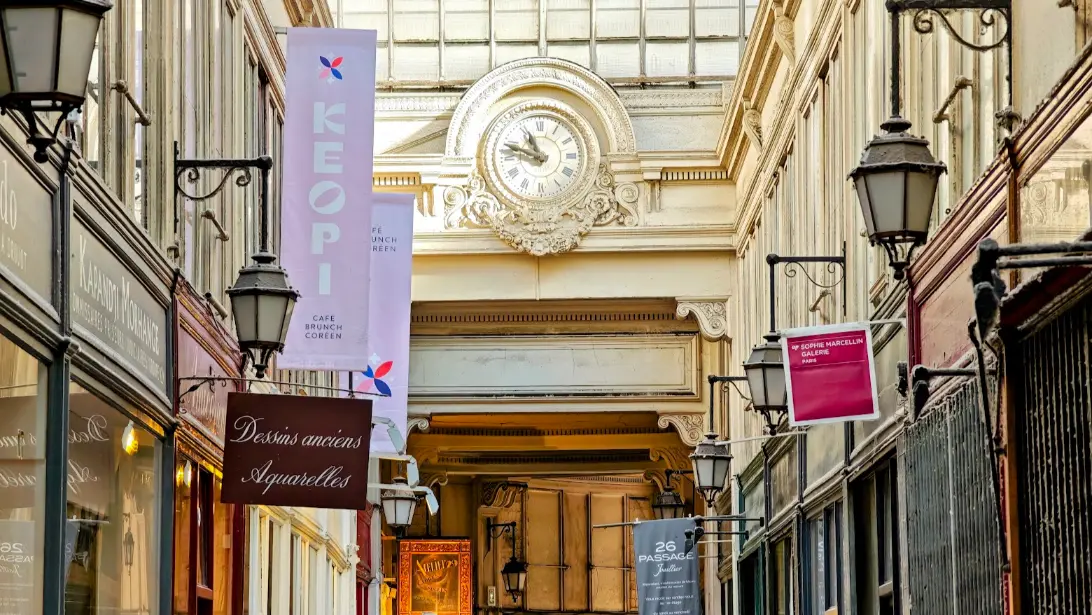
At number 46 inside the passage is the Hôtel Chopin , a hotel that opened with the passage in 1846 and was originally called the Hôtel des Familles. It was renamed in honor of the composer, who passed through the passage on his way to the Pleyel piano showrooms. There is a version that he met Georges Sand here, but this has never been verified.
Inside the passage you will find the exit from the famous wax museum, the Gervan Museum (the entrance is from the street).
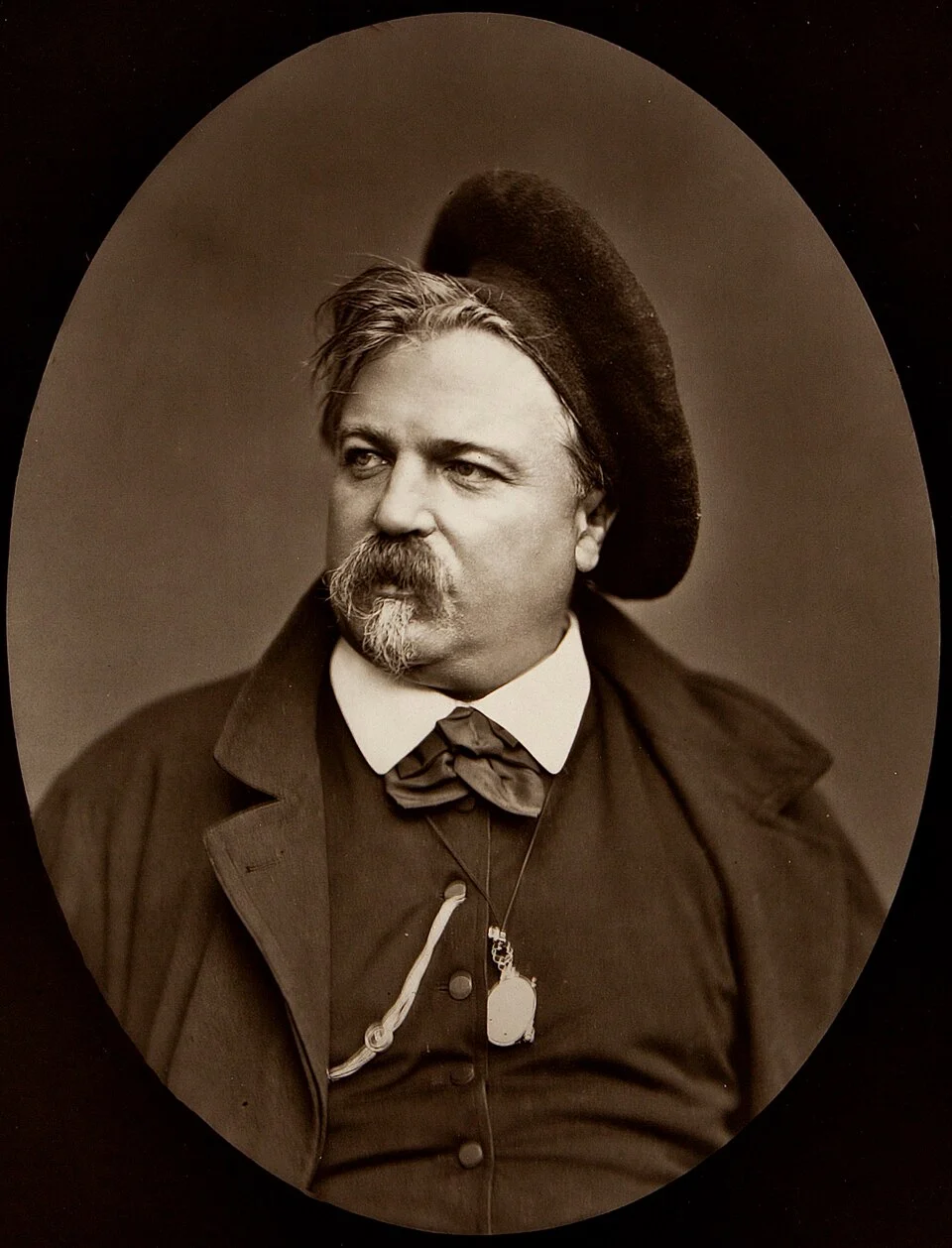
Alfred Grévin (1827–1892) was a caricaturist, sculptor, and theatrical costume designer, and his name was much better known in Paris than that of his associates. That is why the museum bore his name, even if the idea was not his.
The idea came from Arthur Meyer (1844–1924), editor of the newspaper Le Gaulois, who wanted his readers to be able to see the faces of the people he wrote about. Photojournalism was not yet possible at the time, so the answer was wax. The museum opened on June 5, 1882, and its success was immediate. The man who turned it into a stable business was financier Gabriel Thomas (1854–1932), the same man who also headed the company that operated the Eiffel Tower and the Champs-Élysées Theater.
And by the way, the most surprising detail in this museum is related to our station number 3. From 1892 to 1900, Émile Reynaud (1844–1918) presented his illuminated pantomimes here, cartoon animation films projected on a screen to a paying audience. This was three years before the Lumière brothers' projection, about two miles west of here.
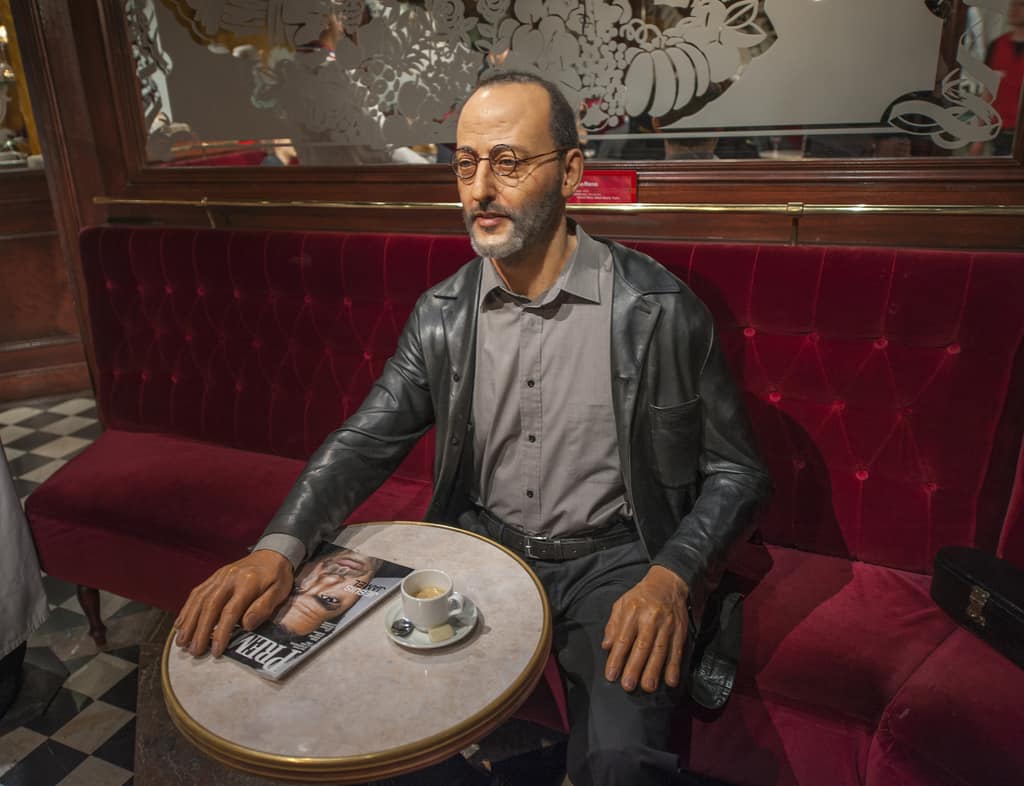
The museum is open Monday through Friday from 10:00 AM to 18:00 PM, and on weekends, holidays, and vacations from 9:30 AM to 19:00 PM, with the last admission an hour before closing. An adult ticket costs about €26, and a fixed-date ticket booked in advance online is cheaper. The visit takes about an hour and a half. You can also book a ticket at Tiqets , which also sells combination tickets with other attractions in the city.
passage Verdeau: the silence at the end
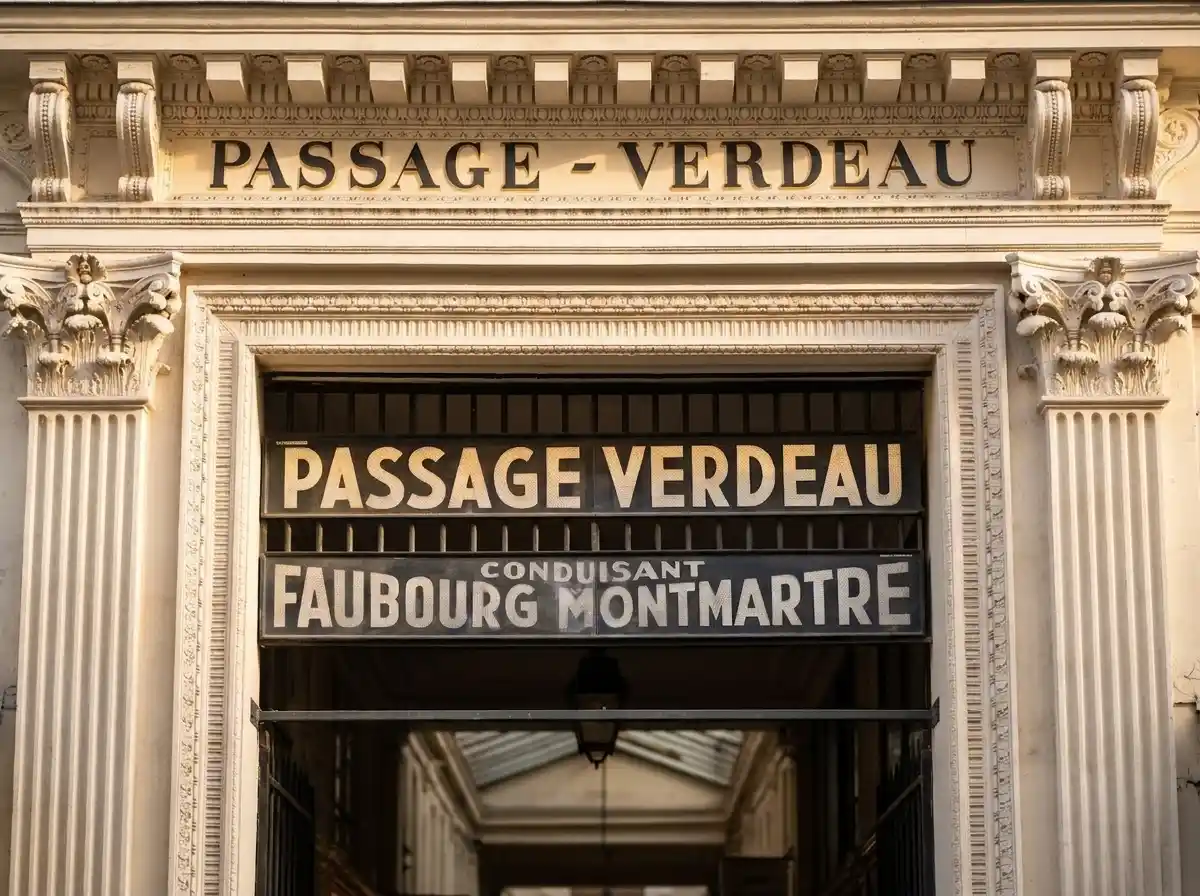
At the northern end of passage Jouffroy, cross rue de la Grange-Batelière and enter passage Verdeau, built in the same spirit and named after one of the partners in the company that initiated both. Its ceiling is built like a fish bone, and the light that falls from it is the real reason to come here.
This is the quietest of the three, and the shops in it are appropriate to its character: used books, antique prints, old cameras and postcards. Those who continue south and cross the boulevard reach the Passage de Panorama , and together the three make up the long indoor walk in Paris (if the passages have caught your eye, the full passage route awaits you in a separate article).
This is where the route ends, and this point is particularly convenient: those who are hungry will find nearby rue du Faubourg Montmartre with the old candy store À la Mère de Famille and the huge canteen Bouillon Chartier, and those who are just tired will find two metro stations a minute away. What do you say, stop here or continue north to the foot of Montmartre?
Accommodation on the Grand Boulevards
The big advantage of staying in this area is the transportation: three metro lines in one stop and a short walk to anywhere in the city center. These are three hotels that are on the route itself or just a few minutes away, and you can find the full list in the article about hotels in the 9th arrondissement.
-
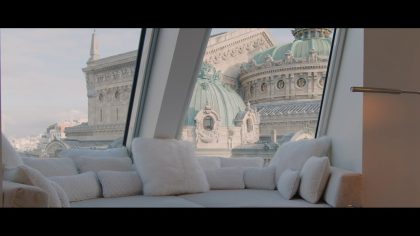
InterContinental Le Grand
This is exactly the building from station number 7 on the route: Le Grand Hôtel which Empress Eugénie inaugurated on May 5, 1862, with Café de la Paix on the ground floor.
Its opera salon, with a 14-meter-high ceiling, is listed as a historical monument, as is the café hall. The hotel stands directly opposite the opera, and now has around 470 rooms after a renovation by Pierre-Yves Rochon. However, note that only some of the rooms face the opera and are priced accordingly. I still recommend them, as that is the whole point of sleeping here.
-

Chouchou Hotel
On rue du Helder, about a four-minute walk from Opera Square and on the axis of the route.
63 rooms ranging from 14 to 46 square meters designed by Michael Malapert, with fish parquet, cornices and nods to French pop culture: the suites are named after songs by Edith Piaf and Serge Gainsbourg. On the ground floor there is a guinguette with a stage for live performances and two food stands, one for seafood and one for charcuterie and crepes. Note that the cheaper rooms are only 14 square meters, so I recommend upgrading to at least a Superior.
-

Diva Opera Hotel
A small hotel in the heart of the Grands Boulevards area, with theaters and neighborhood cafes all around and the Drouot auction house a short walk away.
Paintings of famous opera divas hang on the walls. Breakfast is based on organic and local products, Viennese pastries are baked on site every morning, and free tea and coffee are replenished in the rooms every day. Note that the rooms are small and that a balcony costs an additional 15 euros per night and must be requested in advance. I recommend requesting it anyway, as some balconies overlook the Folies Bergère.
Questions and answers about the route on the Grand Boulevards
How long does the route take and is it difficult?
Do I need to book tickets in advance for the Opéra Garnier?
What day is best to go?
Is the route suitable for children?
Where can I stop for food on the way?
How do we proceed from here?
More on the subject