

in short
- מה זה: An iron tower inaugurated in 1889 for the World's Fair, it rises to a height of about 330 meters and receives more than 7 million visitors a year.
- Opening hours 2026: From early September to mid-June: 09:30 to 23:00 (last admission 22:45). From mid-June to early September: 09:00 to midnight.
- Tickets: The official website releases tickets 60 days in advance at 08:30 (French time), and they are snapped up within minutes. For those who missed it: third-party providers like Tiqets and GetYourGuide hold spare stock at a slightly higher price.
- Official prices (adult): Stairs to the 2nd floor: approximately €14.80; Elevator to the 2nd floor: approximately €23.50; Elevator to the summit: approximately €36.70; Stairs to the 2nd floor plus elevator to the summit: approximately €28.
- Important Information: The stairs only go up to the 2nd floor, and the stairs above are closed to the public. Those who want to continue to the top take the elevator from there, with a combined ticket.
- New from September 29, 2026: Groups of more than nine people must purchase tickets in advance online. Individual visitors can continue to purchase tickets at the box office, including for the day.
- How to get there: Metro line 9 to Trocadéro station gives the most impressive photo opportunity. Line 6 to Bir-Hakeim station and RER C to Champ de Mars station are physically closer.
- Before leaving: There is no storage in the tower and luggage is not allowed. Floors 1 and 2 are wheelchair accessible, the summit is not.
- Recommended timing: An hour before sunset: We go up in daylight and come down when Paris is already lit up.
Let's be honest for a moment: You can't visit Paris without saying hello to the Iron Lady. Since 1889, it's been the undisputed symbol of the City of Lights, and with over 7 million visitors a year, it's also one of the busiest. After dozens of visits to Paris, one climb that I remember in detail, and years of tracking prices, queues, and policy changes, I've compiled here everything you really need to know for 2026.
We'll talk about everything: how to get tickets when the official website crashes, why you're not allowed to come with a large bag this year, which direction is best to arrive from to get the perfect photo, and whether it's worth investing in the restaurants inside.
Full transparency: This guide was written after dozens of visits to Paris and includes my genuine recommendations. Some of the links in the post are affiliate links. If you book through them, the site will receive a small commission. At no additional cost to youThis helps me continue to maintain “Francophiles Anonymous” – thank you!
Tickets and skip the line
In short: Try the official website about two months in advance; if it's sold out, a third-party provider like Tiqets is the surest way to guarantee entry without standing in line.
Here's the hard truth about visiting the Eiffel Tower in 2026: Spontaneity is not an option. If we used to be able to get to the box office and wait half an hour, today that's history. Demand is huge, and the systems are collapsing.
How much will a ticket to the Eiffel Tower cost in 2026?
Official adult rates range from €14.80 for the stairs to the second floor to €36.70 for the elevator to the top. Youth ages 12 to 24 pay about half the price, and children ages 4 to 11 and visitors with disabilities pay about a quarter.
| Card type | Adult (25+) | Youth (12-24) | Children (4-11) and disabled |
|---|---|---|---|
| Stairs to the 2nd floor | 14.80 Euros | 7.40 Euros | 3.80 Euros |
| Elevator to the 2nd floor | 23.50 Euros | 11.80 Euros | 6.00 Euros |
| Stairs to the 2nd floor plus an elevator to the top | 28.00 Euros | 14.00 Euros | 7.00 Euros |
| Elevator to the summit (3rd floor) | 36.70 Euros | 18.40 Euros | 9.20 Euros |
These are the official toureiffel.paris rates for 2026. Children under 4 enter for free, but must also be issued a zero-euro ticket at the time of booking.
The prices in the table are the official prices of toureiffel.paris, and are only relevant if you have managed to get hold of official stock. In practice, the gap with an external supplier usually ranges around tens of percent, and during peak season it may increase even more. It is worth comparing two suppliers before placing an order, and checking whether the difference justifies the peace of mind.
How to buy on the official Eiffel Tower website
The official website is toureiffel.paris , and it will always be the cheapest. The difficulty is not the price but the availability: tickets go on sale exactly 60 days before the date of visit, at 08:30 French time, which is 09:30 Israeli time . The time difference between Israel and France is fixed both in summer and winter, so this time never changes.
It's a good idea to be in front of the screen a few minutes before, with the date and time already set in your mind and the payment details ready. From what I've seen, the sunset and evening hours close first. If the board shows Sold Out, it doesn't mean that the tower is full, but that the online ticket quota for that day has closed.
Theoretically, the official Eiffel Tower website is the cheapest place to buy tickets. In practice? It's a battlefield. Tickets go on sale 60 days in advance at 08:30 a.m. ( French time ), and are snapped up within seconds by bots and agents. Most tourists I know go to the website, see a red calendar (Sold Out) and give up.
From this date, groups of more than nine people, including the guide, must buy tickets in advance online, for both the elevators and the stairs. Individual visitors are not affected by the change, and can continue to buy at the box office for the day.
🎁 Last minute armor
I've been working with Tiqets for years, and on recent visits I used them myself when there were no tickets left on the official website. The ticket is displayed directly from the smartphone and there's no need to print anything.
Booking tickets for the Eiffel Tower
All types are checked. Uncheck what you are not interested in, or simply click the button.
Showing all 21 options
- best seller
Reserved entrance to the summit + audio guide
The most popular ticket: entrance at a pre-determined time, elevator ride, and access to the summit.
This is the ticket that eliminates the line at the box office, but not the security check. Note that the summit is sometimes closed due to strong winds even when the lower floors are open. The audio guide is in English, not Hebrew.
Second floor by elevator + guided tour
Quick entry with a guide who tells the engineering story and points out the monuments from above.
The tour ends on the second floor and you can stay as long as you want. Those who want to go to the top can upgrade on the spot, subject to availability. The guide also handles the passage through security, which saves nerves during rush hour.
Climbing the stairs to the second floor
The cheapest option, and also the most satisfying: climb on foot through the iron skeleton with a guide.
674 steps to the second floor, at your own pace. Those who want to see the top can upgrade to the elevator instead. Not suitable for those with vertigo or toddlers, but it's the only way to see the building from the inside.

Meal at Madame Brasserie restaurant on the first floor
A meal in the first-floor restaurant, with floor-to-ceiling windows and a separate entrance that bypasses the line.
The price includes the elevator ride, so there's no need for a separate ticket. Madame Brasserie is the accessible version of the tower's dining; Le Jules Verne on the second floor has a Michelin star and is priced accordingly. It's worth requesting a table by the window when you book.

Dinner cruise + Tower admission + Moulin Rouge show
A complete Parisian evening in one package: the Eiffel Tower, dinner on the Seine, and a cabaret show at the Moulin Rouge.
This is the biggest expense on the list, and also the most packed evening. If you only have one evening in Paris and the budget allows, this solves all the dilemmas at once. If you have three evenings, it's better to split them up and save.
- Combined price

Eiffel Tower (second floor or summit) + Seine River Cruise
The most common combination in Paris: seeing the city from above, then seeing it from the water.
When booking, you choose whether to stop at the second floor or continue to the top. The cruise is separate in terms of time, so you can take advantage of it on a different day. My recommendation: First, the tower in daylight, and the cruise near sunset.
- Combined price
Paris City Card: City card for several attractions
A ticket that combines several major attractions, allowing you to choose between the Eiffel Tower and another museum.
The ticket also includes the Arc de Triomphe with rooftop access or Versailles, and a cruise on the Seine. It's only worth it if you actually take advantage of three or more attractions on adjacent days. Before buying, it's worth calculating the separate price of what you'll actually see.
- Combined price

Eiffel Tower and Palace of Versailles: Day Tour from Paris Including Train
An organized day that connects the two most sought-after monuments, including the trip to Versailles and back.
Eight hours is a long day, and the pace is not yours. Suitable for those who want to check off both places in one day and not bother with RER tickets and entry times. Those who like to linger in the gardens of Versailles will feel rushed.
- Combined price

Eiffel Tower (second floor + audio) + tourist bus tour
Entrance to the second floor with an audio guide, followed by a double-decker bus tour of the city's sites.
A convenient addition for your first day in Paris, when you want to get a mental map of the city without walking much. Note that this package has a relatively low rating on Tiqets, mainly due to complaints about the frequency of the buses.
- Combined price
Family cruise on the Seine + Eiffel Tower
This cruise is accompanied by a quiz for children about the secrets of the Seine, and is accompanied by a ticket to the tower.
A good option for families with elementary school-age children, who get tired of a regular cruise after ten minutes. The quiz is in English and French.
- Combined price

Louvre Museum with a guarded entrance + Eiffel Tower
The two attractions that are most difficult to get tickets for at the last minute, in one booking.
The Louvre ticket includes a guided tour of the masterpieces. Don't try to cram both into the same day: the Louvre alone requires a minimum of three hours, and the tower after it is a recipe for broken legs.
- Combined price
Eiffel Tower (Summit + Audio) + Louvre Museum
The same package, in a version that includes the ascent to the summit in advance and not just to the second floor.
The price difference compared to the second floor version is relatively small, and if you're going up anyway, the summit is worth it. The audio guide is included in the price.
- Combined price
Eiffel Tower (by stairs) + Louvre Museum
The economical version of the same package: Louvre with a reserved entrance, and a hike to the tower.
Suitable for those on a budget and not afraid of 674 steps. The tower is best done in the morning, when your feet are still fresh, and the Louvre in the afternoon.
- Combined price

Arc de Triomphe with roof access + Eiffel Tower
The two best viewpoints in Paris, a twenty-minute walk from each other.
From the roof of the Arc de Triomphe you can see the Eiffel Tower, and from the tower you can see the Arc de Triomphe. If you are a photographer, it is worth going up to the gate at sunset and the tower in daylight.
- Combined price
Palace of Versailles + Eiffel Tower
The ticket to Versailles includes the palace, gardens, and Trianon Estate, and is included with a ticket to the tower.
Unlike the organized day tour, here you arrive at Versailles on your own on the RER C and set the pace. Suitable for those who want to spend half a day in the gardens without a guide rushing them.
- Combined price

Outdoor tour of Notre Dame + Eiffel Tower
Guided tour around the cathedral and Ile de la Cité, combined with a ticket to the tower.
The tour is exterior only and does not include entry to the cathedral, which is free and requires a queue. Those who want to go inside must reserve a spot on the official app separately.
- Combined price
Eiffel Tower (by stairs) + Bateau-Mouche cruise
A walk to the second floor, and a classic Beto Moche cruise on the Seine.
This is the cheapest package on the list, and in my opinion one of the most affordable. In To Mosh, you leave from Pont de L'Alma, a short walk from the tower, so everything fits together in one afternoon.
- Combined price
Eiffel Tower (Summit + Audio) + Beto Moche Cruise
The same cruise, with the full ticket to the tower: elevator to the top and audio guide.
The right choice for those who don't intend to climb stairs and want to see the summit. Please note that the summit is closed in strong winds, in which case you will receive a refund for the difference.
- Combined price
Eiffel Tower (Summit + Audio) + Vedette de Pres electric cruise
And Det de Pree operate smaller electric boats, with a guide and without engine noise.
If the big cruises sound too crowded to you, this is the quieter version. The boats hold only dozens of passengers and the guide speaks live, not a recording.
- Combined price
Eiffel Tower (second floor + audio) + Vedette de Prey electric cruise
The same package, without the climb to the summit. Enough for those who come mainly for the view and the photos.
The second floor is, in my opinion, the best vantage point in the tower: high enough for a panorama, low enough to spot buildings. From the top, everything seems small and distant.
- Combined price
Tootbus Tourist Bus + Eiffel Tower
A daily ticket for the double-decker bus, and a ticket with access to the top of the tower.
A convenient combination for those coming to Paris for two days and wanting to cover a lot of ground with a little walking. The package has a low rating on Tiqets, so it's worth reading the reviews before booking.
You have not selected any card type, so there is nothing to display. Please select at least one option above.
My Tiqets discount code
Tiqets has agreed to give my readers a 5% discount on Eiffel Tower tickets. I send the code by email to those who sign up for my newsletter, and registration is free here.
Stairs or elevator?
In short: stairs = short and cheap line, elevator = convenience but significantly longer line.
This is perhaps the most common question I get, and the answer depends on only two things: how much time you have, and how much effort you are willing to put in.
The stairs only go up to the 2nd floor, as the stairs above are closed to the public. Those who want to continue to the top can do so from there by elevator, with a combined ticket (28 euros for an adult).
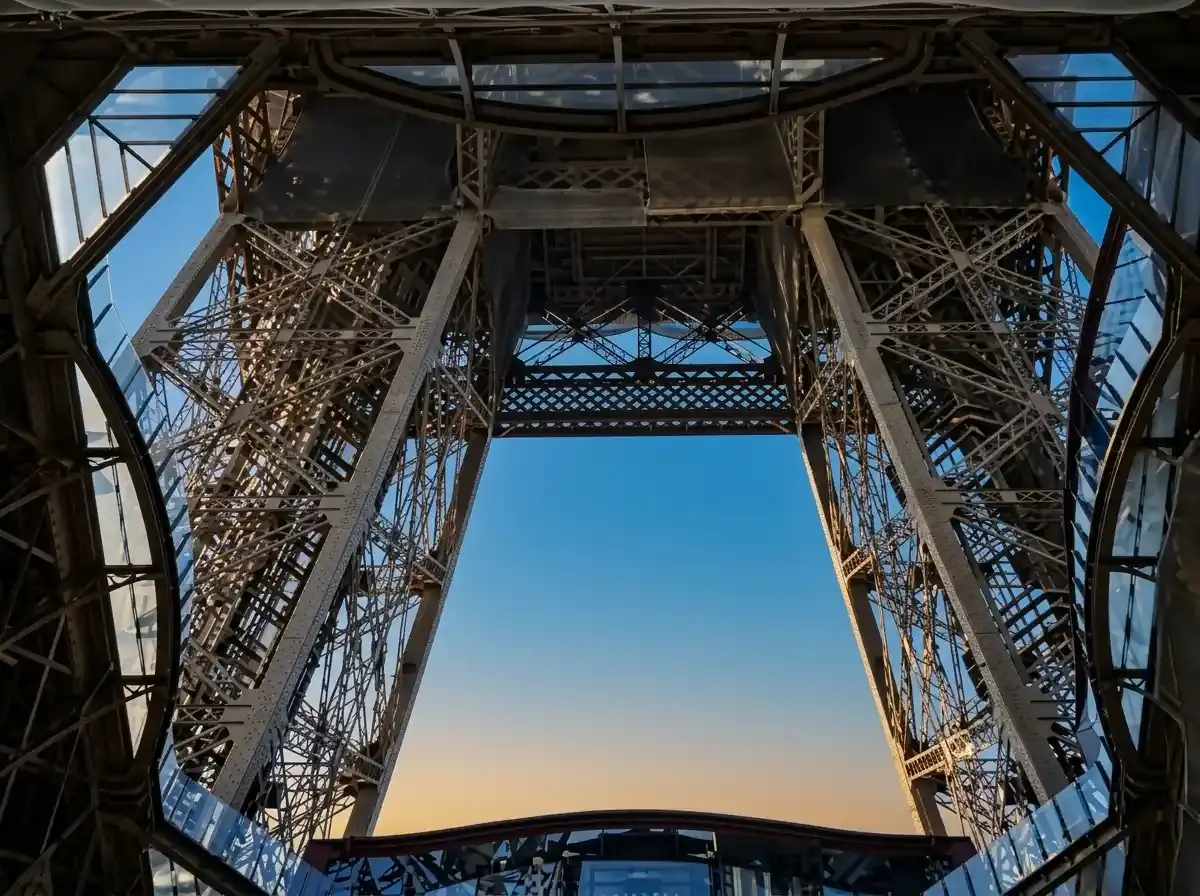
The sporty option (stairs)
- The effort: 674 steps.
- The turn: Usually significantly shorter (15-30 minutes).
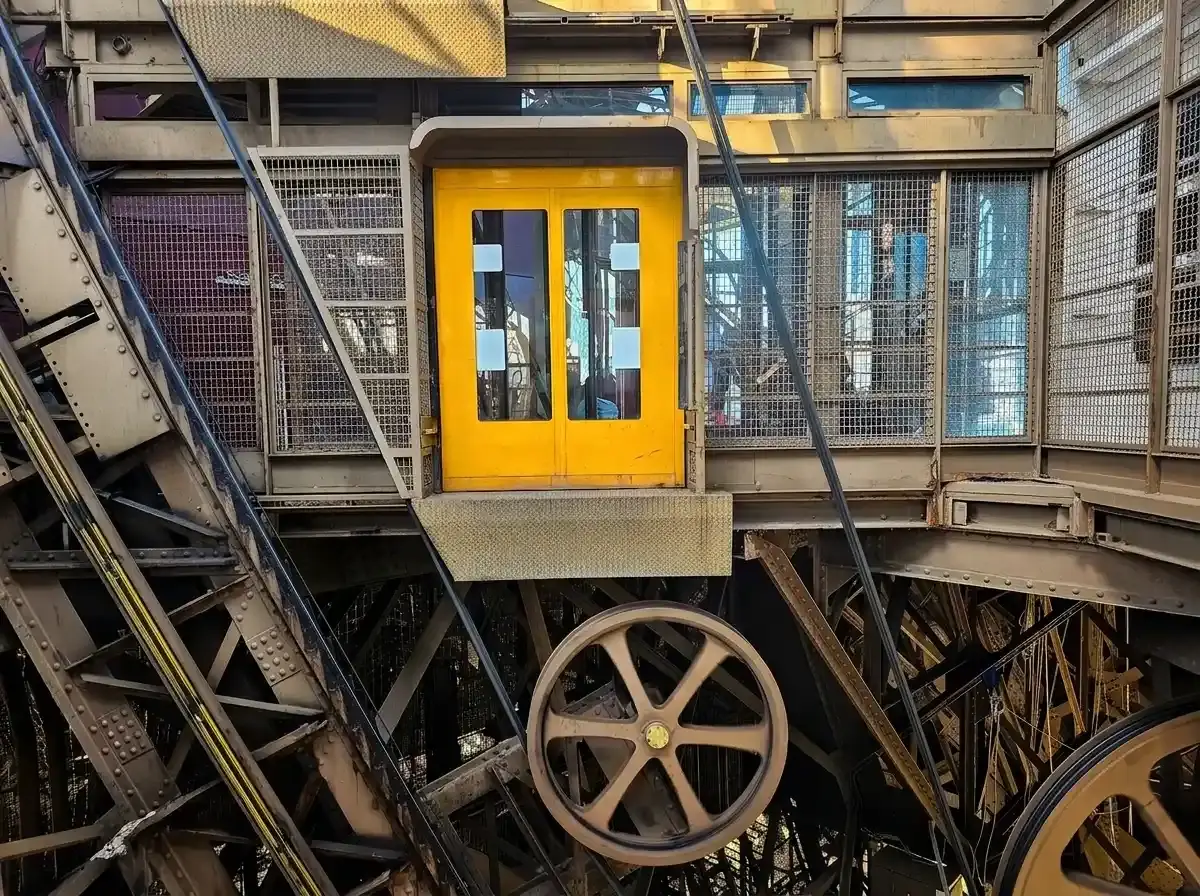
The luxurious option (elevator)
- The turn: Very long (up to two hours without a ticket in advance).
- The experience: Go up comfortably straight to the 2nd floor or to the top.
Opening hours, weather and bags
In short: The tower is open year-round, in winter until 23:00 PM and in summer until midnight. There is no storage for belongings, and in strong winds or heavy fog the summit may close at short notice.
Eiffel Tower opening hours 2026
- Early September–mid-June: 09:30 to 23:00 (last admission 22:45).
- Mid-June–early September: 09:00 to midnight (00:00).
Portfolio policy
Please note! There is no storage for belongings. No luggage is allowed, only reasonably sized bags. There is a security check at the entrance to the plaza, and it is worth adding fifteen minutes to your planning.
Weather and sudden closures
In the rain, the tower is open as usual, but the summit is a different story: in strong winds, lightning storms, or heavy fog, it sometimes closes at a few minutes' notice. If you bought a ticket to the summit and it's closed, ask at the box office what's on offer there. And my most useful tip: it's always colder up there than it looks from below, and the wind on the open terrace makes all the difference. An extra layer in your bag, even in April and September.
Renovations and closures in 2026
In short: The tower is undergoing its biggest renovation campaign in forty years, and the summit occasionally closes at short notice. It's worth checking the updates page on the official website the day before your visit.
Since 2019, the Eiffel Tower has been undergoing an unprecedented renovation and maintenance operation, and according to announcements from the operating company (SETE), it is expected to complete its most significant project in about four decades by the end of 2026. The overall plan, which is not due to be completed until 2031, includes an investment of approximately €380 million in maintenance and restoration.
Two things close the summit without notice. The first is maintenance work, which usually concentrates in January and February, the tower's slow season. The second is the weather: during summer heat waves, the summit is sometimes closed for an entire day (this most recently happened on August 14, 2026, when temperatures in Paris approached 40 degrees), and also in strong winds and lightning storms. In both cases, floors 1 and 2 remain open , and those who bought a ticket to the summit are directed to the box office to clarify the difference. It's worth checking the updates page on toureiffel.paris the morning of your visit.
Even on a completely normal day: the last elevator to the summit is an hour or more before the closing time of floors 1 and 2. Anyone who arrives at the last hour with a ticket to the summit may find that they only go up to the 2nd floor.
And if you're a history buff like me: In January 2026, a list of 72 names of female scientists proposed to be engraved on the tower was published, alongside the 72 names of scientists that Eiffel engraved there in 1889, and they are all men.
How do you get to the Eiffel Tower?
In short: Trocadéro station (line 9) provides the most impressive photo opportunity of the tower.
Once you have your ticket and time, there’s only one question left. The Eiffel Tower is visible from anywhere in Paris, but getting there properly is an art. Many people get off at the closest stop, but it’s the longer route that provides the biggest “wow.”
Metro 9 (Trocadéro station)
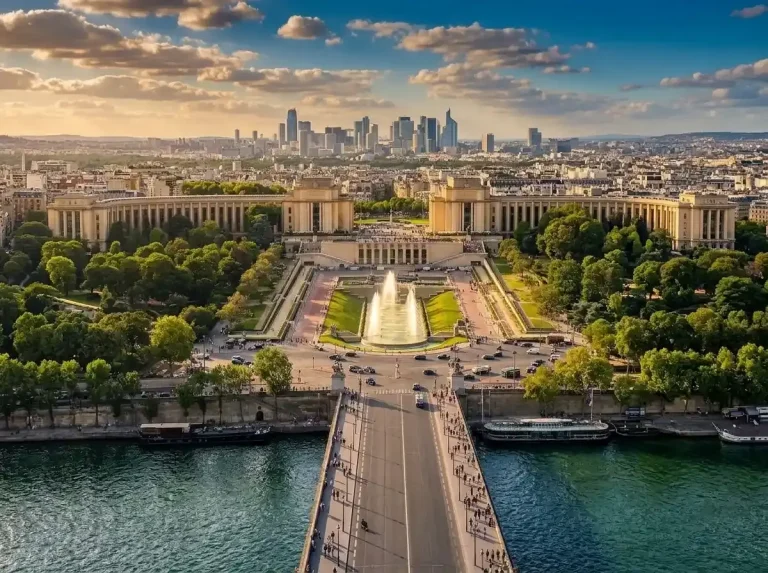
The Francophile's choice. As you exit the station and arrive at Trocadero Square, the tower appears before you in all its glory across the river. It's a classic photo spot.
Metro 6 (Bir-Hakeim Station)
It's about a 10-minute walk along the platform. The big advantage: the ride on Metro 6 is partly elevated, and the view of the tower from the car as you cross the Seine is very impressive.
RER C (Champ de Mars station)
The closest physical station. Excellent if you are coming from the Notre Dame or Orsay area and want to save walking.
Where is the Eiffel Tower photographed?
In short: Trocadero Square gives the classic picture, but five additional points give a picture that doesn't look like everyone else's. The most important rule: arrive before 08:00 AM or after dark.
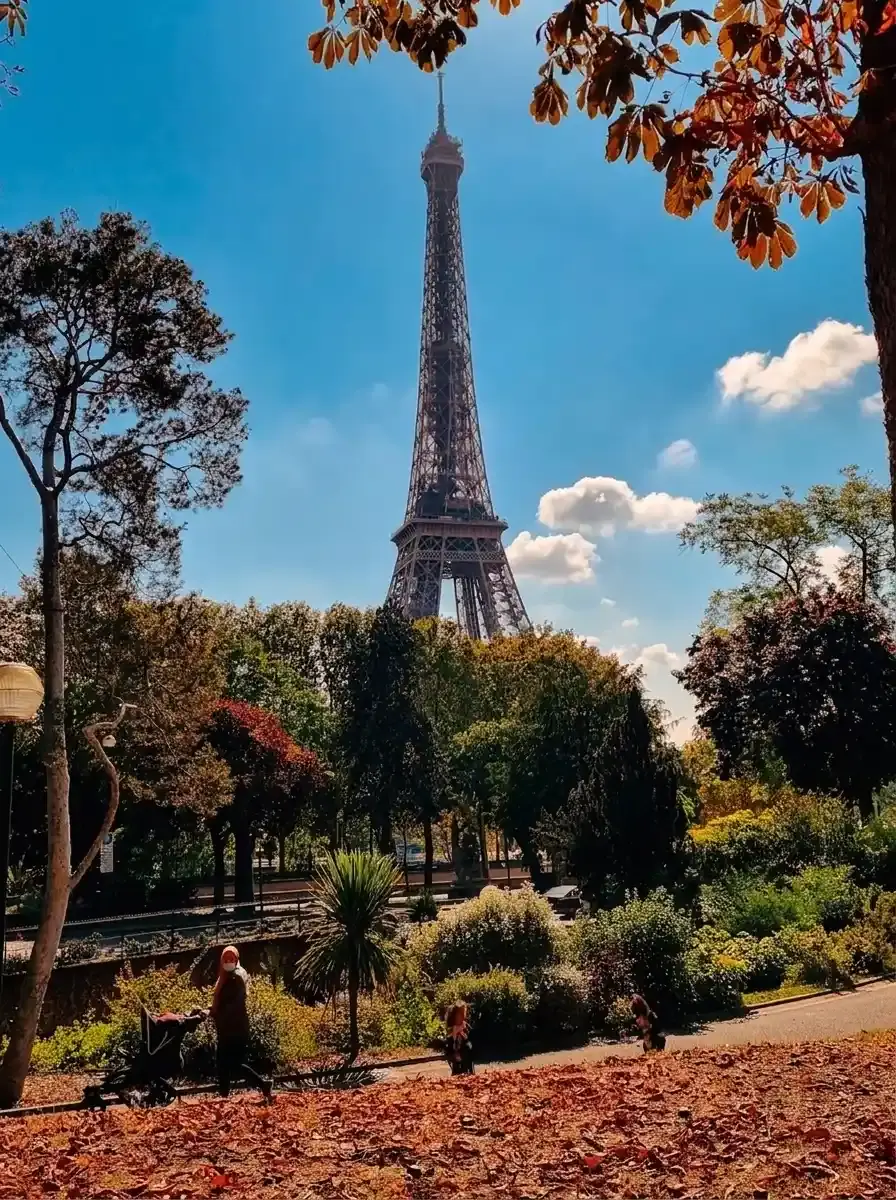
After dozens of visits, I learned that a good photo of the tower is not a matter of camera but of time and angle. At noon, the sun is behind the tower from the Trocadero direction, and it comes out in the photo as a dark spot lacking in detail. Here are the five points I return to, in the order in which I would have taken them.
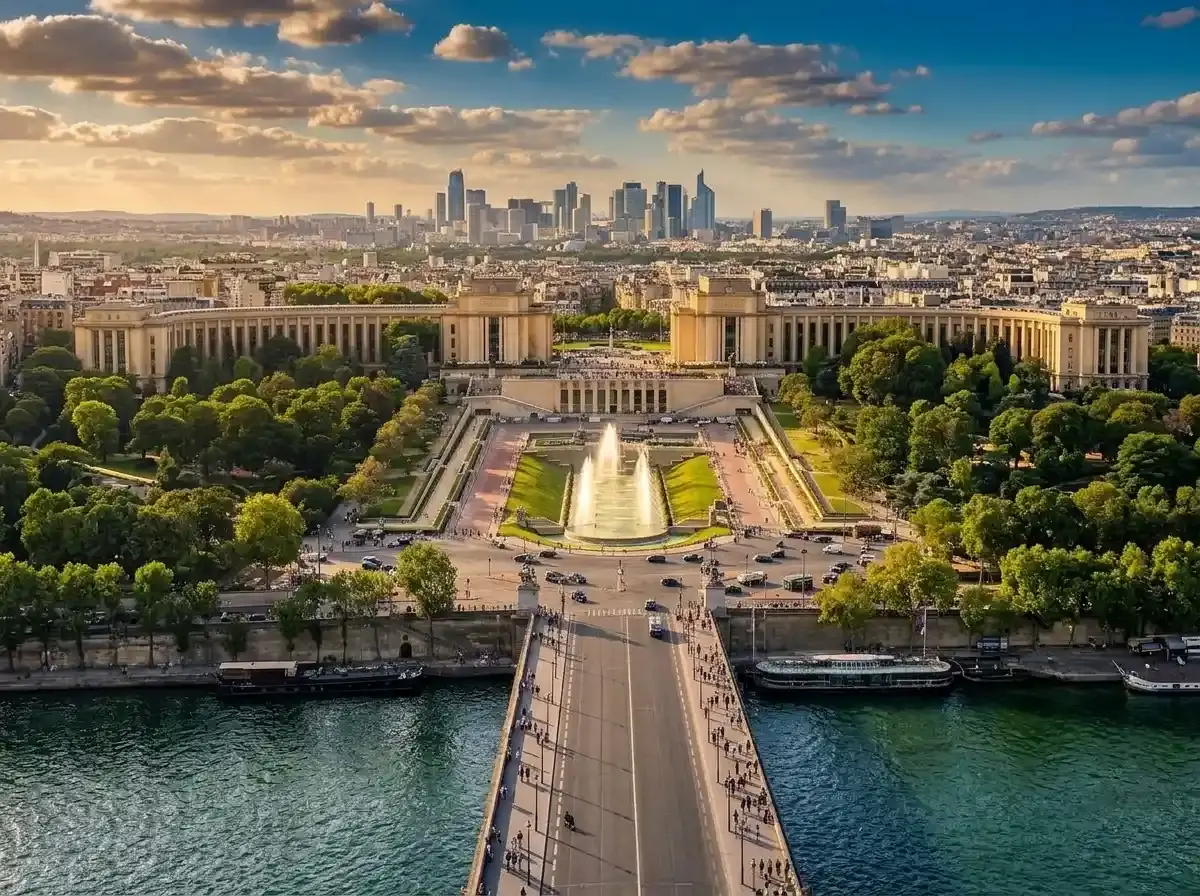
Trocadéro Square (Place du Trocadéro)
The classic shot. The tower at its full height across the Seine, with the Trocadero Gardens in the center of the frame. The square fills up around 09:00 AM and stays busy until nightfall, so I arrive at 07:00 AM. At this time, the sun illuminates the tower from the front rather than the back, which makes all the difference.
Rue de l'Université Street
At the corner of number 5, the tower fills the narrow street between the Haussmannian buildings. It's the image you've seen a hundred times on the internet, and there's a small line of cameras there as early as 8 a.m. Rue Saint-Dominique gives a very similar effect with far fewer people.
Bir-Hakeim Bridge (Pont de Bir-Hakeim)
The two-story Art Deco bridge, with its perspective-creating columns and tower at the end. If you're lucky, the Metro Skytrain will pass over you at just the right moment. The north side of the bridge is the right angle.
Field of Mars (Champ de Mars)
From below, from the lawns. This is the least impressive spot for a landscape photo and the best for photos with people: the tower looms above you, and you sit on the grass. In the summer, this is also the place for a picnic before the ascent.
Debilly Pedestrian Bridge (Passerelle Debilly)
The area's little secret. A pedestrian-only bridge between Trocadero and the Pont de l'Alma, from which you can see the tower over the Seine with the cruise ships passing below. Almost empty at any time of day, including sunset.
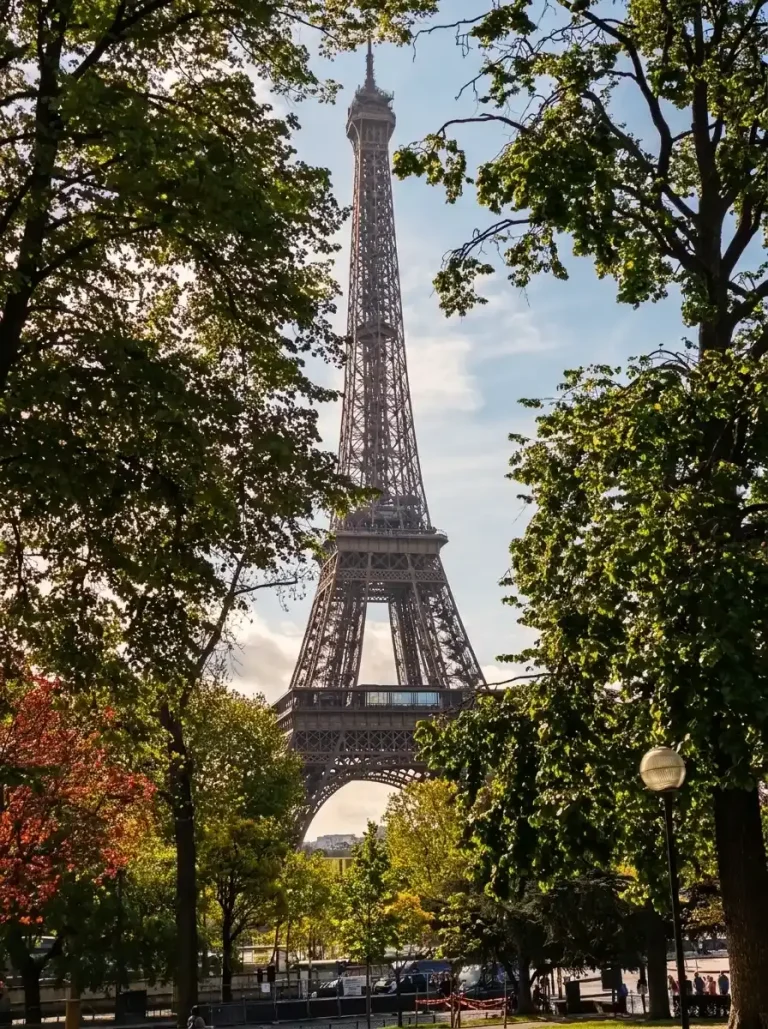
From my camera. I took all the photos here myself, and the time in the caption is the time they were taken. Notice how much the time changes the photo.
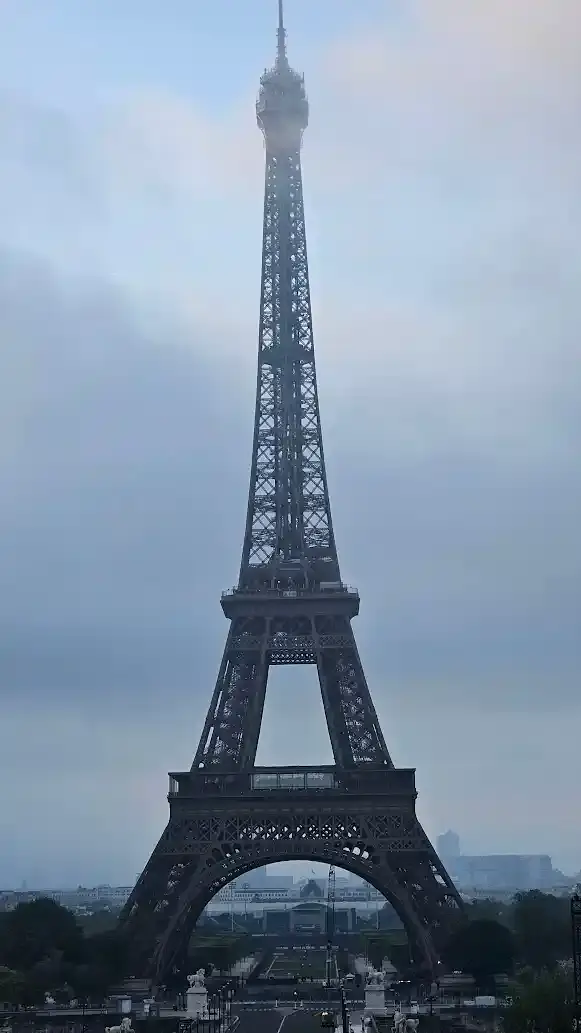
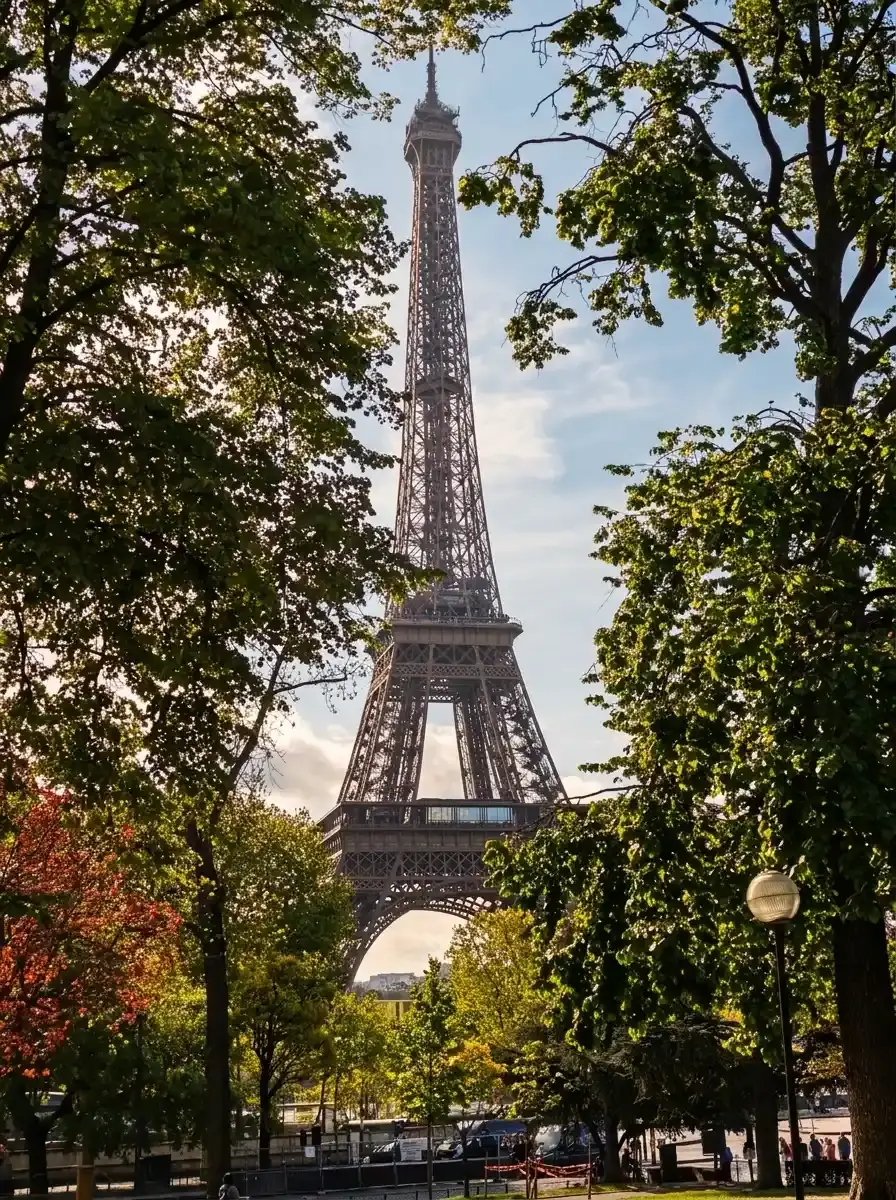
Wondering how to fit the tower into your first day in the city? Build yourself a free Paris itinerary and get a full schedule.
Eiffel Tower at night
In short: The tower sparkles for five minutes every hour, from dusk until the last glimmer of night. A point most visitors don't know: The tower's nighttime lighting is a copyrighted work, while the structure itself is in the public domain.
There are two ways to see the Eiffel Tower, and most people only know one. By day it is an impressive engineering structure. At night it becomes a spectacle, and in the legal sense even a work of art. It is worth planning an evening around it.
The Sparkle (Scintillement)
About 20,000 twinkling lights installed around the year 2000 are lit for exactly five minutes on the hour , starting at dusk. The last twinkle is at midnight, and when the tower is open late, from about late June to early September, at 1 a.m. Be there five minutes before the hour, not after.
The lighthouse at the top
At the top of the tower, two spotlights rotate, creating a rotating beam of light over Paris, similar to a lighthouse. It can be seen from a considerable distance outside the city, and it operates until curfew. If you stay in the 15th or 16th arrondissement with a window facing the right direction, you will see it passing over the wall.
Copyright on the lighting
The golden lighting, designed in 1985 by Pierre Bideau, is protected as a work of art. Publishing a night photo for commercial purposes requires permission from the operating company. A private photo that you upload to the Internet is not a problem. The structure itself is in the public domain, because Gustave Eiffel died in 1923.
The most beautiful way to see the tower illuminated is from the water. The cruise boats on the Seine leave right under it and pass in front of it just as it sparkles.
Scams in the Tower area
Locals will try to hand you a “gold ring they found” or tie a string bracelet around your wrist to aggressively demand money. Keep your hands in your pockets, ignore them, and keep walking.
Young women with a writing board ask if you speak English, and ask for a signature on a petition for some cause. The second you look down at the board, their hand or that of a partner goes into the bag. Don't stop and don't take the pen.
People walking around the plaza offering to sell you a ticket that someone has already canceled, or skip-the-line entry in cash. There is no such thing. The tower tickets are assigned to a specific time and scanned at the entrance, and you are left with a worthless piece of paper in your hand.
The two lines that lead to the tower are favorites of pickpockets in Paris, precisely because most of the passengers are tourists with phones in their hands. Bag in front, phone in an inside pocket, and heightened vigilance as soon as the doors close.
The vendors in the plaza will quote an absurd starting price and then happily compromise with you. It's not dangerous, just too expensive. If you really came for a souvenir, the official shops on the 1st and 2nd floors sell at a fixed price (and of slightly different quality).
Accessibility at the Eiffel Tower
In short: Floors 1 and 2 are fully accessible by elevator, the summit is not accessible to visitors with limited mobility, and there is a discounted price for a visitor with a disability and one companion.
The Eiffel Tower is largely accessible, but accessibility varies from floor to floor. It is worth checking in detail below what is true for the floor you plan to go to, before purchasing.
What is accessible on floors 1+2?
The first two floors are fully accessible via the large elevators, including the restaurants and shops. People in wheelchairs can reach them independently using the elevators.
What is not accessible at the summit?
The 3rd floor (the summit) is closed to visitors in wheelchairs or on crutches, for safety reasons: the emergency evacuation route from the summit is via narrow spiral stairs. Note the nuance that many miss: a visitor with a disability whose mobility is normal is allowed to ascend to the summit.
Tickets and discounts
There is a discounted price for visitors with disabilities, plus one companion (only one per visitor). An official certificate of disability must be presented, both upon purchase and to the staff at the entrance. The discounted ticket can be purchased in advance on the official website.
Preferred entrance and accessible restrooms
There is preferential access to the ticket offices and columns for visitors with disabilities and their companions. It is advisable to contact a staff member in the plaza immediately upon arrival. Accessible restrooms are located on the ground floor (behind the east column) and on the 1st and 2nd floors, and the 2nd floor has observation windows adapted to wheelchair height.
Eiffel Tower Inside: What's on Each Floor
1nd floor (57 m)
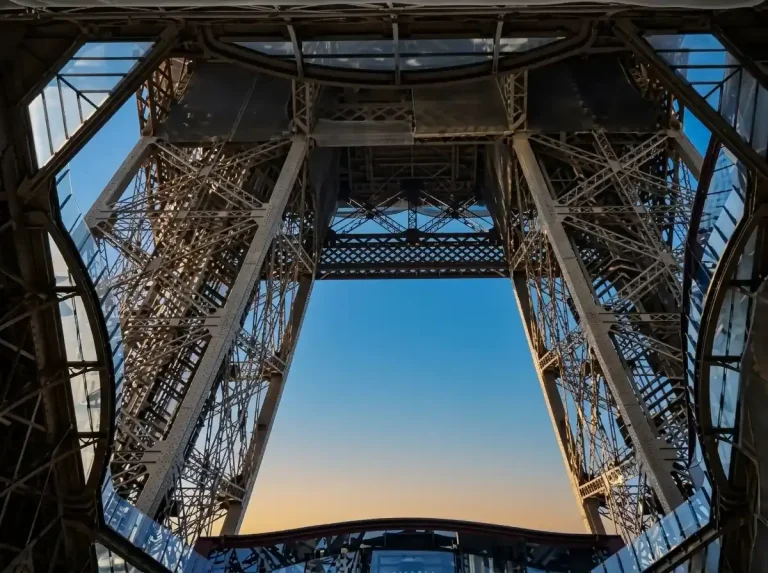
A transparent glass floor (scary and cool!), and the Madame Brasserie restaurant.
2nd floor (116 m)
The best vantage point for photography. The height is perfect for spotting the Louvre and Notre Dame.
The summit (276 m)
Gustave Eiffel's restored office, a champagne bar and a breathtaking bird's-eye view.
Eiffel Tower Restaurants
In short: Two formal restaurants, both by reservation only. Madame Brasserie on the 1st floor is the accessible option, and Le Jules Verne on the 2nd floor is a Michelin-starred tasting menu. A reservation for the restaurant does not include a tower business card.
???? ️ Madam Brewery
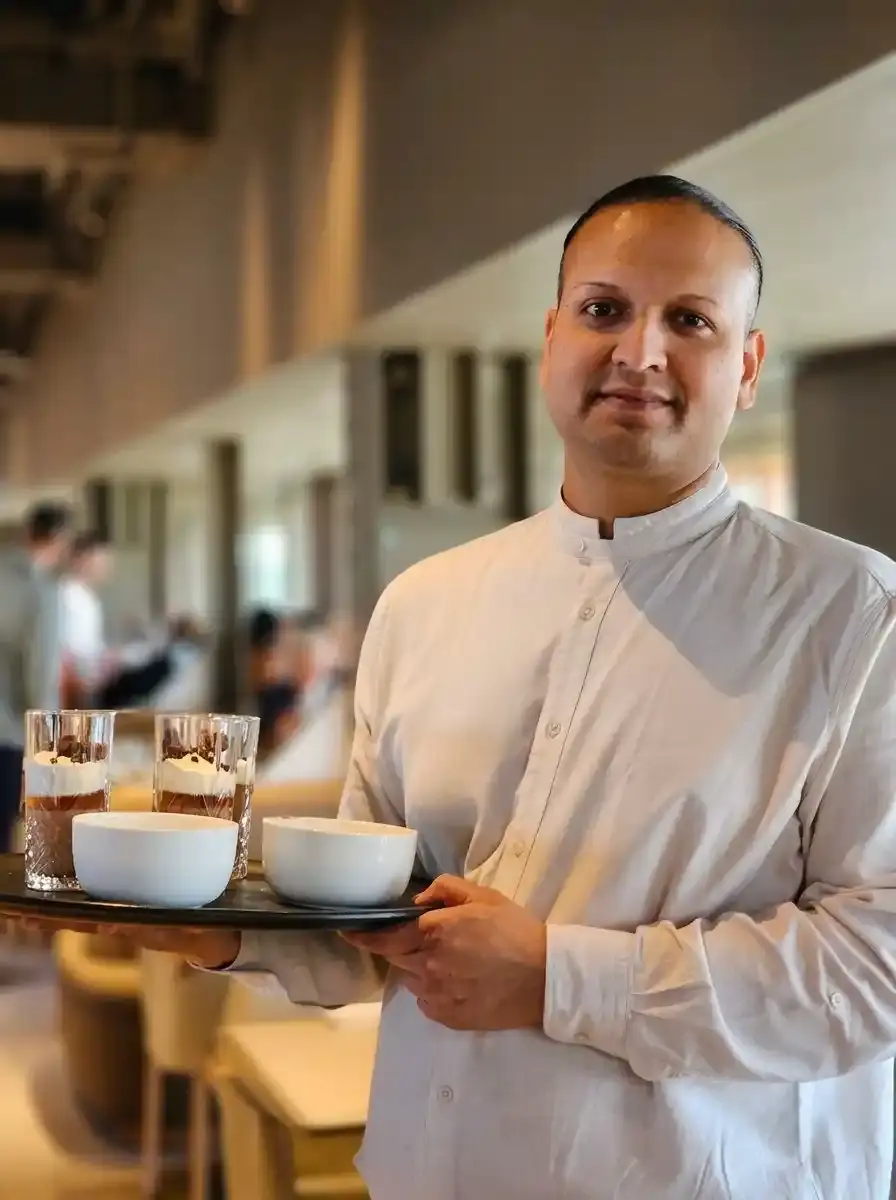
Chef Thierry Marx's restaurant is on the 1st floor, 57 meters high, with floor-to-ceiling windows. Lunch menus start at around €70 per person and dinner menus start at around €130 and up (as of August 2026, prices change frequently and it's worth checking the official booking website). The entrance for diners is separate and bypasses the elevator queue. It's also the right choice for families: there's a children's menu.
???? The Jules Verne
Chef Frédéric Anton's Michelin-starred restaurant is on the second floor, with a private elevator from the south pillar that bypasses all the lines. As of 2026, the restaurant serves tasting menus only: five courses from €295 and seven courses from €330 per person, before wine. There is a dress code (no shorts and no sportswear), and it is worth requesting a table by the window when booking. If the budget is too high and you just want the moment, the champagne bar at the top sells a glass for around €24, without a reservation.
Good restaurants within walking distance of the tower
The two restaurants above are inside the tower, and anyone who hasn't booked in advance won't get in. These are eight restaurants I checked out in the 7th arrondissement and surrounding areas, according to walking distance from the tower.
- Welcome, five minutes walk. Established since 1870 and run by the same family for three generations. Seasonal menu of classic French dishes, and excellent desserts. 14 Rue de Monttessuy.
- Aux Cherries, eight minutes. Small bistro with a limited menu, which is a point in its favor. Reasonable prices and good coffee at the end. 47 Avenue de Suffren.
- The Casseroles, eight minutes. French bistro with a serious wine list, traditional comfort food. 135 Rue Saint-Dominique.
- Zia, about fifteen minutes. Family-owned cafe and restaurant, and one of the best breakfasts in the area. 22 Avenue de Tourville.
- Belhara Bistro, about fifteen minutes. Traditional and modern French, good for a romantic meal. Midweek there is a starter, main course and dessert for about 36 euros. 23 Rue Duvivier.
- The Trade Cafe, about twenty minutes. A bustling neighborhood restaurant that locals love, with excellent steaks and fries. 51 Rue du Commerce.
- Mokus l'Écureuil, about twenty minutes. Thin crust pizzas, pastas and hamburgers, and it works well with picky kids. 116 Avenue Kléber.
- Corso Kleber, about twenty minutes. Italian with good pasta and gluten-free options, and breakfasts too. 79 Avenue Kléber.
Looking specifically for kosher? I've compiled the options by neighborhood in the guide to kosher restaurants in Paris.
Where to sleep near the Eiffel Tower
The 7th arrondissement (where the tower is located) and the surrounding arrondissements (15th and 16th) are considered the most prestigious and safest areas of Paris. Here are some apartments I've checked out in the area, and that I would happily sleep in myself. You can find more great options in our 7th arrondissement vacation rental guide.
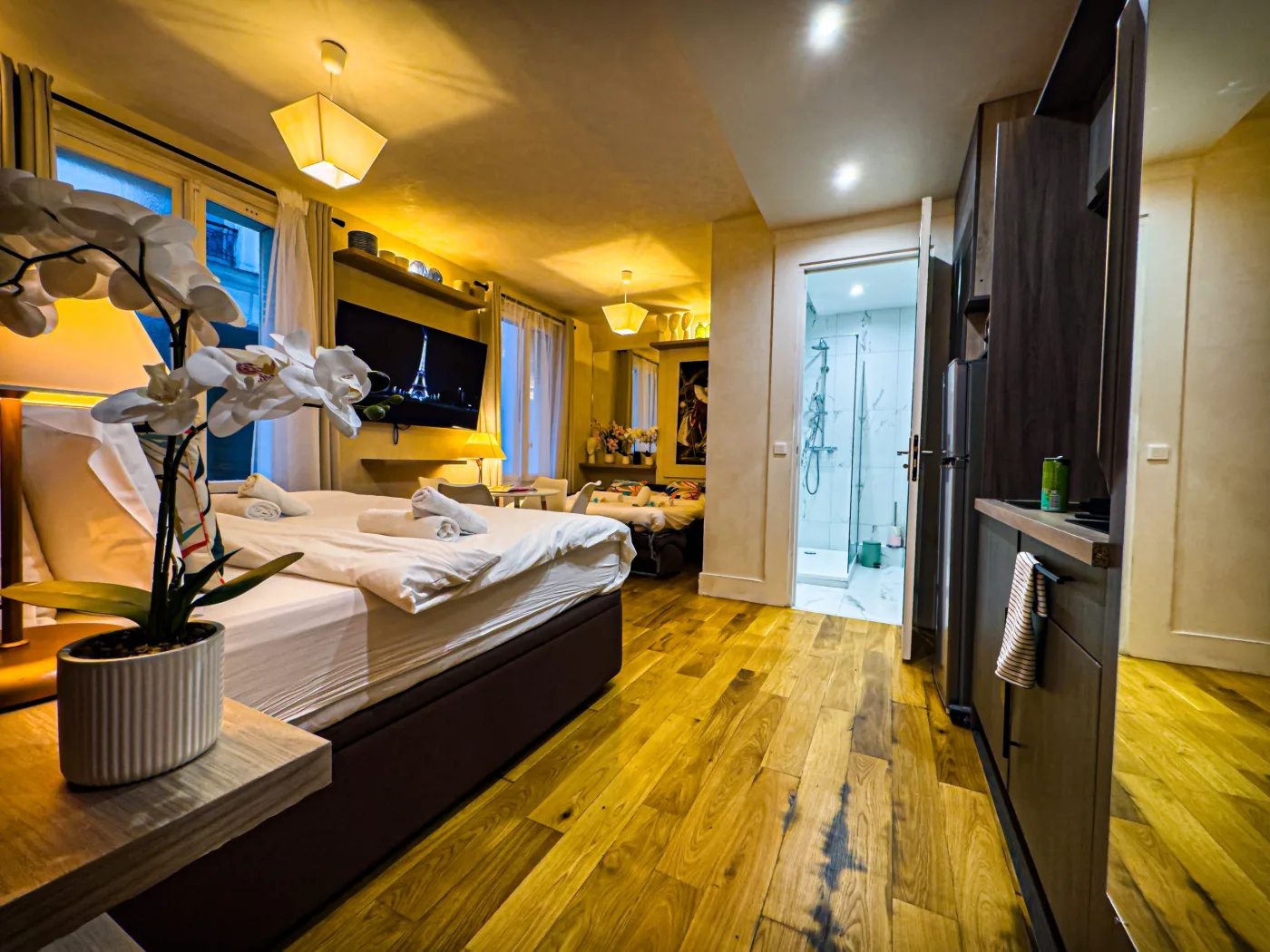
The apartment near the Eiffel Tower
- 200 meters from Trocadero Square
- Ground floor apartment (no elevator needed)
- View of the inner courtyard (quiet)
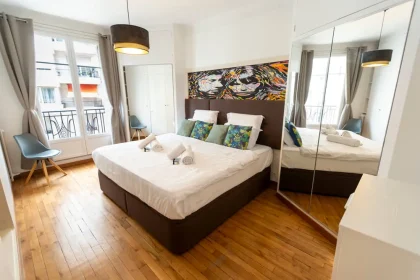
The apartment near Trocadero
- Two bathrooms (rare)
- 2nd floor with elevator
- Upscale neighborhood
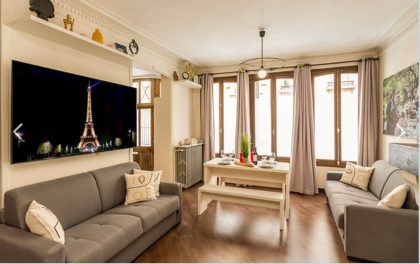
The apartment in the Passy district (16)
- Excellent for Sabbath keepers (ground)
- Beautifully equipped and luxurious
- Very quiet neighborhood
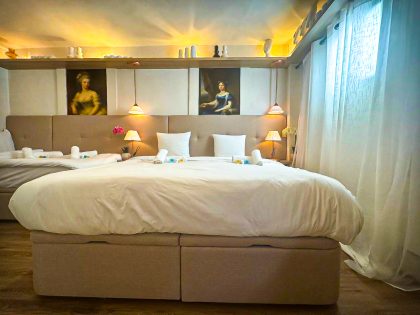
Apartment near the Arc de Triomphe
- Luxurious location near the Champs
- Sweet and decorated studio
- High floor (no elevator)
Looking for a hotel? Here are recommendations focused by neighborhood:
Attractions in the Tower Area
Cruise on the Seine
The sailing boats (Bateaux Mouches) depart right below the tower. A romantic and relaxing experience.
Ca Branly Museum
Other continental art in a magical garden, a few minutes' walk away.
Passy Cemetery
A small and peaceful cemetery within walking distance, fascinating for lovers of Parisian history and architecture.
Hiking trails in the tower area
Want to delve deeper into the area? Here are two detailed walking trails that will enrich your visit:
Hiking route in the Passi neighborhood
Discover the picturesque streets and historic buildings of the quiet Passy neighborhood, step by step.
A travel itinerary following Jules to Beirut
Follow the masterpieces of architect Jules Labirot, one of the most prominent creators of the Art Nouveau style in the 7th arrondissement.
Why was the Eiffel Tower built?
In short: The Eiffel Tower was built as the entrance gate to the 1889 World's Fair in Paris, which marked the centennial of the French Revolution, and was intended to be a temporary structure that would be dismantled twenty years later.
In 1886, the French government announced a competition to design a monument that would stand at the entrance to the World Exhibition. The requirements were particularly demanding: an iron tower on a square base measuring 125 meters by 125 meters, reaching a height of 300 meters. Out of more than a hundred proposals, the proposal from the engineering company of Gustave Eiffel (1832-1923) was selected, the actual design of which was done by the engineers Maurice Koechlin (1856-1946) and Émile Nouguier (1840-1897), and the architect Stéphen Sauvestre (1847-1919) added the sculpted arches that transformed it from a skeleton into an icon.
Beyond the national prestige, there was also a political statement here. Republican France wanted to prove technological superiority to the world, and to do so with iron, the material of the Industrial Revolution, rather than the stone of royal monuments. Construction took only two years and two months and was completed in March 1889, an engineering record for the time. The tower held the title of the tallest building in the world for forty years, until the Chrysler Building was built in New York.
And the point that most visitors don't know: the permit Eiffel received was for only twenty years, after which the municipality was supposed to accept the tower and dismantle it. What saved it was not beauty but utility: Eiffel made sure to turn the summit into a laboratory, with a meteorological station and wireless experiments. When the French army realized that it had one of the tallest radio masts in the world here, no one was talking about dismantling it anymore (and in World War I it was even used to intercept German communications).
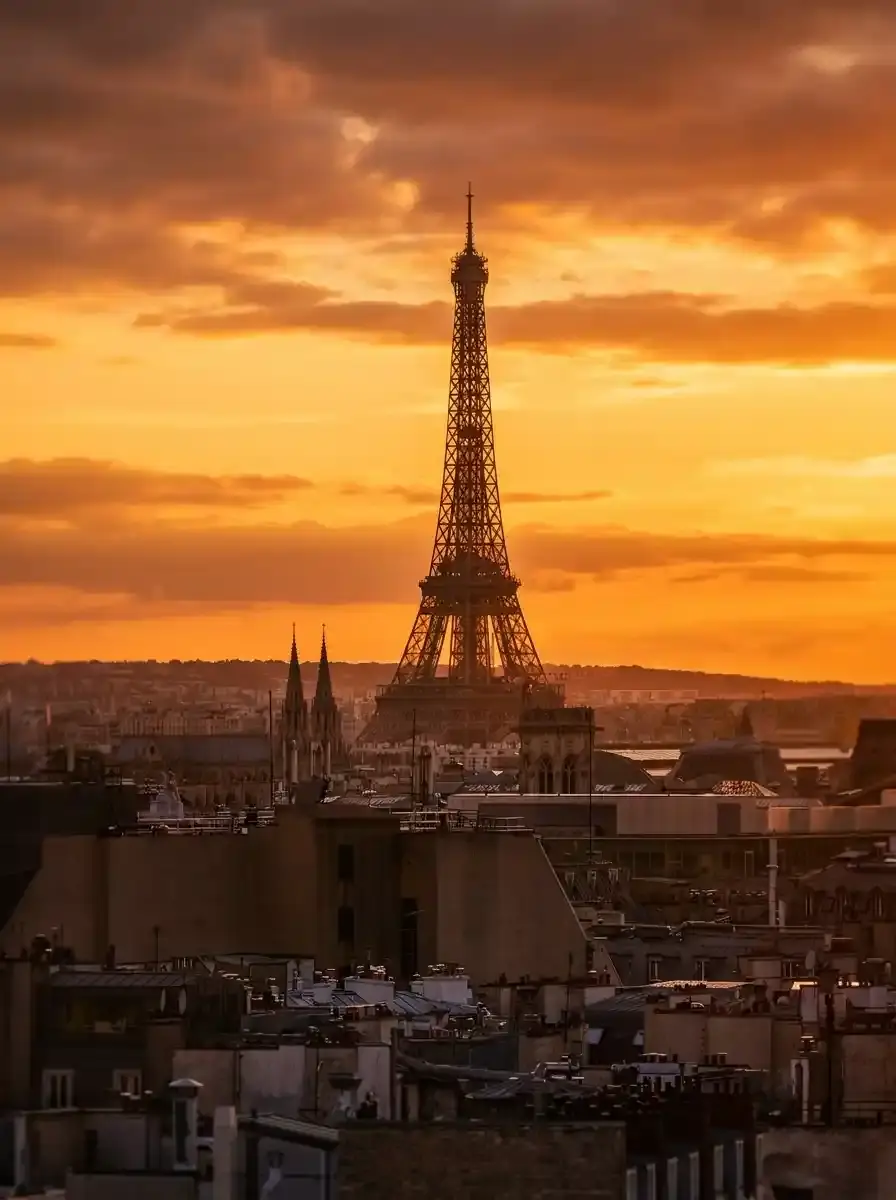
Did you know that the Eiffel Tower was supposed to be demolished 20 years after its construction in 1889? Parisians loathed it and called it “metal asparagus.” Gustave Eiffel saved it by turning it into a radio antenna.
Read the full story »Eiffel Tower in numbers
Some statistics to impress those around you on your next trip (or just because it's fascinating):
Is the Eiffel Tower worth the queue?
If you search social media, you’ll find opinions ranging from “a once-in-a-lifetime experience” to “a crowded tourist trap.” So what’s the truth? I’ve only been up there once, and that’s exactly why I remember it so well. Here’s my honest review:
Yes, there are always a lot of people there (and you have to watch your wallet), and yes, the lines for the elevators can be frustrating. But when you’re standing on the second floor, or better yet – at the top, and all of Paris is spread out beneath you like a shimmering carpet… it’s a magical moment that’s hard to put into words. Is it worth the hassle? The answer is yes, but only if you’re smart and book in advance . If you arrive without a ticket and have to stand in line for two hours, the experience can definitely be ruined.
Questions and Answers about the Eiffel Tower
How tall is the Eiffel Tower?
How many floors are there in the Eiffel Tower?
How many stairs are there in the Eiffel Tower?
There are 674 steps open to the public up to the second floor (in total the tower contains 1,665 steps to the top, but they are closed to the public for safety reasons).
Don't feel like working out on your romantic getaway? That's totally understandable (I'm not judging). It's time to reserve a lift ticket and skip the effort.
In which district is the Eiffel Tower located?
When does the Eiffel Tower sparkle?
Is there storage for belongings in the tower?
How long does it take to visit the Eiffel Tower?
Do I need to print the tickets?
Is it worth the money?
What is the best time to visit?
Are there toilets upstairs?
How much does an entrance ticket to the Eiffel Tower cost?
Do children need a ticket for the Eiffel Tower?
How far in advance should you book tickets for the Eiffel Tower?
Which floor of the Eiffel Tower is the most valuable?
When is the Eiffel Tower least crowded?
Can you go up the Eiffel Tower with a stroller?
Where is the best place to take photos of the Eiffel Tower?
More about the Eiffel Tower on the website
The history of the Eiffel Tower
From the hated monument in Paris to the symbol of France – the full story of Gustave Eiffel.
For the full story »The dark side of the Eiffel Tower
What they don't tell on tours: the deceptions, tragedies, and affairs that the tower prefers to forget.
To the article »Hotels with a view of the Eiffel Tower
The hotels where the view from the window is worth the difference in price, and those that aren't.
To the hotel guide »So what next?
Now it's time to plan the rest of your trip. Check out the complete Paris guide.

A small addition to the interesting explanations: Hitler really wanted to climb the tower, a symbol of the city, but the maintenance staff couldn't swallow such a frog. They simply cut the elevator cables, thus preventing the tyrant from ascending the tower. Therefore, he was forced to take pictures from a distance, with the tower in the background, like any other tourist.
Thank you very much for this important and interesting information that I did not know.
What fun on Saturday with coffee, cake, and your weekly article that creates perfect escapism..
Thank you for all your perseverance.
Thank you very much 🙂
Here is another unforgettable scene from the movie Ninovčka with Greta Garbo in which she climbs the Eiffel Tower steps and catches up with Melvin Douglas who arrives in the elevator https://www.youtube.com/watch?v=S__D3Llvr-k.
Thank you very much 🙂
¨
Thanks for a few minutes of nostalgia and longing.
And within the framework of the struggle between physics and mathematics, there was a mathematician who simply proved with mathematical equations that a tower has no chance of standing. You build it on mathematics.
Thank you very much for the amusing anecdote 🙂