in short
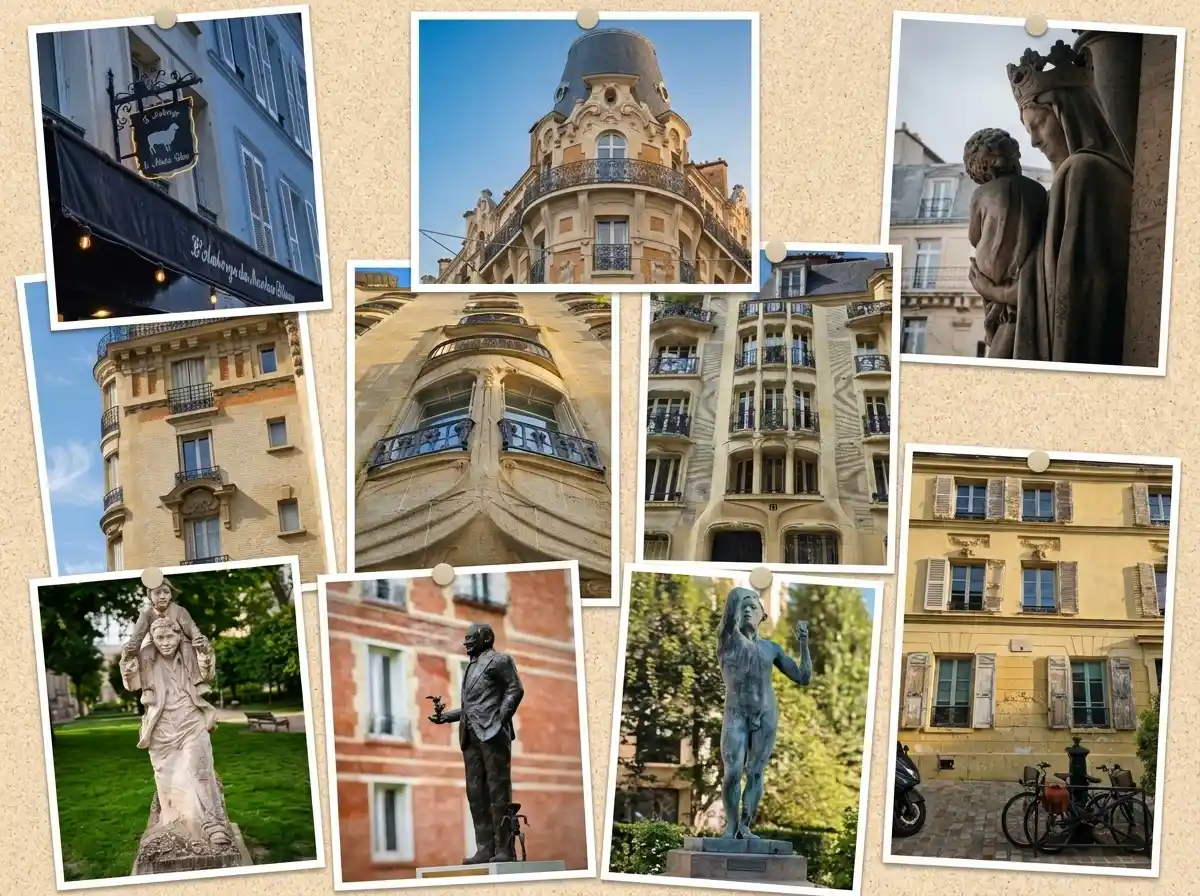
- What's on the route: 21 stops, between the Art Nouveau of Castel Béranger and the rue Agar cluster and the 18th-century palaces on rue d'Auteuil.
- Where to start: Ranelagh Gardens, Ranelagh or La Muette metro stations on line 9.
- Where do you finish: Place de l'Église-d'Auteuil, with the obelisk from 1753 and the church of Notre-Dame d'Auteuil.
- How long: About three kilometers, two and a half to three hours with stops.
- When to go: All days of the week. The Apprentis d'Auteuil chapel is open weekdays from 7:45 a.m. to 19:00 p.m.
- What to combine: The Marmottan Museum, five minutes from the starting point, is closed on Mondays.
- And bonus: Lunch at L'Auberge du Mouton Blanc, the inn where Molière and Racine dined.
Auteuil is far from the center of Paris and is considered a bourgeois residential neighborhood and not particularly touristy. However, this does not mean that nothing interesting happens there, quite the opposite. I lived in several of Audi's apartments (one on Rue Paul Doumer and one on Rue Nicolo ) and this allowed me to walk around the area and discover the secrets of this charming neighborhood.
I walked Otay three times, in April 2024, April 2025 and September 2025, and each time I came back with more photos and more places I discovered (sometimes completely by accident). This is what happens in a neighborhood where the old village, the Art Nouveau and the bourgeoisie of the 16th arrondissement sit on top of each other in a three-kilometer area. All the photos in this article are from these three rounds, and the route itself begins at the northern end of the neighborhood, in Ranelagh Gardens . And that's where our walk will begin.
The route has 21 stops, and they are organized into three parts: the streets of Guimard around rue Jean-de-La-Fontaine, the old village of rue d'Auteuil with the inn and 18th-century mansions, and the church square where it all ends. Along the way, there is also Madame Helvetius' garden where Benjamin Franklin and Condorcet sat, a school that was a cashmere manufacturer's palace, and a small street where Olympe de Gouges hid before the revolution.
Practical information for the Otay route
How to get there
The starting point is Ranelagh Gardens, and can be reached by metro line 9 at Ranelagh or La Muette stations, or by RER C at Boulainvilliers station. The finish is at the Auteuil Church Square, from where you can get off at line 10 at Église d'Auteuil station or walk a few more minutes to Michel-Ange-Auteuil station, which serves lines 9 and 10.
Note a detail that surprises even Parisians: the Église d'Auteuil station operates in one direction only, towards Boulogne, so to return to the city center it is better to go to Michel-Ange-Auteuil. Everything you need to know about the tickets and the lines can be found in my article on the Paris Metro.
What days to go?
Most of the route is street frontage, so it works every day and at any time. The two stops that require paying attention to the clock are the Chapel of the Apprentis d'Auteuil, which is open weekdays from 7:45 to 19:00 and weekends from 9:00 to 19:00, and the church at the end of the route. Those who want to combine the Marmottan Monet Museum with it, don't come on Mondays, when the museum is closed.
How long, and when to come?
The route is about three kilometers, mostly gently downhill, and takes two and a half to three hours with stops for photos. Spring and autumn are especially convenient, as many of the stops are open gardens and courtyards. If you arrive in the morning, you'll reach the church square around noon, which goes well with a meal on rue d'Auteuil.
The Marmottan Monet Museum , home to the world's largest collection of Claude Monet, sits at the other end of Ranelagh Gardens, five minutes from the starting point. Those with a spare morning can fit it in before the trail.
It is highly recommended to book a ticket in advance using this link.
The route in Otway: from Ranelagh Gardens to Church Square
The walk is from northeast to southwest, and almost entirely downhill: from the Ranelagh Gardens down to place Rodin, from there on rue de l'Assomption to place du Docteur-Hayem, then along rue Jean-de-La-Fontaine to place Jean-Lorrain, where the old village begins. This direction also arranges the neighborhood by time: starting in the 1920s, moving to the Art Nouveau of 1900, and ending with 18th-century houses.
Instead of a map: Under the title of each station is its address, and each address is a link. Click on it, and the place will immediately open in Google Maps.
The garden where you start
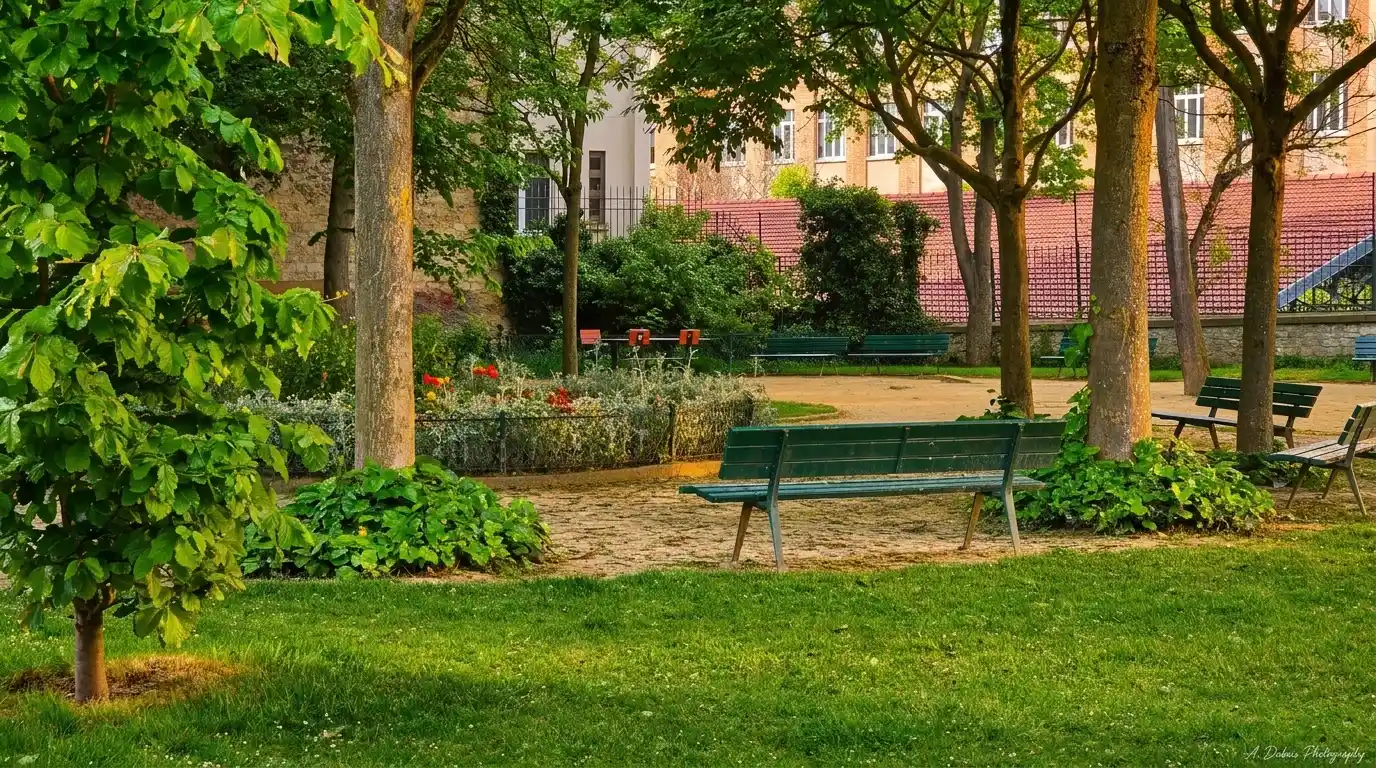
Ranelagh Gardens is the green strip that separates Passy from Ottignies, and their name comes from a London pleasure garden that was imitated here in the 18th century. Today they have an ancient roundabout, chestnut boulevards, and quite a few interesting statues, most notably the statue of Le Fontaine (whose restaurant he ate at with Molière we will visit later). If you would like to get to know the garden and the surroundings better, I highly recommend you read Dr. Orna Lieberman's article Ranelagh Garden – A Tour of a Green Sculpture Garden, a Paradise Where Time Stands Still . The first stop on the route is not the garden itself but what begins immediately after it, so it is enough to cross it at the southern end and head towards rue de l'Assomption.

The invisible palace that became a square
There is nothing in this circular square to indicate what once stood there, so it is a good place to start. The soil here is clay, and a tile factory was documented as early as 1248. François I (king from 1515 to 1547) built a hunting lodge here, and in 1782 the Marquis de la Tour du Pin-Gouvernet (Jean-Frédéric de la Tour du Pin-Gouvernet 1727-1794) bought the land and built a palace on it called Château de la Tuilerie, after the tile factory (not to be confused with the Tuileries Palace in the 1st arrondissement, of course). The isolation and the thickness of the treetops that hid it gave it the local nickname: “the invisible palace.”
In 1855, the estate, five hectare in size extending to today's avenue Mozart, was sold to the Augustinian nuns of l'Assomption. They commissioned the architect Aymar Verdier (1819–1880), who specialized in church renovation, to build them a Gothic convent next to the palace, which was inaugurated in 1857. The nuns opened a boarding school for girls on the site, and were expelled from it in 1906 following the rules of the order. The palace and convent buildings were demolished in 1927, the park was divided into plots, and a new network of streets was laid out around the square.
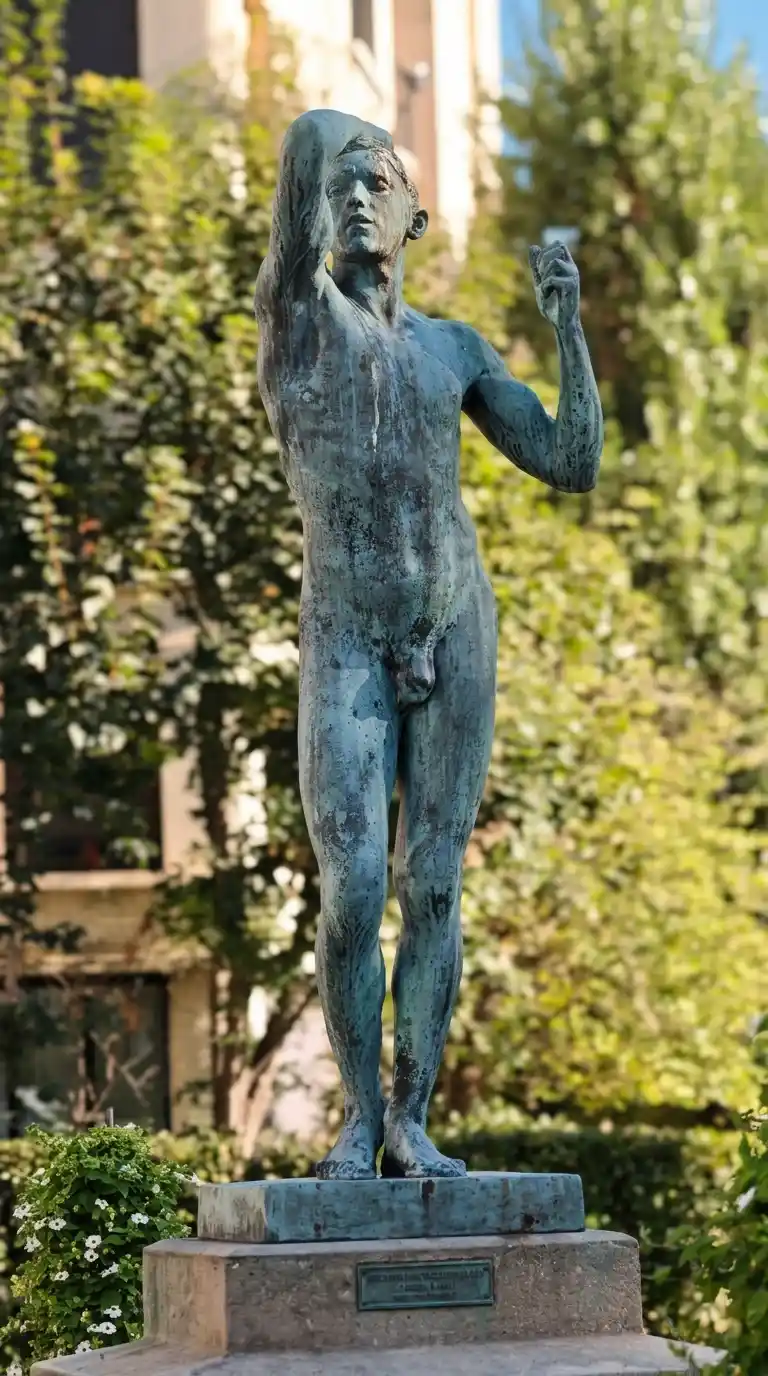
The square opened in 1928 and was named after Auguste Rodin (1840–1917) in 1929, and in 1932 a bronze cast of the sculpture L'Âge d'Airain was inaugurated in its center. The original sculpture was presented by Rodin in 1877, and its realism was so precise that he was accused of casting it on the body of a live model. This scandal launched his career, and more of his works can be seen at the Rodin Museum.
The statue had a life of its own here. Passersby embarrassed by its nudity once dressed it in a cloth skirt, and in 1947 it was found lying on the ground in the morning after someone had released it from the base at night. The police who were called took it to the station, and only then did it return to its place.
Motherhouse of the Nuns of l'Assomption
17 rue de l'Assomption, 75016 Paris
The street that descends from Place Rodin was once called Rue des Tombereaux, the street of the carts, and was renamed after the order that lived there. When the nuns returned to their mother house in 1953, they found only one auxiliary building at number 17 and a beautiful garden, parts of which they were also forced to give up to developers. What remained was very well-kept, and in 1961 the architect Noël Le Maresquier (1903–1982) built them a triangular, exposed chapel that resembles a tent or a sail, with wide stained glass windows that flood it with light.
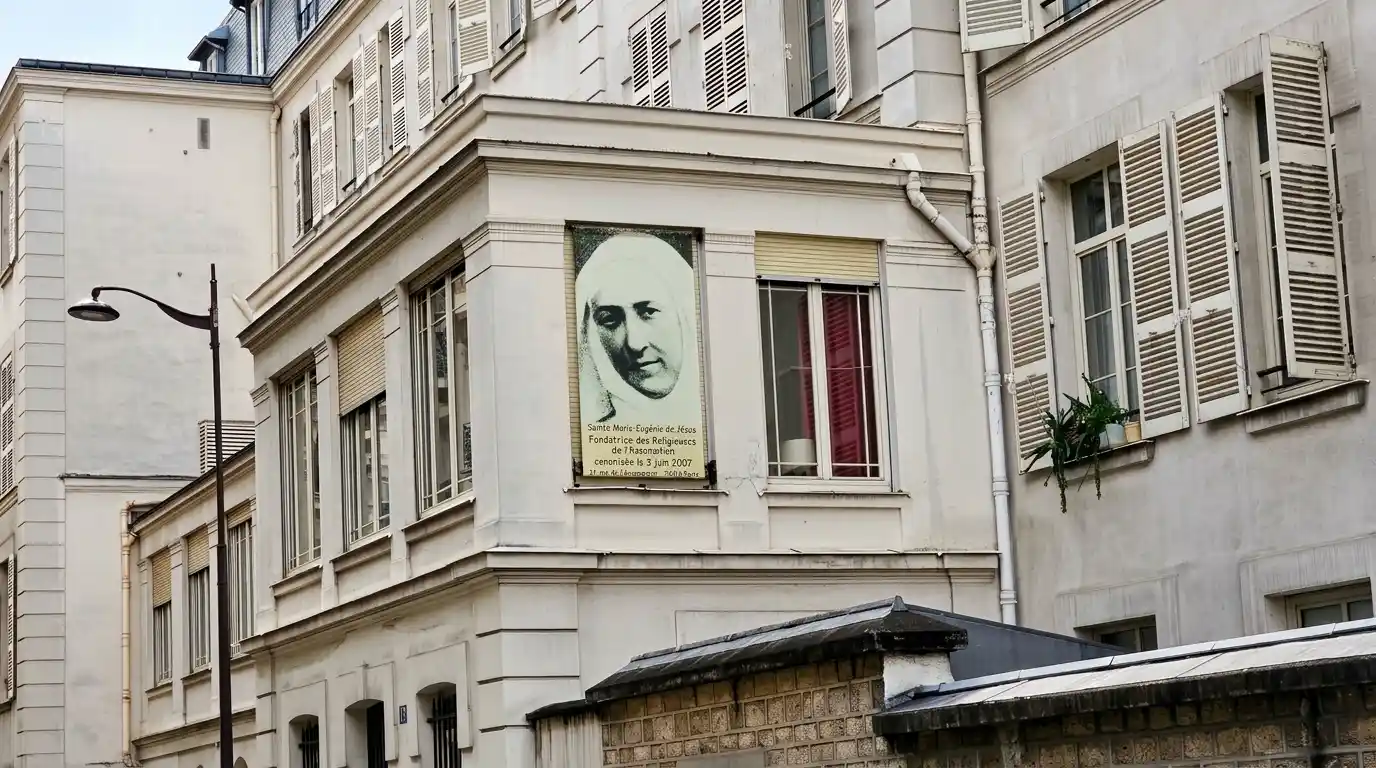
On the facade facing the street hangs a large picture of Marie-Eugénie de Jésus (1817–1898), the founder of the order, who was declared a saint on June 3, 2007. The sign below it is essentially a notice of achievement from the neighbors, and is also the simplest way to know that you have come to the right place.
The bearded head overlooking the street
18 rue de l'Assomption, 75016 Paris
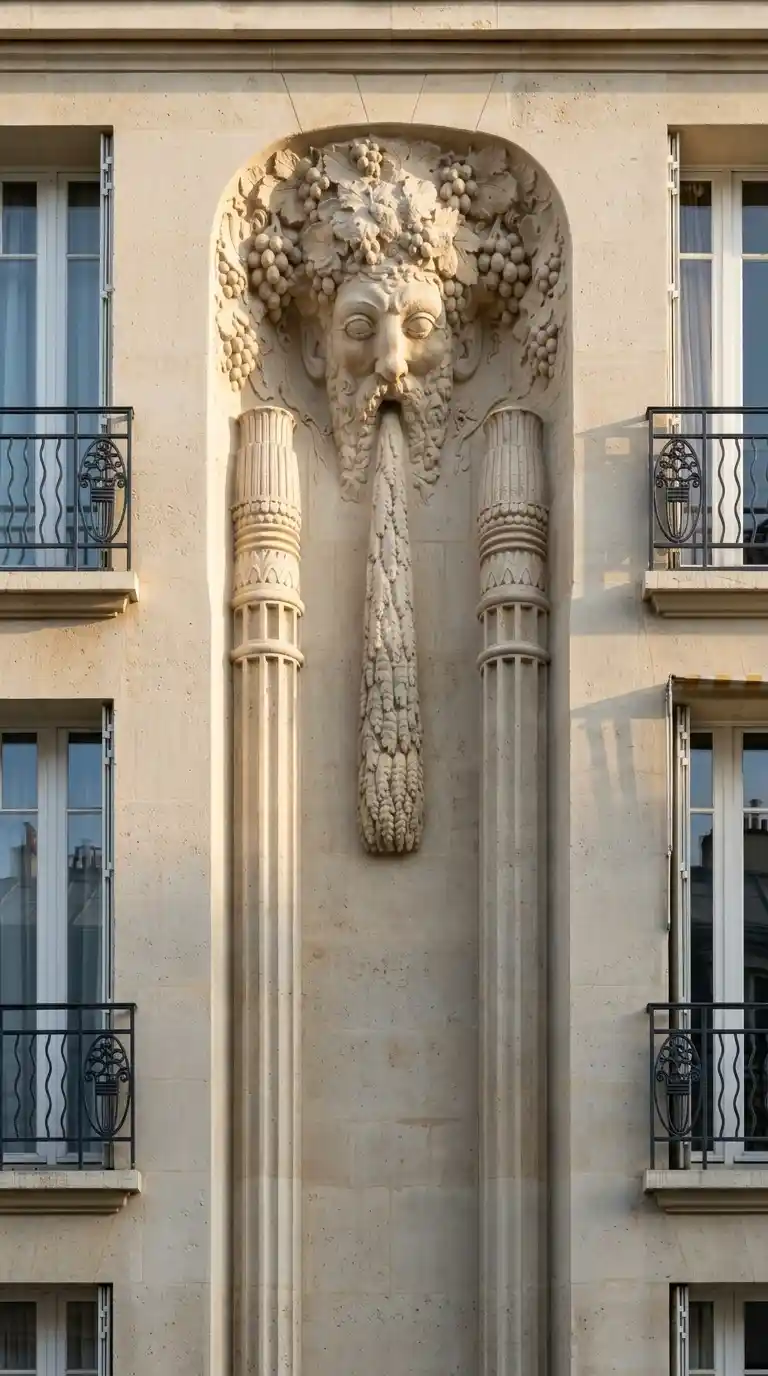
Opposite, at number 18, stands a 1925 apartment building designed by Charles Lemaresquier (1870–1972), the father of the architect who built the chapel across the street. The building is full of conservative ornamentation, pilasters, consoles, and stone balconies, and in the middle of the facade suddenly appears a giant head of a bearded man adorned with clusters of grapes, with bulging eyes and a large nose. Anyone who wants to know what a compromise between classicism and modernism looks like can simply look up here.
Lamarsquier, who was a member of the Académie des Beaux-Arts and died at the age of 101, also built the Putten Department Stores and the Palais de Hanover in Paris, and this building is one of his lesser-known. Among its tenants was the director Christian-Jaque (1904–1994).
The building that made Guimard
14 rue Jean-de-La-Fontaine, 75016 Paris
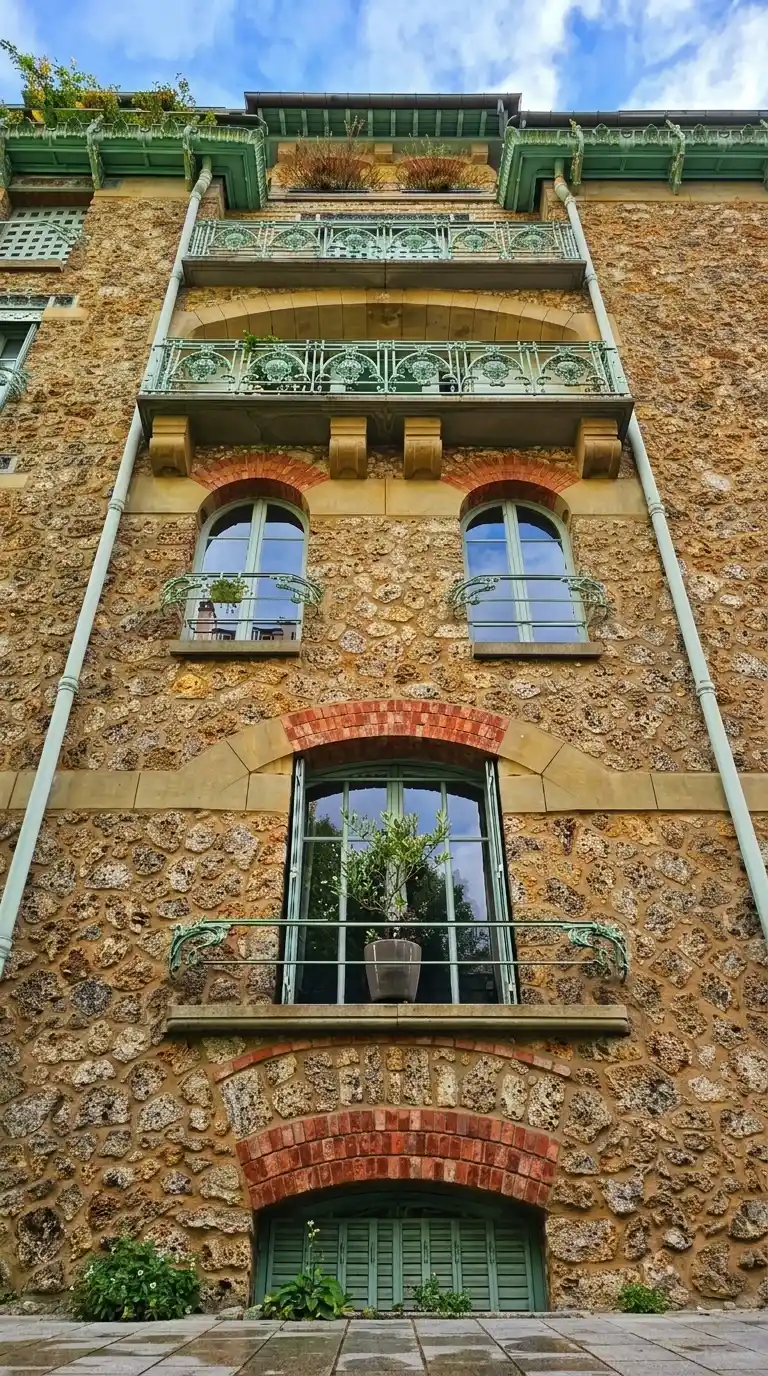
Hector Guimard (1867–1942) received the commission for this building from Anne-Élisabeth Fournier, a widow who wanted an apartment building to rent at moderate prices. He built it between 1895 and 1898, at the age of 30, with 36 apartments, and on March 28, 1898, he won the first prize in the Paris City Hall's facade competition. A year later, he received the commission for the gates of the Paris Metro, and from there it was a short journey to the top.
The interesting thing is that the original plans were completely conservative. In the summer of 1895, while he had already finished the drawings, Guimard went to Brussels, met Victor Horta (1861–1947) and saw the Hôtel Tassel. He returned to Paris and changed the entire decoration plan. Since he could not afford ashlar in large quantities, he played with color and materials: stone, red and gray bricks, Moliere stone, iron castings, molten copper, wood and colored glass. The Parisians did not know what to make of it, and some called the building Castel Dérangé, meaning “the shaken castle.”
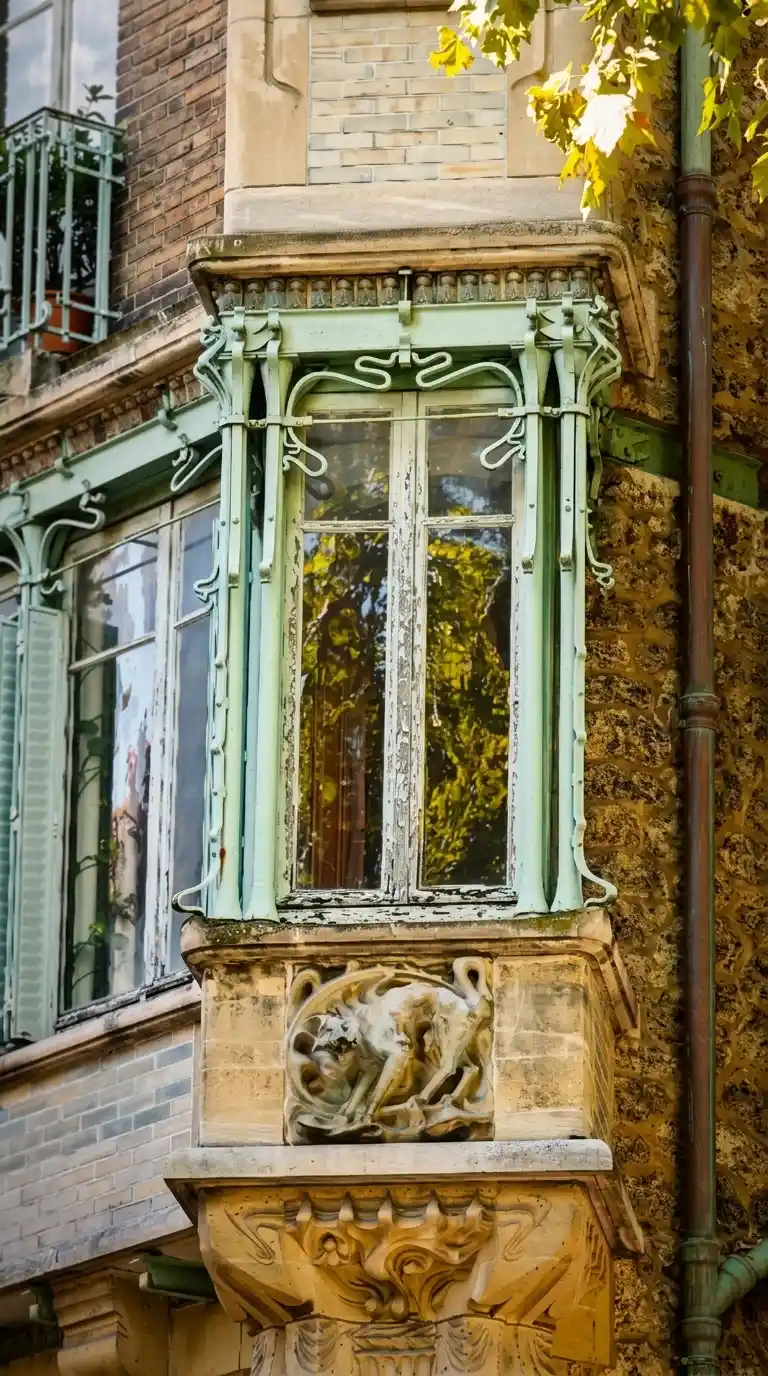
The building is spread out like a zoo: seahorses cling to the stone chains of the facades, a distorted mask of the architect himself peeks out from the balconies, a fountain in the courtyard disguises itself as a scorpion, and ceramic decorations take the shape of a cat or a chicken. It's worth standing right under the bay window and raising your head, because from there you can see these creatures at the angle Guimard intended them to be seen.
The building's most famous tenant was the painter Paul Signac (1863–1935), who had an apartment and studio on the sixth floor between 1898 and 1912. Guimard himself sat in an office on the ground floor, on the corner between the street and the interior passage, so he lived inside his calling card.
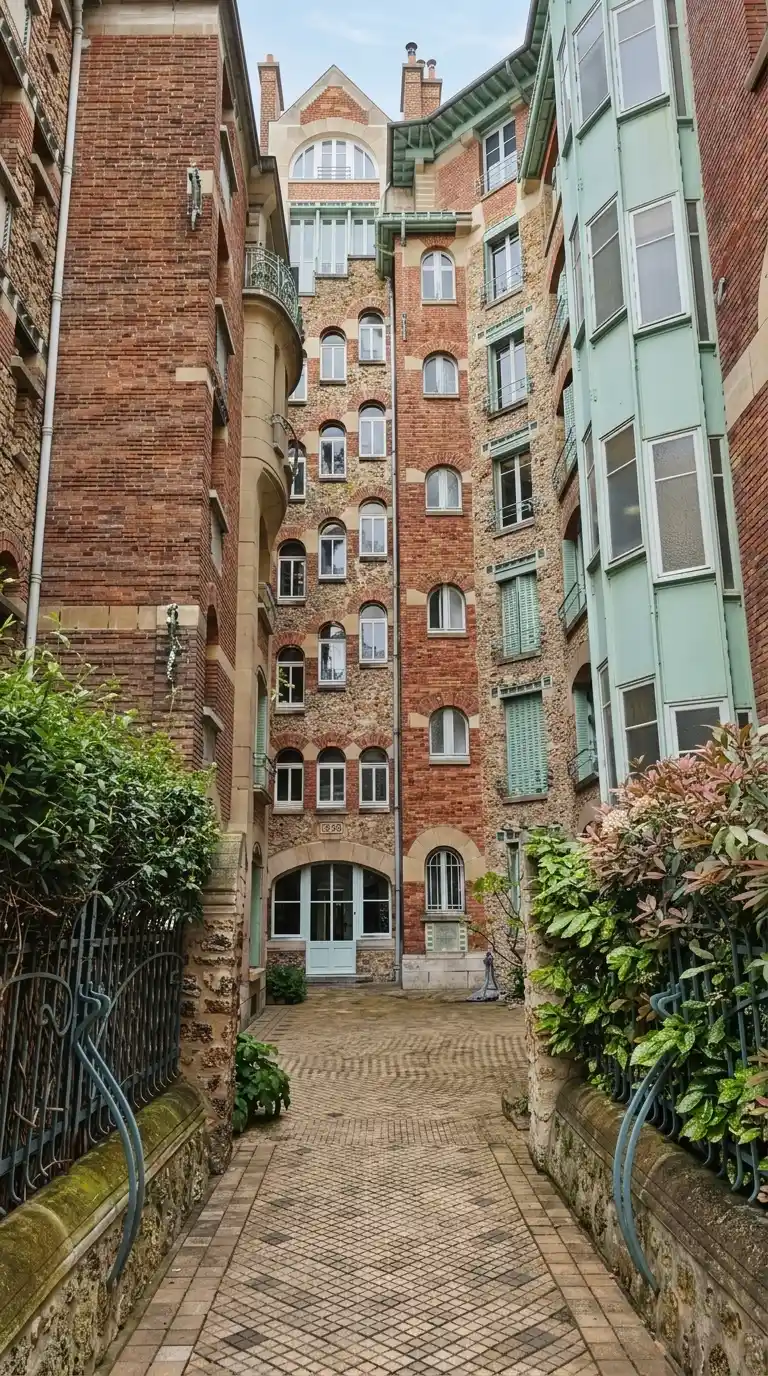
You can’t enter the building (although I managed to “sneak in” once, but don’t tell anyone), but from the sidewalk you can see through the gate the inner courtyard and the covered passage leading to it, where Guimard did exactly what he did to the facade. Opposite, at number 11, stands the Francis-Poulenc Conservatory, built in 1985 by Roger Taillibert (1926–2019), the architect of the Parc de France. Its concave facade was deliberately built opposite Guimard, and it is one of the polite confrontations in Paris between the architecture of 1900 and the architecture of the fin de siècle.
Guimar's large construction site
8 and 10 rue Agar , and numbers 17 to 21 rue Jean-de-La-Fontaine
Across the street, just past Castel Béranger, begins the largest group of buildings Guimard ever built. It was built between 1909 and 1911 and includes numbers 17 to 21 rue Jean-de-La-Fontaine, number 43 rue Gros, and numbers 8 and 10 rue Agar. The street itself was originally called rue Moderne, which is exactly what it was meant to be.
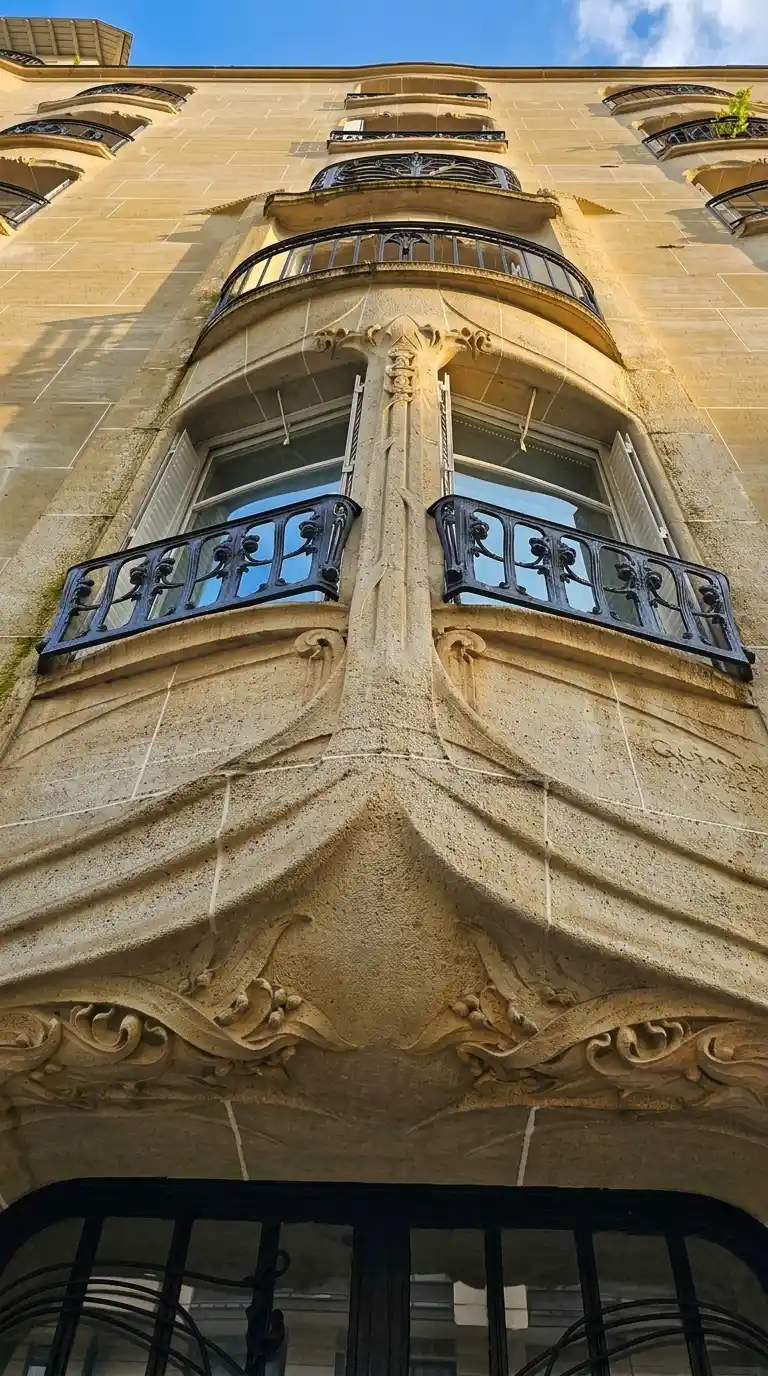
These are Guimard's mature works. In them, he has given up the wild polychromy of Castel Béranger and is left with a limited contrast between stone and cream-colored brick, with the addition of black iron. Note the street sign itself: its letters are Guimard's, and it is the same handwriting you know from the metro gates.
A few steps away, at 39 rue Gros, stands a building built by A. Guilbert in the 1930s, and it would be hard to find a sharper contrast: a completely straight facade, without a single curve, its entire decoration being broken tiles inlaid with gold by the ceramic house Gentil et Bourdet. Thirty years separated the two buildings, and it seems like a century.
The street that was a barn
villa Béatrice-Boudart , at the exit of 25 rue Jean-de-La-Fontaine
This small private street is named after the architect Baudard, who divided the land here into lots and built the buildings at numbers 3 and 4 in 1913. What stood here before is much more interesting: la Grande Vacherie d'Auteuil, the large dairy that supplied fresh milk to all of Paris. Tuberculosis patients of the time could rent rooms above the stables, because the body heat of the cows was then considered beneficial for the lungs. Medical tourism in 1900 looked a little different from ours…
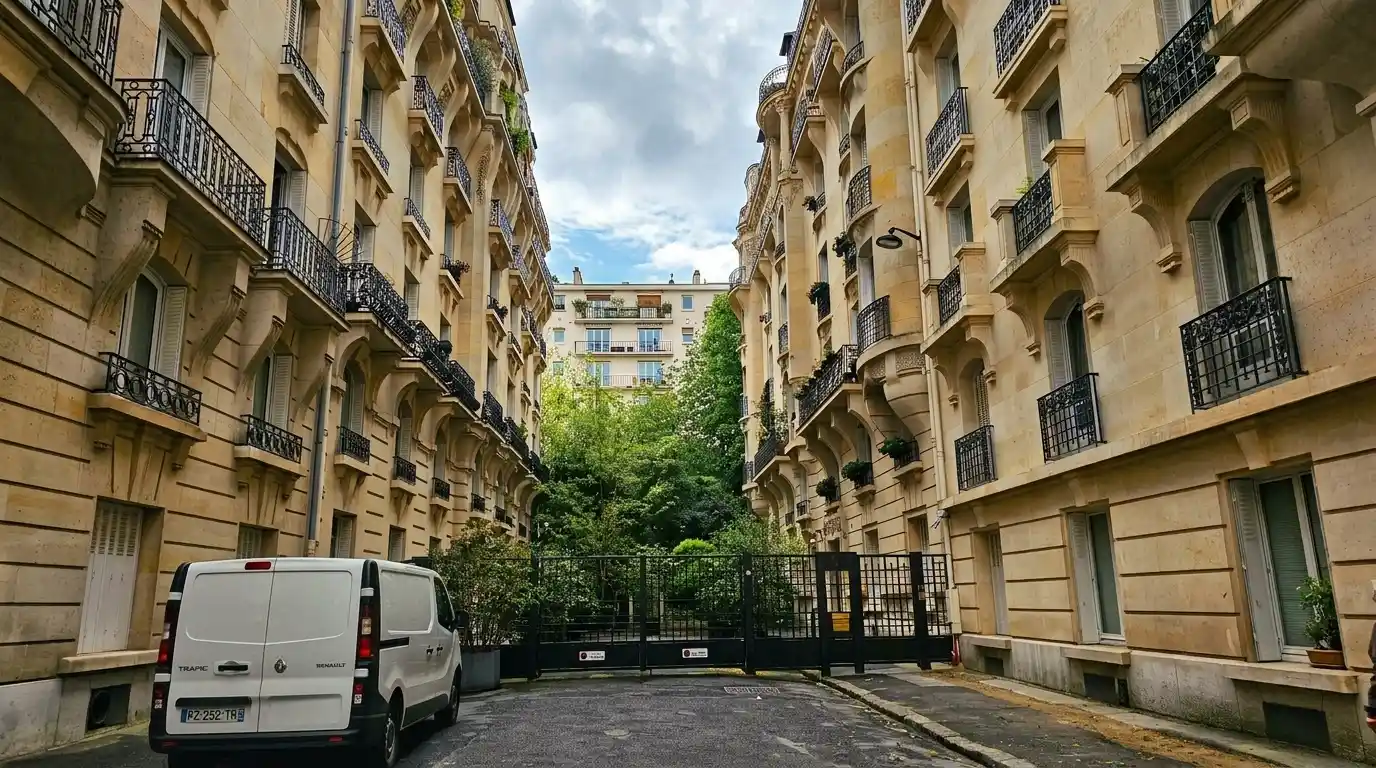
A few meters further, at number 32, stands Villa Jeanne-d'Arc, built by Deneu de Montbrun in 1904, and featuring the same idea again: a small private street leading to an interior garden, away from the hustle and bustle of the boulevard.
Short detour to Immeuble Trémois
11 rue François-Millet, 75016 Paris
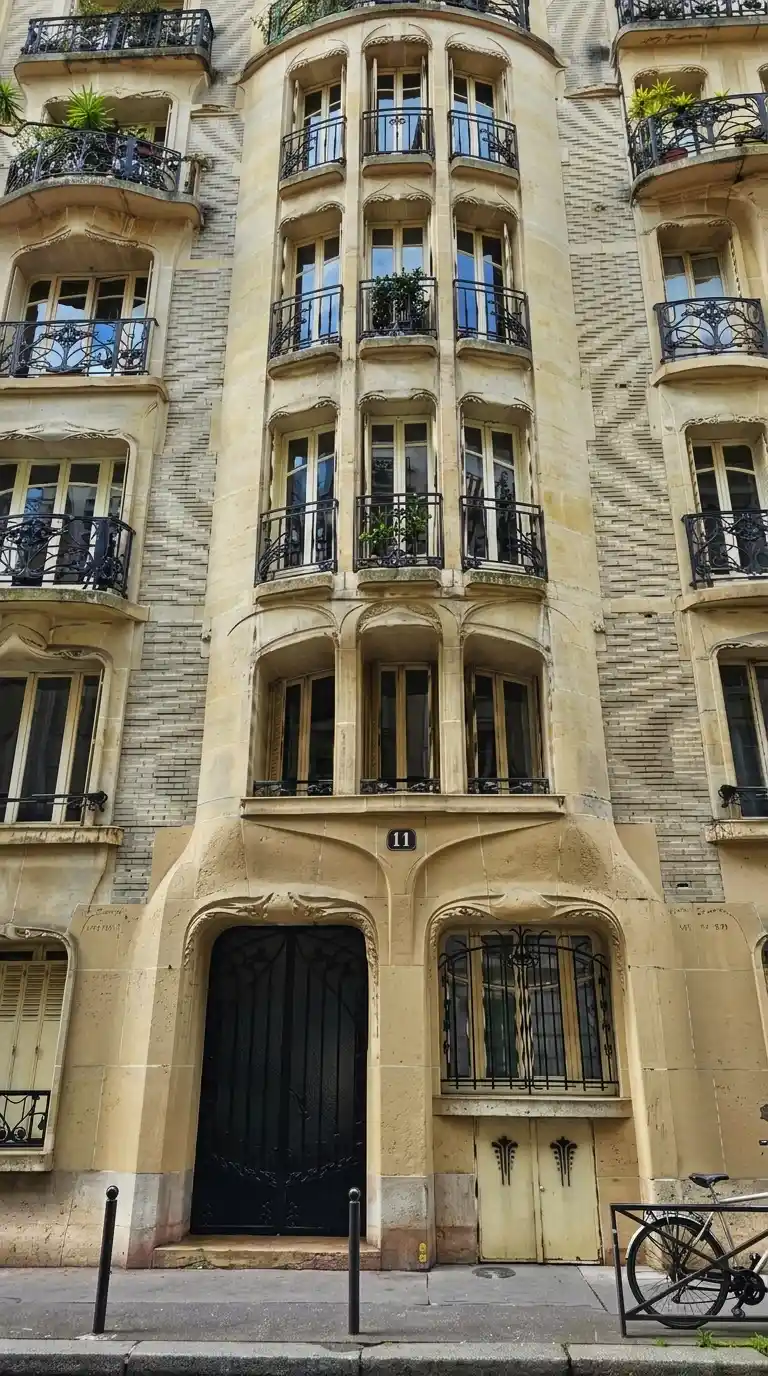
Here we make a short detour from rue Jean-de-La-Fontaine and immediately return to the same point. This building, which Guimard built in 1910 parallel to the rue Agar complex, is the most prestigious of them all. The facade is almost symmetrical, and it is dominated by stone: soft curves, rounded balconies, and an entrance that seems to stretch upwards. Anyone who wants to understand what happened to Art Nouveau as it matured should stand here for five minutes.
The gardens and chapel of the Apprentis d'Auteuil
40 rue Jean-de-La-Fontaine, 75016 Paris
One winter evening in 1865, Father Louis Roussel (1825–1897) picked up a homeless boy who was rummaging through a trash can. Eight days later, he had six children in his room, and by the spring of 1866, he had already moved them to a run-down house on rue d'Auteuil. His goal was to feed them and get them to their first communion, but he quickly realized that it was impossible to send a child back to the street without a profession. From 1871, he opened workshops, and in 1873, the printing workshop he made an institution there was established. To build the workshops and the first chapel, materials were collected from the ruins, mainly from those of the 1878 World's Fair.
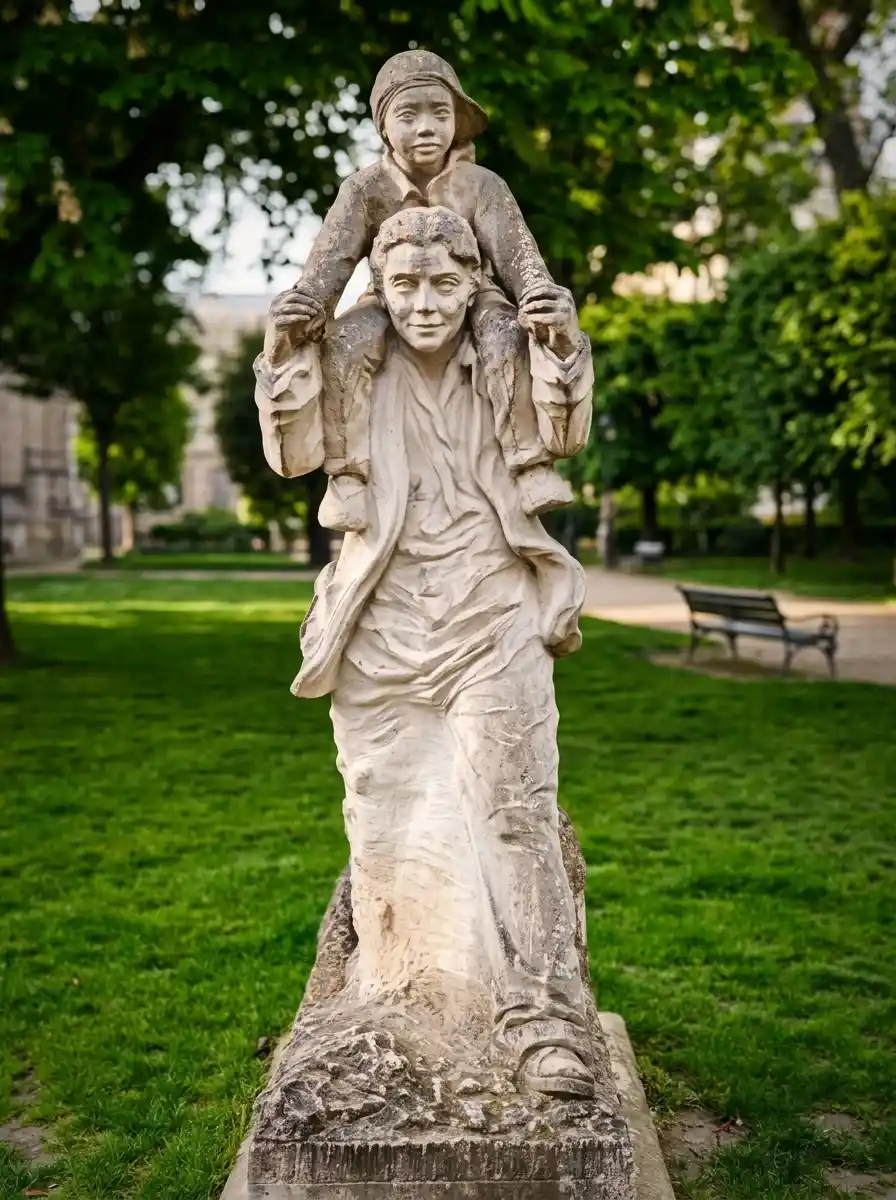
The gates at number 40 are wide open, and the gardens behind them are maintained by the city of Paris and open to the public. Inside them stands the Monument to the Adoption, a statue of a woman carrying a child on her shoulders, by Auguste Maillard (1864–1944), who also sculpted the statue of St. Therese in the chapel. It is one of the quietest gardens in the district, and few people know that it is allowed to enter.
The institution's heyday was between the two world wars, under Father Daniel Brottier (1876–1936), who was beatified in 1984. He went into the production of radio receivers, and because he needed to keep children busy on Sundays, he opened a 1,500-seat cinema called Auteuil Bon Cinéma. The first screenings were held in 1927 and the cinema only closed in 1978. The barracks of the 1878 exhibition had meanwhile been replaced by neo-Gothic red brick buildings designed by the architect Henri Chailleux and his son.
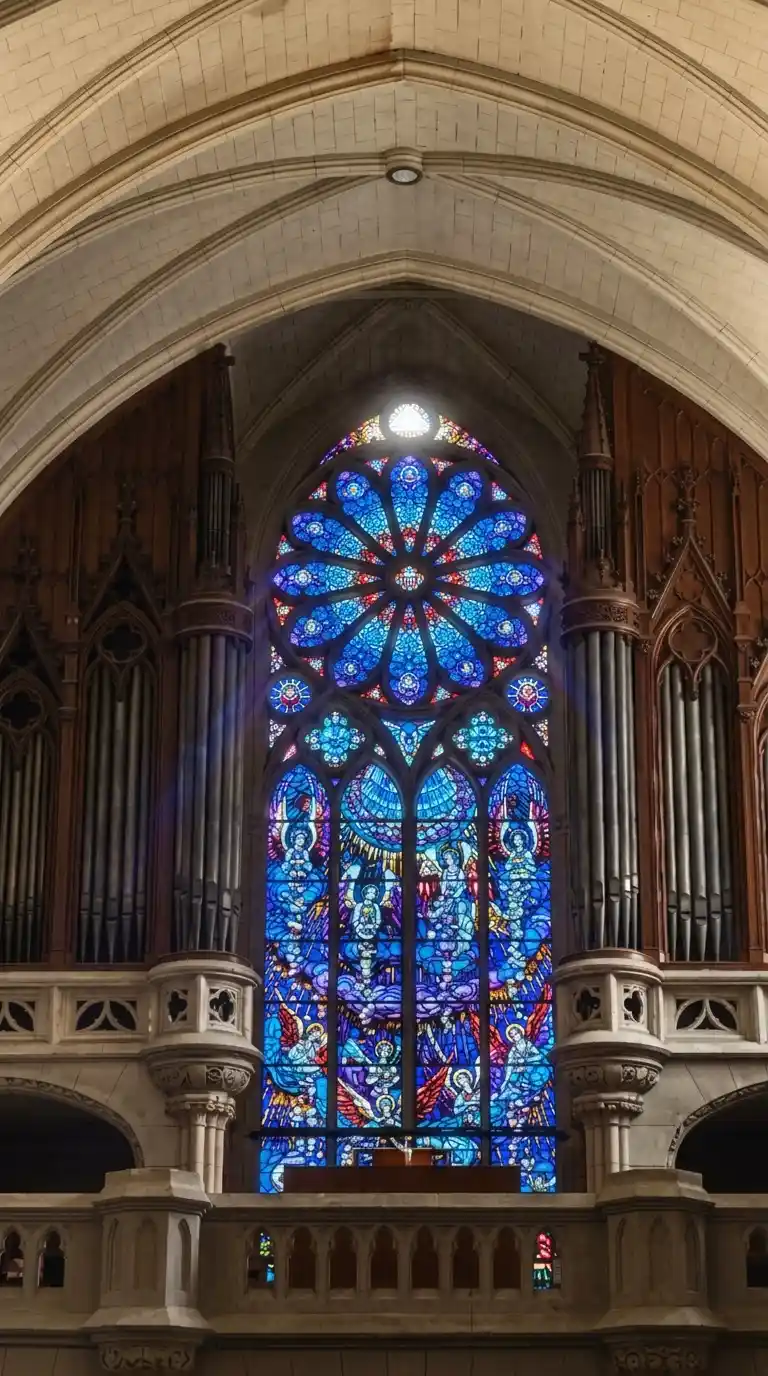
The chapel itself was built in the second half of the 1920s and consecrated in 1930, and was the first church in the world dedicated to Thérèse de Lisieux (1873–1897). The titles of the columns are dedicated to the professions studied in the workshops and cathedrals of France, and the stained glass windows and the Stations of the Cross in mosaic are the work of the Maumejean brothers, who signed them in 1927.
And just before we move on, if you pass by during opening hours, I highly recommend going into the chapel for five minutes, even if you're not looking for churches on this trip :-).
The villa that will become the Guimard Museum
60 rue Jean-de-La-Fontaine, 75016 Paris
Hôtel Mezzara is Guimard’s last major work in the neighborhood. He built it between 1910 and 1911 for Paul Mezzara, a Venetian-born textile industrialist who made lace, and this time almost everything is symmetrical and the materials blend harmoniously in beige. The interior is organized around a central hall, two stories high, lit by a glass roof, and featuring a staircase of tin and cast iron whose contours are borrowed from shipbuilding.
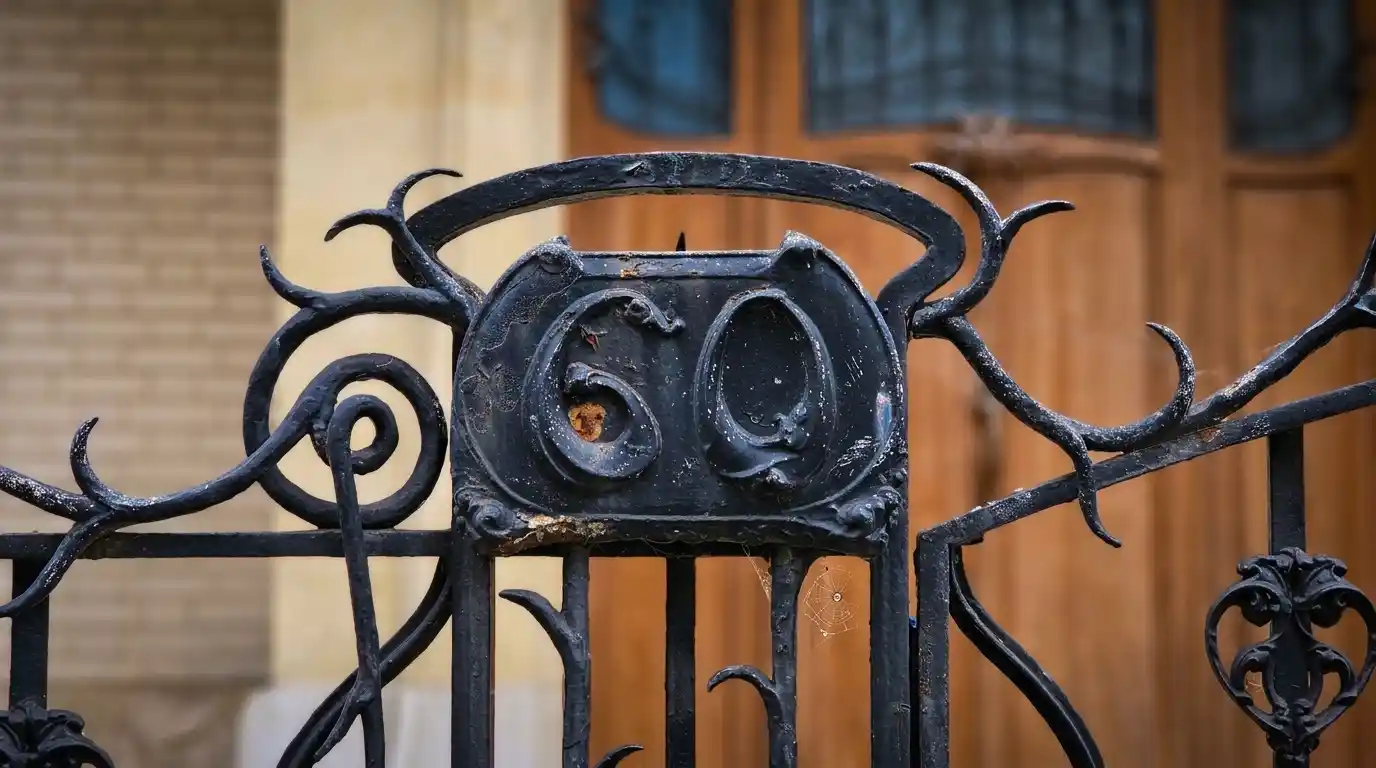
The building belongs to the state, it was declared a protected heritage site in 2016, and it has been empty since 2015. The Le Cercle Guimard association fought for years to turn it into a museum, and in June 2025 the decision was finally made: the place will become the Guimard Museum, under a 50-year lease, and the opening is planned for 2027 or 2028. In the meantime, the gate is enough, and the house number embedded in it is one of those details that makes it worth walking.
Juliette Drouet's Pavilion
Where 57 rue Jean-de-La-Fontaine stands today
Here stood the house where Juliette Drouet (1806–1883), Victor Hugo's lover and companion for fifty years, lived. Here, before she was twenty, Claire Pradier (1826–1846), her daughter by the sculptor James Pradier (1790–1852), for whom she was his model, died. Hugo dedicated two lines to her: “Elle s'en est allée à l'aube qui se lève, / Lueur dans le matin, vertu dans le ciel bleu”, meaning “She went with the dawn, morning light, virtue in the blue sky”.
You can read the full story of the relationship between Victor Hugo and Juliette Drouet in my article about Victor Hugo's great love.
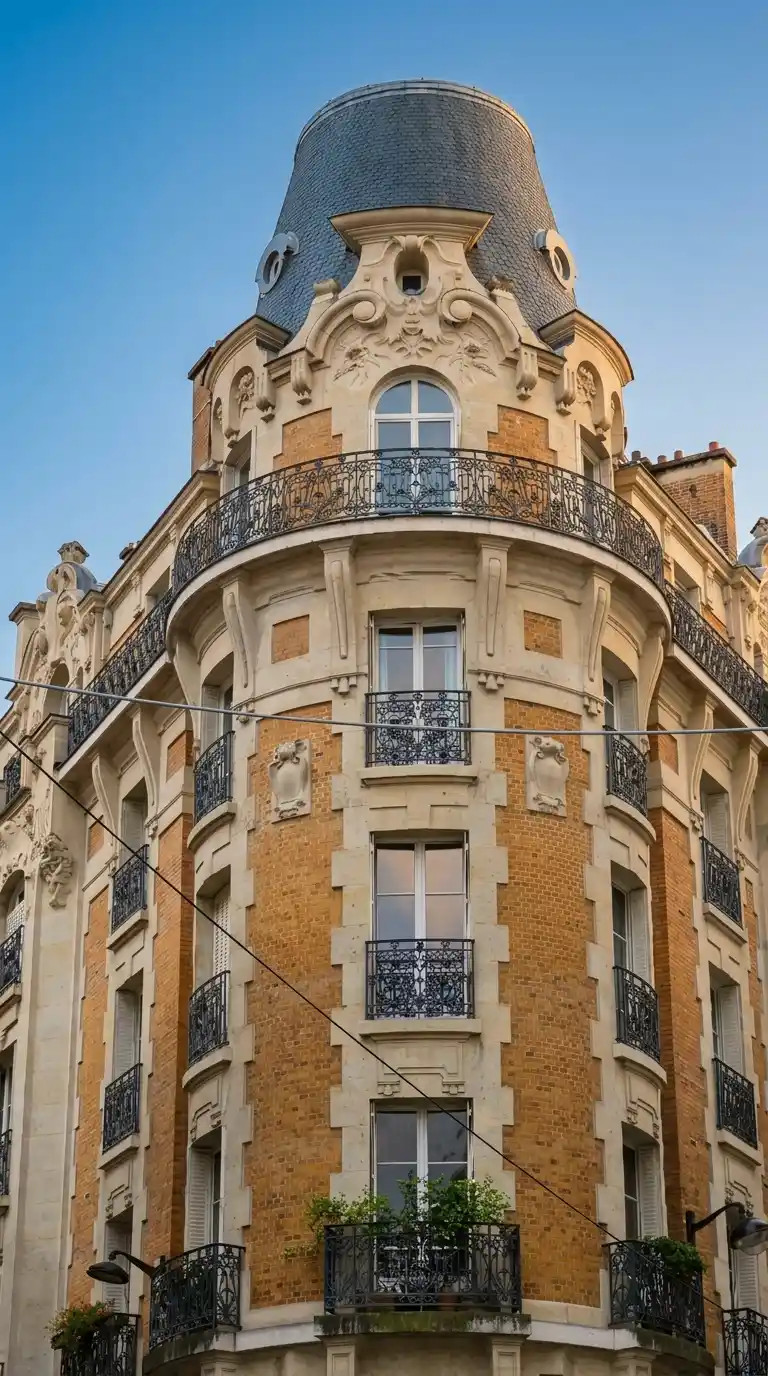
Opposite are two buildings that tell the story of the transition between two eras. At numbers 61 and 63 stands a large, ornate Belle Époque building built by Paul Furet, and at number 65 is the Studio Building, built in 1927 by Henri Sauvage (1873–1932), with a steep facade covered in colorful ceramic tiles by Gentil and Bordat. The apartments there are duplexes that are seven meters high, and they were sold as studios for artists, although they were originally intended for a bourgeois audience.
The house where Frost was born
96 rue Jean-de-La-Fontaine, 75016 Paris

At number 96, in the house of her great-uncle Louis Weil (1816–1896), Madame Adrienne Proust gave birth to her first son, Marcel, on July 10, 1871. The family lived in the 17th arrondissement, and the house in Auty served as her summer home for 25 years. You can follow the route I wrote following Proust's other places in Paris.
Proust himself was not happy with the house. He wrote that the house he lived in with his uncle, in the middle of a large garden that had been bisected by the street from Avenue Mozart, was as tasteless as could be, and immediately afterwards added that he could not describe the pleasure he felt when he went up to his room for a moment after walking in the sun, smelling the street's cedar trees. That's Proust in two lines.
The square that opens the village
Place Jean-Lorrain, 75016 Paris
Right here, two blocks from the house where Frost was born, the square is named after the man he shot.
Until 1930, this square was called Place de La Fontaine, and since then it has been named after Jean Lorrain (1855–1906), a writer and journalist from the decadent circle who was known for his venomous columns. One of these columns cost him dearly: after he hinted in the newspaper about the nature of the young Proust's relationship with Lucien Doude, Proust challenged him to a pistol duel. The two met in the forest of Meudon in February 1897, shot at each other and missed.
From the square begins rue d'Auteuil, which was the village's main street from the 16th century. The section between the square and the church has retained a remarkably rustic appearance by Parisian standards, and some of the mansions that gave the street its name remain, even if they have lost much of their charm.
The Garden of Mrs. Helavusius
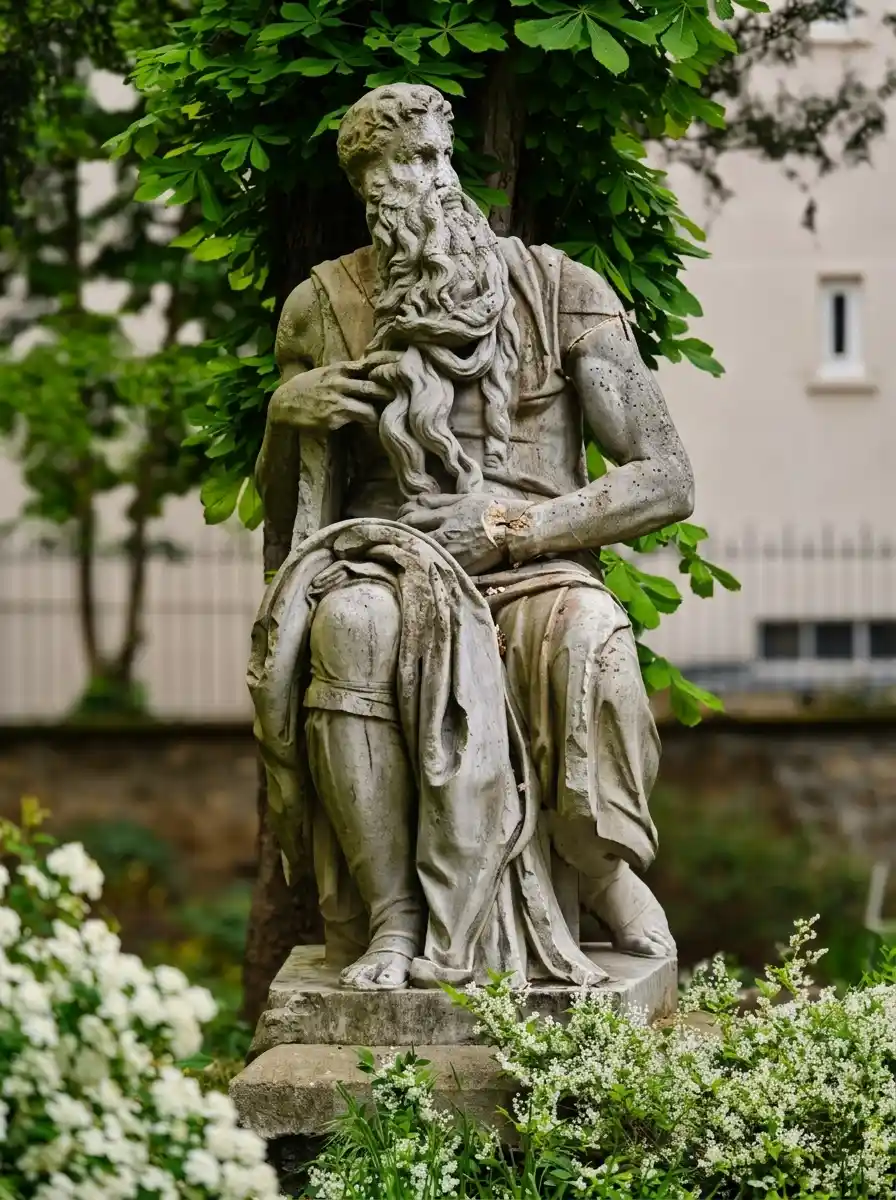
Behind the fence of a 1965 apartment building sits a small garden, from which a stone replica of Michelangelo’s Moses looks out at you. A few trees around it are all that remains of a much larger garden, that of Anne-Catherine Helvétius (1722–1800), whom neighbors called “Mrs. Mautey.”
Her husband, Claude-Adrien Helvétius (1715–1771), was a tax collector who retired to pursue philosophy, and upon his death left her his fortune and his rebellious spirit. In 1772 she bought the palace on this street, which had belonged since 1750 to the pastel painter Maurice Quentin de La Tour (1704–1788), and gathered around her a group known as the “Auteuil Society.” Denis Diderot (1713–1784), Anne Robert Jacques Turgot (1727–1781), Nicolas de Condorcet (1743–1794) and Benjamin Franklin (1706–1790), a neighbor from Passy, who, according to the story, was just as happy to marry her as Turgot was, lived with her.
Her most famous sentence, according to the story, was said to the young Bonaparte, when she boasted in that garden: “Général, si l'on savait tout ce qui peut tenir de bonheur dans trois arpents de terre, on songerait moins à conquérir le monde,” meaning “General, if people knew how much happiness could be contained in three acres of land, they would think less about conquering the world.” The revolution spared her, and her friends much less: Condorcet died in prison in 1794, and the poet André Chénier (1762–1794) was executed the same year. She herself died in 1800, and her palace was burned down during the Commune.
And there is another story about Madame Helvétius that I really like to tell. One of her friends was Fontenelle (Bernard Le Bovier de Fontenelle 1657-1757). One day when he was ninety years old, he stayed with her and because the party at her house ended late and he lived far away, he stayed overnight at her house. At night, Fontenelle woke up and because he was thirsty, he decided to go downstairs to the kitchen to drink some water. As he passed through the hallway of her house, he suddenly saw Madame Helvétius coming out of her room dressed in thin, transparent cotton, which does not leave much room for the imagination.
“Oh, my lady!”, Fontanel turned to her, “If only I could go back and be 80 years old again…”
The De Verrier Misses' House
43 to 47 rue d'Auteuil, 75016 Paris
The classical buildings here arranged around a garden courtyard are the remains of the Hôtel Antier, also called the Hôtel de Verrières. It was built in 1715 for the opera singer Marie Antier (1687–1747), who married the inspector of the salt tax in 1726, had many lovers, entertained the court and the city, and held a grand celebration here in 1744 to celebrate the recovery of Louis XV.
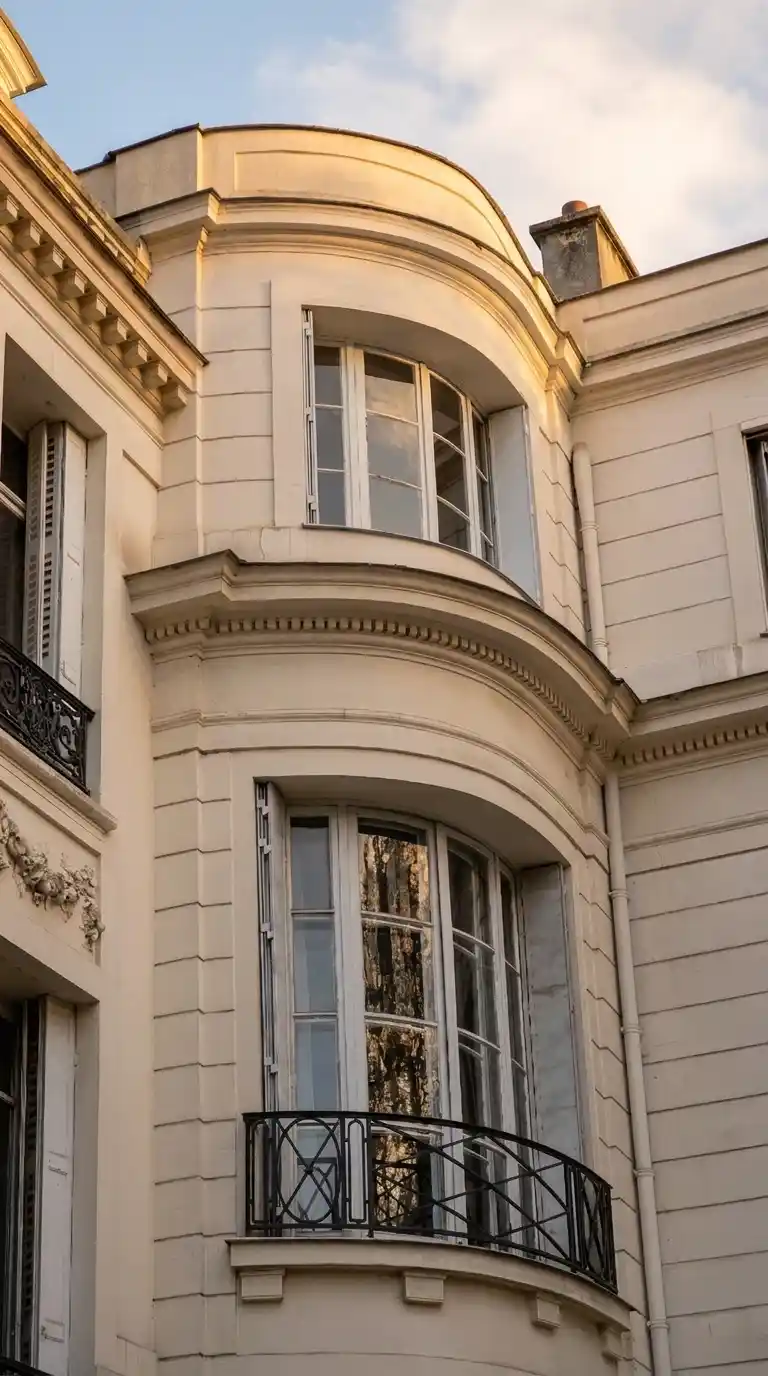
After her, the house passed to two sisters, Marie and Geneviève Rainteau, daughters of a lemonade vendor on rue Greneta, who were nicknamed “Beauty and the Beast” because the other was mocked for being stupid. The two performed in an army theater troupe, where they were noticed by Marshal de Saxe (1696–1750). Marie became his official mistress, adding the suffix “de Verrier” to her too simple surname, as did her sister. She gave birth to three children by three different men, and her daughter by the Marshal, Marie-Aurore de Saxe (1748–1821), was the grandmother of George Sand (1804–1876). If you would like to read more about George Sand, you can do so in the article on the Museum of Romantic Life.
In the park, the two built a 400-seat theater for them, where they performed plays that were forbidden to be performed in the city. Sometimes they also invited the villagers. The property was sold in 1767, the park was repeatedly cut down, most notably when rue Michel-Ange was broken up in 1862, and in 1954 the French oil company bought the palace and swallowed it up in office buildings. Only the facade facing the park and some wooden cladding remained authentic.
The Inn of Molière, Racine and Boileau
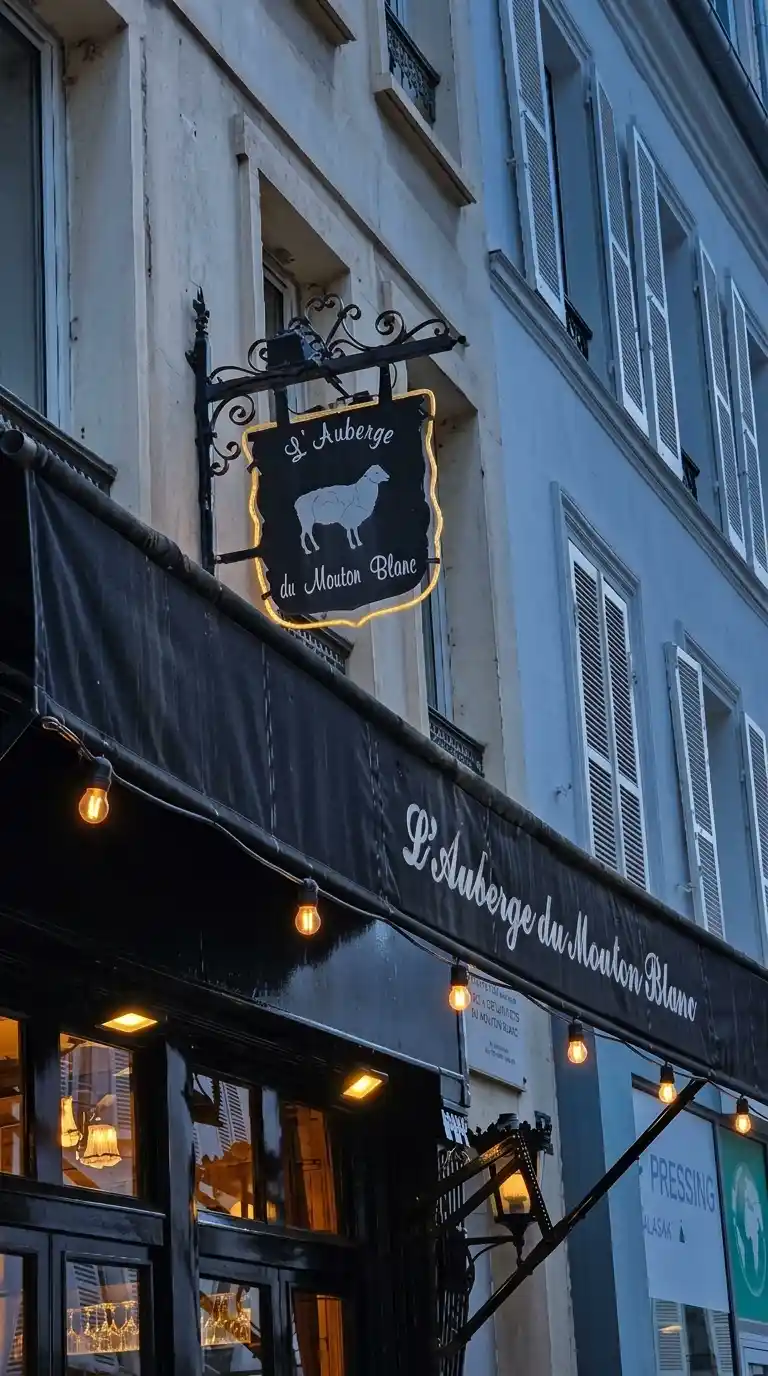
Opposite the brothel, at number 40, was the inn with the sign of the White Lamb. Its regulars included Molière (1622–1673), Jean Racine (1639–1699), Jean de La Fontaine (1621–1695), Nicolas Boileau (1636–1711) and Claude-Emmanuel Lhuillier, dit Chapelle (1626–1686). Molière even rented an apartment in Auteuil for five or six years, around 1667, on the corner of rue d'Auteuil.
Tradition has it that this group of diners, with a glass of wine in hand, composed works that later became very successful. To me, this is exactly why it's worth stopping on this street: four of the great names of the 17th century sat on a corner that is now a neighborhood street with an optical shop and a laundromat.
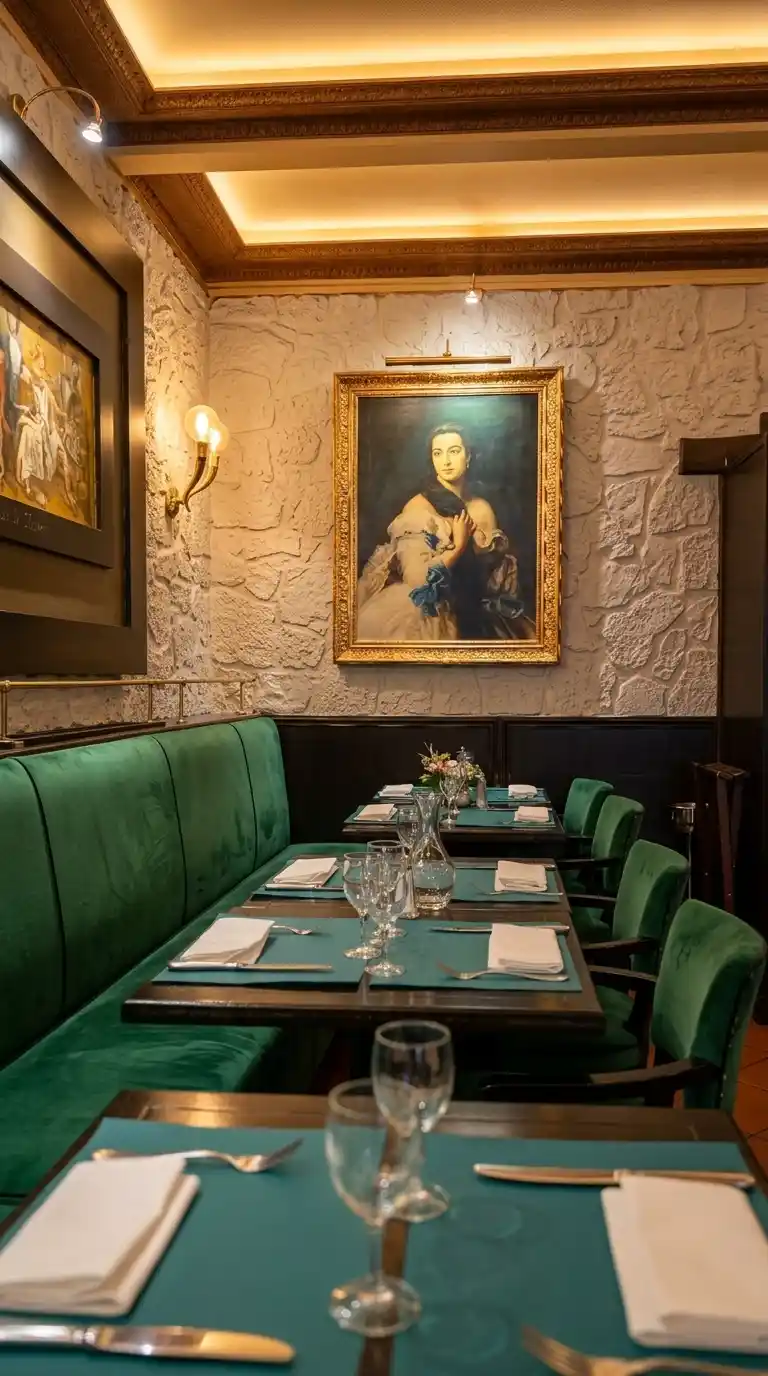
The place is now home to a restaurant of the same name, L'Auberge du Mouton Blanc, which reopened in January 2025 after renovation. This is the natural lunch spot on the route, about two-thirds of the way through. I had kidney stew with mustard sauce here and it was very tasty, so the place is definitely recommended.
The house where Baudelaire's parents met
A carriage gate topped by a cast iron railing and two pavilions on either side mark the Hôtel Véron, also called Hôtel Pérignon or Hôtel de Puscher. The property is mentioned as early as around 1600 as “clos du Buc”, in 1690 it belonged to Joseph de Puscher, and around 1756 Louis-Henry Véron, the son of a merchant, built the palace on it.
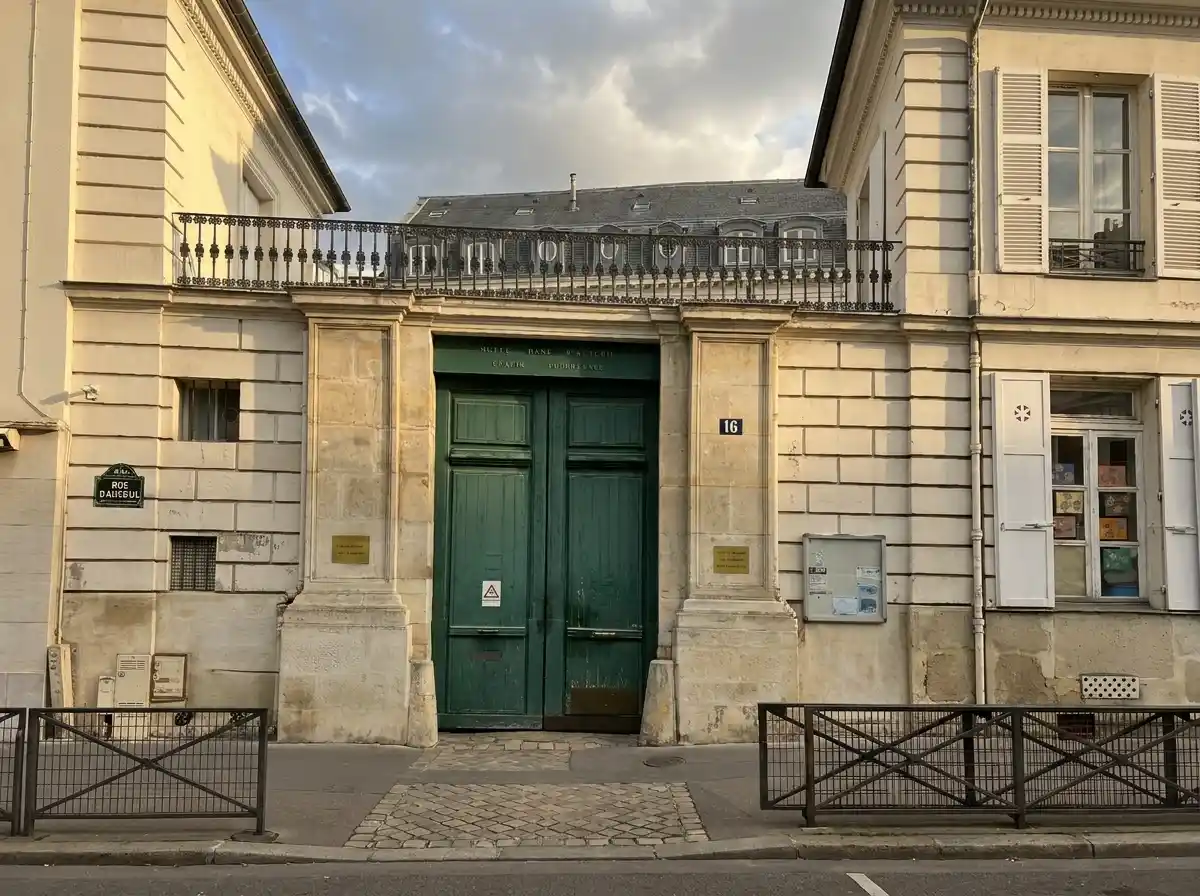
In 1800, the palace passed to Pierre Pérignon (1768–1846), a lawyer who became a baron of the Empire. Pérignon, the father of a large family, adopted a young orphan, Caroline Dufaÿs (1793–1871), and she met the tutor of the Choiseul-Périllon children, Joseph Baudelaire (1759–1827), at his home. She was 26 and he was 60. They married, and in 1821 they had a son: Charles Baudelaire (1821–1867). You can read about his poetry in the article on the two polarities in Baudelaire's soul and poetry.
Perignon renovated the house around 1806, giving it its present appearance. Between 1852 and 1893 it was owned by the Chardon-Lagache family, and since 1957 it has served as a community center for the Notre-Dame-d'Auteuil church and houses the junior classes of the Saint-Jean-de-Passy school. Four panels painted by Hubert Robert (1733–1808) were transferred from it to the Museum of Decorative Arts.
The school that was a cashmere manufacturer's palace
11 bis rue d'Auteuil, 75016 Paris
Across the small square, behind the iron gate, stands what was once Château Ternaux. The estate was originally part of the property of the Genoese Order. In 1714, it passed into the hands of a man named Galpin, who commissioned the architect Nicolas Dulin (1670–1751) to build him a palace. In 1804, it was bought by Nicolas Ternaux (1763–1833), a textile manufacturer famous for his scarves, and he established a dyeing factory there.
In the ten-hectare park, which extended to today's rue Jouvenet, he grazed his sheep and Tibetan goats, whose wool would be used to make cashmere. A herd of Tibetan goats in the heart of the 16th arrondissement is just the kind of detail that reminds us of how much of a village this neighborhood was. Two years after his death, a large part of the park along rue Boileau was divided into lots, from 1835 onwards.
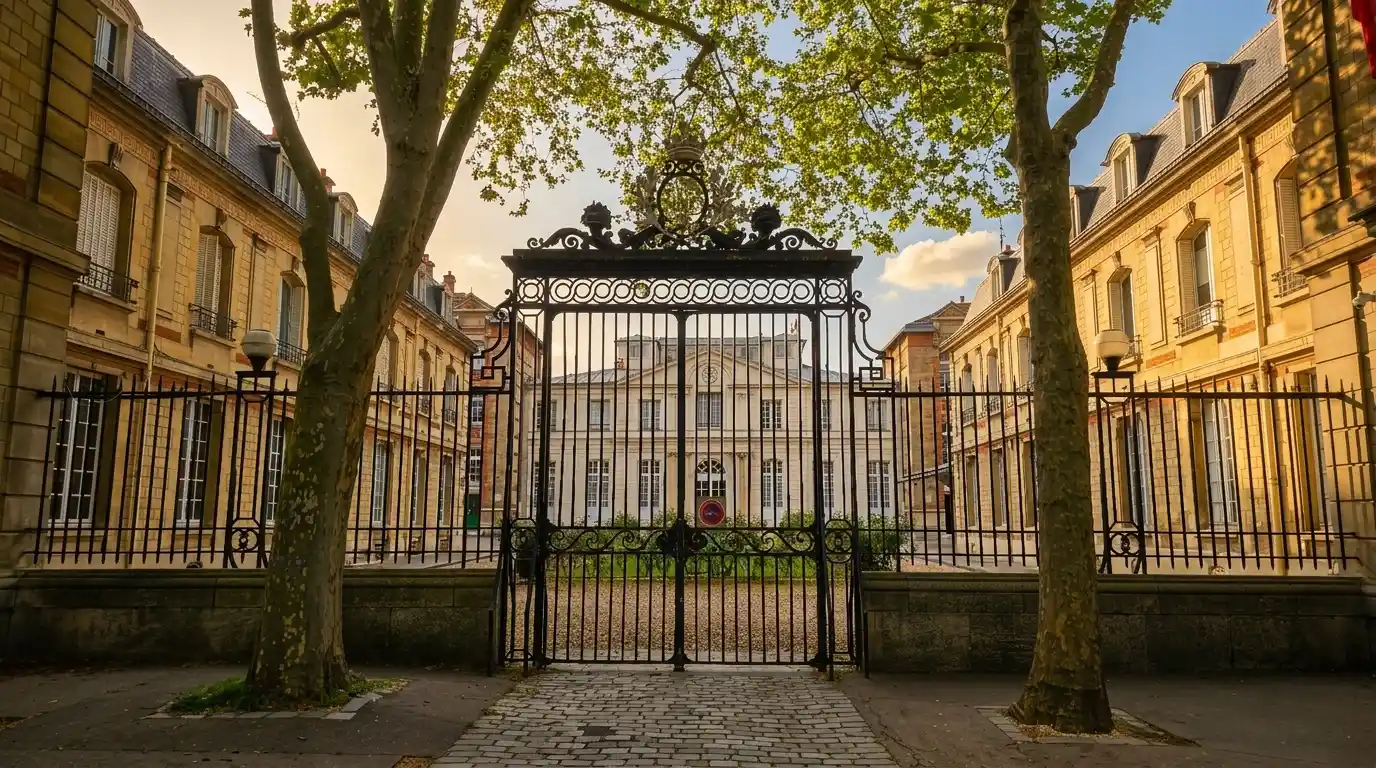
In 1852, the Notre-Dame-d'Auteuil institution stood, in 1872 it was taken over by the city of Paris, and it was divided between the teachers' seminary and the Lycée Jean-Baptiste-Say, which still stands here today. Of the original construction, only the courtyard of honor and the central pavilion remain, nestled within the school buildings built between 1875 and 1897. From the gate, you can see everything without entering.
The street where Olympe de Gouges hid
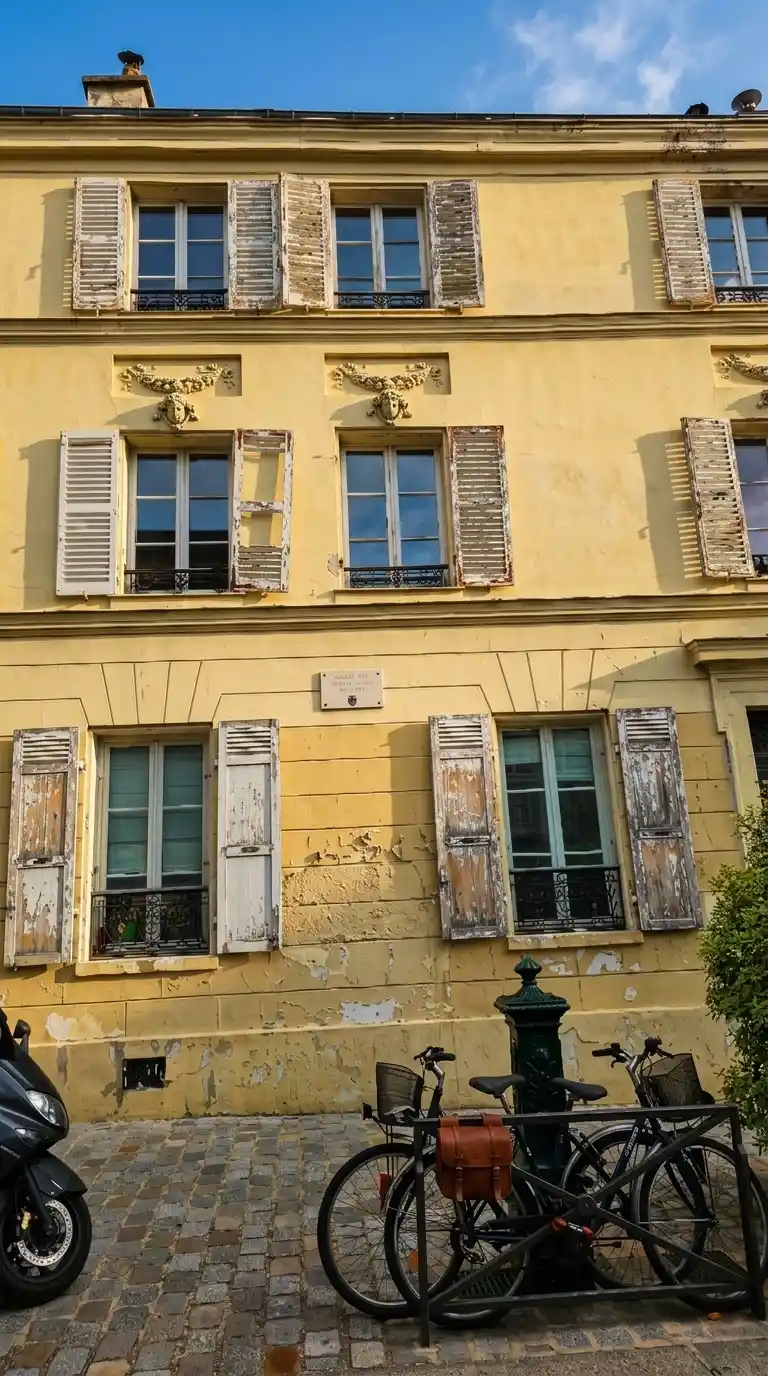
Turn right onto this short street, and turn back to the same point three minutes later. On the left, at numbers 2, 4, and 6, are houses from the early 18th century that remain from a palace of the same period that has undergone changes. At number 4, for reasons of economy and on the eve of the Revolution, the feminist writer Olympe de Gouges (1748–1793) lived.
De Gouges supported the ideas of the French Revolution , was shocked by the acts of terror, and finally was completely disgusted by the execution of the king. Then she had the shameful idea of writing to Robespierre (Maximilien de Robespierre, 1758–1794) and suggesting that he jump into the Seine with her. This unfortunate initiative brought her to the gallows.
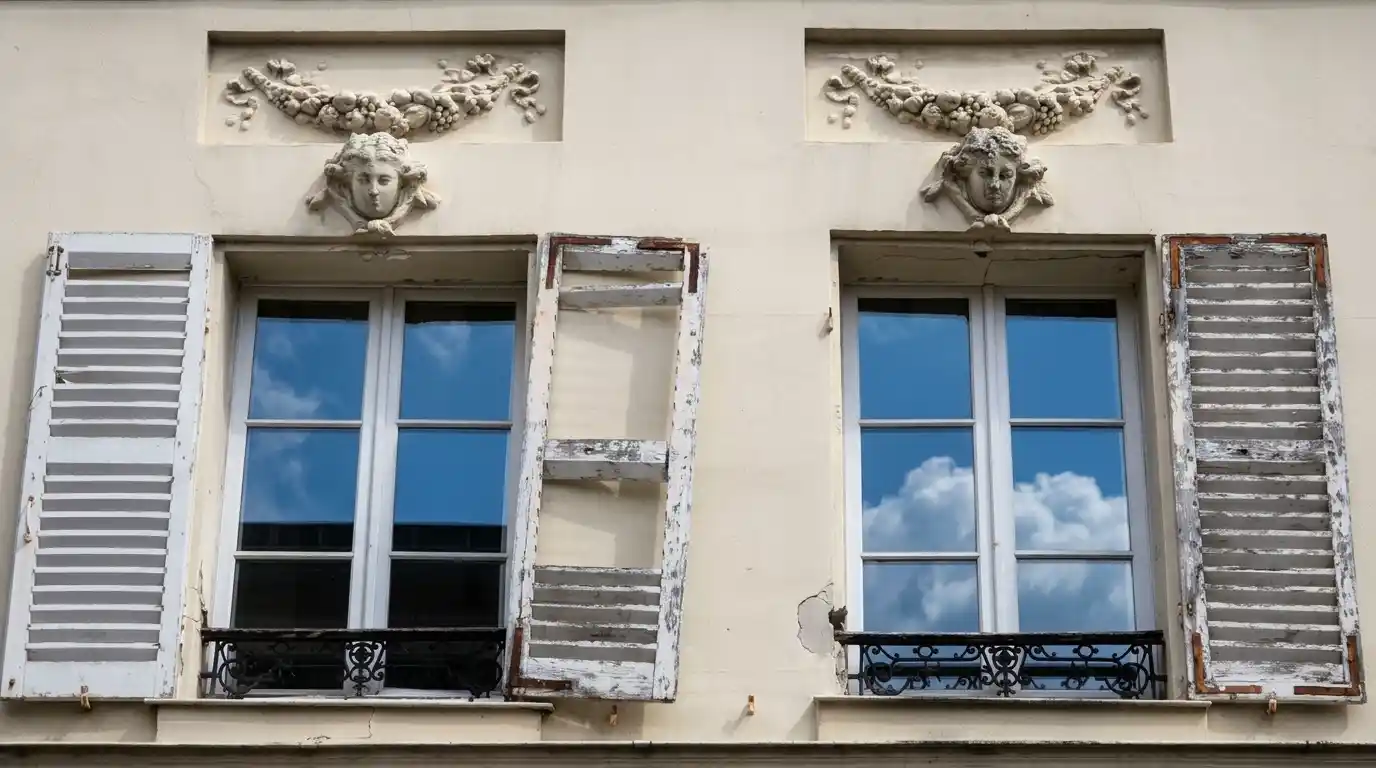
Two street windows still have stone masks and carved fruit garlands above them, and the shutters around them have been peeling for years. This is probably the only part of Otay where you can see what the neighborhood looked like before the 16th arrondissement became what it is.
The obelisk that remains from the cemetery
place de l'Église-d'Auteuil, 75016 Paris
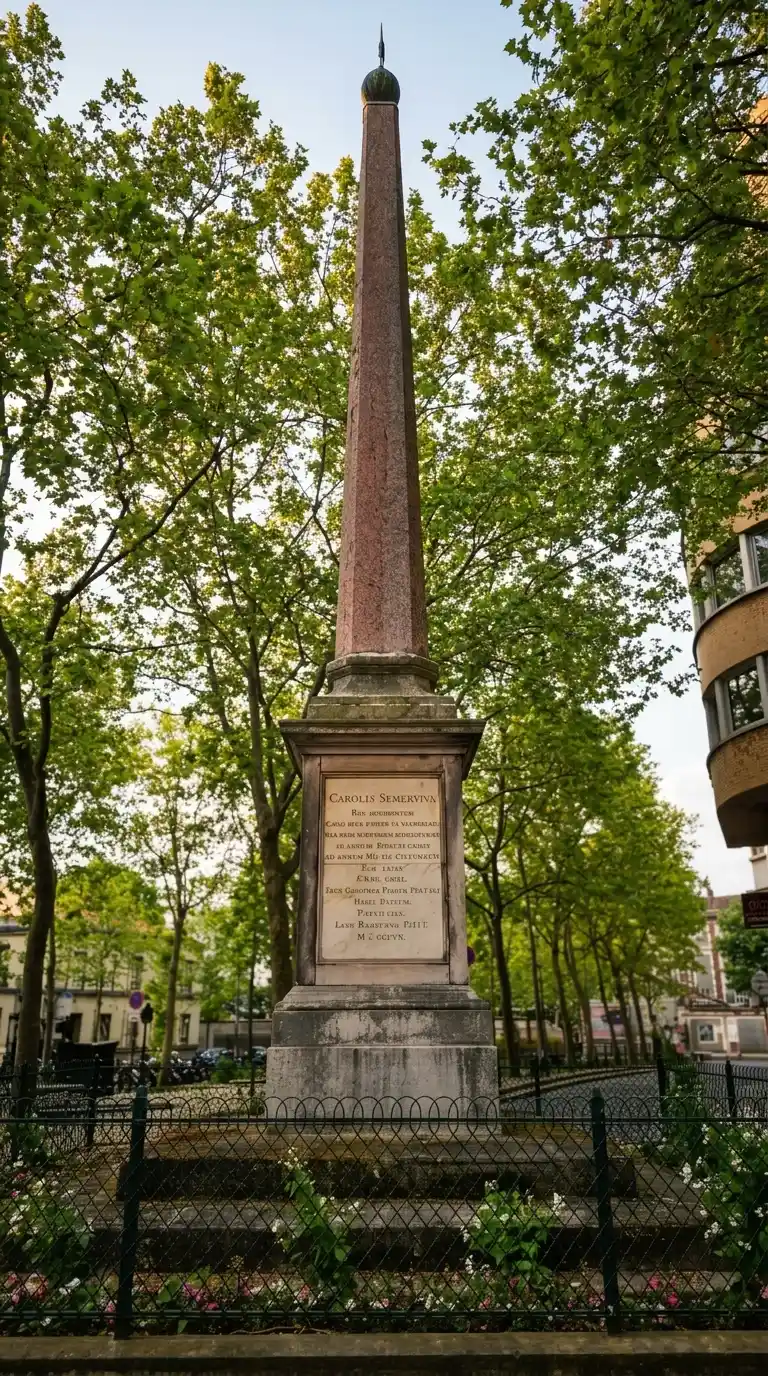
In the square in front of the church stands a small obelisk of reddish breccia marble on a marble base, which is all that remains of the village cemetery. Anne Lefèvre d'Ormesson, wife of the minister Henri-François d'Aguesseau (1668–1751), asked to be buried among the poor in the cemetery of Auteuil. In 1753, Louis XV ordered an obelisk to be placed at the head of their grave.
In 1793, the cemetery was moved to another location, and the obelisk was left alone in what became a public square. During the Consulate and the Empire, the governor of the Seine, Nicolas Frochot (1761–1828), replaced the weather vane on its top with a globe and a cross, and since 1929 it has been listed as a protected heritage site. A long epitaph is engraved on the base, alongside the sentence: “La Nature ne fait que prêter les Grands Hommes à la Terre. Ils s'élèvent, brillent, disparaissent. Leur exemple et leurs ouvrages restent,” meaning “Nature only lends great men to the earth. They rise, shine, disappear. Their example and their works remain.”
The church that closes the route
Place de l'Église-d'Auteuil, 75016 Paris
The parish of Auty was founded in 1190, and the cornerstone of the old church was laid in 1319, approximately where the present church stands. It was dilapidated and too small for the population, which had grown from 1,000 to 10,000 between 1850 and 1875. Father Pierre-Henri Lamazou (1828–1883), who had been appointed parish priest in 1874, pushed through the rebuilding with tenacity and even at his own expense, against the opposition of a radical municipality.
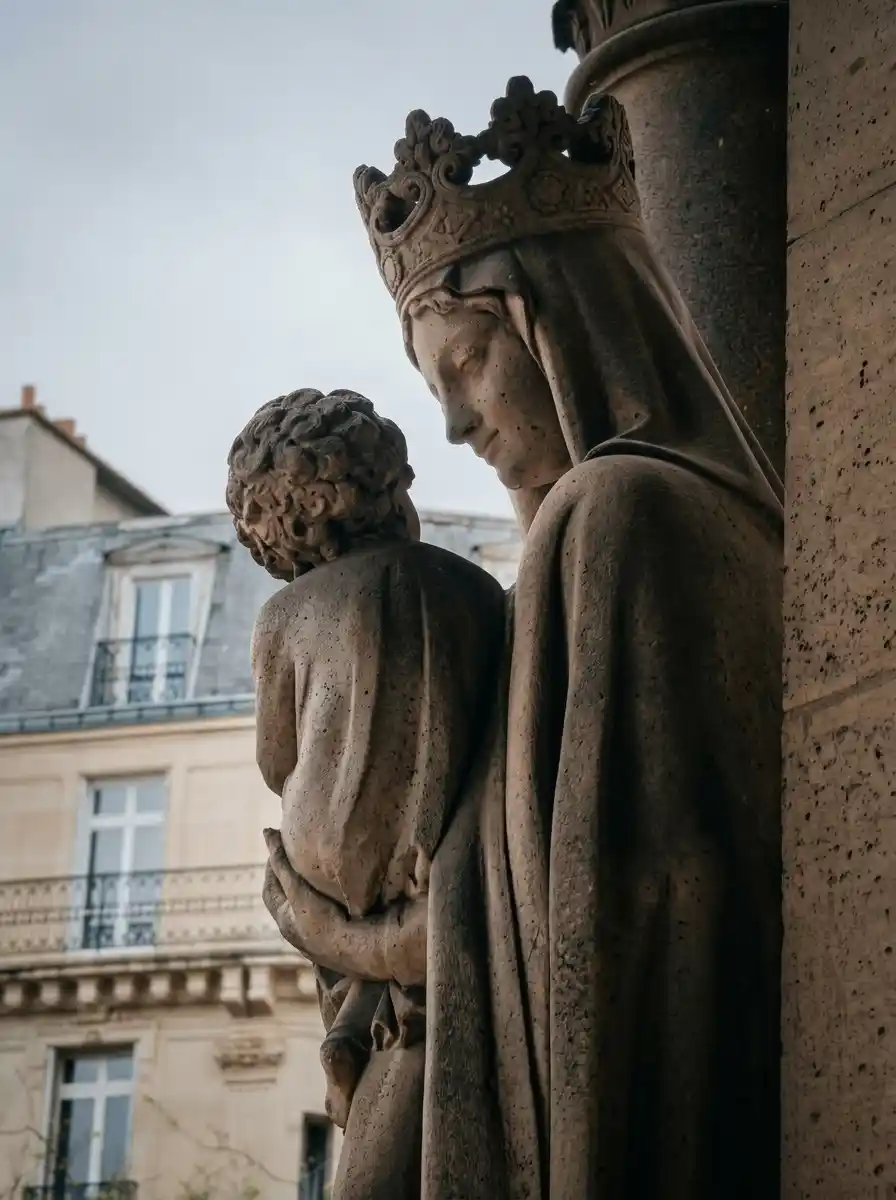
It was built between 1877 and 1892 by Émile Vaudremer (1829–1914), the architect of the diocese, in the Romanesque-Byzantine style that was fashionable in those years. The church rises 63 meters, and the bell tower next to it rises 50 meters, and the cone at its top takes its shape from the papal crown. The relief above the portal was sculpted in 1880 by Henri-Charles Maniglier (1826–1901).
There is a small detail worth looking for on the facade: the coat of arms of the city of Paris appears on it decorated with stars instead of the traditional fleur de lys. This was at once a tribute to the city council that approved the construction, and a reminder of the explosive political climate in which it was made possible.
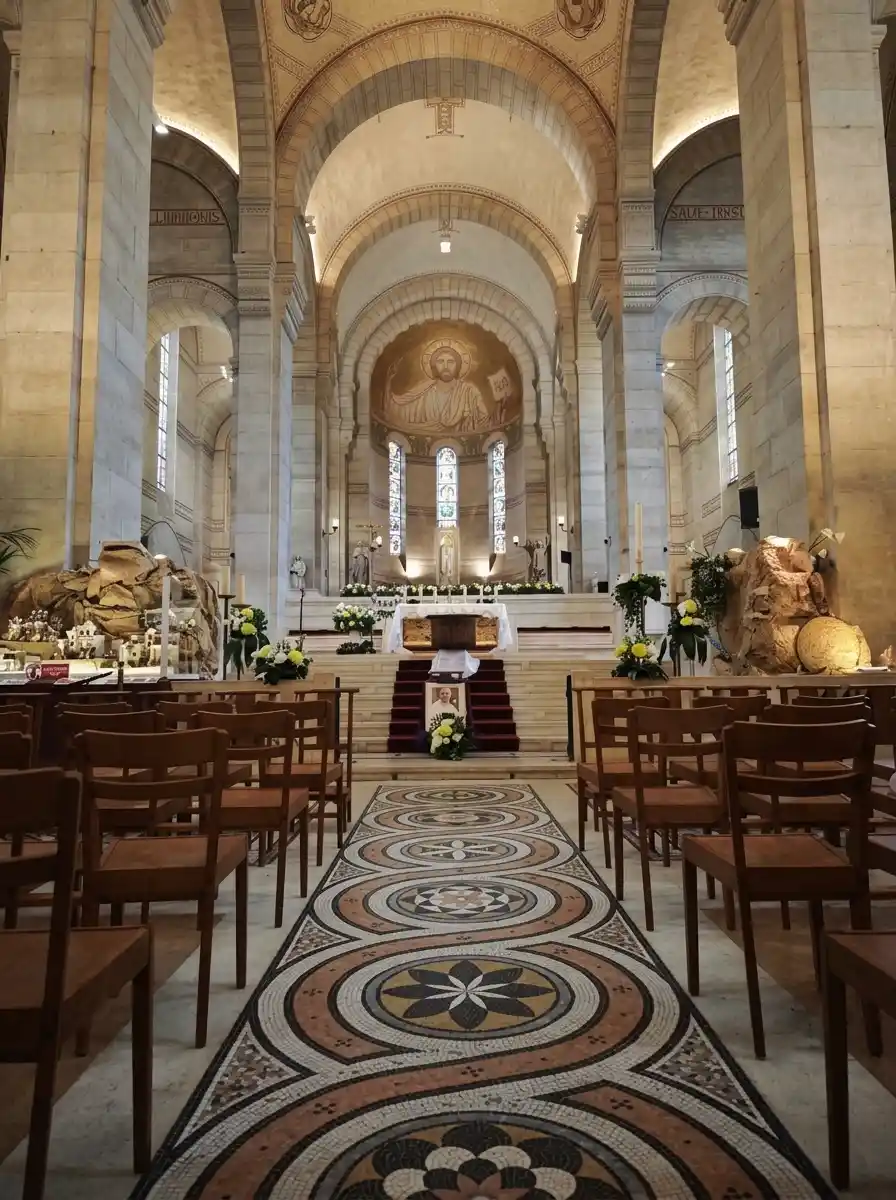
Inside, a mosaic floor leads the eye to the altar, heavy round arches, and a mosaic figure of Christ in the apse shell. In the gallery above the entrance stands an organ built by Aristide Cavaillé-Coll (1811–1899) in 1884 and 1885, and expanded in the late 1930s. Lamazo himself, who made it all happen, is buried inside the church he built.
The route ends here, at the square where the village began. If you live nearby, or just want to discover more of the secrets of the 16th arrondissement , a whole route awaits you in the neighboring neighborhood: the Passy neighborhood walking route.
Accommodation in the 16th arrondissement, within walking distance of the route
The great advantage of the 16th arrondissement is that you can sleep there and set out on this route on foot, without the metro and without planning. The three apartments below are owned by Audi, whose apartments I have been recommending for years, and they are all located in Passy or Trocadero: from each of them you can reach Ranelagh Gardens by a short walk or one stop on line 9.
-
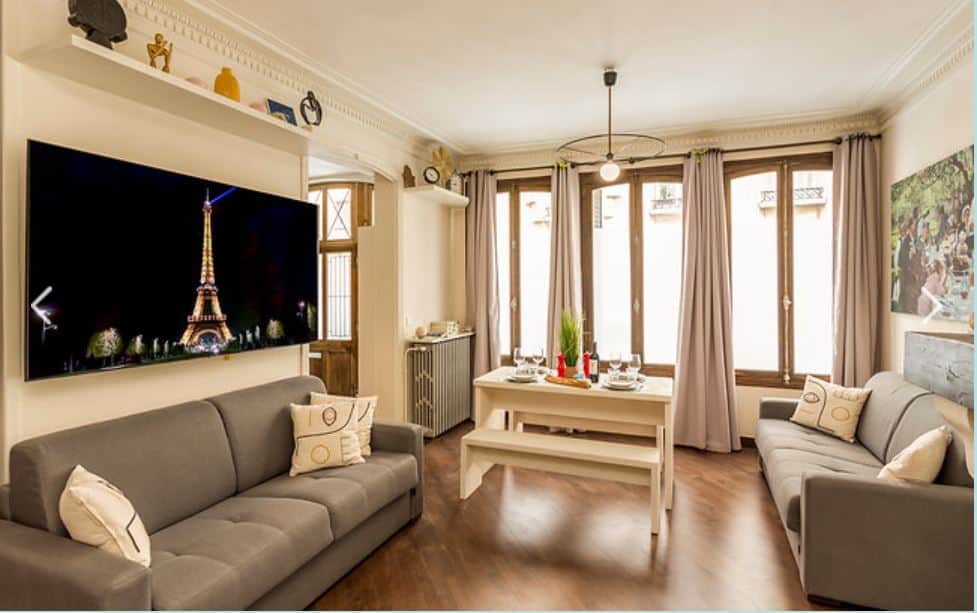
Passy, 58 rue Nicolo
A fully equipped ground floor apartment in the heart of the bourgeois neighborhood of Passy, with no stairs and no digital code at the entrance, making it suitable for Sabbath-keepers. From rue Nicolo, it takes about a ten-minute walk to reach Ranelagh Gardens, which is the most convenient starting point for the route.
-
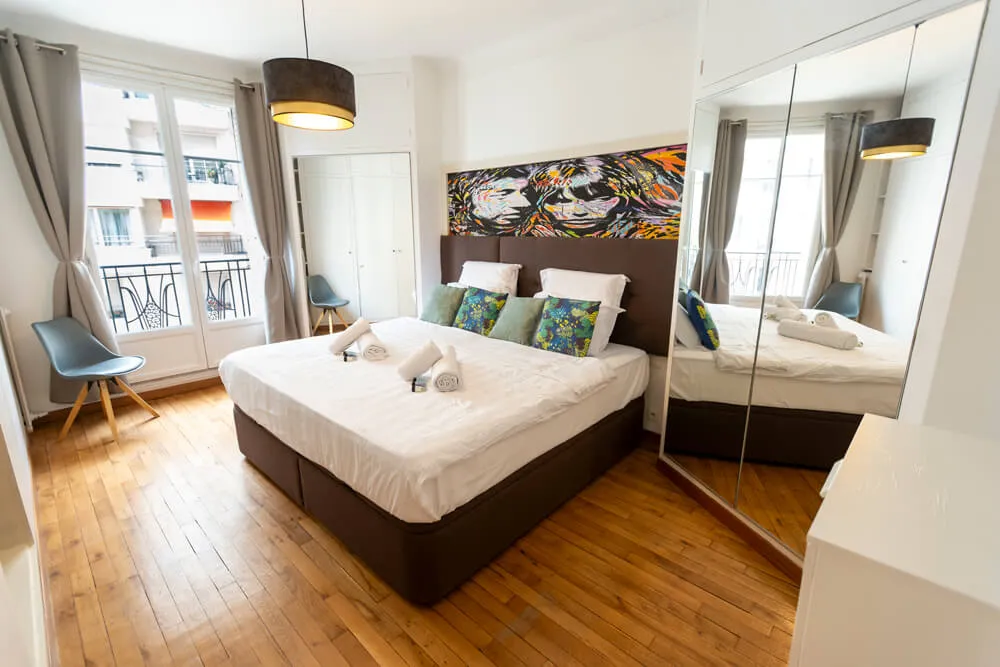
Trocadéro, 45 avenue Paul Doumer
A spacious and bright apartment on the second floor with an elevator, with two bathrooms, a serious upgrade in Paris. Avenue Paul Doumer connects Trocadero to La Muette, so you can either walk to the start of the route or jump one stop on line 9.
-
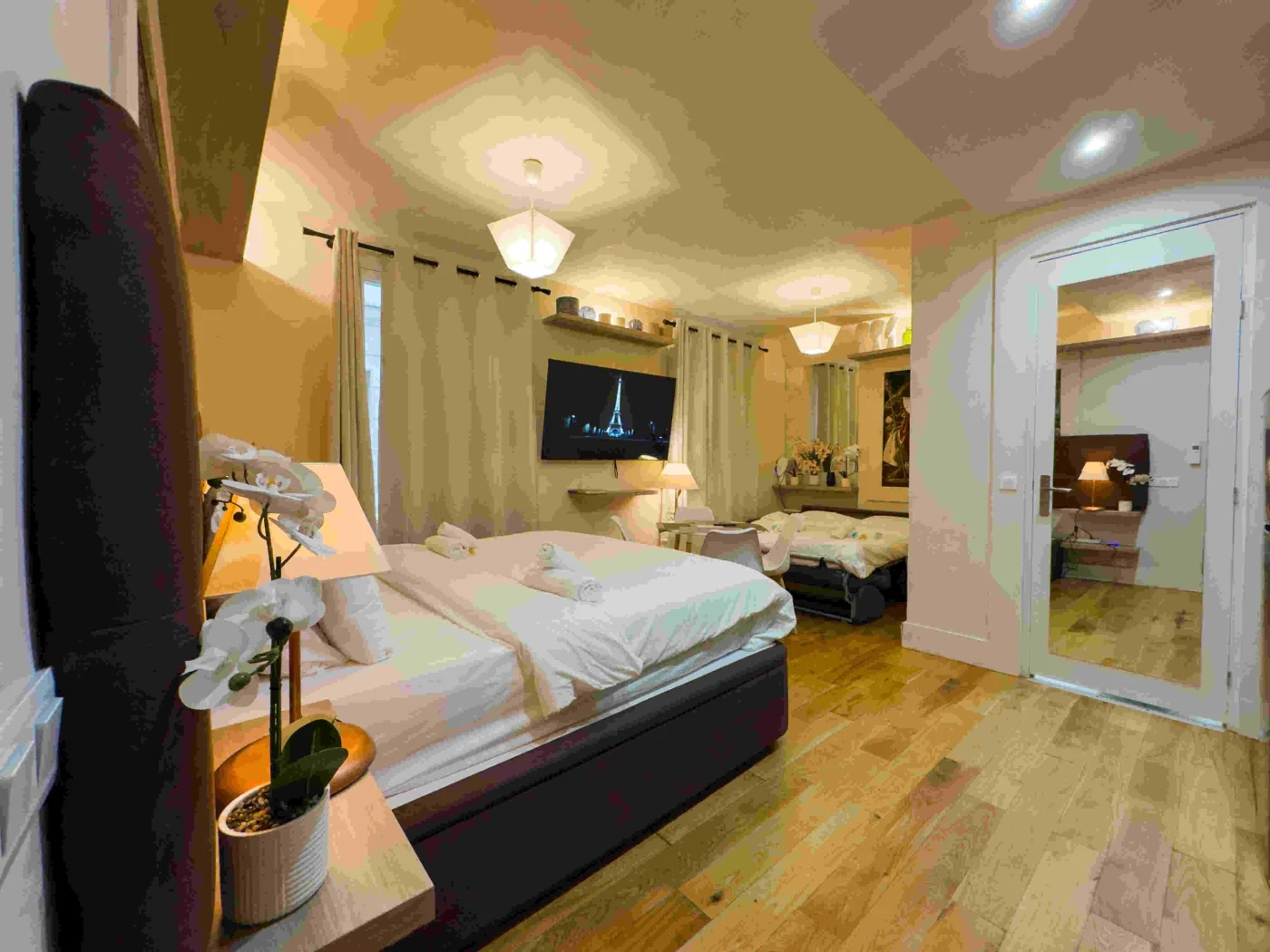
Trocadero, 11 rue Magdebourg
A quiet ground floor apartment in an internal courtyard, 200 metres from place du Trocadéro, and particularly suitable for couples and those who have difficulty with stairs. From there line 9 takes you to Ranelagh station in two stops, and the walk back in the evening along avenue Paul Doumer is a bonus.
Those looking for additional options are invited to browse the recommended apartments in the 16th arrondissement and the recommended hotels in the 16th arrondissement , where there are tickets by area and by price range.
Questions and answers about the route in Otay
These are the questions I get the most about this area.