
in short
- What's there: Library Museum (Mazarin Gallery, Grand Cameo of France, Throne of Dagobert), Oval Hall and Vivienne Garden
- How much does it cost: Museum €15, free for under 26s; Oval Hall and Garden free
- When is open: Tuesday 10:00–20:00, Wednesday to Sunday 10:00–18:00, closed on Mondays
- How to get there: 5 rue Vivienne, metro Bourse (line 3), Pyramides (lines 7 and 14) or Palais-Royal (lines 1 and 7)
- history: Mazarin Palace from 1643, King's Library from 1721, Labrouste Hall from 1868, Oval Hall from 1936
- Bonus: Four 17th-century “chastity veils” still remain on the ceiling of the Mazarin Gallery.
The National Library of France on the Richelieu site (Bibliothèque nationale de France, site Richelieu) is a place where, in one visit, you can stand under the ceiling that Cardinal Jules Mazarin (1602–1661) commissioned, peek into the reading room where readers were already warming their feet in 1868, and see up close what remains of the royal collections after two robberies, one of which ended up in the bottom of the Seine. All this behind a single facade, on a quiet street north of the Palais Royal.
I visited the Richelieu site in 2023, when the museum that opened there was still relatively new, and I came back with quite a few photos that you will see throughout the article. A large part of the place, by the way, is open for free: the Oval Hall, a huge reading room from the beginning of the 20th century, is open to anyone who enters from the street, without a ticket or reservation. The museum itself, with about 900 items from the library's collections, will only open in 2022 (you can find the full list of museums in the city in the Paris Museum Guide ), and it is located within walking distance of the Louvre , so it is easy to combine it with a day trip to the city center.
Incidentally, the site is named after the rue de Richelieu, where the historic entrance is located, and not after Cardinal Richelieu (Armand Jean du Plessis de Richelieu, 1585–1642) himself (although the street is, of course, named after him). The person who built a palace here was actually his political heir, Mazarin.
So before we set off and visit the Richelieu site, let's talk about what you'll find in this article. I'll start with the practical information: how to get there, when it's open, how much it costs, and what you can see for free. Then you'll find the places you shouldn't miss on a visit, and from there to the story of the place: a cardinal whose library was sold to finance the bounty on his head, a duke who walked around the palace with a chisel, a Scottish banker whose scheme collapsed at the gates of the house, and one burglary on the night of November 1831. At the end of the article, you'll find recommendations for accommodation in the nearby 1st arrondissement and answers to frequently asked questions.
Practical information for visiting the National Library on the Richelieu website
Where is it and how to get there?
The historic site of the library occupies an entire block in the 2nd arrondissement, between rue Richelieu, rue Vivienne, rue Colbert and rue des Petits-Champs, right on the border with the 1st arrondissement. The entrance for visitors to the museum and the Oval Hall is at 5 rue Vivienne, while the entrance at 58 rue Richelieu is mainly used by readers and researchers.
The easiest way to get there is by metro: Bourse station on line 3, Palais-Royal-Musée du Louvre station on lines 1 and 7, or Pyramides station on lines 7 and 14. Bus lines 20, 29, 39, 74 and 85 also stop nearby. If you are coming from the Louvre Museum , simply cross the Palais Royal gardens to the north and you are there.
Opening days and hours
The museum is open on Tuesdays from 10:00 to 20:00, and Wednesday through Sunday from 10:00 to 18:00. It is closed on Mondays. The Oval Hall is open the same hours, and is also closed on Mondays.
The museum is also closed on the following holidays:
- January 1
- Easter Monday
- 1 May
- Monday of Pentecost (Pentecost)
- July 14
- August 15
- December 25
However, it is open on May 8, the holiday of Aliyah, and November 1 and 11. Two more things you should know before you come. First: the sensitive exhibits in the Galerie Mazarin and the Rotunda change three times a year, and with each change, these two spaces are closed for a few days. Second: every year, all the library sites in Paris close for a week of annual vacation at the end of summer. Anyone arriving in late August or early September should check the dates on the museum's official website.
Tickets and prices
The good news is that the Oval Office, Vivian Garden, and the foyer are open to everyone for free, with no reservations required. A ticket is required only for the museum and the temporary exhibitions.
Prices, as of September 1, 2026:
- Museum admission: €15 (reduced price: €10)
- Combined ticket for the museum and exhibition: €18 (discounted price: €13)
- Guided tour of the museum by the library: €20, including admission
Admission to the museum is free for young people under 26 and students up to 35 (with ID), as well as for people with disabilities and one companion. It is advisable to book a ticket to the museum in advance to guarantee a spot and avoid waiting.
It is highly recommended to book a ticket in advance using this link.
How long, and when to come?
If you only have a short time, the Oval Hall and the garden cost nothing, and can be combined with a short stop on the way between the Louvre and the Galerie Vivienne , which is just around the corner. The museum requires more time, especially if you want to read the explanations in the Galerie Mazarin. Those who want a leisurely visit are welcome to take advantage of the late opening on Tuesday, until 20:00 PM.
What to see at the National Library on the Richelieu site
The museum is on the first floor (there is an elevator) and covers about 1,200 square meters, with about 900 items selected from the library's collections: antiquities, coins, jewelry, manuscripts, maps, notes, engravings and costumes. The route begins in antiquity and reaches the present day. Some of the items, mainly the manuscripts and paper, are replaced three times a year due to their sensitivity to light, so what I saw may not necessarily be waiting for you. These are the places that, in my opinion, are worth the visit:
The Oval Hall (Salle Ovale)
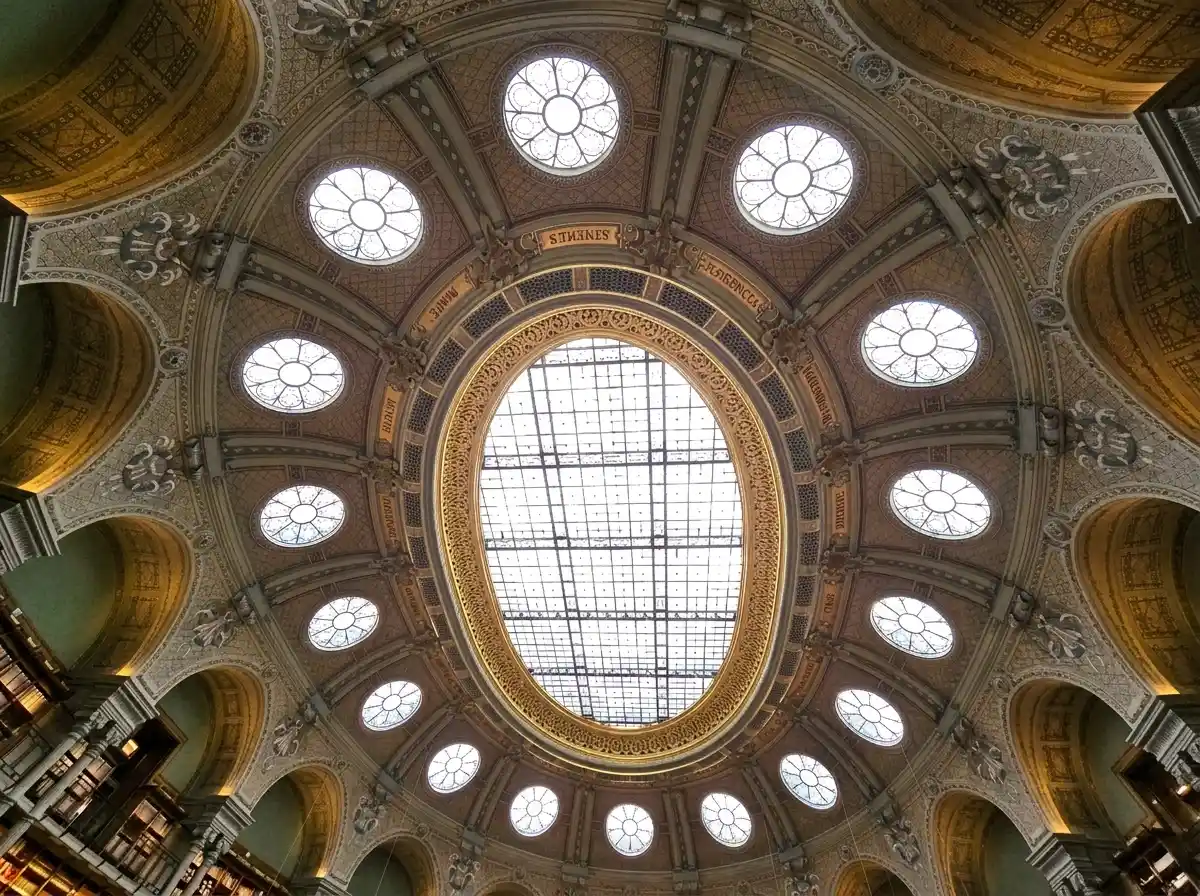
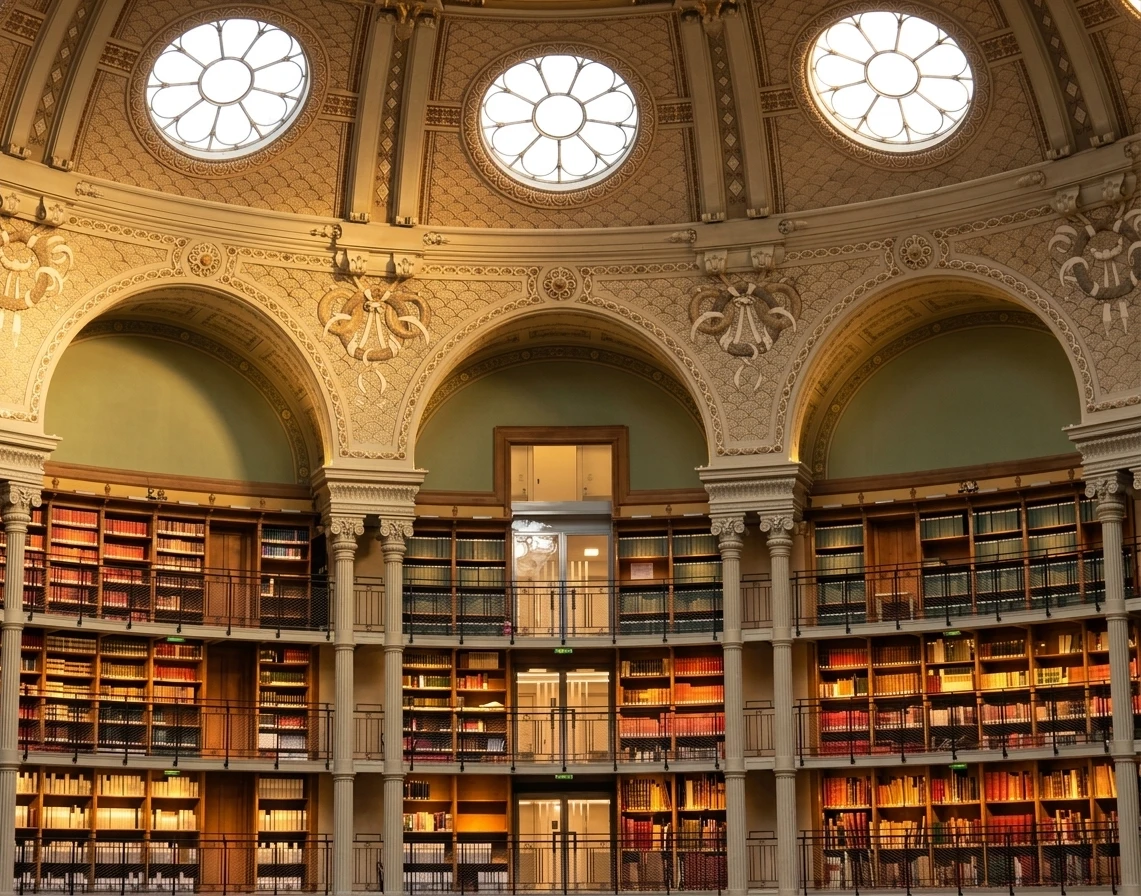
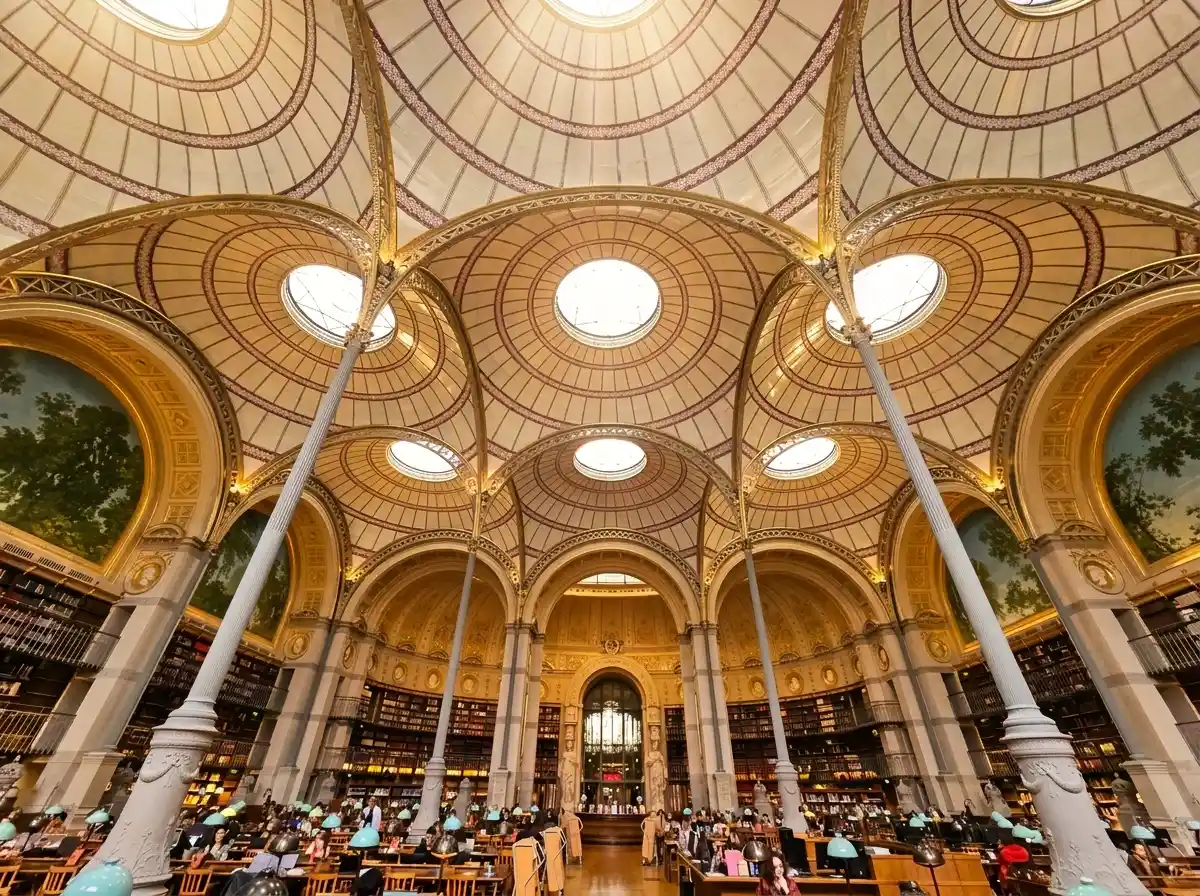
The hall, which was nicknamed the “Oval Paradise” (Paradis Ovale), is 43.70 meters long, 32.80 meters wide, and 18 meters high. At its top is a glass roof surrounded by a decoration of gilded acanthus leaves, and below it are 16 round windows surrounded by mosaic, and above each of them is the name of a city that was important in the history of culture and libraries. Around it run 3 levels of shelves with balconies and perforated iron floors, which rest on 16 pairs of cast columns.
Today, the hall is an all-ages reading room, with 160 seats and more than 20,000 volumes on open shelves, including more than 11,000 comic and graphic novel titles (so even children will find a reason to sit still, which is a miracle in itself). Along the outer ring are stations that allow you to spin 3D globes, digitally measure stage costumes, and follow the evolution of a famous book from draft to print.
Mazarin Gallery
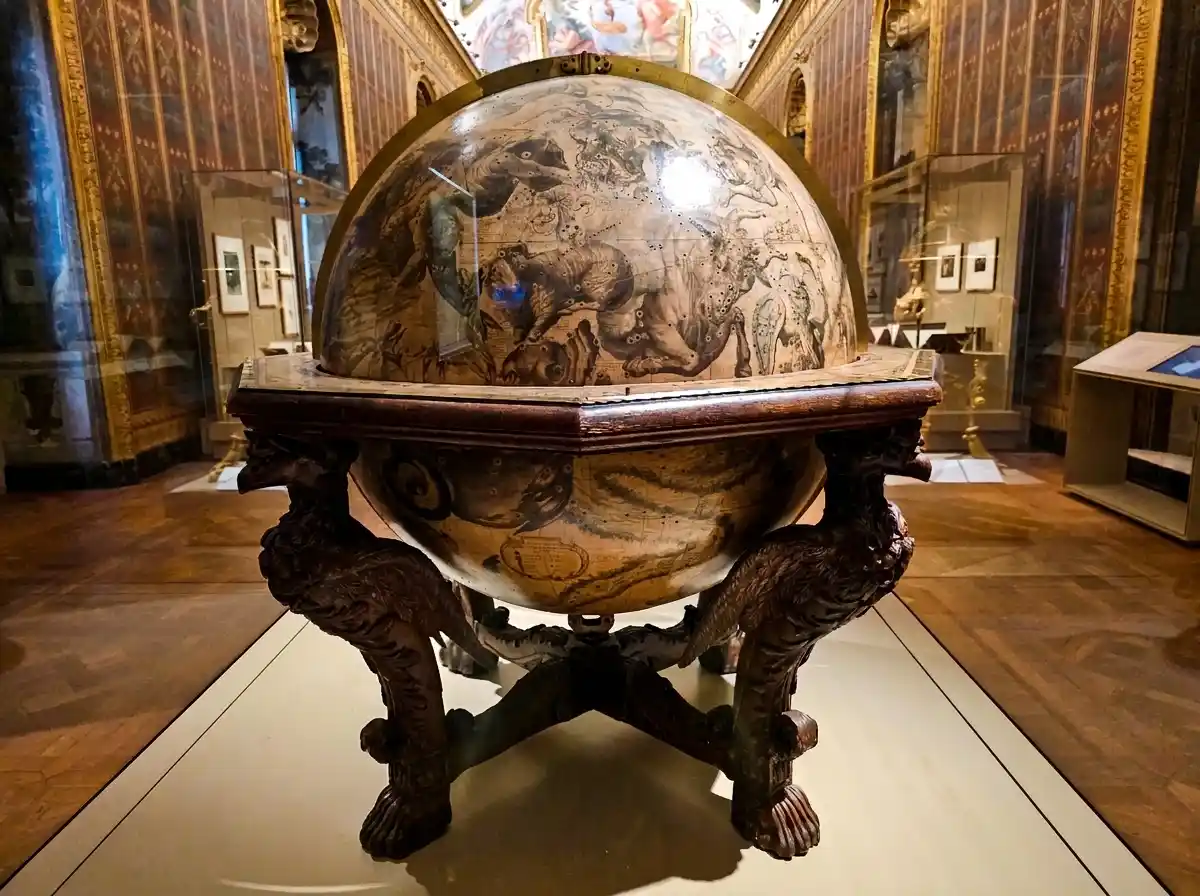
This is the gallery built by François Mansart (1598–1666) for Cardinal Mazarin in 1644–1646 to display the finest pieces in his collection. It is 45.55 meters long and 9.20 meters high, and is one of the few Baroque galleries in France that has survived to this day.
The ceiling was painted in 1646–1647 by Giovanni Francesco Romanelli (1610–1662) and his workshop, inspired by the “Métamorphoses,” a collection of Roman myths. In the center you will see Jupiter striking the giants with lightning, and in the four large sections around it Apollo on Mount Parnassus and the story of Helen, from the judgment of Paris to the fall of Troy. Pay particular attention to the naked bodies: some of them still have small canvases placed on them that were not there when Romanelli finished his work (you will read the story behind them in the history section).
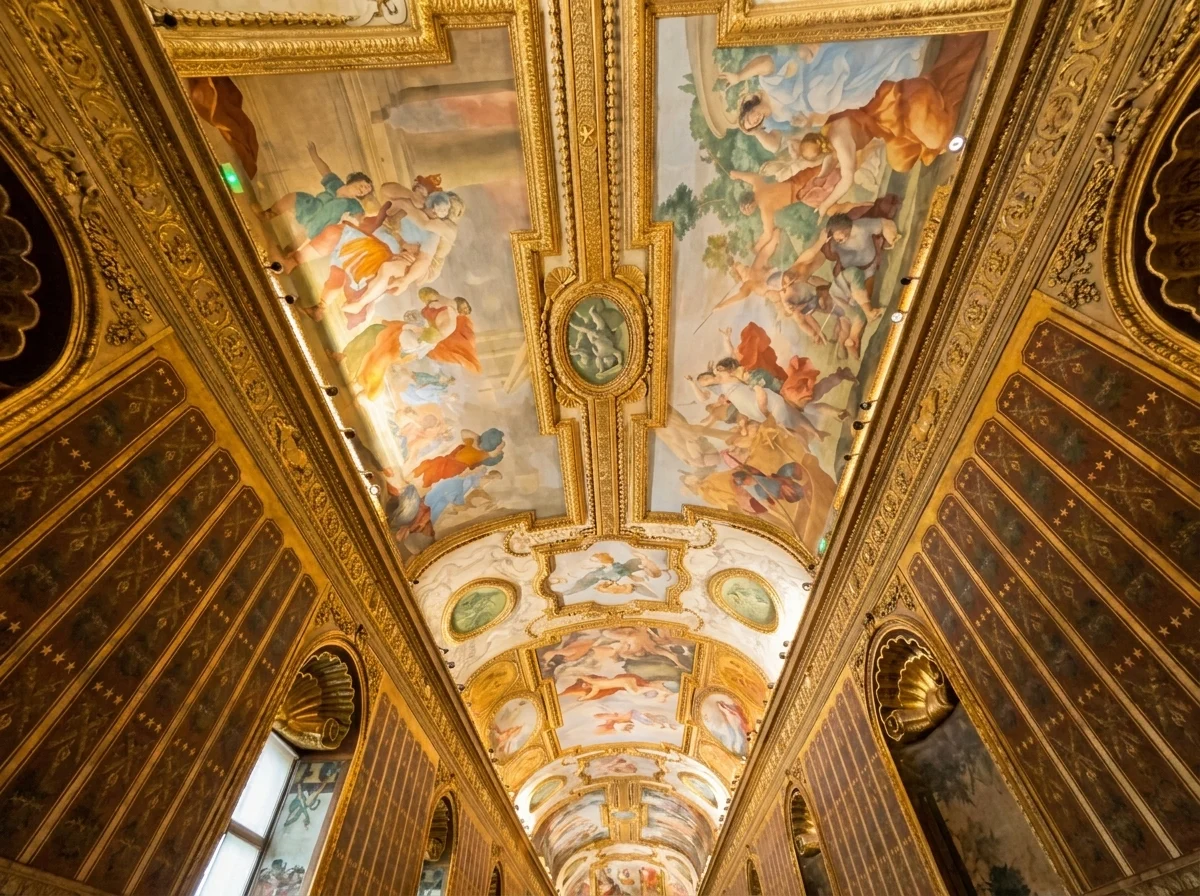
Under this ceiling, the library's "treasure gallery" is displayed today: decorated manuscripts, rare books, engravings and photographs, which, as mentioned, are changed three times a year.
The Columned Hall and the Treasure Room
The chronological route begins in the Hall of Columns (salle des Colonnes), where the antiquities collected in the king's cabinet are displayed: urns, statuettes and coins from Greece and Rome, amulets and jewelry, and objects from everyday life. Within these walls, incidentally, the Phoenician and Palmyra alphabets were first deciphered.
In the adjacent room, the Cabinet précieux, the coins, jewels and carved stones are concentrated. At its center is the Berthouville Treasure, a collection of Roman silver weighing more than 25 kg that a Norman farmer discovered in 1830 while plowing his field. The treasure came from a Gallo-Roman temple dedicated to the god Mercurius, and has been on display in the Cabinet of Medals since June 1830.
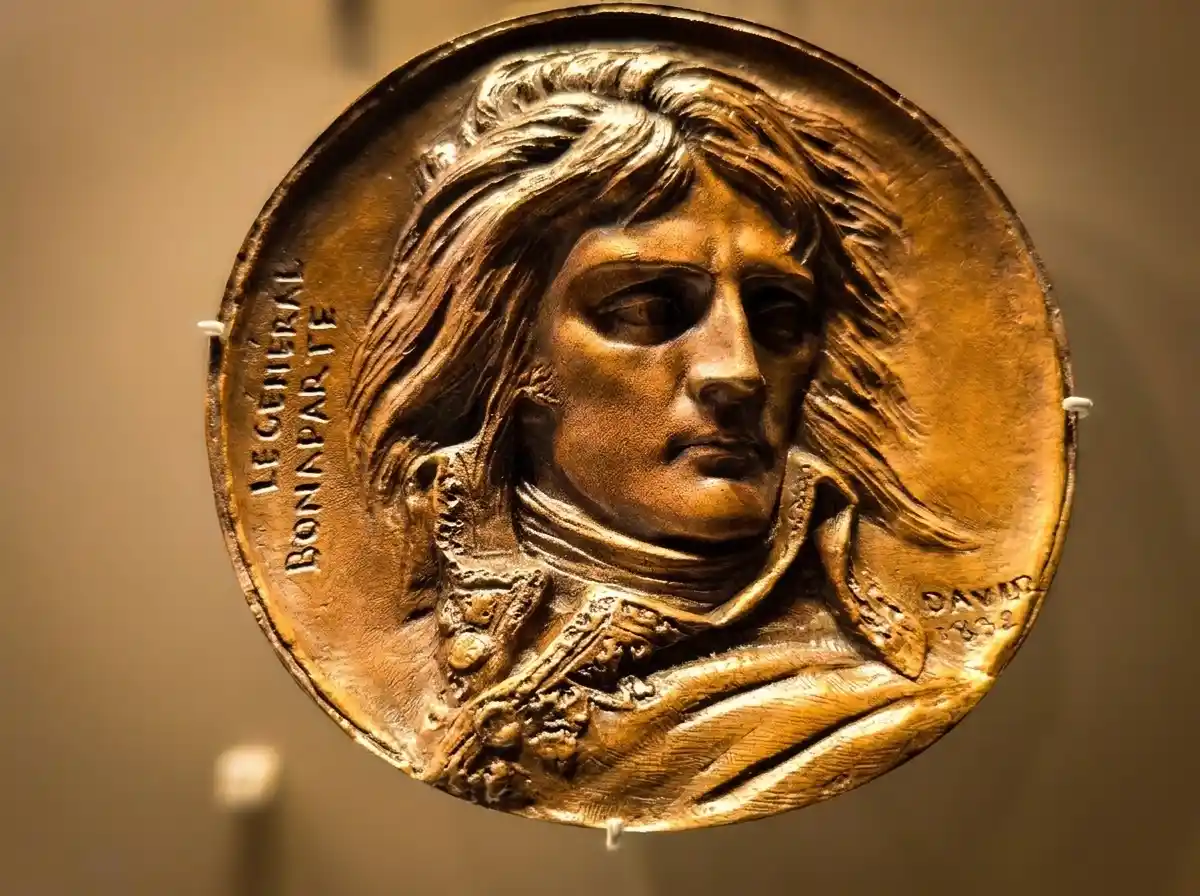
Among the museum's notable exhibits are the Grand Camée de France, the largest cameo remaining from antiquity, the Throne of Dagobert, and the chessboard of Charlemagne (ruled 768–814). You'll read about the adventures the cameo has gone through below.
If you have more time on the Richelieu site
Hall de Louin, Hall Barthélemy and the salon of Louis XV
The collections in the Salle de Luynes are a gift from Duke Honoré d'Albert de Luynes (1802–1867), who donated about 1,000 objects and 7,000 coins to the cabinet. Among the items not to be missed:
- The sword of Boabdil (reigned 1482–1492), the last Muslim ruler of Granada
- An extremely realistic Hellenistic bronze head from Samnium
- Aurillac Gallic gold bracelet
- The mixing jar of Metapontum
The Barthélemy Room, named after Jean-Jacques Barthélemy (1716–1795), keeper of the king's cabinet, was once the reading room of the coin department. Today, the room tells the story of the collection, and among its exhibits are gold medals commissioned by Louis XIV and the Eucratideion, the largest gold coin remaining from the ancient world.
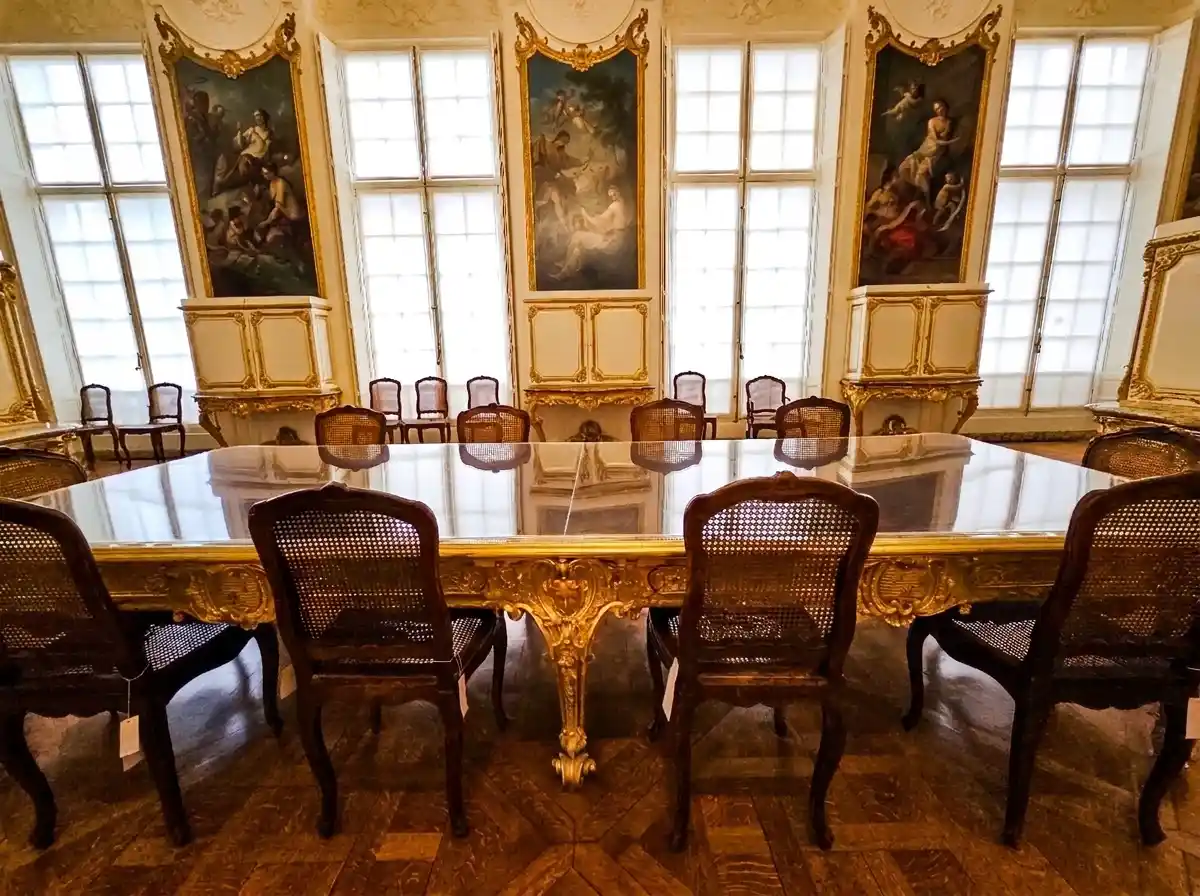
The Salon Louis XV, formerly known as the “King’s Cabinet”, was designed in the mid-18th century, during the reign of Louis XV (reigned 1715–1774), for the collection of coins and carved stones of the crown. The medallion cabinets and the large table in its center were built in 1742, and the four paintings above the doors were painted by François Boucher (1703–1770) in the same year. Since the salon has been open to researchers and the curious since its inception, it is considered the oldest museum in Paris.
The Rotunda, Lavrost Hall, and Vivian Garden
The Rotonde, a circular space of about 100 square meters, was designed by Henri Labrouste (1801–1875) at the end of the 19th century. It is dedicated to the performing arts, and a large glass door opens onto the Galerie Auguste Rondel, an impressive warehouse designed by Labrouste and housing most of the collection from which the library's performing arts department was born.
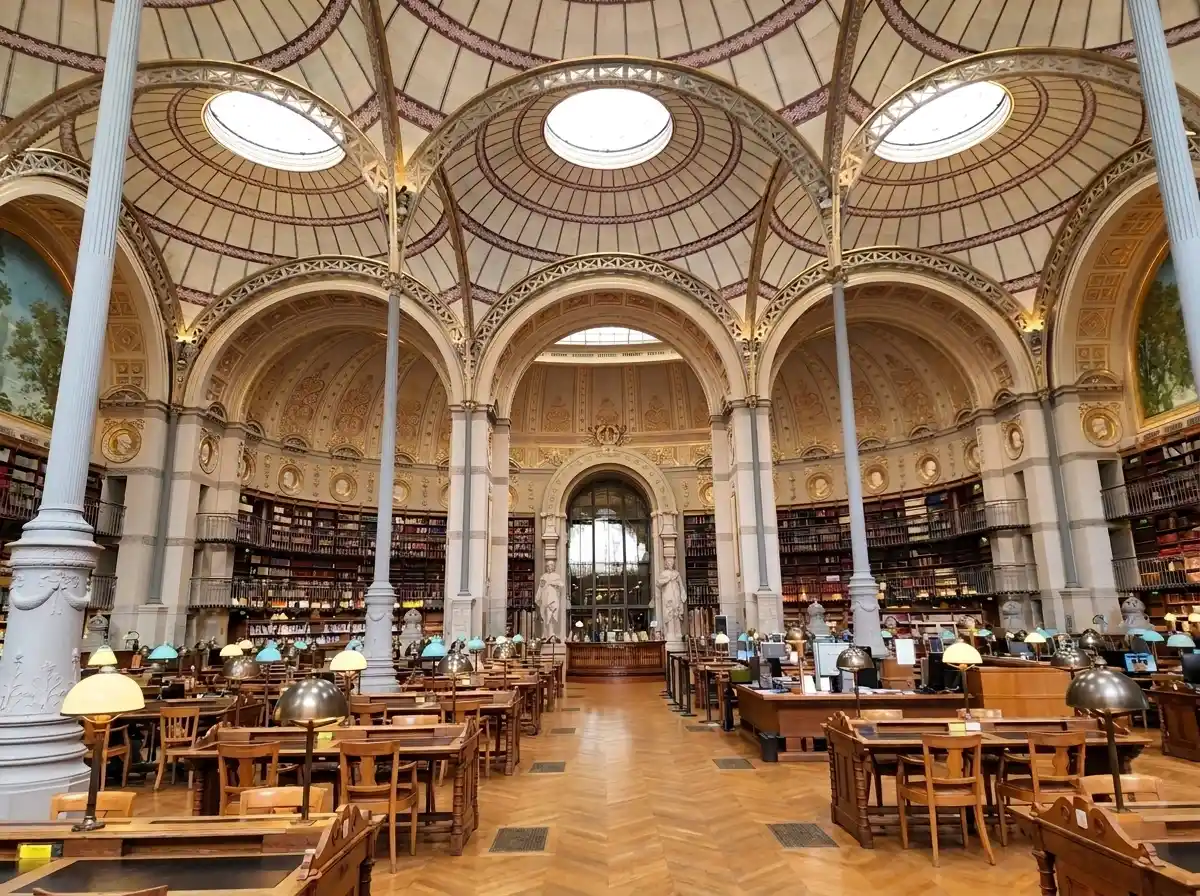
The Labrouste Hall (salle Labrouste), a large 19th-century reading room, is now used as the library of the National Institute of Art History (INHA) and is not open to the public, but can be glimpsed from the cour d'honneur and the foyer in front of it. Those arriving during the weekend of the European Heritage Days (Journées européennes du patrimoine), in September, can usually go inside.
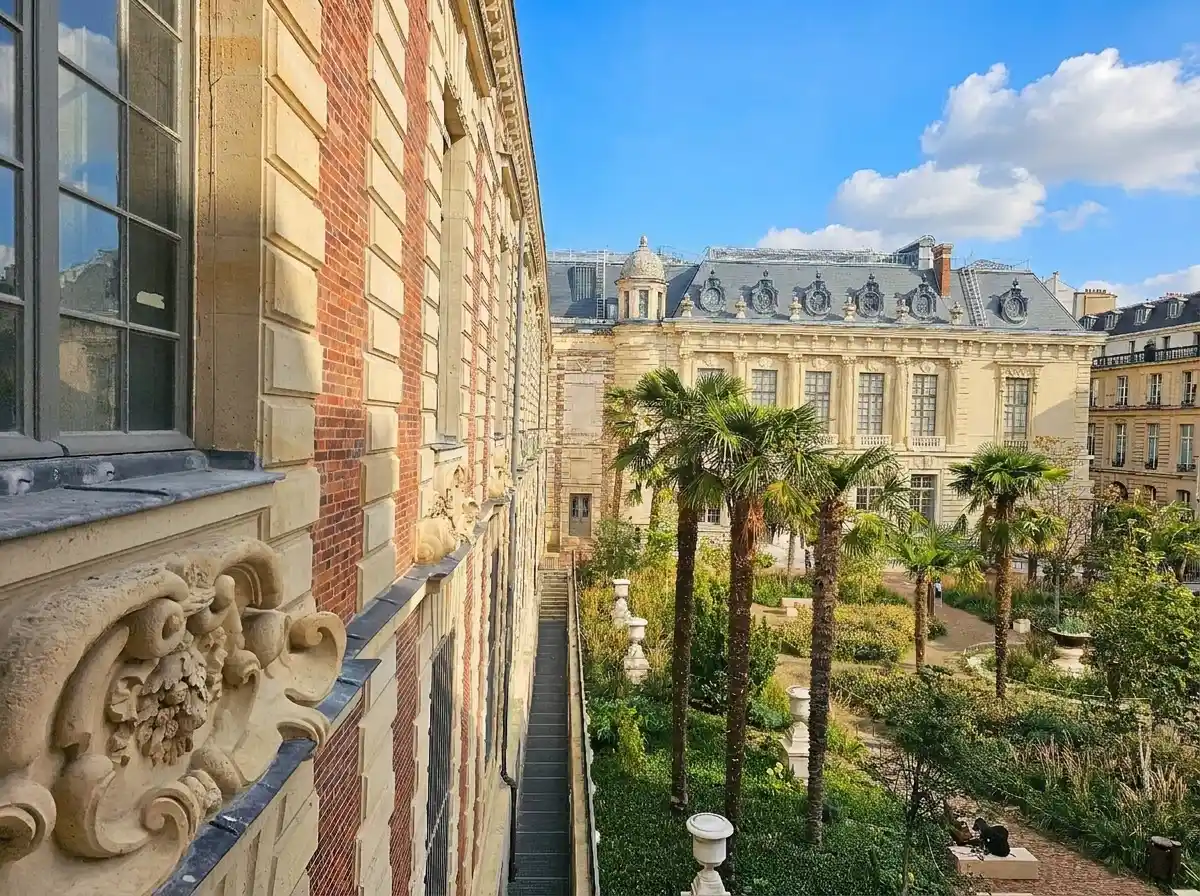
Behind the building, on the Rue Vivienne side, is the Jardin Vivienne, a garden open to all. There is also a café and a bookstore on site, so there is a place to rest between the museum and the Oval Office.
The history of the National Library on the Richelieu website
The building you are visiting is actually two stories that have come together: the story of a palace that Cardinal Mazarin built for himself, and the story of the library of the kings of France, which wandered for centuries until it found a home there.
14th to 17th Centuries: From the Royal Library to the Cardinal's Palace
The story of the library begins not so far from here, at the Louvre. In 1368, Charles V (reigned 1364–1380) set aside a special room in the palace for his books, and a decade later it already contained 917 manuscripts. However, after his death, the collection was sold and dispersed (you can read about the medieval Louvre in the article on the history of the Louvre ).
Louis XI (reigned 1461–83) founded a new library in 1461, which was passed from king to king and moved with them between Amboise , Blois , and Fontainebleau. In 1537, during the reign of Francis I (reigned 1515–47), a principle was established that accompanies the library to this day: a copy of every book published in France must be deposited in the king's library. Thirty years later, in 1567, Charles IX (reigned 1560–74) returned the library to Paris.
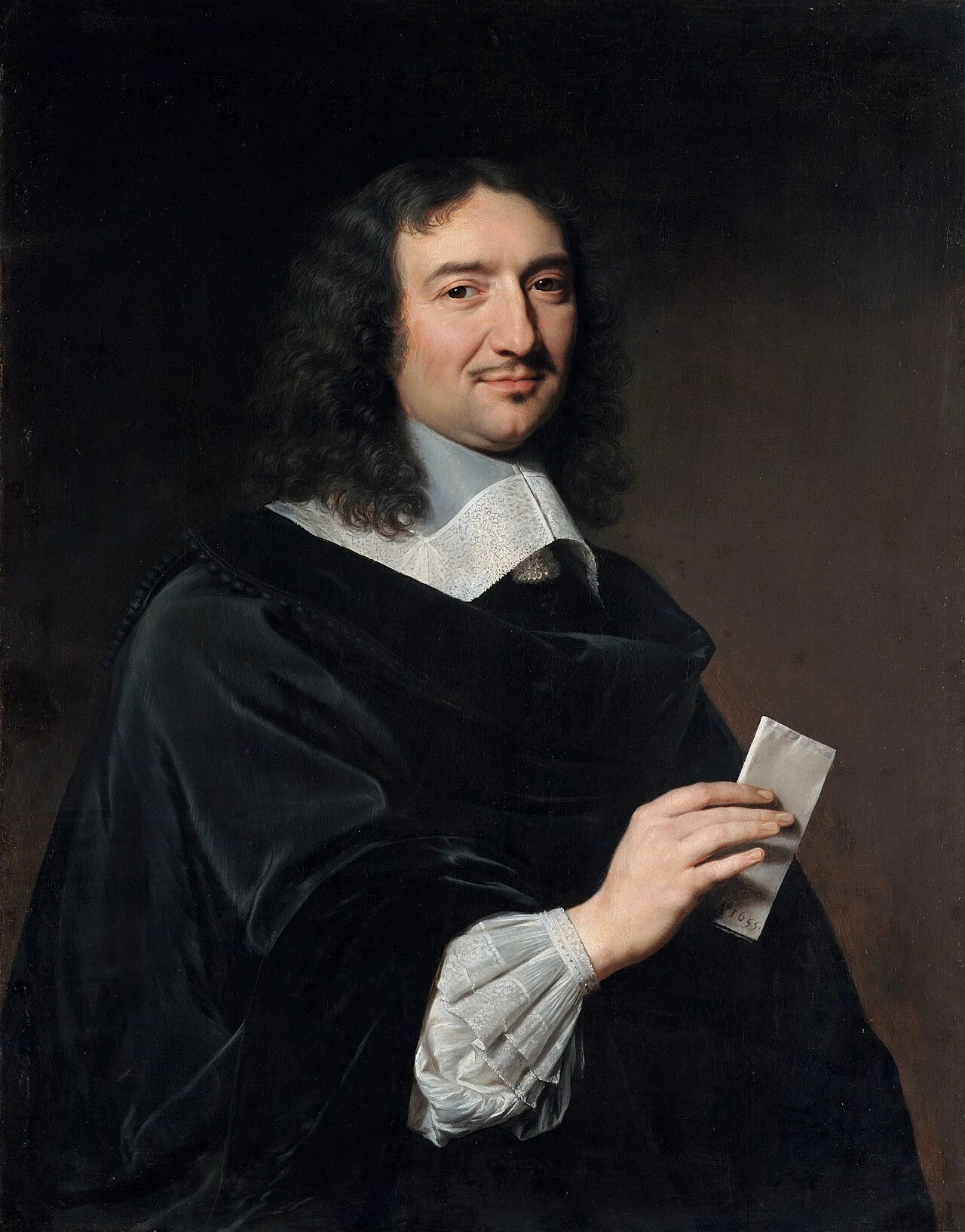
In 1666, Jean-Baptiste Colbert (1619–1683), Louis XIV's controller general of finances and a bibliophile in his own right, transferred it to two houses he bought at the end of the gardens of his house on Rue Vivienne (his memory is preserved to this day in the name of the nearby Passage Colbert, which you can read about in the article on Galeries Vivienne and Passage Colbert ). Opposite these houses, across the street, stood a magnificent palace whose owner had died five years earlier, and as you will see shortly, it will play a central role in our story.
The palace began as a mansion. In 1635, a house was built here for Charles Duret de Chevry, president of the Chambre des comptes, who died in 1636 before the house was completed. In 1641, it was bought by Jacques Tubeuf, also a member of the Chambre des Comptes and an associate of Cardinal Mazarin, and the oldest part of the site is still named after him: Hôtel Tubeuf.
In 1643, Louis XIII (reigned 1610–1643) died, and the Queen Regent Anne of Austria (1601–1666) moved with the young king to the palace built by Cardinal Richelieu across the street, the Palais Royal. Gilles Mazarin, the Italian cardinal who was Richelieu's staunch supporter and Louis XIV's godfather, was appointed chief minister, and in October 1643 he rented the Maison de Toubeff. Mazarin, who wanted to be close to the queen, gradually bought all the plots of land in the block between Rue Richelieu, Rue Colbert, Rue Vivienne, and Rue Petit Champ, and in 1649 he finally bought the house itself.
As early as 1644, Mazarin commissioned from Mansard a new wing, with two galleries, one above the other: the lower one, now the Mansard Gallery, was intended for his ancient sculptures, and the upper one, the Mazarin Gallery, for the most valuable items. Along the rue Richelieu, another wing was built and completed in 1648, with stables on the ground floor and a library on the upper floor. The library was directed by Gabriel Naudé (1600–1653), and in 1648 it probably contained about 40,000 volumes, more than any collection assembled in Europe up to that time.

But just then the Fronde broke out, the civil war in which the nobility and the parliament of Paris rebelled against the rule of the regent and Mazarin. The cardinal fled Paris, and on December 29, 1651, the parliament set a reward of 150,000 livres on his head, to be collected from the sale of his library. On January 18, 1652, the King’s Council issued an edict canceling the sale, but the edict apparently did not arrive in time, and between January 8 and February 17, 1652, the library was sold by auction. Noda fought until the last moment for the library, which he called “his daughter” and “the miracle of his life” in his letters to Mazarin. He died in 1653, without seeing it rebuilt.
When Mazarin returned to Paris in 1653, he reassembled some of the books and built a new library, which is the Bibliothèque Mazarine, which is located today on the banks of the Seine, not the one you are visiting. He died in 1661 (you can read about this library in the article on the Pont des Arts ).
From 1661 to 1789: The Duke with the Chisel, the Scottish Banker, and the King's Library
After Mazarin's death, the palace was divided between two heirs. His nephew, Philippe-Julien Mancini (1641–1707), received the Hôtel de Nevers on the Rue Richelieu. His niece Hortense Mancini (1646–1699) and her husband received the Hôtel Toubeff and the gallery. The palace remained famous even after the cardinal's death, so much so that in 1665 it hosted the sculptor Gian Lorenzo Bernini (1598–1680) during his visit to Paris.

The husband, Armand-Charles de La Porte de La Meilleraye (1631–1713), who received the title of Duc de Mazarin upon marriage, was a zealous Catholic who abhorred nudity. In 1670 he ordered the ancient statues collected by the cardinal to be smashed with chisels, and it is likely that in those years the naked bodies on the Romanelli ceiling were also covered with painted “chastity veils.” The marriage, as expected, broke up, and Hortense fled from him (and one can understandably do so).
In 1719–1720, John Law (1671–1729) purchased the palace from the heirs. Law, a Scottish banker who had made his fortune gambling, gained the trust of the Regent Philippe d'Orléans (1674–1723), who entrusted him with the kingdom's finances. He established a bank that issued paper money, and Mazarin's palace housed the bank and the Compagnie des Indes.
But when the price of shares began to fall, everyone rushed to exchange their notes for coins, and there was not enough gold in the bank's vaults. On July 6, 1720, the bank stopped paying its notes regularly, and every morning crowds thronged its gates. On July 10, one of the guards shot through the door, killing a man. On July 17, when a large crowd tried to break into the garden of the Mazarin Palace on the Rue Vivienne side, about 15 people were crushed to death, and the crowd carried the bodies to the Palais Royal, the Regent's residence. Lou's system collapsed, and he himself fled France at the end of that year and died in Venice in 1729.
The empty buildings gave the regent an idea: in 1721, the first books from the king's library, which was housed in the western half of the palace, arrived there. In 1724, after the regent's death, the Paris Stock Exchange was also established in another part of it, one of the lessons of his economic collapse.
The passage itself attracted little attention, but the library grew rapidly. Jean-Paul Bignon (1662–1743), the king's librarian from 1719, hired the king's architect Robert de Cotte (1656–1735), who added rooms along the rue Richelieu and built a new gallery in 1735, which is now the reading room of the Department of Manuscripts and Music. In 1742, the King's Cabinet, the salon of Louis XV, was furnished, where the collection of coins and carved stones of the crown were kept.
But the space quickly became too small. In 1785, the architect Étienne-Louis Boullée (1728–1799) proposed building a modern library with a huge reading room, but the plan never came to fruition. Meanwhile, on the other side of the block, the India Company remained in the Hôtel de Toubeff until it was dissolved in 1769, when the building passed into the hands of the royal treasury.
From 1789 to 1831: The Revolution, and the Night the Schildrick Treasure Disappeared
The French Revolution doubled the library's collections in twenty years: libraries from monasteries and confiscated nobles poured into it, and the space did not increase. In 1790, the Ptolemy Cup (Coupe des Ptolémées), which had been kept in the treasury of the Abbey of Saint -Denis since the 9th century, arrived in the Cabinet of Medals. On May 1, 1791, by order of Louis XVI (reigned 1774–1792), the Great Cameo of France from the treasury of Sainte -Chapelle was also transferred there. On April 30, 1803, the contract was signed at the Hôtel de Toubeff, which was then the Treasury, by which Napoleon's France sold Louisiana to the United States.
Less than a year later, on the night of February 16–17, 1804, the medal cabinet was broken into. The thief reportedly climbed up on a pole to the window, broke the glass, and entered. He took the most valuable items, including the Great Cameo and the Ptolemaic Cup. The thieves were arrested in Holland, and the cameo is in Amsterdam, but its medieval frame has already been melted down, as has the gold base of the cup. The cameo was returned to the library in February 1805, and in 1807 it received a new frame of gilded bronze.
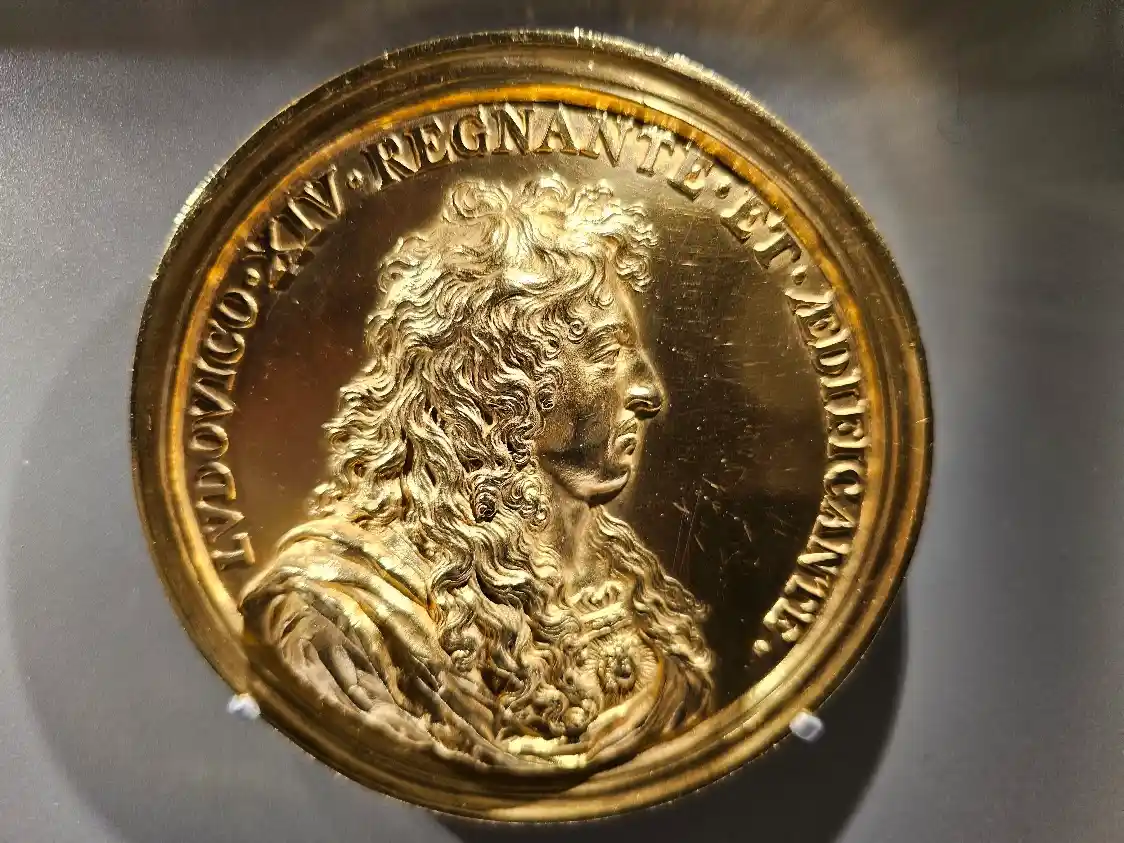
Among the treasures of the cabinet was one item that any French historian would trade places with: the contents of the tomb of Childeric I (reigned 457–481), king of the Franks and father of Clovis (reigned 481–511). The tomb was discovered in 1653 in Tournai, now in Belgium, and contained a ceremonial sword, gold jewelry, the king's signet ring, and hundreds of small gold bees. In 1665, the treasure came to Louis XIV, and it has been kept in the cabinet of medals ever since. As you may recall, Napoleon chose a bee as the symbol of his empire, apparently inspired by Childeric's bees (you can find out all about the emperor himself on the Napoleon page on the website).
The treasury survived the Revolution, the Empire, and the Restoration until the night of November 5-6, 1831. That night, Étienne Fossard, an escaped prisoner who later earned the nickname “prince des voleurs,” and his partner Drouillet, a pardoned prisoner, entered the cabinet. According to the story, they climbed onto the roof of a nearby building that was being renovated, sawed a hole in a thick wooden door exactly the width of a man, and worked all night by lantern light. They collected everything made of gold, including some 2,000 coins and medals and Schildrik’s signet ring, and before dawn they hung themselves by a rope to the Rue Richelieu.
The thieves melted most of the gold into ingots. When the police began to approach, they threw what was left into the Seine, so that they would not find it. According to the story, Eugène-François Vidocq (1775–1857), a former prisoner who became head of the detective police, was also recruited for the investigation, and he immediately recognized Fossard's handwriting (incidentally, this same Vidocq lived in the nearby Galeries Vivienne). The suspects were arrested, and according to the same story, at first they insisted that they knew nothing and that they had met by chance.
The Gazette des Tribunaux followed the affair for more than a year, from November 1831 to January 1833. On 16 January 1833, the cour d'assises sentenced Fossard to 40 years of hard labor and Druy to 20 years. Among the exhibits at the trial was the golden bowl of Rennes (patère de Rennes), which had been found on the banks of the Seine and returned to the cabinet.
What has never been proven is who was behind the operation. There is a version that the Vicomtesse de Nays-Candau, who admitted to having received money to obtain Fossard's release, planned the robbery, but no one has been able to prove her part. The rumor that part of the treasure still lies in the mud of the Seine, near the Pont de la Tournelle, has also never been confirmed. Of the entire Schildrik treasure, only two golden bees survived, which are still kept in the library.
From 1854 to 2022: Lavrost, the Oval Office, Buchenwald and the Rebirth
For thirty years, there was debate in Paris about whether to move the library to another location, and it was not until 1857 that a committee headed by the writer Prosper Mérimée (1803–1870) decided that it should remain. The job was given to Henri Lavrost, the library's architect since 1854. Lavrost did not try to adapt the library to the palace, but to transform the palace into a modern library, even at the cost of demolishing historic parts, including the Grand Gallery of the Hôtel de Nevers.
Its highlight is the reading room, built between 1861 and 1868 and opened in June 1868. Nine domes covered in ceramic tiles diffuse uniform light, and they rest on perforated iron arches and 16 slender cast columns. Around the hall, Le Broussard placed 36 medallions of literary greats from all over the world, including only one woman, Madame de Sévigné (1626–1696). For the first time, readers enjoyed a heated hall, with pipes running under each table to warm their feet, and each seat had a coat hook and inkwell. Gas lighting, however, was banned due to the fire hazard, so opening hours varied throughout the year according to the daylight.
In the years 1868–1872, Lavroust also restored the Mazarin Gallery, replacing the old wooden beams with a sturdy metal construction and renewing all the ceiling and wall paintings. Lavroust's successor, Jean-Louis Pascal (1837–1920), completed the "conquest" of the block: in 1882, the last buildings on the corner of the streets Colbert and Vivienne were purchased, and since then the library has stood alone, cut off from the surrounding buildings. On the site of these buildings, construction began in 1897 on the oval hall, which was designed as a public reading room with a separate entrance from the rue Vivienne and electric lighting.
The work was delayed by a lack of money and World War I. In the meantime, researchers complained that in order to read a monthly periodical, one sometimes had to wait six months, because the newspapers were only given to readers when they were bound in volumes. In 1916, it was decided to dedicate the new hall to periodicals. The main work was completed in 1932, readers entered it in May 1935, and it was officially inaugurated in December 1936. The library's general director, Julien Cain (1887–1974), was proud that foreign experts considered it not only the largest periodical hall in the world, but also the best equipped.
Kahn was appointed director general of the library on May 1, 1930, on the recommendation of Léon Blum (1872–1950). In the 1930s, under his leadership, the architect Michel Roux-Spitz (1888–1957) began to compress the block from top to bottom to make room for the ever-growing collections.
Kahn was Jewish, and the Vichy regime deposed him in July 1940. On August 6, 1940, he was replaced by Bernard Faÿ (1893–1978), an associate of Marshal Philippe Pétain (1856–1951), who turned the library's exhibitions into a propaganda tool and also gathered the archives confiscated from the Freemasons. Kahn was arrested on February 12, 1941, spent three years in prisons in France, and in January 1944 was sent to the Buchenwald concentration camp. He was released on April 11, 1945, as the American army approached, and in October 1945 he returned to 58 Rue Richelieu and his position, which he held until his retirement in 1964. Pai was arrested on August 19, 1944, and the following year was sentenced to life in hard labor.
In 1954–1955, Roe-Spitze added 5 floors to the central warehouse, but even that wasn't enough. By the 1970s, the library was receiving 3 kilometers of shelves each year, just from the deposit obligation, and the library was simply drowning.
On July 14, 1988, President François Mitterrand (1916–1996) surprised everyone by announcing the creation of “the largest and most modern library in the world.” In 1994, the National Library and the new institution were merged into the Bibliothèque nationale de France (BnF), and the new Mitterrand site, in the 13th arrondissement , opened to the public in December 1996 and to researchers in October 1998. Printed books and periodicals moved there (in 1998, the periodicals also left the Oval Office), and the Richelieu site was dedicated to the arts and heritage: manuscripts, engravings and photographs, maps, coins and medals, music and the performing arts.
In 2010, a comprehensive renovation of the site began under the leadership of architects Bruno Gaudin and Virginie Brégal. In December 2016, the renovated Labrouste Hall opened as the library of the National Institute of Art History, and in 2018–2019, the ceiling of the Mazarin Gallery was restored. During the restoration, some 50 modesty covers that had been added to Romanelli's paintings after he had finished them were revealed, and 4 of them, the originals, remained on the ceiling. In the fall of 2022, the site will fully reopen, with the museum and the Oval Hall open to all.
So when you stand in the Mazarin Gallery, raise your head and try to find the 4 small canvases they left there. Will you succeed?
Accommodation near the National Library: Hotels and apartments in the 1st district
Accommodation near the National Library: Hotels and apartments in the 1st district
The library itself is in the 2nd arrondissement, but the 1st arrondissement begins just beyond the Palais Royal gardens. I really like the 1st arrondissement, both because I lived there when I visited Paris as a child, and because of its centrality: the Louvre, the Tuileries Gardens, and the Seine are within walking distance. You can find all my recommendations on the 1st arrondissement hotels page and the 1st arrondissement apartments page , and those who prefer to live in the library district itself will find additional options on the 2nd arrondissement hotels page and the 2nd arrondissement apartments page.
These are the 4 options closest to the library that I would recommend:
-

Hotel Moliere
I myself stayed at the Hôtel Molière and loved it. The hotel is on the quiet rue Molière, between the Palais Royal and the Opéra Garnier, a short walk from the library. The building has been completely renovated and has a spa with a sauna and steam room that can be reserved for private use. In the evening, while you are out, the room is made up for the night, music is turned on and the curtains are drawn, and breakfast is changed daily.
-
Grand Hotel Du Palais Royal
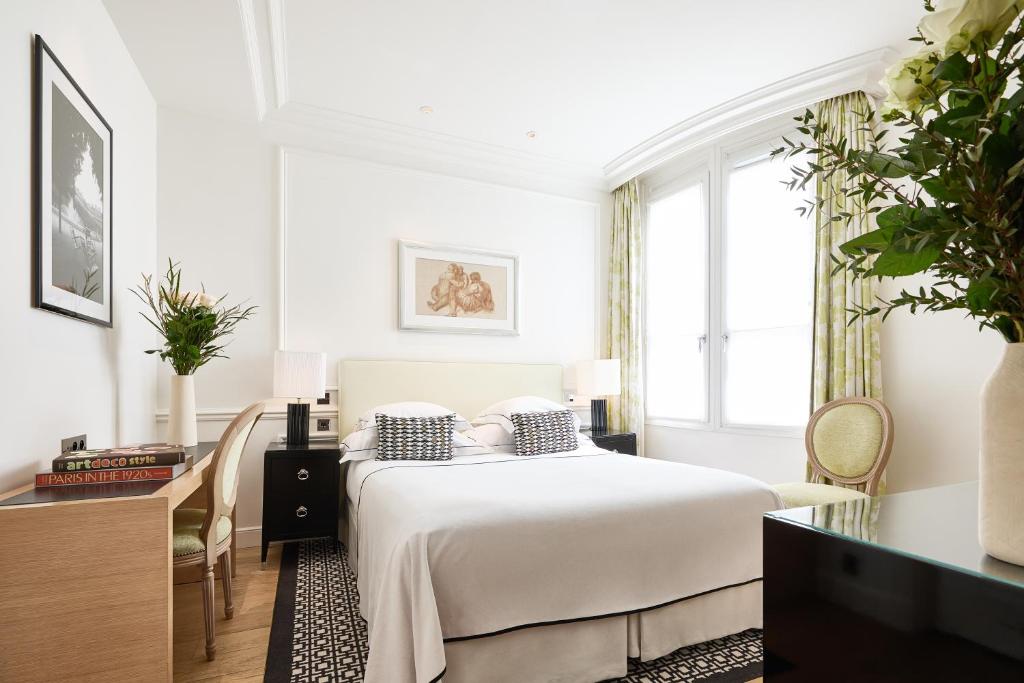
Rue de Valois is one of my favorite streets in Paris: adjacent to the Palais Royal gardens, in the absolute center, and almost without passersby. The 5-star hotel is housed in an 18th-century building, and has a spa, gym, and private art gallery, and some of the suites have a view of the Eiffel Tower. This is the choice for those who want to pamper themselves and live right between the library and the Louvre.
-

Hotel Crayon Rouge
A small 3-star hotel with only 17 rooms, on rue Croix des Petits Champs, next to the Palais Royal and not far from the entrance to the library. Each room is decorated with a different wallpaper, in a colorful retro style that is more reminiscent of a guesthouse than a hotel. There is a wine bar and a shared lounge, and the breakfast (which can also be taken to the room) is a good reason to get up: nut bread, raisin bread with pistachios, and good coffee.
-
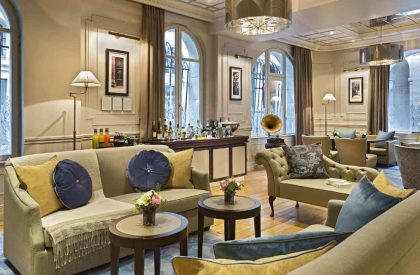
The Key Louvre
For those who prefer an apartment to a hotel: at 8 Rue Richelieu, in an Art Nouveau building from 1908 with statues and balconies, opposite the Comédie-Française, there are 51 suites ranging in size from 27 to 40 square meters. Each has a kitchenette with a dishwasher and washing machine, so you can prepare breakfast in your room, and downstairs there is a 24-hour gym, a breakfast buffet, and a 24-hour reception. The walk from here to the library is in a straight line, along the same street.
Questions and answers about the National Library on the Richelieu website
Is admission to the National Library in Paris free?
What is the difference between the Richelieu website and the François Mitterrand National Library?
Can I enter the hall for breakfast?
On what days is the National Library Museum closed?
How do you get to the National Library at the Richelieu site?
Do I need to book a ticket in advance?
More on the subject
