in short
- What's there: Cluny Museum, the Pantheon, the Police Museum, the Sorbonne, Shakespeare and Company and Rue Moffatt.
- Location: Left Bank, across the river from the Louvre and the Île de la Cité.
- What to know in advance: The Cluny Museum is closed on Mondays, and the Police Museum is closed on weekends.
- Food markets: Three, Mauve, Monge and Fort Royal, and each of them is also open on weekend mornings.
- Restaurants: Six recommendations, most of them away from the tourist traps of Saint-Michel.
- Itineraries: Two routes are all within the district, and seven more pass through it.
- Who is it for: For history buffs and those looking for central accommodation at a reasonable price.
The 5th arrondissement is also called the Latin Quarter, and this name does not come from Italy but from the fact that Latin was spoken in the alleys around the Sorbonne until the Revolution. This is the oldest quarter in Paris in the truest sense: the Roman Lutetia stood here, and to this day you can still see a Roman arena and baths from the 2nd century.
The bohemia of the 1950s has long since passed, and the district has become one of the most expensive in the city. What remains is the historical weight: the most important medieval museum in France, the Pantheon where the nation's greats are buried, the city's famous bookstore, and three food markets, more than any other district I've written about so far.
So just before we get going, let's talk about what you'll find on this page: first the hotels and apartments I recommend in the district, then the attractions and museums one by one, the restaurants I send people to, the three food markets with the days and hours, and finally the hiking trails that pass through here.
Recommended hotels in the 5th arrondissement of Paris
The Latin Quarter is a very safe area to stay: central, across the river from the Louvre, and with lots of student-priced food left over from when it was truly a student district. If you're not sure what's right for you, answer three questions and I'll choose from my recommendations:
My personal recommendation
Which hotel in the 5th arrondissement is right for you?
One short question, and I'll filter for you from the accommodations I've already checked and written about on the site what's suitable for the vacation you're planning.
Just a moment, I'll go through my recommendations and look for what suits you...
Prefer to go through all the recommendations yourself, with photos and details about each hotel? Go to my recommended hotels in the 5th arrondissement page.
Recommended apartments in the 5th arrondissement of Paris
With three food markets in one district, an apartment with a kitchen is a particularly good idea in this district. Here too, you can let me choose:
My personal recommendation
Which apartment in the 5th district is right for you?
One question about the area, and I'm sifting through the apartments I've reviewed and written about on the site. Up until now, I've recommended Udi's apartments directly here, but they're snapped up very quickly, so I've also included some great apartments from Booking.com that I handpicked for my readers.
Just a moment, I'll go through my recommendations and look for what suits you...
Want to go through all the apartments I recommend, with photos and details? Go to my recommended apartments in the 5th arrondissement page.
Attractions and museums in the 5nd arrondissement of Paris
These are the sites I recommend in the 5th arrondissement, from the museums to two streets that lead on their own.
-
A must visit

Cluny Museum (Musée de Cluny)
The Museum of the Middle Ages of Paris, in a building that is itself one of the oldest in the city, and in my opinion one of my favorites.
The museum is housed in the Hôtel de Cluny and on top of Roman baths that survived from Lutetia, meaning the building itself is an exhibit. The two works that everyone comes for are the tapestries “Lady with the Unicorn” and the statues of the Kings of Judah from the facade of Notre Dame. The statues disappeared during the Revolution and everyone assumed they had been destroyed, until they were found buried under a building in the 9th arrondissement.
-
A must visit

The Pantheon
The secular mausoleum of the greats of the French nation, from Voltaire and Rousseau to Victor Hugo and Emile Zola.
The building was originally built as a church in honor of Saint Genevieve, and the Revolution turned it into a mausoleum for the nation. Those who enter the crypt discover that the list varies by country: figures were added and removed according to the political mood. In the center of the hall hangs Foucault's pendulum, with which the rotation of a sphere was first proven. Don't miss the church of Saint-Étienne-du-Mont on the side.
-
Free entrance
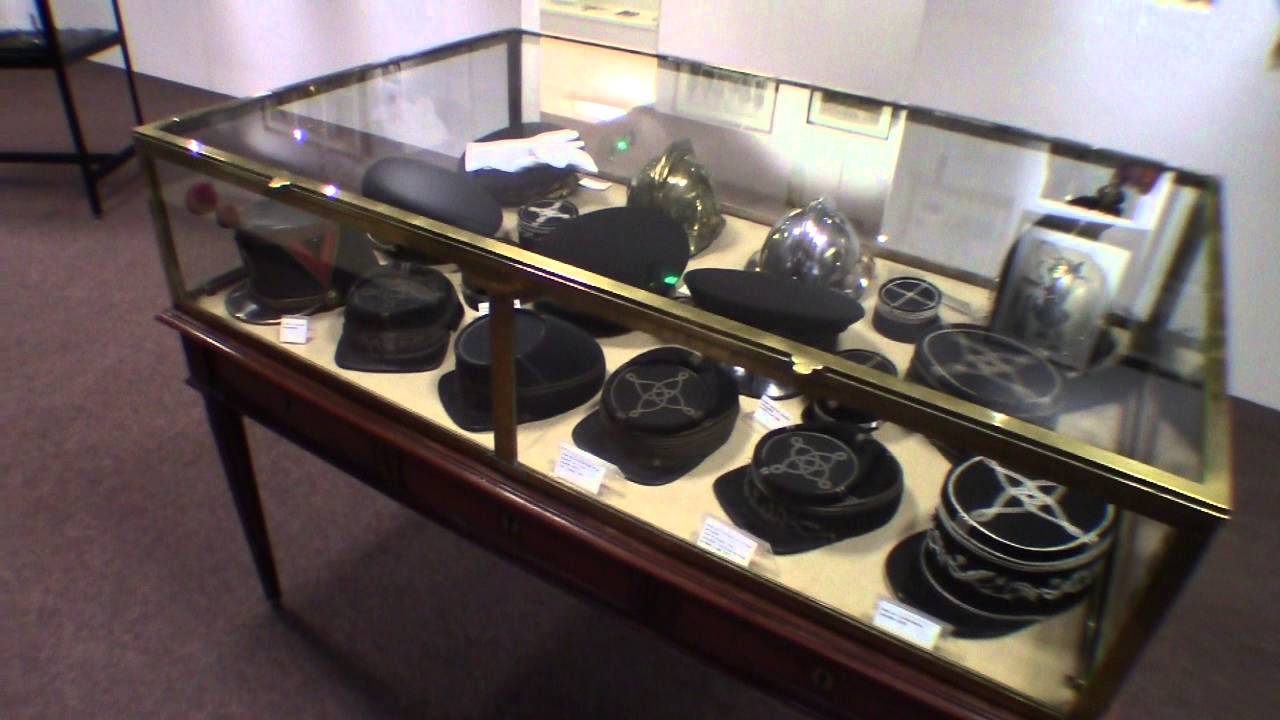
Police Museum (Musée de la Préfecture de Police)
One of my secret museums in Paris, and admission is free.
The museum tells the story of the Paris police and their fight against crime, and is housed on the third floor of a working police station, making a visit a strange experience in itself. On display are 18th-century uniforms, original investigation files from famous crime stories, and a guillotine blade. This is not a museum for little children.
-
Free entrance

Shakespeare and Company
The English bookstore across from Notre Dame, and the most photographed place in the Latin Quarter.
The current store, opened in 1951 by George Whitman, is not the original Sylvia Beach store from the 1920s, but a successor that has adopted the name. The upper floor has beds where thousands of penniless writers have slept in exchange for work in the store. Be aware that the line outside can be long, and photography is not allowed inside.
-
From the outside only

The Sorbonne
The university that gave the district its name, and its building is worth a stop even from the outside.
Founded in the 13th century, the Sorbonne became the most important theological center in Europe, and in the 20th century its name became associated with something entirely different: the student uprising of May 1968. The building is an active educational institution, not a tourist site, so entry is limited to organized tours. What you can do is see the square, the facade, and the domed Sorbonne Church, and sit in the surrounding cafes.
-
Food street

Rue Mouffetard
One of the oldest streets in Paris, and today a pedestrian street with food stalls from the bottom up.
The street runs along the hillside and leads from Contrescarpe Square to the Church of Saint-Madre. The lower part is a market of stalls, bakeries and cheese shops, and the upper part is quiet and full of small cafes. Shani Wadowker wrote a personal article about this street on the website, from the perspective of someone who lives there.
Other attractions in the 5th District worth exploring
These are places that I haven't written a separate article about yet, but if you're walking around the neighborhood it's worth knowing that they're there:
| the place | Address | Why stop there? |
|---|---|---|
| Botanical Garden and Natural History Museum (Jardin des Plantes) | 57 rue Cuvier | A huge botanical garden with greenhouses, the evolution gallery and a small zoo. Admission to the garden itself is free. |
| The Great Mosque of Paris (Grande Mosquée de Paris) | 2 bis place du Puits de l'Ermite | A Maori-style courtyard, and its teahouse serves sweet mint tea |
| Arenas of Lutèce | 49 rue Monge | A 1st-century Roman amphitheater, hidden in an inner courtyard, and admission is free. |
| Arab World Institute (Institut du Monde Arabe) | 1 rue des Fossés Saint-Bernard | Glass facade with mechanical light dimmers, and an observation roof with one of the best views of Notre Dame |
| Church of Saint-Étienne-du-Mont | Place Sainte-Geneviève | Its stairs are familiar from a Woody Allen film, and inside is the only preserved choir stalls in Paris. |
| Saint-Séverin Church | 1 rue des Prêtres Saint-Séverin | A Gothic church with a twisted column that looks like a palm tree, in the heart of the neighborhood's alleys |
| Val-de-Grâce | 1 place Alphonse Laveran | A baroque church founded by Anne of Dautherich in gratitude for the birth of Louis XIV, and few people visit it |
Tours and activities in the 5th Arrondissement that might interest you
And if you're looking for attractions in other neighborhoods of the city, my Paris attractions page brings them all together in one place.
My recommended restaurants in the 5th arrondissement of Paris
The Latin Quarter is a neighborhood where you have to be careful when choosing a restaurant. The streets around Saint-Michel are full of tourist restaurants with menus in eight languages, and these are exactly the ones you should stay away from. These are the places I send people to:
| the restaurant | Type | Address | Why |
|---|---|---|---|
| Colette's Table | French classic | 17 rue Laplace | A modern kitchen with an emphasis on seasons and reducing waste, right above the Pantheon |
| Au Bon Coin | French classic | 21 rue de la Collegiate | A neighborhood bistro without a tourist stand, in the south of the district |
| Bistro des Lettres | French classic | 52 boulevard Saint Germain | On the boulevard itself, and yet maintains a high standard and reasonable prices |
| Chez gladines | Basque | 44 boulevard Saint Germain | Basque cuisine in large portions and low prices. No reservations, just wait. |
| Respite | On the radar | 18 rue Maître Albert | A small restaurant on a side street by the river, a place that entered my radar and is still there |
| At the Windmill | On the radar | 20 rue des Fossés Saint-Bernard | A bistro specializing in meat, with a design that hasn't changed in a long time. |
Looking for restaurants in other neighborhoods? My recommended restaurants page is organized by cuisine type and neighborhood.
The food markets of the 5th arrondissement in Paris
The 5th arrondissement has three urban food markets, more than any other borough I've written about so far, and they're all open morning markets. Note one thing that changes your planning: each of them is also open on weekend mornings, Maubert and Fort Royal on Saturday and Monge on Sunday, until 14:30 PM.
| The market | Address | Days and hours | Metro |
|---|---|---|---|
| Maubert Market (Marché Maubert) | Place Maubert | Tuesday and Thursday 07:00 to 13:30, Saturday 07:00 to 14:30 | Maubert-Mutualité |
| Monge Market (Marché Monge) | Place Monge | Wednesday and Friday 07:00 to 13:30, Sunday 07:00 to 14:30 | Place Monge |
| Port-Royal Market (Marché Port-Royal) | Boulevard de Port-Royal | Tuesday and Thursday 07:00 to 13:30, Saturday 07:00 to 14:30 | Port-Royal |
And if you're in the district on a day when the markets are closed, Moffatar Street does the job almost every day, with permanent stalls and shops along the pedestrian street. On my markets page you'll find recommended markets in other neighborhoods of the city.
Itineraries in the 5th arrondissement of Paris
I divided the routes into two: those that all take place within the district, and those that pass through it and continue. Note that most of the routes from the second group cross into the 6th arrondissement, because Boulevard Saint-Germain is the border between them and it doesn't stop anyone.
Routes that take place in the 5th arrondissement
Routes that pass through the 5th district and other neighborhoods
Want all the itineraries I've written, by district and by theme? My Paris itineraries page has them all.
The history of the Latin Quarter
This is the place with the longest history in Paris, more than two thousand years. It begins with the Roman Lutsia, from which the arena and the baths of Cluny remain, and continues through the formation of the university in the 13th century. That's where the name came from: the students studied and spoke Latin there. The story ended with the student uprising of 1968, which resulted in a significant part of the faculties being taken out of Paris.
For the full article on the history of the Latin Quarter
The next step in your trip
The 5th arrondissement is part of the Latin Quarter but not the entire Latin Quarter. If you're looking for the neighborhood's identity rather than the administrative list, my Latin Quarter page summarizes that, and the history of the quarter from Lutetia to the student uprising awaits in a separate article.
And if you want to be prepared for any scenario, my comprehensive Paris guide brings together all the knowledge I've accumulated for you. Have an amazing trip, and don't forget to climb Moffatar for me.