
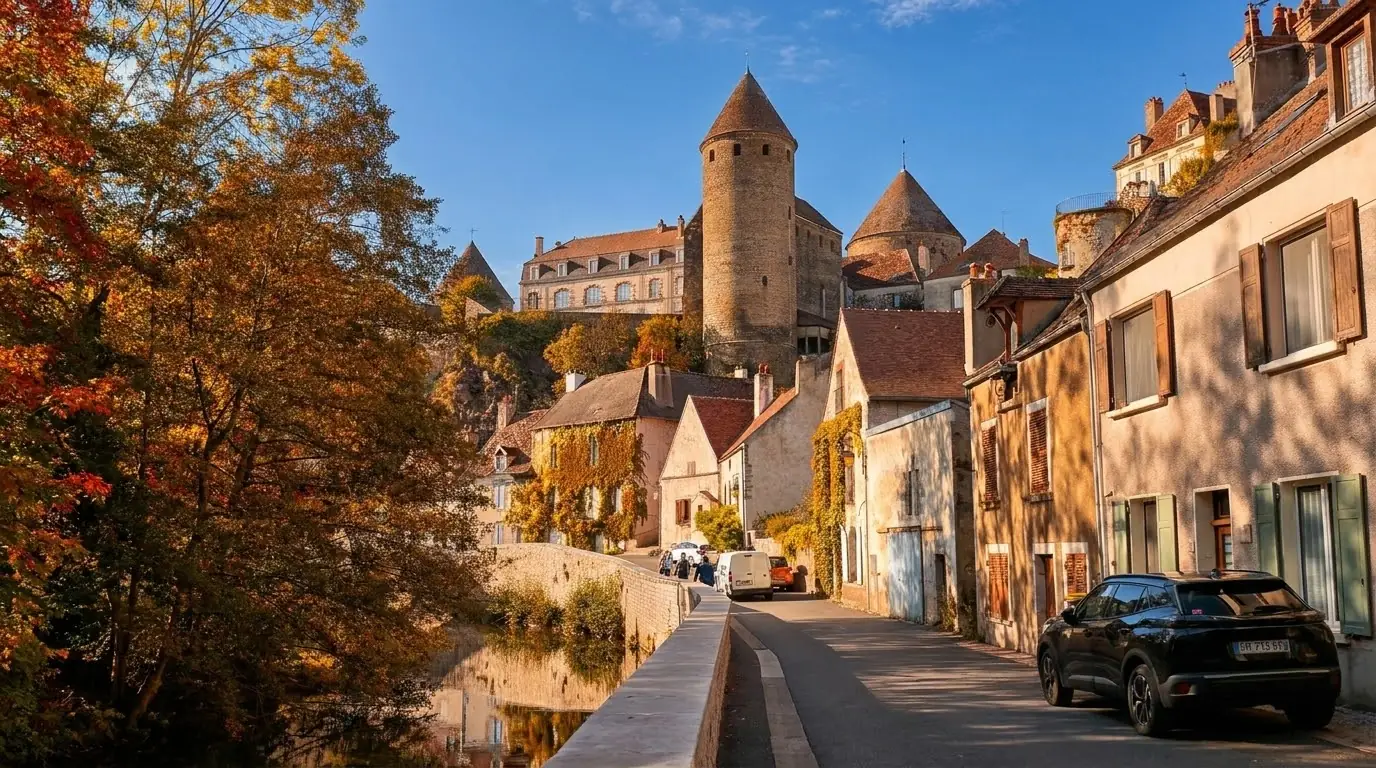
in short
- What's there: A four-tower donjon from the 13th century, a Gothic collegiate church, a rampart promenade, and a museum with an original display from the 19th century.
- status: The capital of the Oxua region for generations, and a remarkable heritage site (Site Patrimonial Remarquable).
- How to get there: An hour by high-speed train from Gare de Lyon to Montbard, and from there 18 km by regional bus, or by car at exit 23 of the A6 highway.
- How long: Half a day to a day to the city, two nights as a base for stargazing in Oxua.
- When: April to October. The museum is closed in winter, and the Orléans d'Or Tower is open mainly in high season and with guided tours.
- How much does it cost: The Collegiate Church has free admission, the Municipal Museum is 4 euros per adult.
- And bonus: The Bugatti, the oldest horse race in France, has been held in the city on May 31st since 1639.
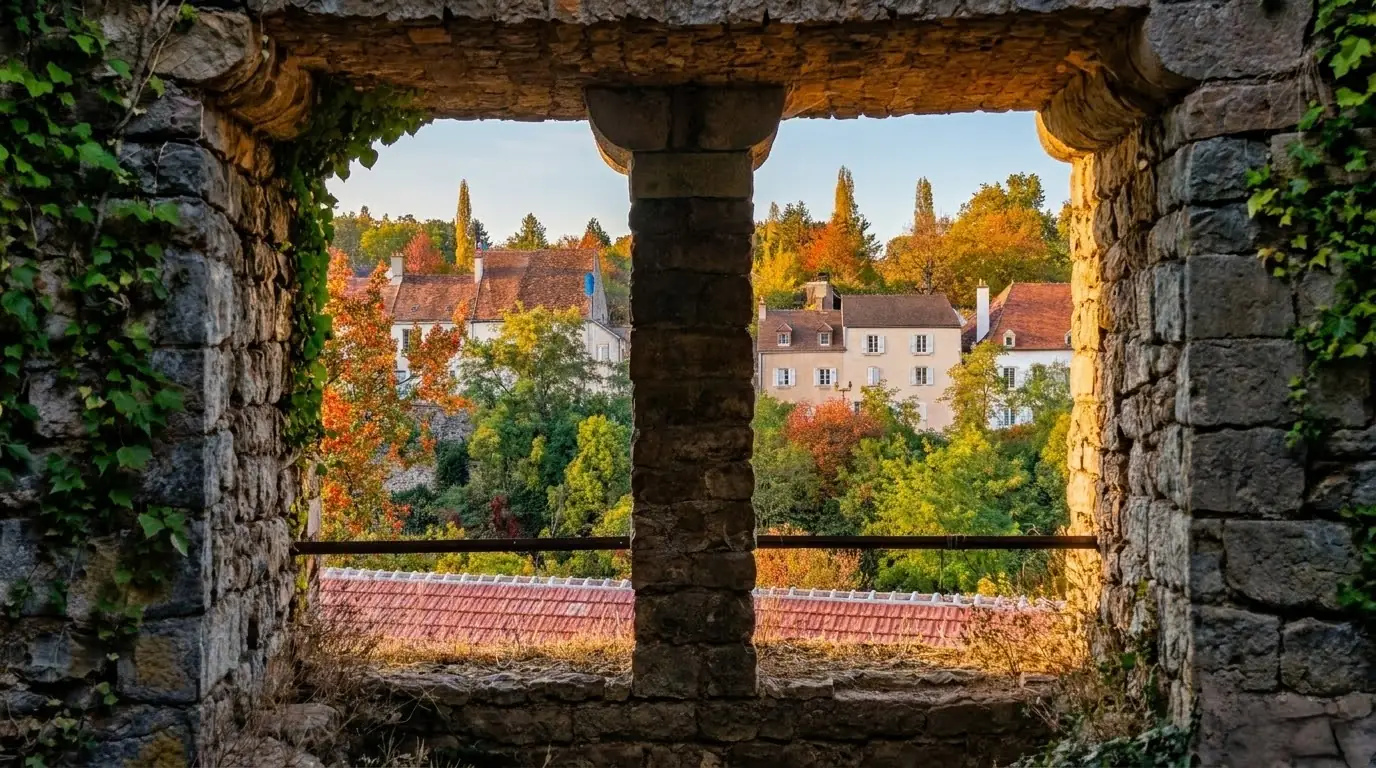
I chose Semur-en-Auxois as a base for part of my trip to Burgundy in October 2026 for a completely prosaic reason: it sits right in the middle. Half an hour from Alesia , twenty minutes from the high-speed train station, an hour from Dijon, and from whichever direction I came at the end of the day it looked the same, like a town someone had placed on a pink rock in a river loop and then forgotten to tell the tourists.
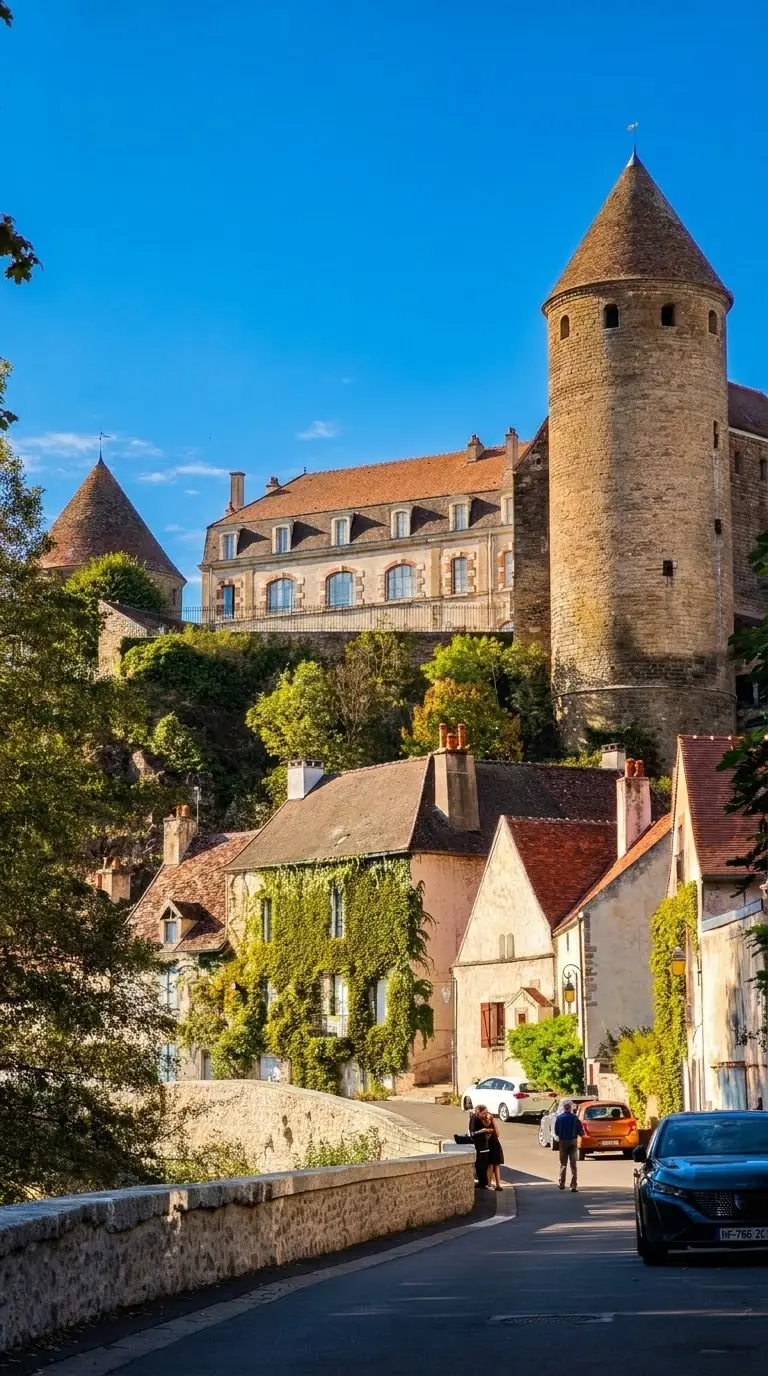
The moment I realized where I had arrived was on the first evening, on the Pinard bridge. Below was the Armançon stream, above four gray towers touched the sky, and in one of them, the largest and heaviest of all, a crack was visible from the roof to the base. A real, open crack, the kind that looked as if the city was about to split in two. I stood there for a good few minutes and assumed it was an earthquake or a slow collapse of the stone.
It's not. That crack is a royal decree from 1602, and that's the story of Smor: a city built to be a fortress, overachieved in the role, and eventually dismantled by its own king. What remains is exactly what makes it an interesting place to visit today. Walkable walls, a beautiful Gothic collegiate church, a museum that looks exactly as it did in 1866, and cobblestone streets where there are no queues for anything.
So if you decide to visit here during your visit to Burgundy, you'll be happy to know that I've brought you all the information you need. First of all, the general information, how to get there and what's open and when, then the things you shouldn't miss in the city itself, then its full history, from the legend of Hercules to the liberation in September 1944 (and there are quite a few interesting stories here, including one about a woman who translated Newton while her husband ruled the city). And finally, where to eat and where to sleep. I stayed in one of the hotels, and I'll tell you exactly what you should know before booking a room there.
By the way, Sémour-en-Auxois was part of my Burgundy itinerary , and there you will find all the days of the trip, the hotels, and the restaurants.
Practical information for visiting Sémur en Oxoa
Samoura is a small town, with about 4,500 residents, and its historic center was literally made for walking. This means that planning is simple, but you also need to know two things in advance: the hours here are limited and seasonal, and public transportation exists but is not abundant. The Terres d'Auxois tourist office is located at 2 place Gaveau, right at the entrance to the old town, and everything written below was checked against official sources in August 2026.
How to get to Samoura en Oxoa
Public Transport
By train, it's much easier than it looks on the map. The nearest train station is Montbard, 18 kilometers from Semmes, and the journey there from Gare de Lyon in Paris takes an hour by high-speed train. There's also a cheaper option, the TER train from Paris-Bercy station, which does the same section in two hours and twenty. It's convenient to book tickets in advance through Omio , which centralizes train operators on one screen and saves you the hassle of dealing with the French website.
A regional bus from the Mobigo network, line 120, departs from Montbar station and reaches Sèvres in about 20 minutes. The fare is flat at 1.5 euros per trip, regardless of the distance, but the frequency is low and coordination with the train is not automatic, so you must check the schedules in advance on the Mobigo website. Other lines that touch the city are 119 (Avillon-Sèvres-Dijon), 121 (Sèvres-Verneret-le-Lôme), and 122.
And if the hours don't work out, there's a solution that I happily discovered: a taxi service on demand (transport à la demande) from the same network, line TAD 151, which runs between Montbard and Le Moule. It operates by telephone reservation only, at the latest the day before the trip (and for a trip on Monday, reservations are made on Friday). The Mobigo reservation number is 03 80 11 29 29, Monday through Saturday. It's also worth knowing that you can rent a car at the Montbard station itself, at the local Renault garage, and the keys are dropped off at the Montbard tourist office during its operating hours.
Private car
By car Semur is right on the Paris-Lyon route. Get off the A6 at exit 23, Bierre-lès-Semur, and from there it’s a few minutes. If you’re planning a trip to the area, then Semur is a great base for star trips by car: everything interesting in the area, from Alesia to the villages of Auxois, is scattered on small roads with no real public transportation. It’s best to book a car from Israel through Auto Shay , which has a special booking page for “anonymous Francophiles” surfers.
Opening hours, tickets and what is worth buying at the bureau
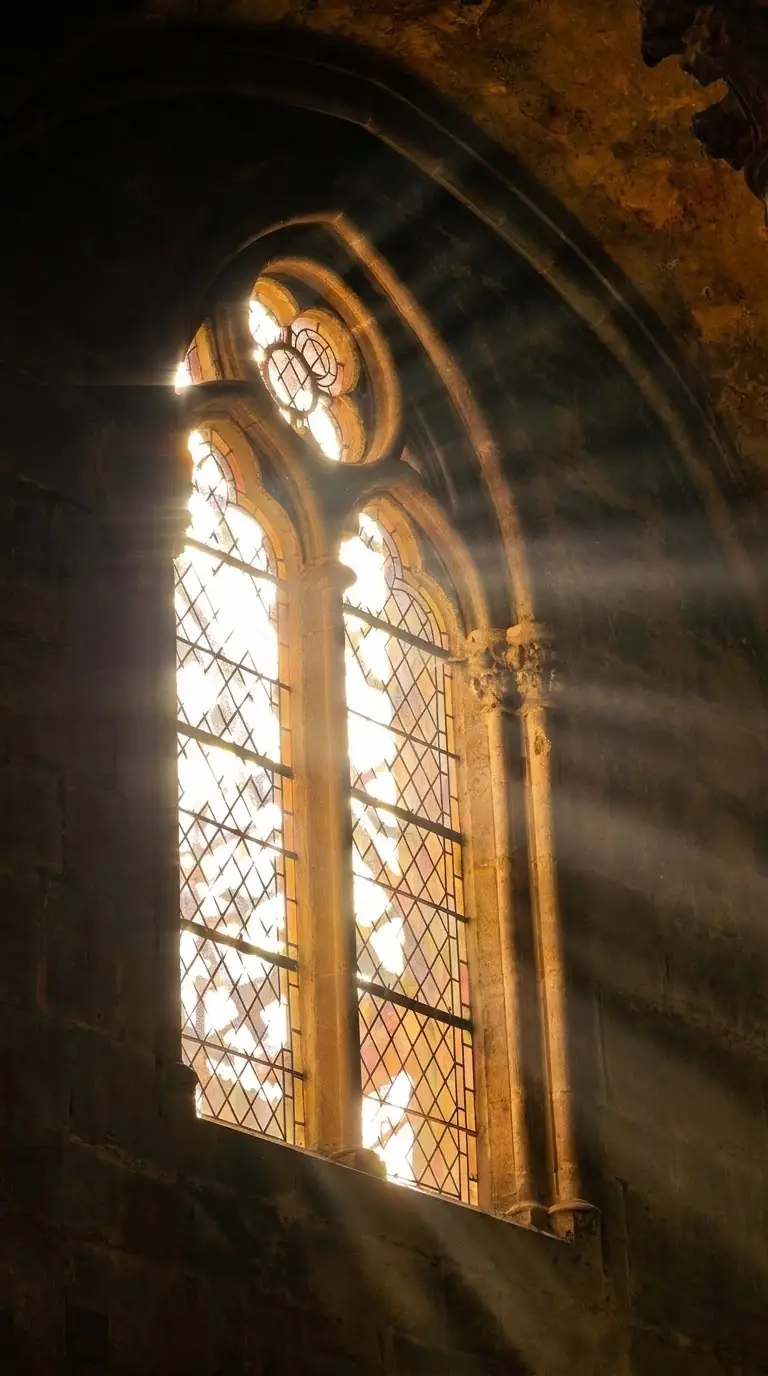
The Collegiate Notre Dame is open to the public for free. In July and August, the Friends of the Collegiate Association offers free guided tours, lasting about thirty to forty minutes, which is a good opportunity: many of the interesting details in this building are in places you wouldn't look at on your own.
The municipal museum is located at 3 rue Jean-Jacques Collenot, and an adult ticket costs 4 euros. Admission is free for children, students up to 26 years old, job seekers, people with disabilities and holders of a press or ICOM card. The hours change twice a year: from February 14 to June 1, and from October 1 to November 30, it is open on Wednesdays, Thursdays and Fridays from 1:30 p.m. to 6 p.m., and on Saturdays also in the morning, 9:30 a.m. to 12 p.m., then 1:30 p.m. to 6 p.m. From June 1 to September 30, it is open from Wednesdays to Sundays, 1:30 p.m. to 6 p.m., and on Wednesdays and Saturdays also in the morning. In winter, it is completely closed. Note two inconvenient details: the museum is spread over three floors without an elevator, and there are no toilets (the closest ones are in the Collenot parking lot).
The Orle d'Or Tower (tour de l'Orle d'Or), the cracked tower, is opened mainly during the tourist season and almost always only on guided tours, in groups limited to 18 people. The municipality itself refers this matter to the tourist office, so this is one of the first questions you should ask as soon as you enter. I, who arrived in October, saw the crack only from the outside.
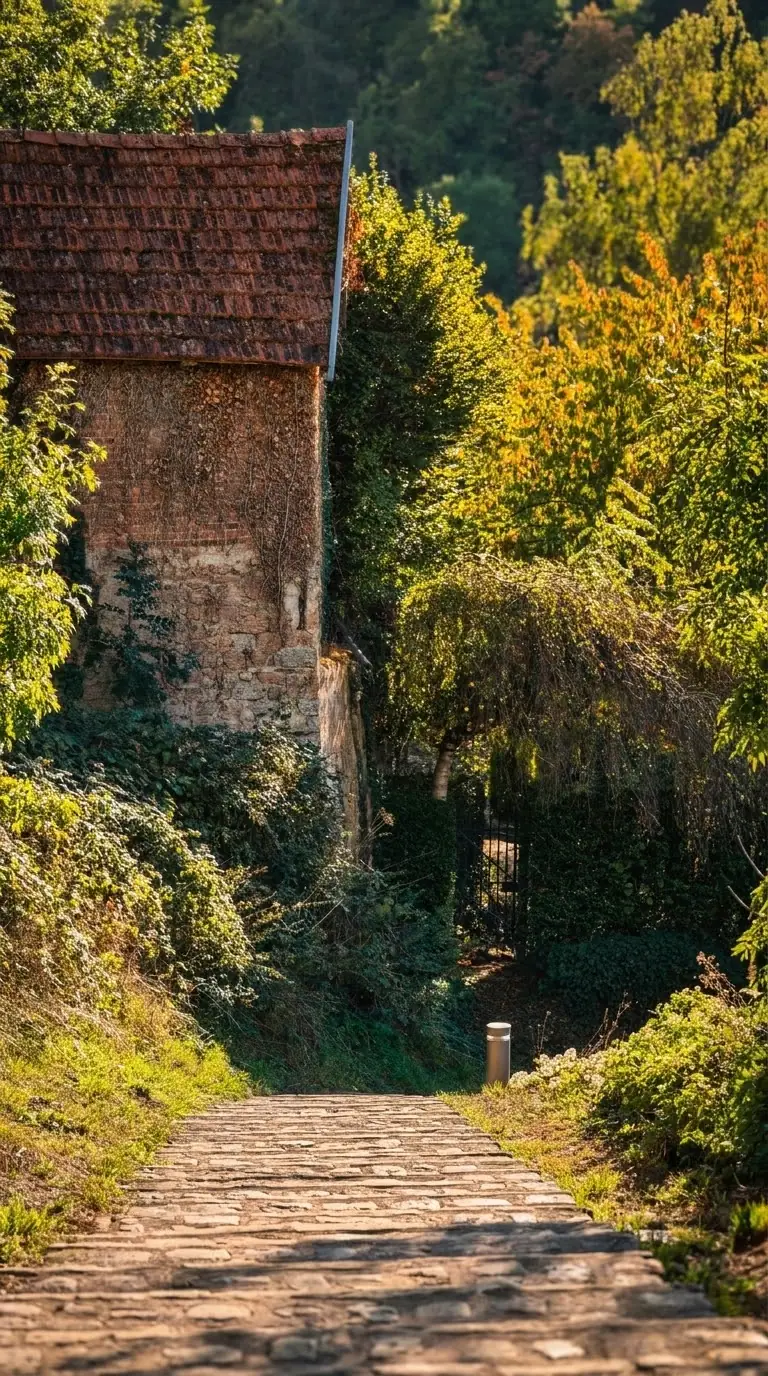
At the office, it’s worth buying two things. The first is a booklet for the “Three Walls” route, a marked route in the upper city with 136 arrows and eight bronze plaques on the floor, which takes about an hour and costs 2 euros (in French only). The second is for those traveling with children: a booklet for “There Was a Little Knight,” with a dragon named Samoro who leads them through puzzles around the city, for 4 euros, including the loan of a cloak. Another small detail worth planning around: the local market is held on Sunday mornings, near the church.
How much time to dedicate, and when to come?
Half a day is enough for the city itself. For the city, the museum, the promenade of the ramparts without rushing and a long meal, a whole day. I still recommend two nights, for a completely different reason: Samoura is an excellent base for star trips, and within a half-hour drive are Alesia, the castle of Bussy-Raboutin , the monastery of Fontenay , Flavin-sur-Oserne and the villages of the Hauts-de-France. I wrote separately about the battle that was decided here two thousand years ago, in an article about Alesia Museum Park , and it is definitely an extra half day.
If you have a Tuesday, it's worth driving west: about an hour's drive to the Château de Buzous , Vauban's home, from there for lunch at the Hôtel de la Poste in Avalon , the inn where Napoleon stayed in 1815, and in the afternoon to the Basilica of Vezla . I did this myself, and returned to Sémour before dark.
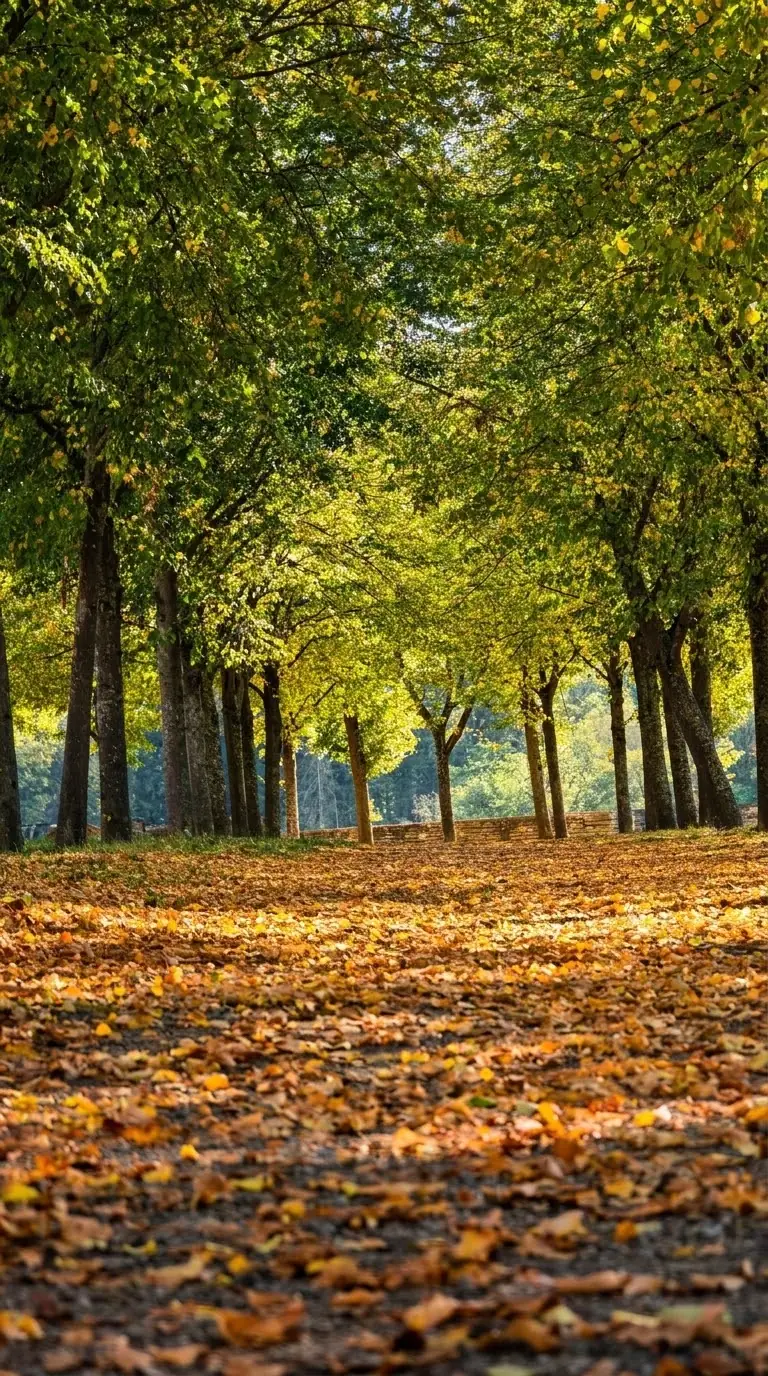
The best season here is April to October, and this is not an aesthetic recommendation but a practical one: the museum is closed in winter, the tower is barely open, and the collegiate tours are concentrated in the summer. I arrived in October and received the city in end-of-season colors, with the heavy, brown Armenson and almost no other visitors on the walls. If you are hesitating between the summer and fall months, this is my suggestion to consider. And speaking of timing, if you want to see Samoura on one of the days when it is least quiet, aim for the end of May, and I will talk about that in the historical chapter.
What not to miss in Sámur en Oxoa
The donjon and the four towers
What everyone here calls “the donjon” is not a donjon at all but an entire castle, and this name has remained due to historical confusion: the word was already used to describe the fortified part of the city, so the fortress was given a different name. It is built as a rectangle of about 75 by 50 meters, with a tower at each corner, and in the past they were connected by thick walls with corridors and even living rooms inside. Underneath today’s street there was a moat and a drawbridge.
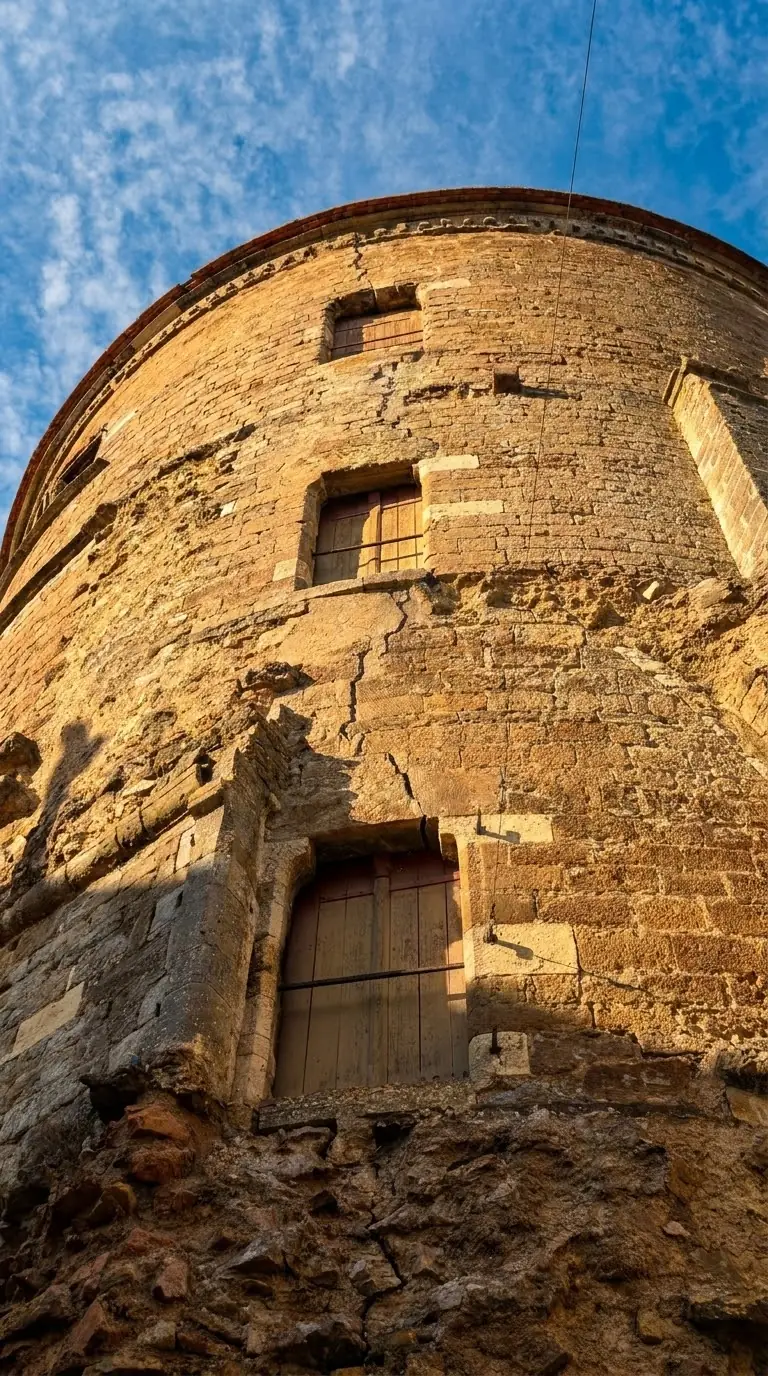
The main tower is the one with the crack. Today it is called the Tower of the Orléans d'Or, “the golden rim,” because of the metal ring that once surrounded it and shone like gold (in early writings it was called otherwise, the Tower of Loredo). It is heavy in a way that is difficult to convey in a picture: 15 meters in diameter, walls five meters thick at the base and two and a half at the top, and about 44 meters of stone above the river. Inside, it is divided into six spaces one behind the other. The detail I liked the most is actually at the bottom: until the end of the 18th century, the upper city was entered through a paved passage that ran inside the base of the tower, and its two sidewalks can still be seen there.
The other three are worth a visit, if only because of their names. The Prison Tower (tour de la Prison) preserved the section of wall it rested on, and was both a prison and a salt warehouse. The Hell Tower (tour de la Géhenne) only received its biblical name in the 19th century, and was used for many years as a salt warehouse and then as a butcher's hall. Opposite it stands the Municipal Theater, which is considered one of the small theaters in France of the Commedia dell'Arte, and on top of it rests the Margot Tower (tour Margot), which today serves as a dressing room for the actors. A Crusader tower that was turned into a makeup room. I loved it.
The theater itself was built in 1847, burned down in 1901, and rebuilt in its original style in 1904. The ceiling of the hall was painted voluntarily by the Parisian painter Henri Collin, whose father was born in Sémours, and he hid a small message in it: on the sheet of music held by the singers in the painting is written, upside down, “À bas la calotte,” meaning “Down with the priests.” The painting was completed in 1903, during the years when France was passionately debating the separation of church and state, and the inscription caused quite a bit of controversy in the city (it turns out that even in a small town in Burgundy, politics can reach the ceiling).
Notre Dame Collegiate
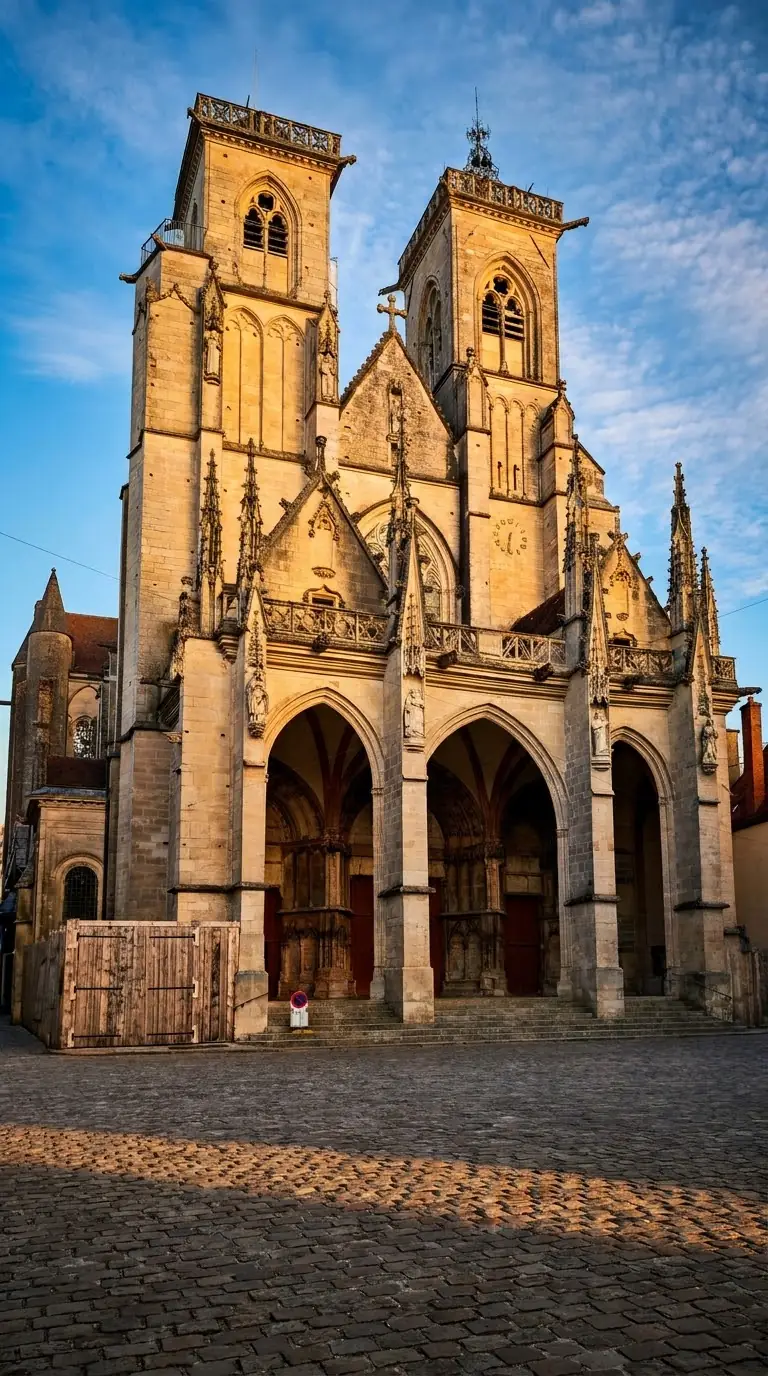
This church is surprising in its proportions. The nave is narrow, only 6 meters, but rises to a height of 21 meters and extends for 66 meters, resulting in a space that looks as if someone squeezed it from the sides and pulled it upwards. Above the junction of the arms stands an octagonal tower 56 meters high. Construction continued from 1220 and into the Renaissance, and it shows: there is no single style here but layers.
The entrance I recommend starting from is the side entrance, on the north, called the “Gate of Grain” (porte des Bleds) because it faces the fields. Its 13th-century tympanum tells the story of the Apostle Thomas, including the legendary chapters of his journey to India, and on the arches above it is carved a complete calendar of agricultural work according to the months of the year. The portico that protected the gate was demolished in 1705 to facilitate passage to the cemetery, so everything is completely exposed to the eye.
Three things inside are really worth stopping for. The first is the Mise au Tombeau, a group of sculptures from 1490 attributed to the circle of the Duke of Burgundy sculptor Antoine le Moiturier. The second is a stained glass window from 1927 in which an angel places a laurel wreath on the heads of French soldiers from World War I, a gift from American soldiers, and I will tell its story later. The third is a game: carved animals are hidden on the pillars of the facade, including two Burgundian snails. If you want to know how a snail became a national symbol and a controversial food, I wrote an entire article about the story of the escargot.
Also look for the stained glass windows donated to the church in the late 15th century by the city's guilds of craftsmen. The drapers' window depicts their work, step by step, and the butchers, whose market hall stood on the place Notre-Dame, also donated their own stained glass windows.
The Walls Promenade, and Pinar Bridge
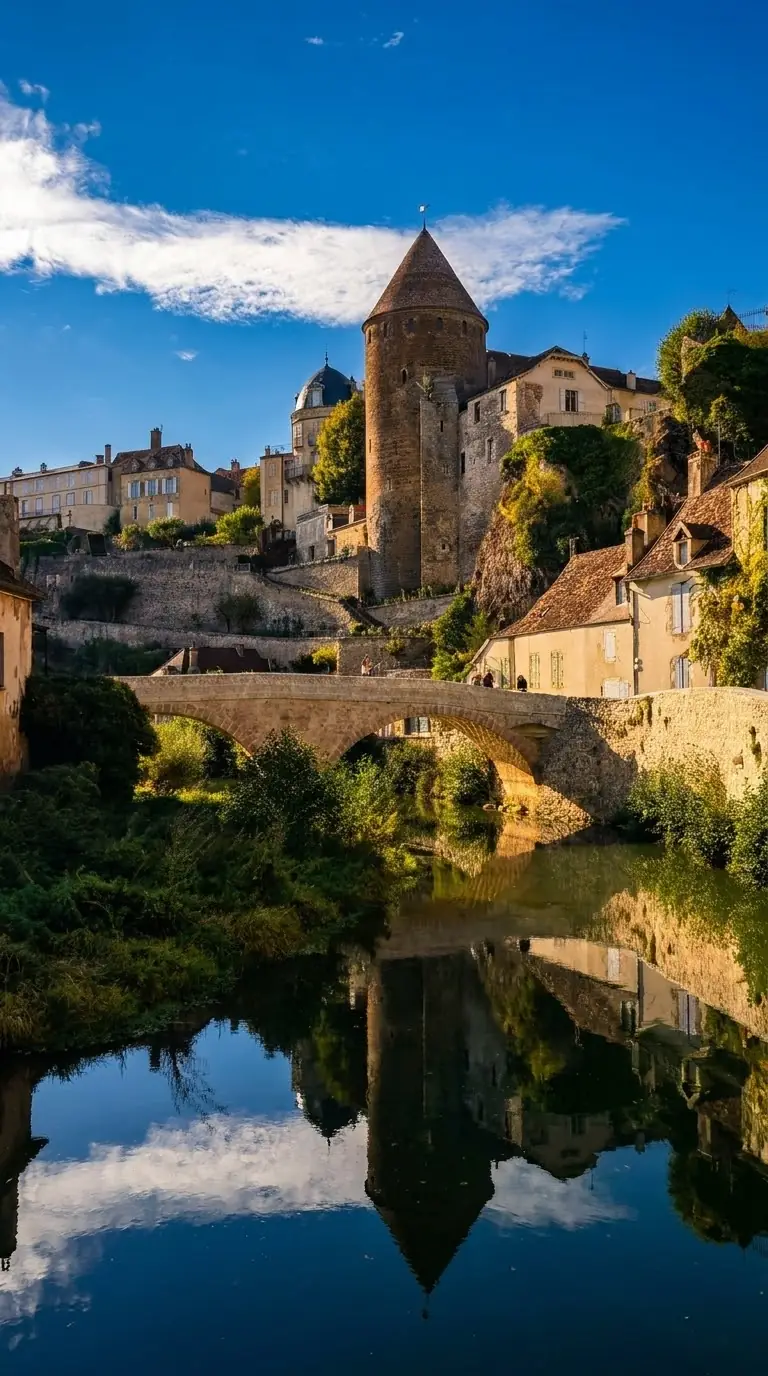
Samoura has two observation points, both free. The first observation point is from above: the city promenade was built on the foundations of the dismantled walls, they are shaded by trees and overlook the houses below and the valley. The second observation point, which is more interesting, is actually from below. You go down to the river on steep steps and circle the cliff along the water, and then the city is arranged above your head in layers, pink rock, then a wall, then towers.
The exact point I am sending you is the Pinar Bridge. That is where the familiar image of Sémours comes from, the bridge and towers and the reflection in the Armenson, and this is where I understood why this city has been photographed so much. Don't stop there. Continue along the river and go back up into the old town, which becomes a full circuit in less than an hour. The way back up can be done by the escaliers du Fourneau, 141 steps that connect the riverbank to the donjon, at the top of which stands the porte des Cycogniers, the modest gate through which those who came from the other side of the Pinar Bridge entered the city. The second large bridge, the Pont Joly, was built in 1784 and offers the opposite angle, and those arriving by car pass over it without noticing that they are entering the city through an entrance that did not exist in the Middle Ages. The bridge received its name from Joly de Saint-Florent, the collector of funds for the Burgundian Parliament, who provided the money for its construction.
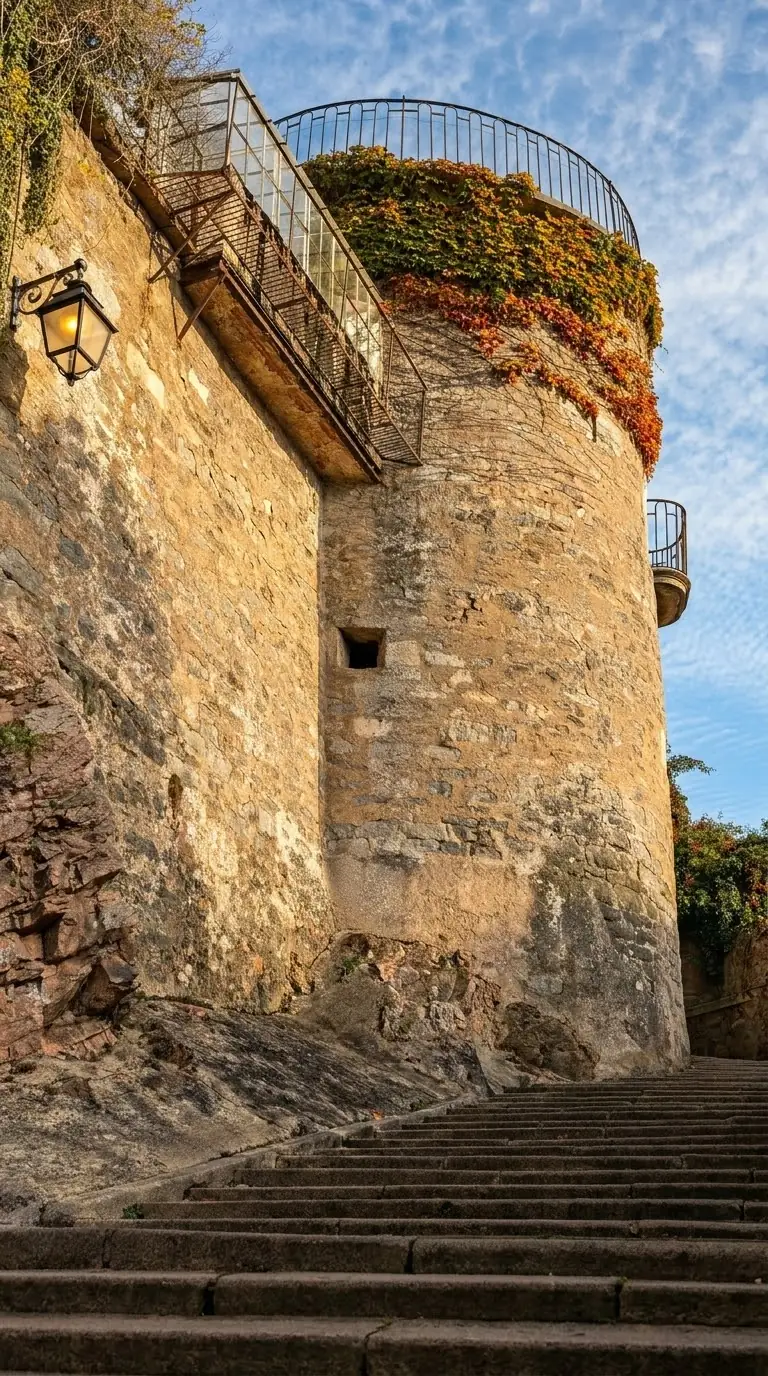
Between the two views, it is worth walking the streets themselves. There are about 15 small townhouses in the city, most of them from the 18th century, built in the form of a building at the end of a courtyard with two wings, and in the castle neighborhood their gardens descend in steps on top of the medieval fortifications. On the outskirts of the city, on the hills that are called “chaumes” here, stand the houses of winegrowers and gardeners built in a completely different style. Incidentally, this name comes from the fact that these hills, which were once forested, were converted to agricultural cultivation and over time became neighborhoods.
The Municipal Museum, which is essentially a museum of a museum
I entered the Samour Museum with low expectations and was pleasantly surprised. It is housed in a 17th-century nunnery, and in 1864 two exhibition rooms were opened on the second floor, one of which became an art gallery, and in 1866 the first floor was specially adapted for the fossil and geology collections. Wooden cabinets, handwritten labels, animal skeletons. A museum about 19th-century museums.
The museum was born from a school of painting, sculpture and architecture that opened in the city in 1833, and its first collection was assembled by the painter Étienne Bouhot (1780–1862), who worked, among other things, on the decoration of Napoleon's apartments in the Tuileries Palace . However, there is an item here that is even more connected to Paris: the museum houses the original plaster model of the “Genius of the Bastille” (Génie de la Bastille), the gilded statue that stands at the top of the July Column (colonne de Juillet) in the Place de la Bastille . The statue was created by Augustin Dumont (1801–1884), who bequeathed part of his workshop to the museum.
The geological collection here is no local curiosity. It contains over ten thousand items that were used to define the Sinemurian, one of the stages of the Jurassic period, and yes, this stage is named after the city. If you look closely at the building stone of Samour, you will see marine fossils, and this is one of the rare things I know: an entire city built from the material that gave it its name in the world of science. This stage was defined in 1849 by the geologist Alcide d'Orbigny (1802–1857), who derived his name from Sinemurus, the Latin form of the city's name. As you walk around Samoura, you will notice three types of stone: the blue-gray Sino-Morvan limestone, from which the towers and many of the houses were built, the pink granite from Morvan, from which the walls and simple houses were built, and the golden-hued limestone, from which a large part of the collegiate church was built. And speaking of science, in the collection of the Samoura Science Society, which sits inside the cracked tower, there is a portable solar oven that the city received as a gift from the city dweller who invented it. I will tell its story in a moment.
The history of Samoura en Oxua
Hercules, a pink rock, and two Latin words
Let's start with what didn't happen. According to an ancient local legend, Semur was built by Hercules on his way back from Spain, and local historians of the 18th century took this version very seriously. What is documented is less grandiose and more convincing: Excavations conducted in the 19th century showed that man had settled on this rock as early as the Neolithic period, and this for an obvious reason, because the river winding around the cliff created a kind of natural barrier.
The first written mention of the city appears in 722, in the charter of the nearby Flavigny-sur-Ozerain monastery, and the name there is Sine Muros, “the old walls.” That is, as early as the 8th century the place was known for its previous fortifications.
11th to 13th centuries: the city of the Dukes of Burgundy
In the 11th century, Smore was the center of the Hoxha district, and the district was absorbed into the Duchy of Burgundy and received a ducal administration. Around a small Benedictine monastery, which was a branch of Flavin, a real city grew: in the 14th century it had about six hundred residential estates, that is, several thousand people, with guilds of weavers and butchers who received their own chapels in the church. At the same time, the fortress was changed from wood to stone.
A tradition that took shape in the 18th century stated that the church of Smor was founded in 1065 by Duke Robert I, known as Robert the Elder, as atonement for the murder of his father-in-law Dalmace, who was reportedly killed during a feast at Smor Castle. Research in recent years shows that the monastery actually predates this date by decades, meaning that the story cannot explain the structure. It has not disappeared, however: there is a carving on the grain gate that some see as that murder.
The 1370s were the period when Smor took on the form we see today. An examination of the age of the wood in the beams and ceilings of the main tower, carried out jointly by the local scientific society and the municipality, determined that it was entirely built within a few months in 1274. Two years later, in 1276, Duke Robert II (Duke of Burgundy from 1272 to 1306) granted the residents a charter of liberty, which allowed them partial self-government with a mayor and six provosts, but left the appointment to the duke.
14th and 17th centuries: Robbery bands, gates, fire and destruction of the walls
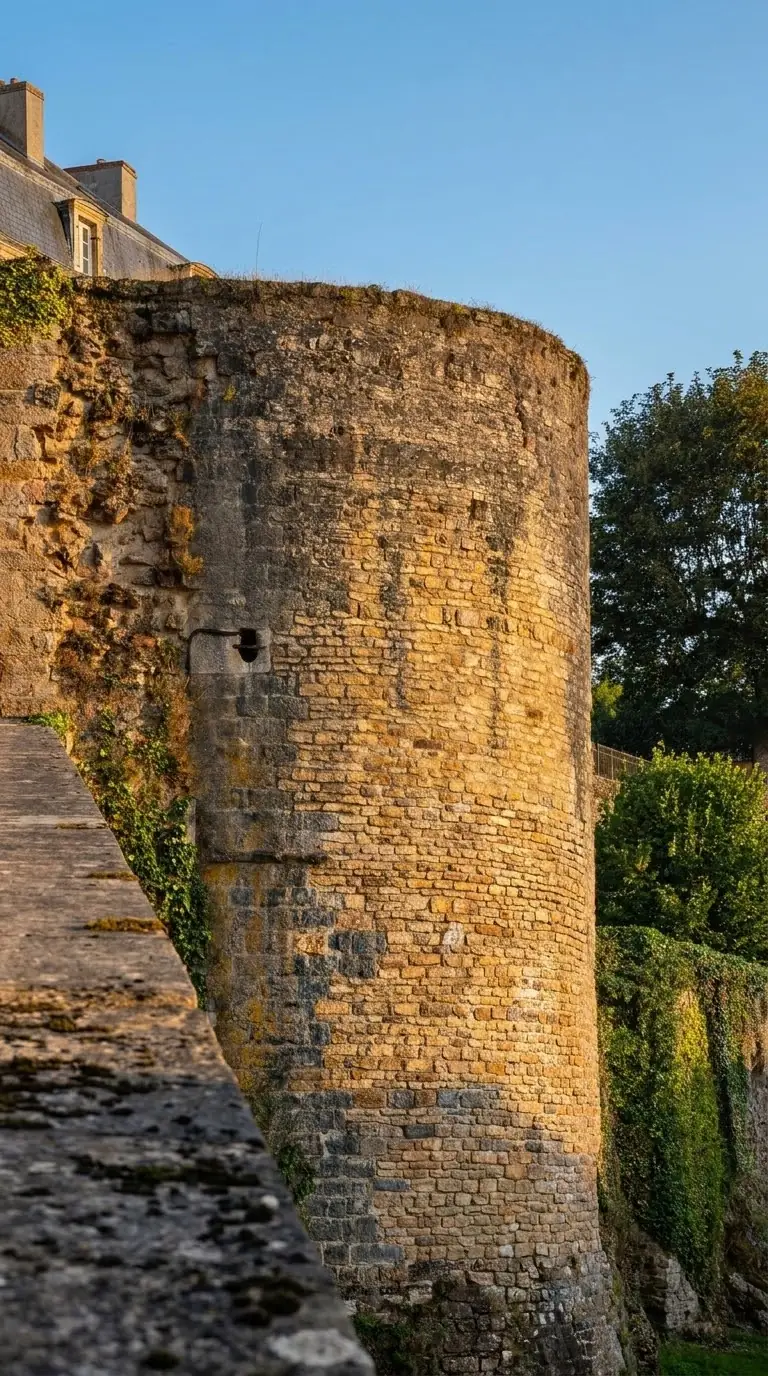
In the mid-14th century, during the Hundred Years' War, the Semurs decided to strengthen the natural defenses with walls and towers and to separate the castle area from the church area by means of the donjon that was built between them. The need was palpable. The area was roamed by bands of freedmen, the "Tard-Venus", and one of them was led by Arnaud de Cervole (1320-1366), a nobleman who was also a high priest of the church, before preferring a military career. According to local historian Alfred de Valbel, his bands terrorized the area around 1364. Cervole himself was murdered two years later by his own men, not far from Mâcon.
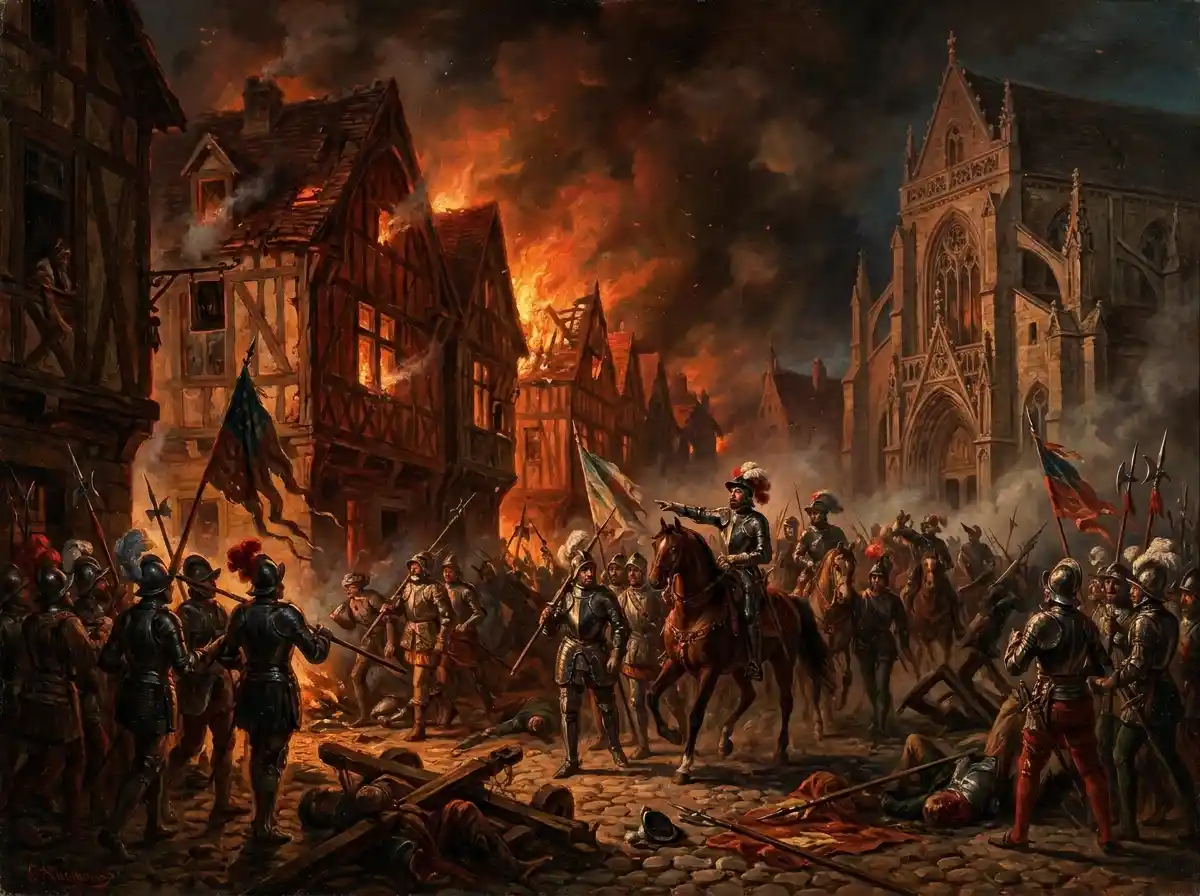
The city has two adjacent gates from the Middle Ages: the Guillier Gate was built in 1328 and named after a wealthy burgher, and in 1444 the Sauvigny Gate was built in front of it, named after the benefactor who built it to strengthen the defense of the older gate. The Sauvigny Gate took its place as the main entrance, and on its facade you can still see the slots into which the arms of the drawbridge entered. This was not enough. After the death of Charles the Brave and the dissolution of the independent Duchy of Burgundy, the troops of King Louis XI (king 1461–1483) were sent here under the command of Charles d'Amboise. In 1478 the city was besieged, looted and burned, and according to the records only the church and the abbey survived.
Samour remained the capital of the jurisdiction of the Hoxhay, that is, the place from which almost a hundred communities in the area were governed. In 1592, at the height of the Wars of Religion, the Burgundian Parliament moved to the city, and it was it that opened its doors in 1593. That same year, a great fire destroyed 270 houses in the city. In 1602, the “King’s House” (logis du Roy) was built there, which housed the district court, which served a series of regimes from monarchy to republic. In that same year, 1602, the decree was issued that left the greatest physical mark on the city.
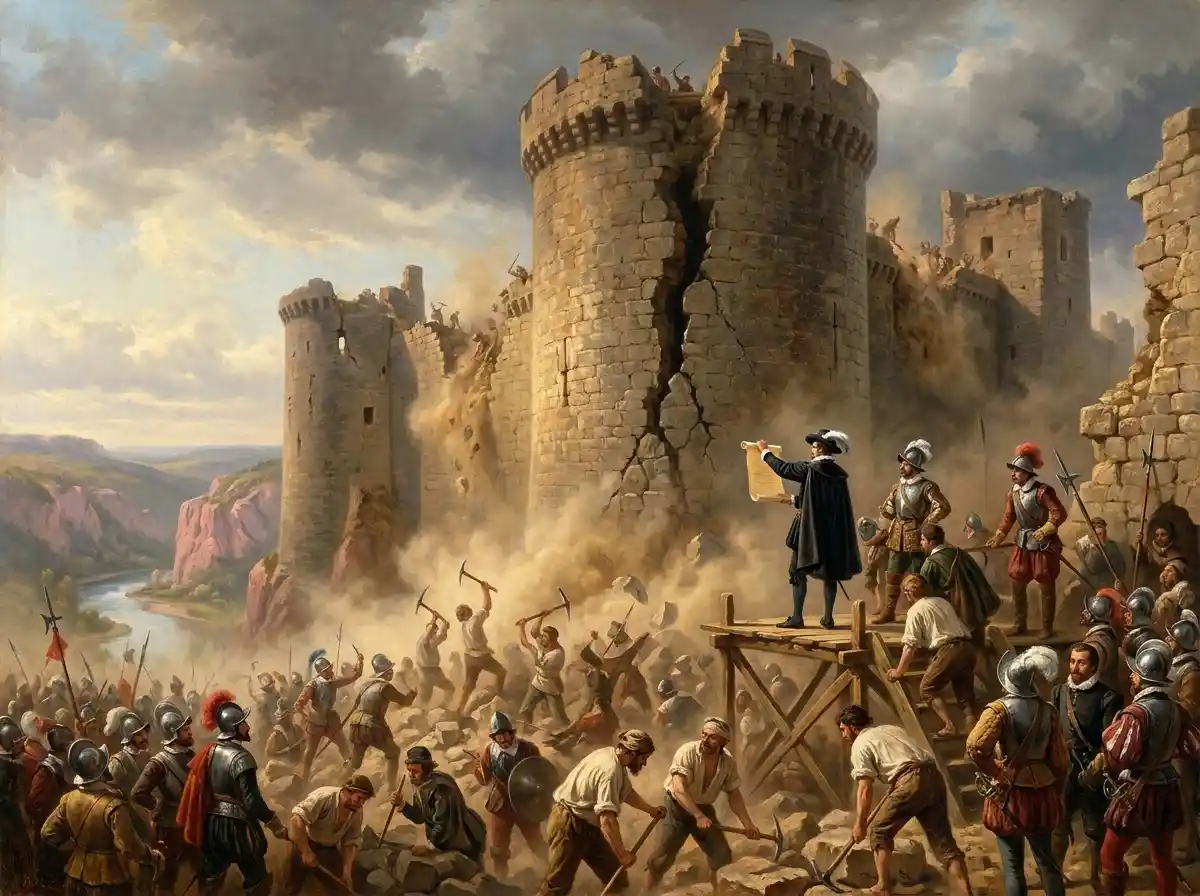
Henry IV (king 1589–1610) ordered the demolition of the walls that connected the four towers, so that the city would no longer be besieged after the religious wars that had torn France apart in the previous century. The towers remained, the connections between them disappeared, and the structure, which had lost its lateral support, cracked along its entire length. Sèvres lost its military function at that moment, while retaining its administrative function.
In 1639, a horse race was held here for the first time, intended to continue the Christian Pentecost fair, and it is considered the oldest equestrian race in France. It is still run today, on May 31, over a distance of about 2,112 meters on the boulevard in the city center, and the winner receives a gold ring, hence its name: the Bague Race (course à la Bague), meaning the Ring Race. The horse race joined an even older tradition: as early as 1566, a foot race, the Course des Chausses, was held in the city to revive the Pentecost fair. The pair of socks was awarded to the winner by three brotherhoods of bull breeders (bouatiers), who each year marched in a ceremony to the collegiate with three bulls as an offering, and from there they continued in procession to the Carmelite monastery and left the animals there. In 1841, a harnessed carriage race, the Course à la Timbale, was also added to the festivities.
18th century: Newton's translator and Little Athena
The 18th century was the period when Sèvres replaced walls with salons. Almost all of the city palaces you see today were built in the city, promenades were paved on top of the fortifications, in addition to the Promenade du Cours, which was laid out as early as 1685 and is considered one of the oldest city promenades in France, and in 1784 the Julie Bridge was built, which moved the entrance to the city from the paved passage inside the tower to a modern, wide bridge. The nickname that stuck to it in those years was “the little Athens of Burgundy,” and it sounds inflated until you see who exactly lives here.

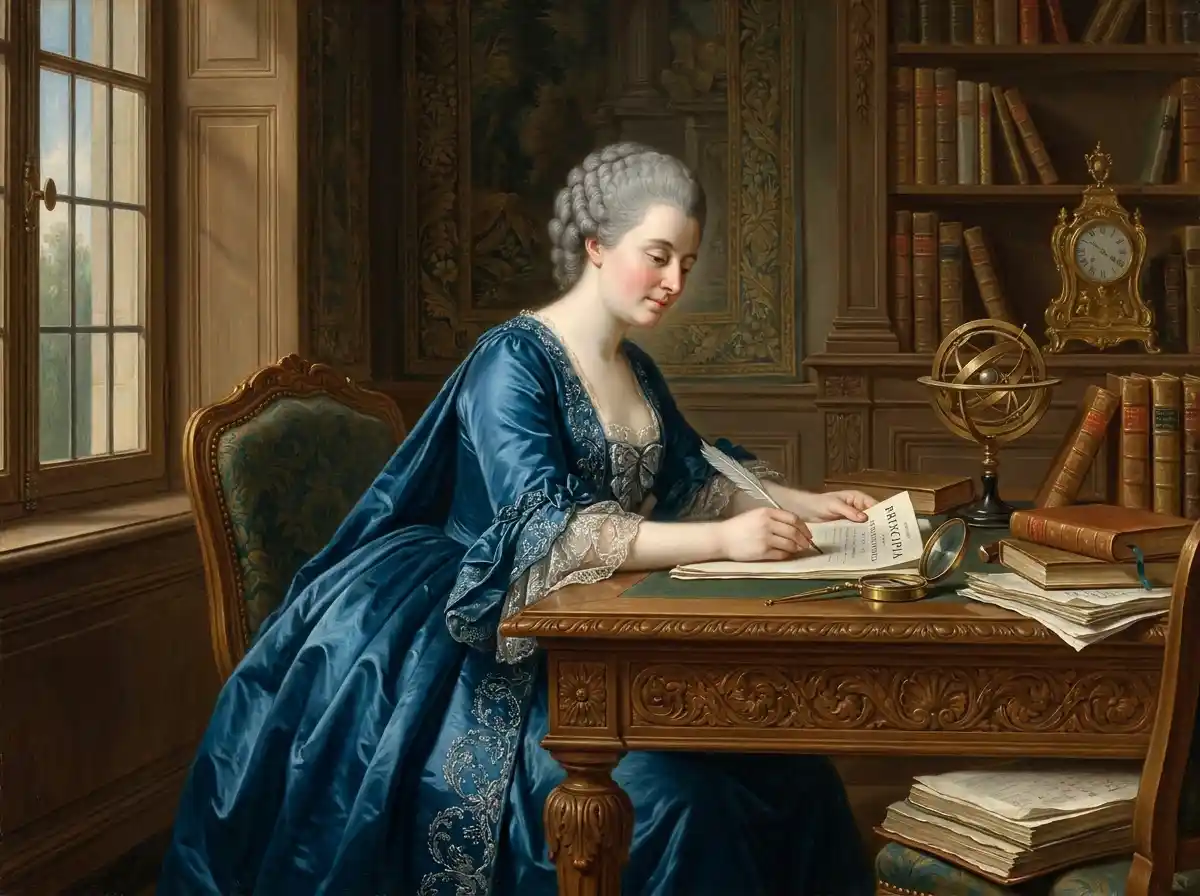
In 1725, a 19-year-old girl named Gabrielle Émilie La Tonnelie de Bertaille, known to us as Émilie du Châtelet , married an older military man, the Marquis Florent-Claude du Châtelet, in Paris. His position was governor of Semur-en-Auxois, so she came to live here, in the governor’s palace in the castle neighborhood. His family also held the position of bailli of Auxois from 1671 until the eve of the revolution. In this small town, she met a local mathematician and began to study seriously. The result of her studies in mathematics and physics was nothing less than the first French translation of Newton’s “Principia.” The translation was so good that for generations no other Frenchman dared to translate the famous scientist’s writings.
The end of this chapter is both sad and ironic. In 1730, Emilie returned to Paris, where she became the lover of Voltaire (Voltaire, 1694–1778), with whom she moved to live in a château in Lorraine. She died in 1749 in Lonville, a few days after giving birth to a son following an affair with a young French officer. In Semur, fifteen years earlier, in 1734, her husband had sold the Governor's Palace to the directors of the local hospital, who were looking for a larger building. And so the house where one of the most brilliant women of the 18th century studied mathematics to escape the boredom of the province became the Saint-Jacques Hospital.
The Revolution and the 19th Century: Hammer, Renovation, and the Solar Oven
The French Revolution raised the status of Smores but damaged some of its important buildings. In 1790 it was declared the center of an administrative district, meaning that it assumed under the new regime exactly the role it had played under the old regime. At the same time, the monasteries were closed: the Carmelite monastery was destroyed, and its magnificent group of statues, placed in a tomb dating from 1490, was moved to the collegiate in 1792, where it remains to this day. A year later, in 1793, the central tympanum of the facade was smashed with hammers. The statue of the “Virgin with Grapes” survived only because it was protected, and was returned to its place.
The 19th century was a century of restoration and collecting here. The collegiate church was renovated by Eugène Viollet-le-Duc (1814–1879), the architect who also renovated Notre Dame de Paris , and the donjon complex was recognized as a protected heritage site (monument historique) in 1862. The municipal museum was established in stages in the 1860s, when the geological collections arrived as a deposit from three members of the local scientific society, and in 1905 the society accepted the cracked tower as its home, after internal stairs were installed.
And in the same century, in 1825, the son of a locksmith named Augustin Mouchot (1825–1912) was born in Sémours. He was a mathematics teacher in the province, and in 1860 he began to be interested in the question of what the world would do when coal ran out. His answer was solar machines. He built solar ovens and then a steam engine powered by light, traveled to Algeria to work in stronger sunlight, and at the World's Fair in Paris in 1878 he exhibited a huge shelter powered by a steam engine. He received a gold medal and the Legion of Honor, and at the same exhibition he also succeeded, in the presence of Marshal Mac Mahon, in producing a block of ice using solar power.
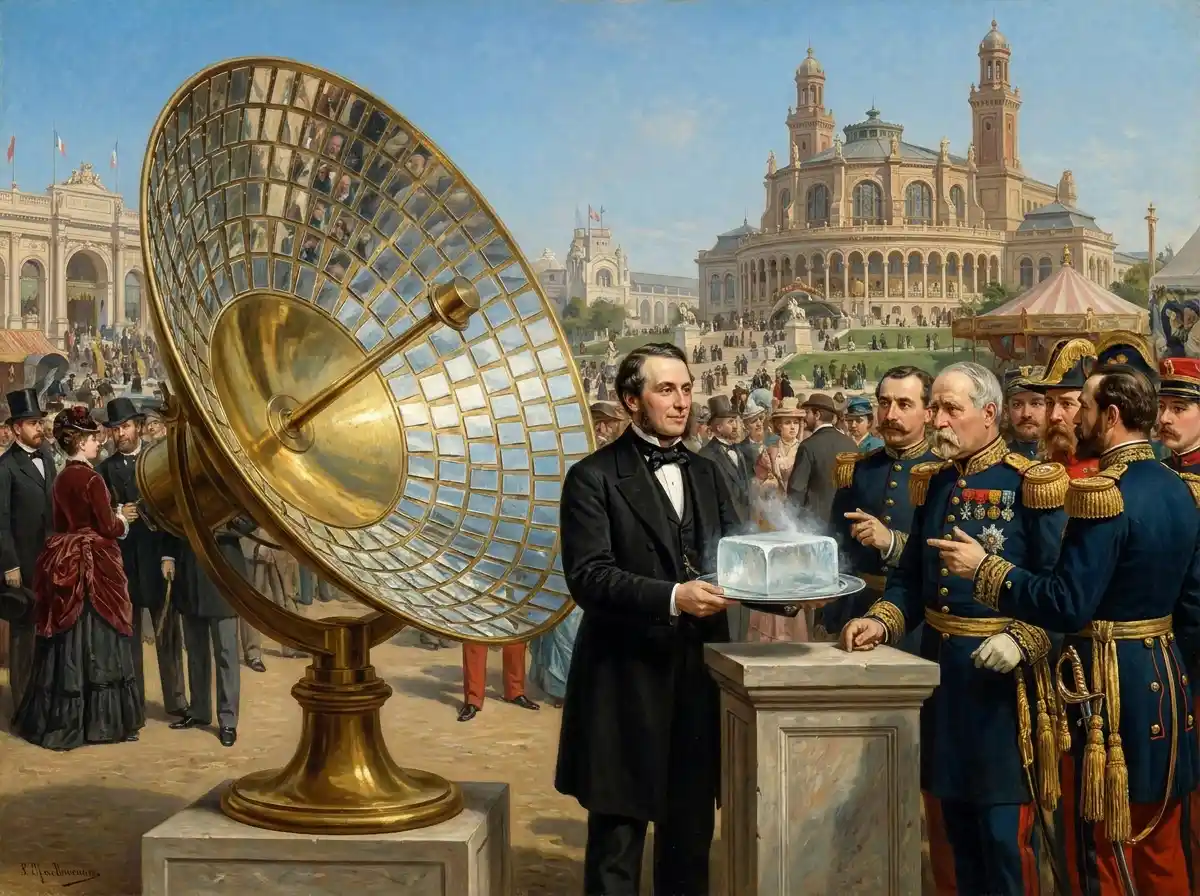
Then coal became cheaper, the internal combustion engine took over the world, and his research was forgotten. Musso returned to France in 1880 penniless, his health failing, and he died in Paris in 1912 in almost complete obscurity. He donated his portable solar oven to his hometown, where it remains to this day. A remarkable man who invented solar energy a century before that word came into use. What do you think, how would he feel if he saw an average Israeli roof?
From the 20th century to the present day
The American chapter of Samoura begins in August 1918. The 78th Division of the United States Army established its headquarters here, and remained in the city until May 1919. What emerged from this stay is not a monument but a stained glass window: in 1927, a colored window donated by former American soldiers was inaugurated in the Collegiate, in which an angel adorns the heads of French soldiers with a laurel wreath. A window donated by foreigners in memory of the locals, in the city where they spent nine months.
In 1926, Sèvres lost the role it had held for centuries: its administrative district was abolished and it was annexed to Montbard. After all the charters and kings and sieges, what finally moved the city was a bureaucratic reform. I find it quite ironic that the city that lost its walls by order of Henri IV lost its status by order of a bureaucrat.
During World War II, Samour was under German occupation. In the summer of 1944, groups of underground fighters, the maquis, operated in Auxois and the nearby Morvan, including Bayard's Maquis, who on September 6, 1944, ambushed the Germans on the road between Précy-sous-Thil and Saulieu. Six of his men were mortally wounded. Three days later, on September 9, 1944, Samour was liberated, two days before Dijon. This date is commemorated in the city every year by laying wreaths at the Maquis Square on rue Pertuisot.
What remains in the end is a small city that decided to preserve itself. Samour is now recognized as a Site Patrimonial Remarquable, and the plan defined here over the past twenty years extends over the vast majority of the area of the authority, and not just a few streets in the center. This explains why the streets look the way they do, and why a single store does not break the continuity. A city built to repel armies, and we walk through it without thinking about it for a moment.
Where to eat in Sámur en Oxoa
In Bessemer, I ate at Aux Vieux Pavés , a restaurant serving traditional, local cuisine in the old town. The food was not bad (you can see the entrecote I ordered in the photo), and the dish that particularly stood out was the escargot, which was served in a shell made of dough instead of the usual shell (you've seen the Burgundian snail before, carved on the facade of the collegiate).
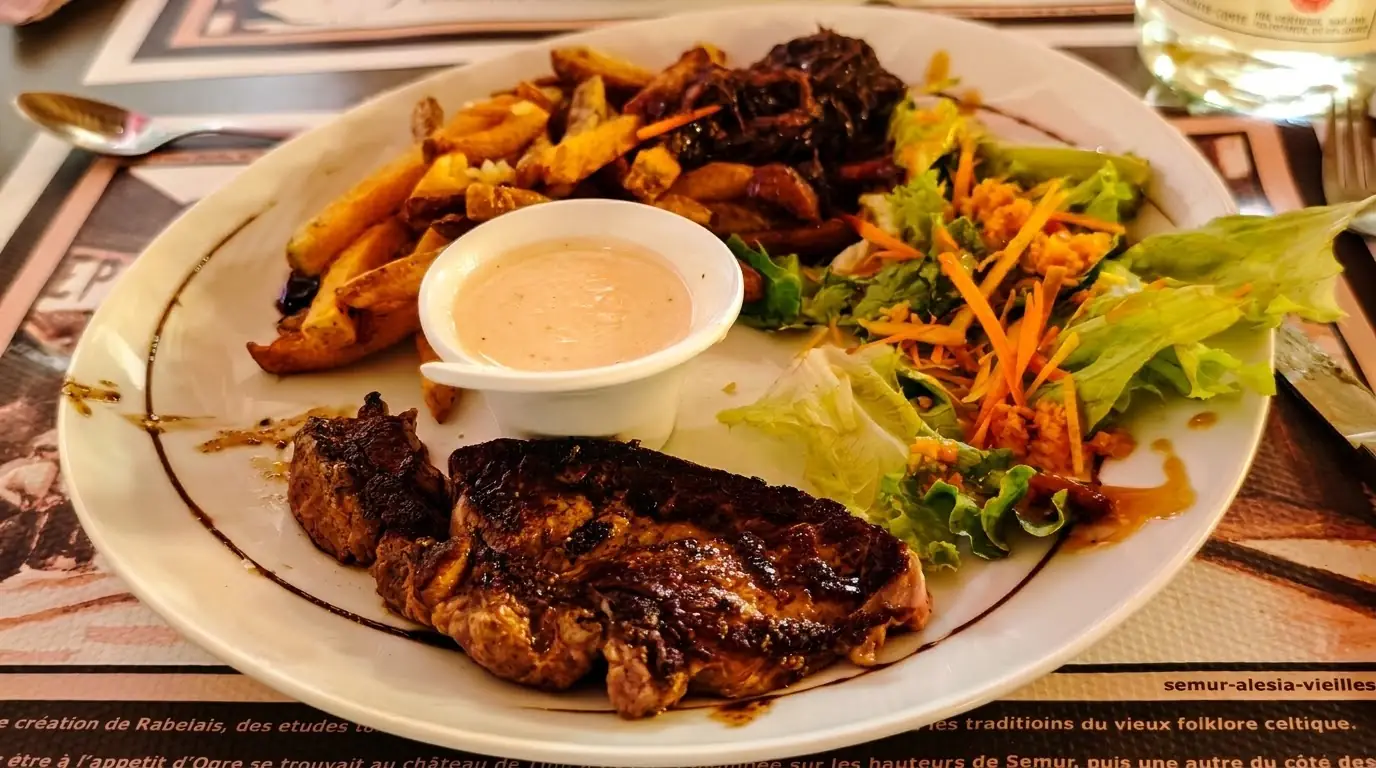
The only downside to the place was the service, which was very, very slow, and that should be taken into account (i.e., don't go there when you're in a hurry).
Address: 4 rue du Vieux Marché . Phone: +33 3 80 92 27 45. You can reserve a table on TheFork.
Places to stay in Samore en Oaxaca
The city has a small selection, and that's the first thing you need to know: If you're arriving on the weekend of the Bugatti race or at the height of summer, book early. The three places below are the only hotels in the city that pass the bar I set for myself (a score of 8 or higher on Booking), and I left out the fourth hotel, which is below the bar. Those who prefer a base in a big city and come to Sémur for a day trip can also get by from Dijon, and I wrote about recommended hotels in Dijon separately.
Hôtel Relais de la Côte d'Or
This is where I lived, so I'll also tell you about what I didn't like. It's a 17th-century royal post office that has been completely renovated, and it sits at the entrance to the old town, just a few minutes from the Collegiate Church and the Sunday market. It has free private parking, and some rooms face the garden. The bar on site functions as a tea house in the afternoon and wines in the evening, and in a city where not everything is open until midnight, this is a detail that makes the evening.
Its big advantage is its location. After a whole day on cobblestones, the distance between the hotel door and the door of the collegiate is a few hundred meters, which means you can go for a walk around the walls at sunset and come back without planning anything. Those arriving by train will find another advantage here: according to the hotel itself, it organizes a paid shuttle from Montbar and Warner-les-Lume stations upon request, which solves exactly the problematic part of the road I described above.
However, I was disappointed with the rooms. They are small, and those staying on the first or second floor have to go up and down half a flight of stairs every time they leave or return to their room. This is very problematic for older people, and there was nothing written about it when I booked the place. If you do decide to stay here, insist on a room on the third floor: that's where the elevator goes and there's no need to go up the stairs at all (and I was told the rooms there are also larger). Check prices at Hôtel Relais de la Côte d'Or.
Hotel des Cymaises
A small hotel, eighteen rooms, in the historic center yet on a quiet street. It consists of two buildings from the 18th and 19th centuries, it has a courtyard and terrace, free parking and Wi-Fi, and each room is individually furnished. In terms of location, this is the most convenient choice of all: you are in the old city, and from the door to the collegiate church it is a walk of minutes.
A continental breakfast is available for an additional fee, and the hotel itself does not have a full restaurant, but two nearby restaurants (one gastronomic and one bistro-style) are a few minutes' walk away. Check prices at Hôtel des Cymaises.
Logis Hostellerie d'Aussois
A three-star hotel sitting outside the walls, on the road to Solihull, with a terrace restaurant overlooking the city's fortifications. It has an outdoor pool, garden, free parking and is minutes' walk from exit 23 of the A6, meaning it's both a hotel that can be used as a stopover between Paris and the south, and a convenient base for stargazing in Occitanie without struggling to find parking in the old town.
The on-site restaurant, La Table de l'Hostellerie, serves local Burgundian cuisine, and there are bed and breakfast packages for those planning to stay a few days. The only downside, and it's worth considering: the distance to the upper town requires either a short drive or a hike, and returning from dinner in the city feels steeper. Check prices at Hostellerie d'Aussois.
Those who continue east or south, and want to turn the trip into a wine trip, will find everything they need in Yossi Drori's article on the Burgundy Wine Route . And all other details about the region, from accommodation recommendations to seasonal weather, are concentrated on my Burgundy for Travelers page.
Questions and Answers about Samoura en Oxua
How long does it take to sable an oxua?
Half a day to a day is enough for the city itself. If you want the museum, the tour of the walls from below, and a long meal, plan a full day. I recommend two nights, because from Mesmer you can reach Alesia, Fontenay Abbey, and Flavinie-sur-Oserne in a half-hour drive.
How to get to Sémour-en-Auxois from Paris without a car?
High-speed train from Gare de Lyon to Montbard station, about an hour's journey, and from there 18 kilometers to Sémur by regional bus (Mobigo line 120, flat rate of 1.5 euros) or by the TAD 151 taxi service, which requires a telephone reservation at least a day in advance. A cheaper option for the train is the TER line from Paris-Bercy station, two hours and twenty. In any case, it is essential to check the bus schedules in advance, as the frequency is low.
Can I go up to the Orléans d'Or Tower?
You can, but not whenever you want. The tower opens mainly in the high season and with special openings, and the visit is done on a guided tour in groups of up to 18 people. The other towers of the donjon are not open to free visits. The updated situation should be checked at the Terres d'Auxois tourist office in the city.
What are the opening hours of the Samoura Museum and how much does it cost?
An adult ticket costs 4 euros, and children, students up to 26 years old and people with disabilities enter for free. The museum is closed in winter and opens in mid-February. From mid-February to early June, as well as in October and November, it is open Wednesday to Friday afternoons and Saturday mornings. From June to September, it is open Wednesday to Sunday afternoons and Wednesday and Saturday mornings. There is no lift.
When was the Buga race held?
The Bugatti, the oldest equestrian race in France, is held on May 31st on the boulevard in the city center, and has been held there continuously since 1639. It is surrounded by days of festivities with a fair and other races, including a running race and a trotting cart race. It is also the busiest day of the year in Sémours, so accommodation needs to be booked well in advance.
Why is there a huge crack in Weasel's tower?
Because in 1602, Henry IV ordered the demolition of the walls that connected the four towers of the donjon, to prevent the possibility of another siege of the city after the Wars of Religion. The great tower was left without its lateral support and cracked along its entire height. The crack is not a sign of collapse but of deliberate dismantling, and is the first thing you see in the city from the Pinar Bridge.