
in short
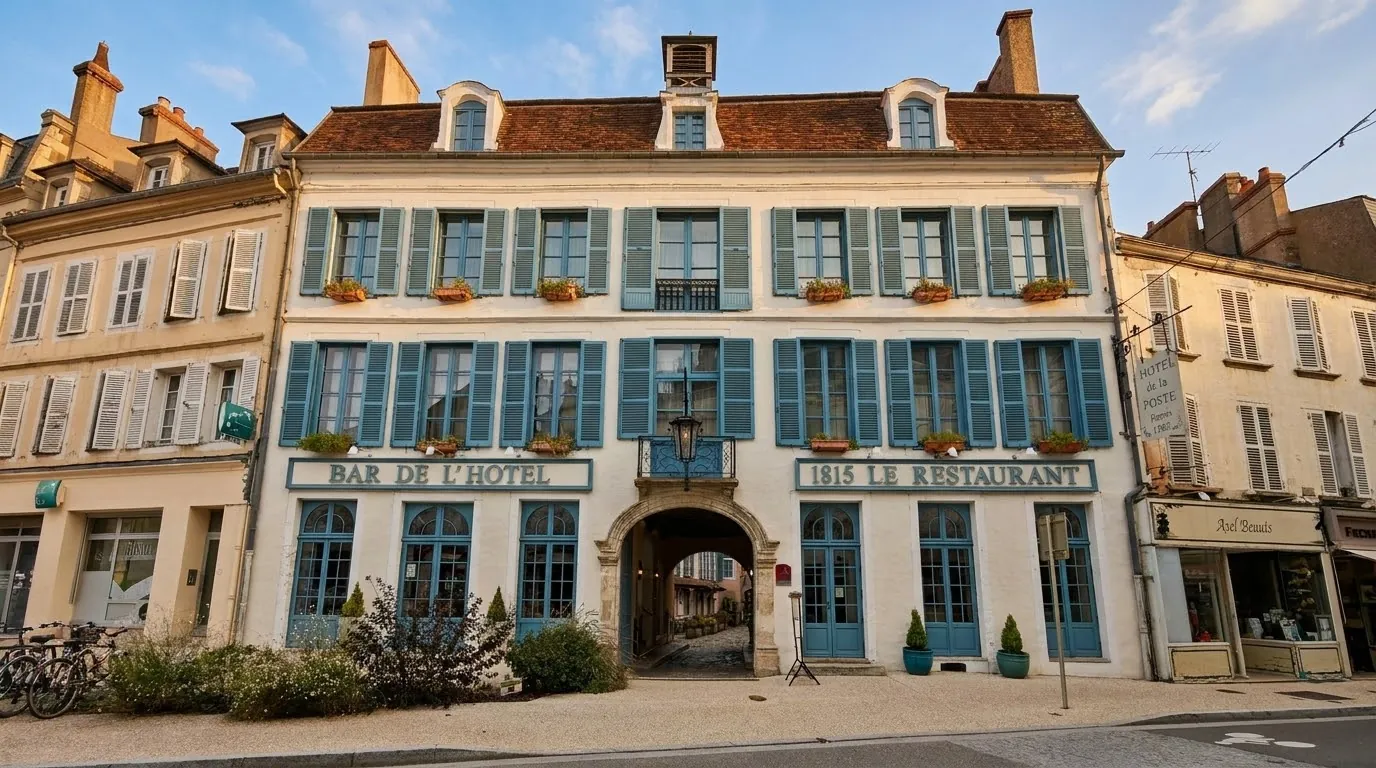
- What's there: Le 1815 hotel and restaurant in a house from 1707, with a dining room with a painted ceiling, a paved courtyard and a carriage gate.
- Napoleon: On March 16, 1815, the Emperor stopped here on his way from Elba to Paris, stayed in a room on the first floor, and left for Osser in the morning. The room still exists today and can be booked.
- status: The restaurant was selected in the Michelin Guide (€€€), and from 1953 to 1966 it was a three-star restaurant.
- How to get there: By direct TER train from Paris-Bercy station to Avellon, or about two and a half hours by car on the A6 highway, exit 22.
- When: The hotel is open from mid-February to the end of December. The restaurant is closed on Tuesdays and Wednesdays from January to May and from October to December.
- How much does it cost: Daily lunch menu on weekdays, 39 euros for two courses or 49 euros for three; Découverte menu 59 euros; 1815 seven-course menu 75 euros.
- And bonus: Almost all of the furniture, mirrors and pictures selected by antiques dealer Julian Cohen are for sale, including the chairs in the restaurant.
I arrived at the Hôtel de la Poste in Avallon on October 9, 2026, for lunch in the hotel's restaurant, Le 1815, in the middle of a day that began at the Château de Buzous and ended in Vozela . The name of the restaurant was not chosen by chance. On March 16, 1815, on his way from the island of Elba to Paris, Napoleon stopped at this inn, received the mayor who refused to recognize him, and spent one night there in a room on the first floor whose windows faced the square.
The house was built in 1707 as a relay de poste, a place where travelers stopped in their carriages to eat and sleep. In the 20th century, it was one of the most famous restaurants in France, with three Michelin stars and a long list of famous guests. In 2016, the house closed, and in the spring of 2024, it was reopened by antiques dealer Julien Cohen, known to French viewers from the TV show “Affaire conclue,” with an unconventional idea: everything in the house, from the mirrors on the walls to the chairs in the restaurant, is for sale.
So before we head out and visit the Hôtel de la Poste, let's talk about what you'll find in this article. First, the practical information: where the hotel is located, when the restaurant is open, how much lunch costs, and how to get there from Paris. Then, what's worth seeing in the house itself and in the old town of Avallon that surrounds it, and then the history of the house, centered around Napoleon's night, his conversation with the stubborn mayor, and the years of the three stars. At the end, you'll find accommodation recommendations and answers to frequently asked questions.
By the way, Hôtel de la Poste was part of my Burgundy itinerary , and there you will find all the days of the trip, the hotels, and the restaurants.
Practical information for visiting Hôtel de la Poste and Le 1815 restaurant
Where is the hotel, opening days and hours?
The hotel is located at 13 place Vauban, a few hundred meters from the clock tower and the old town of Avellaneda. Avellaneda is a small town in the Yonne department of Burgundy , and everything worth seeing is within walking distance of the hotel. If you would like to get information about the hotel and book a room, please follow this link.
The hotel is open from mid-February to the end of December. The restaurant, Le 1815, is closed on Tuesdays and Wednesdays from January to May and October to December. From June to September, please check with the restaurant for opening times before arriving. Lunch is served from 12:00 to 13:30, and dinner is served from 19:00 to 21:00 or 21:30, depending on the day.
You can get information about the city at the Avellaneda tourist office, which is housed in a 15th-century house at 6 rue Bocquillot, in the old town (tel. 03 86 34 14 19).
How to get to Hôtel de la Poste
By train. Avon has a train station, and is the last stop on the TER line that leaves from Paris-Bercy station. The fastest train makes the journey in two and a half hours, and the average journey takes about three and a half hours. Along the way, the train stops at Auxerre and at Sermizelles-Vézelay station, which is close to Vézelay. Avon's station is less than a kilometer from the hotel, so you can get there on foot. It's convenient to book tickets in advance through Omio , which brings together train operators on one screen and saves you the hassle of dealing with the French website.
By car. From Paris, take the A6 towards Lyon to exit 22, Avallon. The entire trip is about 225 kilometers, about two and a half hours. Avallon is also convenient as a base for exploring the area: Vezelay is about 16 kilometers from the hotel, about a twenty-minute drive, and Bezos Castle is about 20 kilometers, about a 25-minute drive. It is best to book a car from Israel through Auto Shay , which has a special booking page for “anonymous Francophiles” surfers.
The hotel has private parking, but it is for hotel guests only.
Table reservations, prices and dress code
The table at Le 1815 can be reserved directly at the hotel, by phone +33 3 10 45 16 16 or by emailing the reception, reception@hoteldelaposteavallon.com.
At noon on weekdays there is a daily menu, which changes every day according to the season and what has arrived from the suppliers: a starter and main course, or a main course and dessert, for 39 euros, and three courses for 49 euros. The daily menu is not served on weekends and holidays, and at other times you order from the regular menu. The Michelin Guide classifies the restaurant in the €€€ price category.
The restaurant requires proper attire (tenue correcte), and the entire hall is air-conditioned.
-
The 1815
Modern French cuisine by chef Ritesh Persand, in the historic dining room of the Hôtel de la Poste. At lunchtime on weekdays there is a daily menu, 39 euros for two courses and 49 euros for three. Address: 13 place Vauban. Phone: +33 3 10 45 16 16.
When to come, and how does it fit into a day trip?
Avalon is a short drive from Vezelay and Mezzouz, so lunch at Le 1815 is a natural stop on a day trip to northern Burgundy (which is what I did myself, between Mezzouz in the morning and Vezelay in the afternoon).
If you want the daily menu, come at noon on a weekday. Those arriving on a Tuesday or Wednesday outside of summer will find the restaurant closed, and from January to mid-February the hotel itself is also closed.
Those who want to take a peek at the house before arriving will find a 360-degree virtual tour of the hallways, rooms, restaurant, and bar on the hotel's website.
What not to miss at Hôtel de la Poste in Avalon
Napoleon's carriage gate, courtyard and tablets
The entrance to the Hôtel de la Poste is through a carriage gate, behind which is a stone-paved courtyard with vegetation. Through this gate the carriages entered the courtyard, and on the morning of March 17, 1815, Napoleon's carriage was also waiting there.
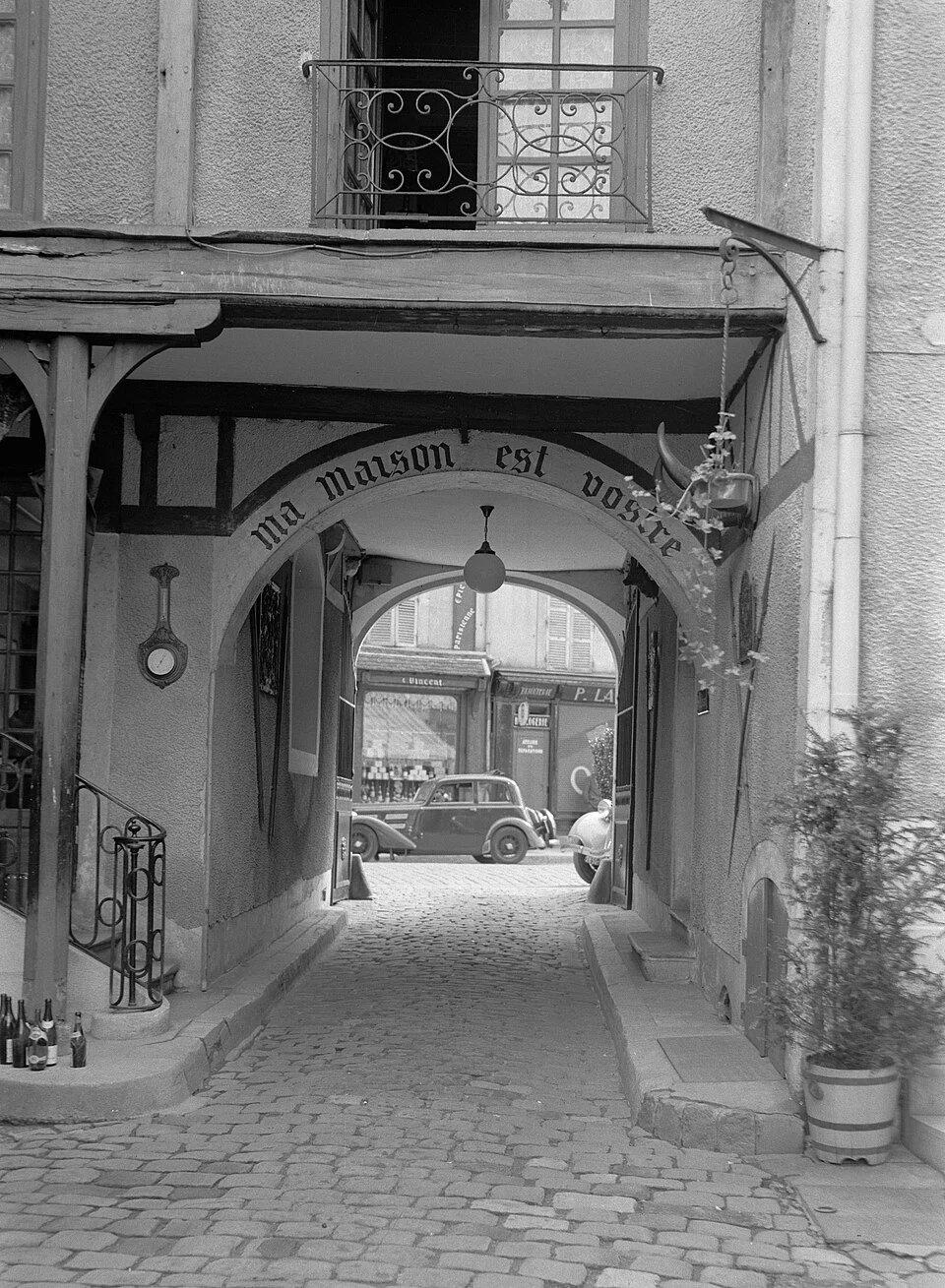
In a photograph from 1935, when the house was still called the Hostellerie de la Poste, an inscription in old French is visible above the passage, Ma maison est vostre, meaning “My house is your house” (with vostre in the old spelling, instead of today’s votre). Through the arch, the houses across the street are visible, and to the left are stairs with an iron railing.
Two plaques commemorate the night of 1815. An oval plaque to the right of the entrance says in French: “In 1815, on March 16, Napoleon I stayed at this hotel.” A second plaque, set in August 1911 under the arch of the gate, adds the context: “On his return from the island of Elba.”
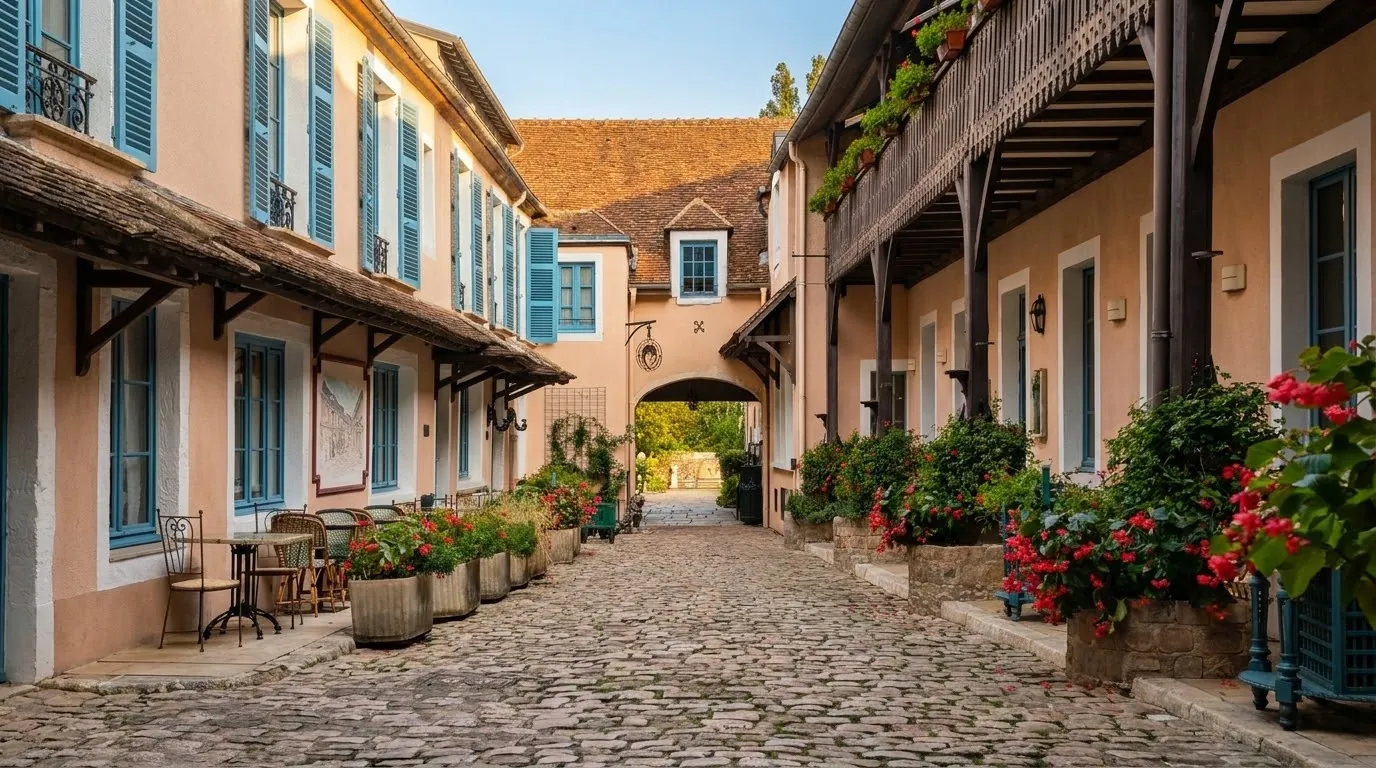
Today the courtyard looks almost the same as in the old photograph, only with many more flowers: stone paving, blue shutters, a wooden gallery along the right wing, and small tables waiting for a sunny day. It's worth stopping here for a moment before entering the restaurant, because this is the part of the house that has changed the least since 1815.
Le 1815's dining room and what's on the plate
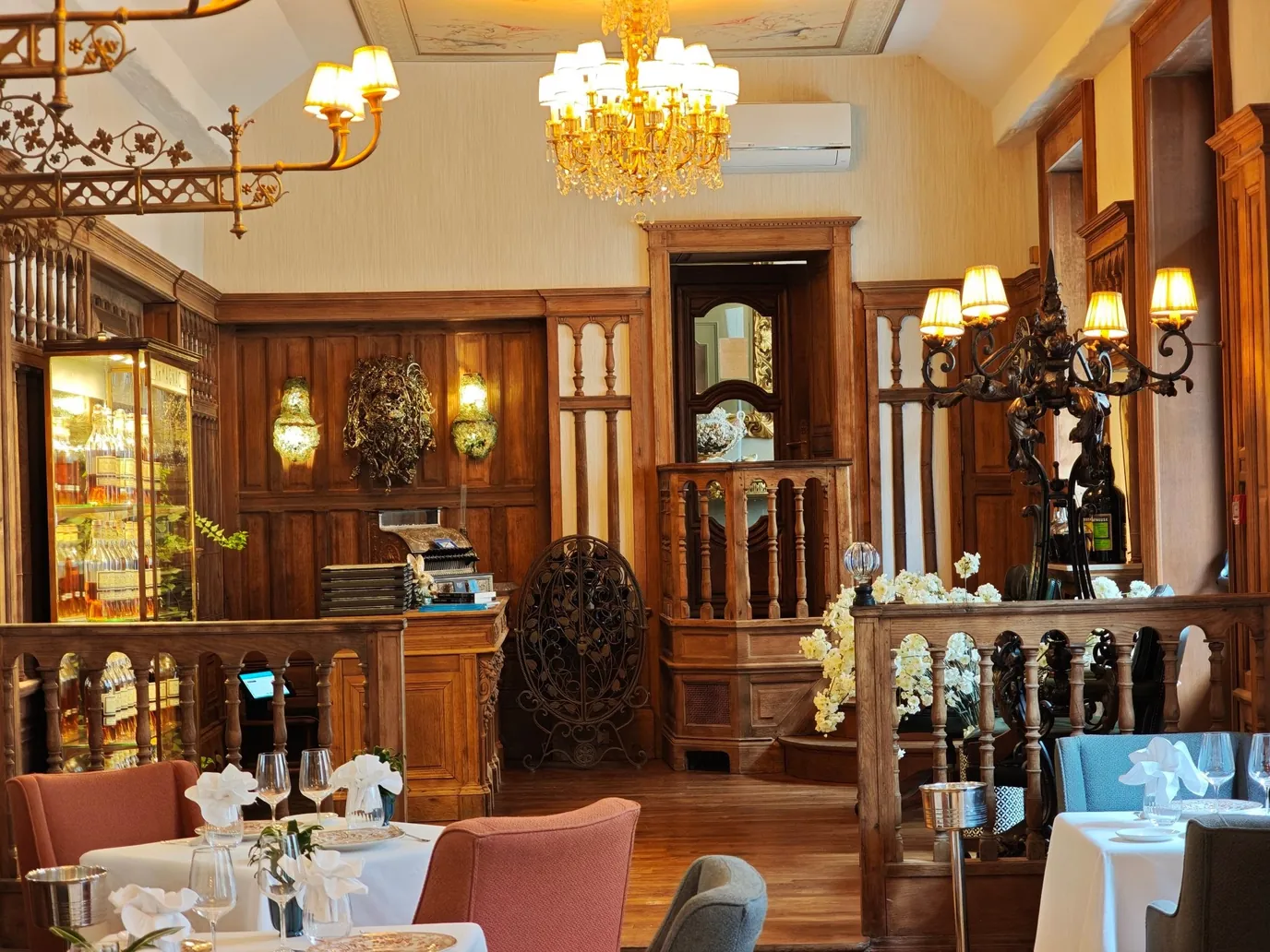
The dining room at Le 1815 has parquet floors, chandeliers, mirrors and an antique painted ceiling. The Michelin Guide, which selected the restaurant for its list, describes the food as “modern cuisine with a taste of tradition, sometimes spiced with creativity and exotic spices.”
The kitchen is led by Mauritian-born chef Reetesh Persand, and the menu changes seasonally. Among the dishes mentioned by Michelin were tataki of yellowtail fish killed in the Japanese ikejime method, infused with dashi stock and with calamansi pulp, a small citrus fruit, and magret de canard in a four-spice mixture with carrot puree. At the reopening in 2024, the menu also included a dessert in honor of the house's famous guest: a champagne and tangerine parfait glacé in the image of Napoleon.
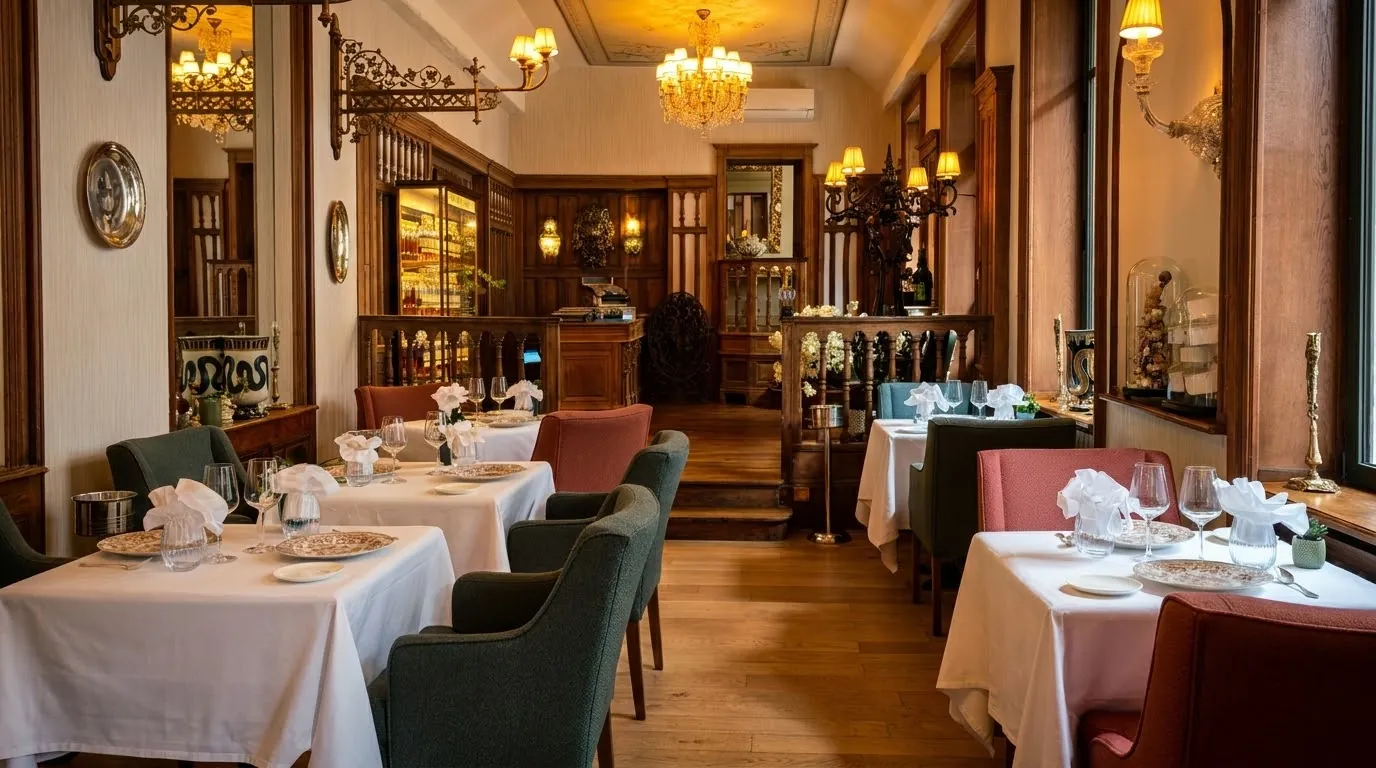
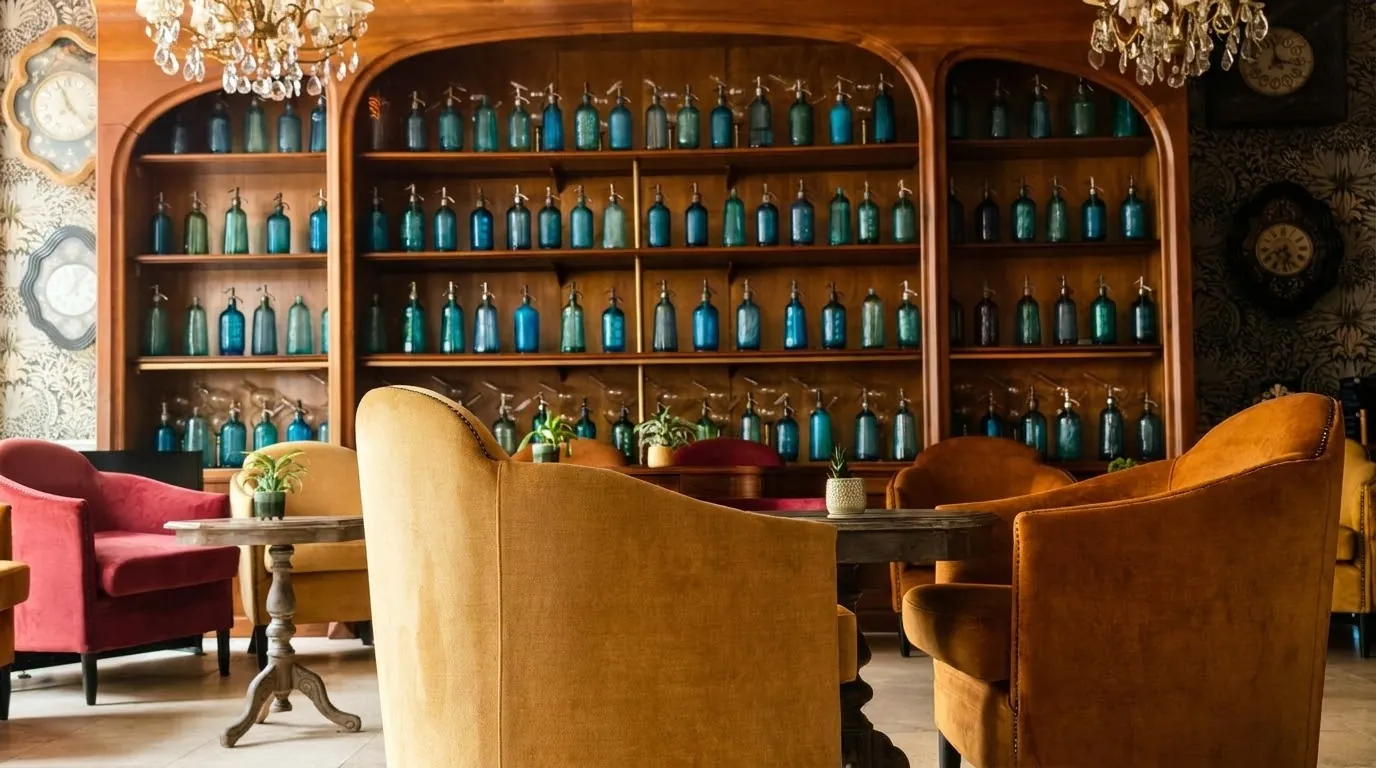
The wine list includes more than 400 wines, with an emphasis on Burgundy vineyards, and there is a sommelier in the restaurant who helps you choose (you can find more information about the region's wines in Yossi Drori's article on the Burgundy Wine Route ). Before or after your meal, you can sit in the hotel's bar, called 1707, after the year the house was founded, and which serves cocktails. It is also furnished with antiques, and on its wall stands a whole collection of blue glass soda siphons in rows.
What I ate at Le 1815
Then it was time to sit down at the table. The three of us arrived, my parents and I, on a Friday afternoon, and we chose three different menus: I took the 1815 menu (75 euros), my mother the Découverte menu (59 euros), and my father the menu of the day (49 euros for three courses). I'll say the bottom line right now: it was the best meal of the entire trip, and I say this after I had already eaten excellently in Auxerre and Bourg-en-Bresse.
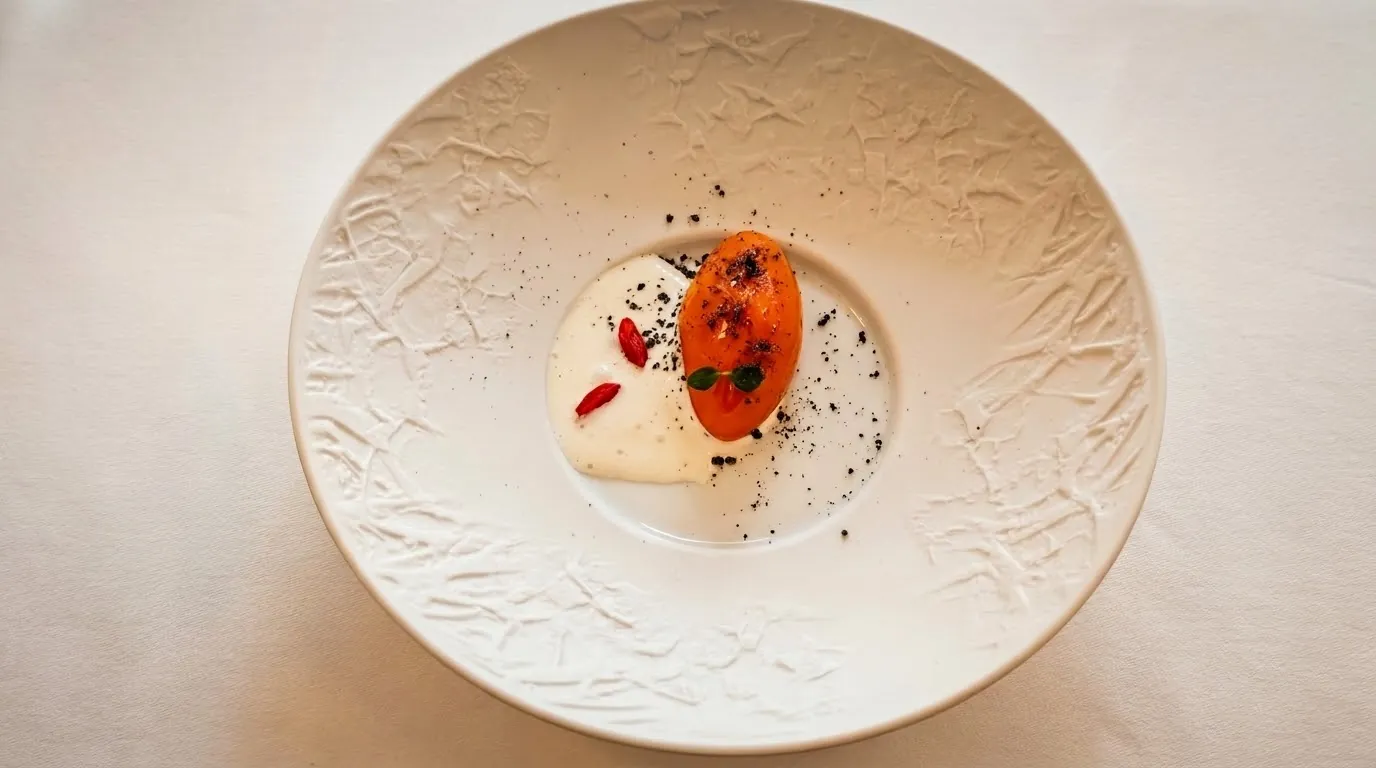
The 1815 menu is made up of seven stages: “Eveil des saveurs” to open, a starter, a main course, a “Gourmet Interlude” before dessert, the dessert itself, and “Sweet Fragments” to close, and in the 105-euro version, a second starter. The small dishes between the courses are part of the experience: an orange canelé on white foam, with black crumbs and a small leaf, came on a deep white plate that looked like a statue.
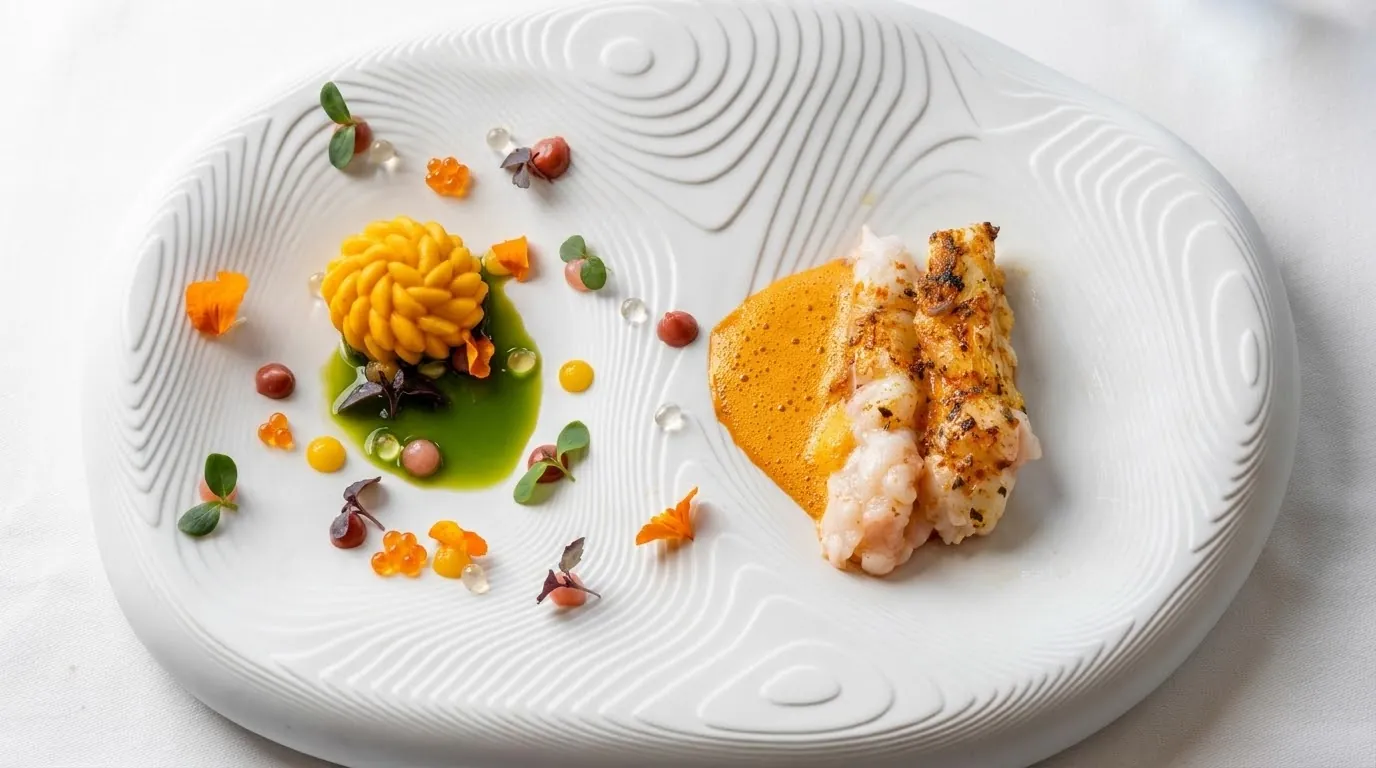
For the first course, I chose Langoustine “in fragments” (Langoustine en éclats): lightly seared langoustine meat, accompanied by carrots in several textures with cardamom and black lemon, orange gel, green oil, and edible flowers. This is the most beautiful plate I saw on the trip, and to my delight, it tastes as good as it looks (if you want, you can add 8 grams of caviar for an additional 15 euros).
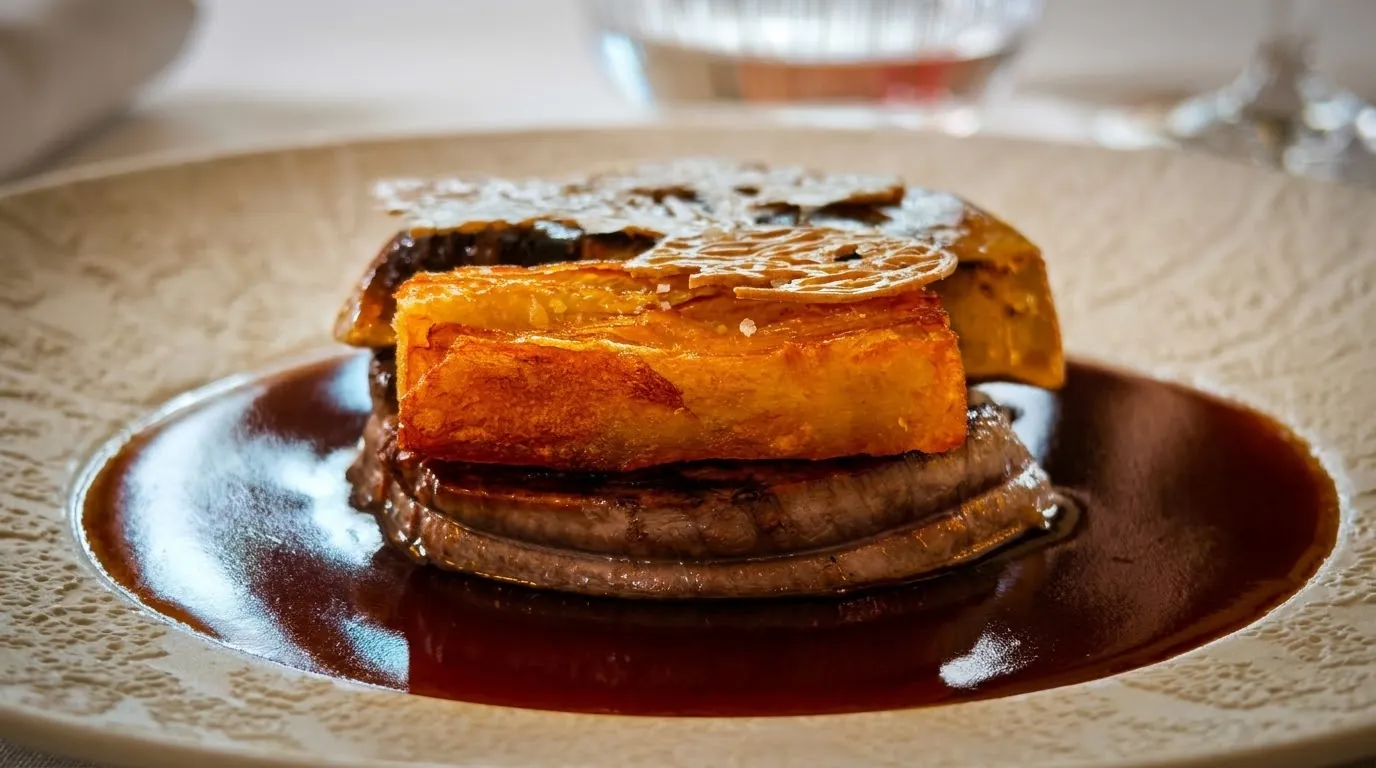
For the main course, I went for the classics: Filet de bœuf Rossini, that is, fillet with a slice of foie gras on top, grilled on a Kamado grill, a Japanese ceramic oven, with celery cream and Périgueux sauce, a Madeira-based truffle sauce. Next to the meat stood a tower of crispy potatoes, and on top of it all were sheets of dough as thin as lace.
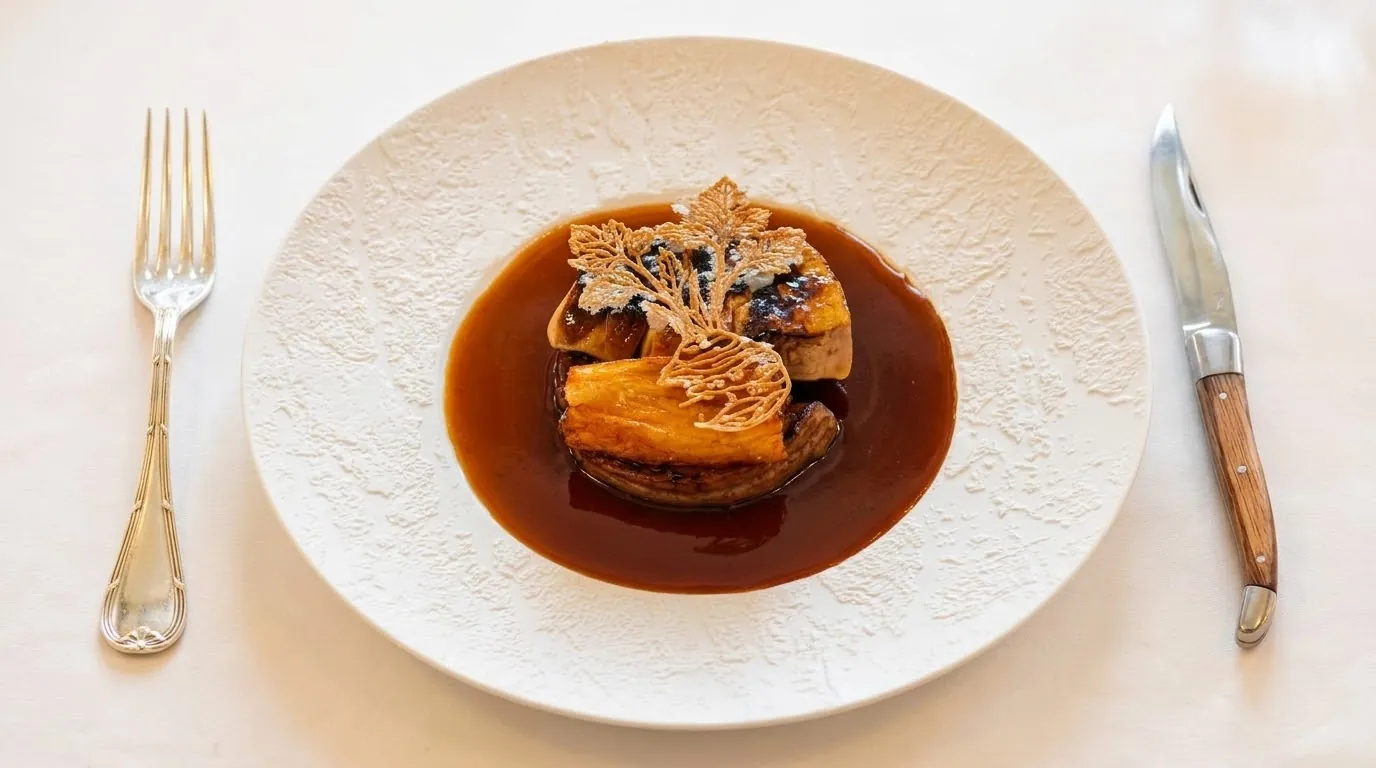
This is the kind of dish that explains why this place once held three stars: a no-frills French classic, done right. If you come here once, this is the dish I would order.
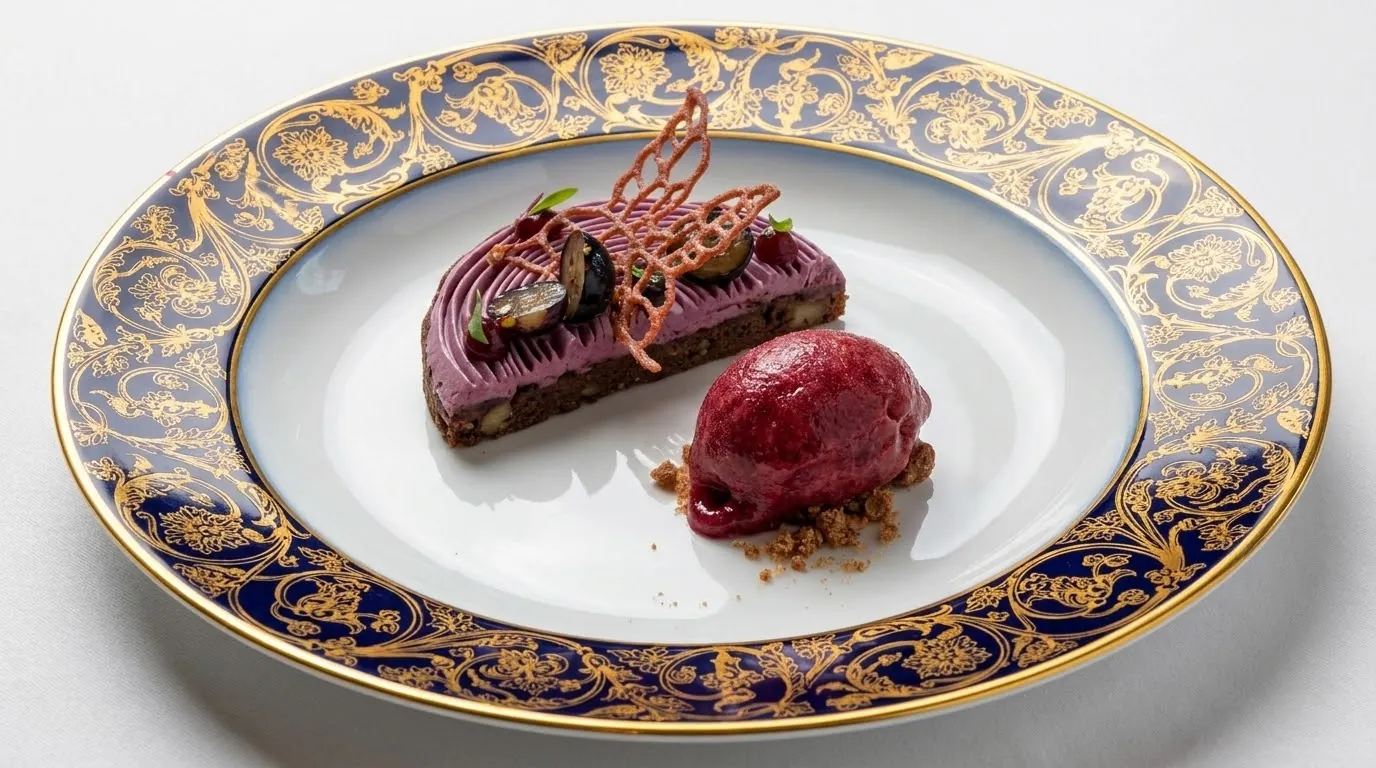
For dessert I chose “The Enchanted Forest” (La forêt enchantée): a tart with a purple cream of berries, grapes, and mint leaves, accompanied by red sorbet on pastry crumbs. This was followed by more small “sweet fragments” with the coffee.
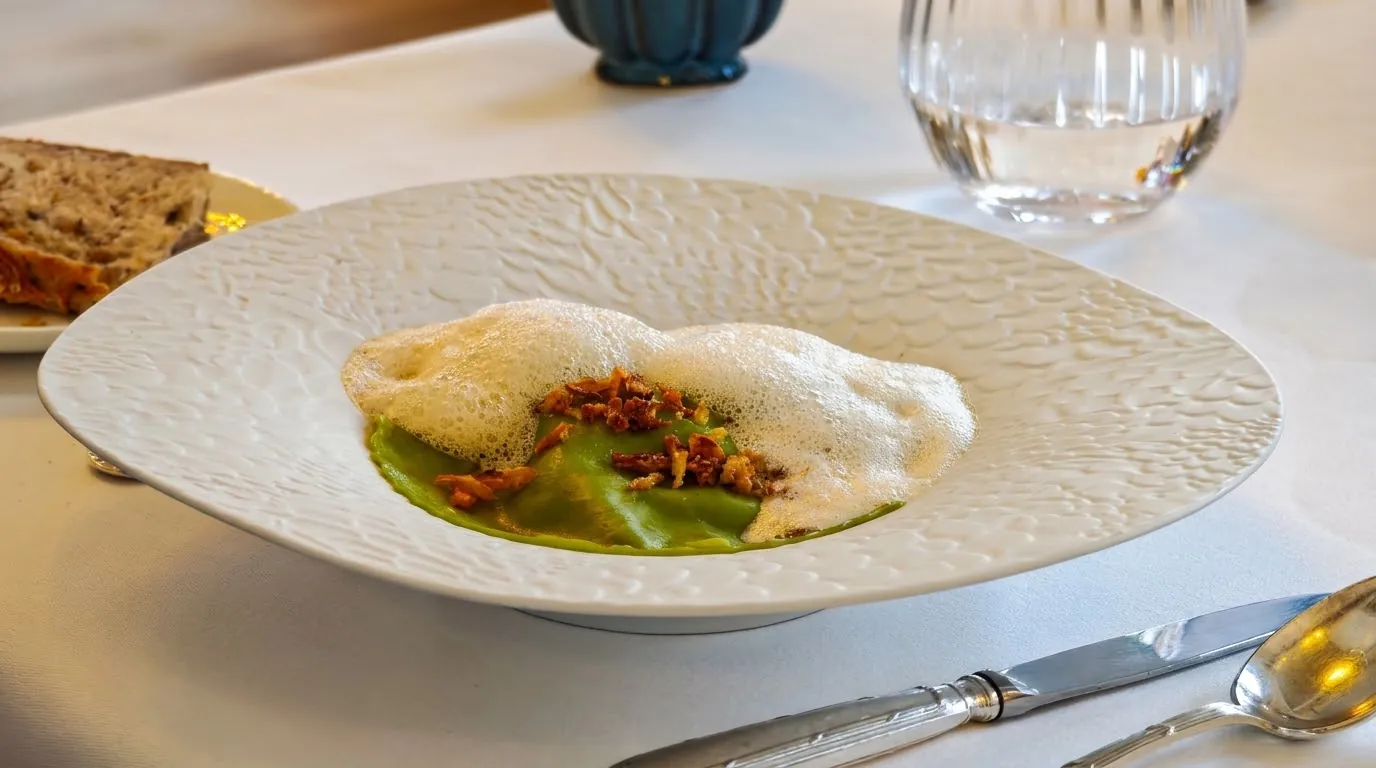
There was no reason to complain from the other side of the table either. On the Découverte menu, the first course was a chlorophyll-green open-faced ravioli with escargots and organic oyster mushrooms, in a vegetable juice with pink garlic, and all under a dome of foam.
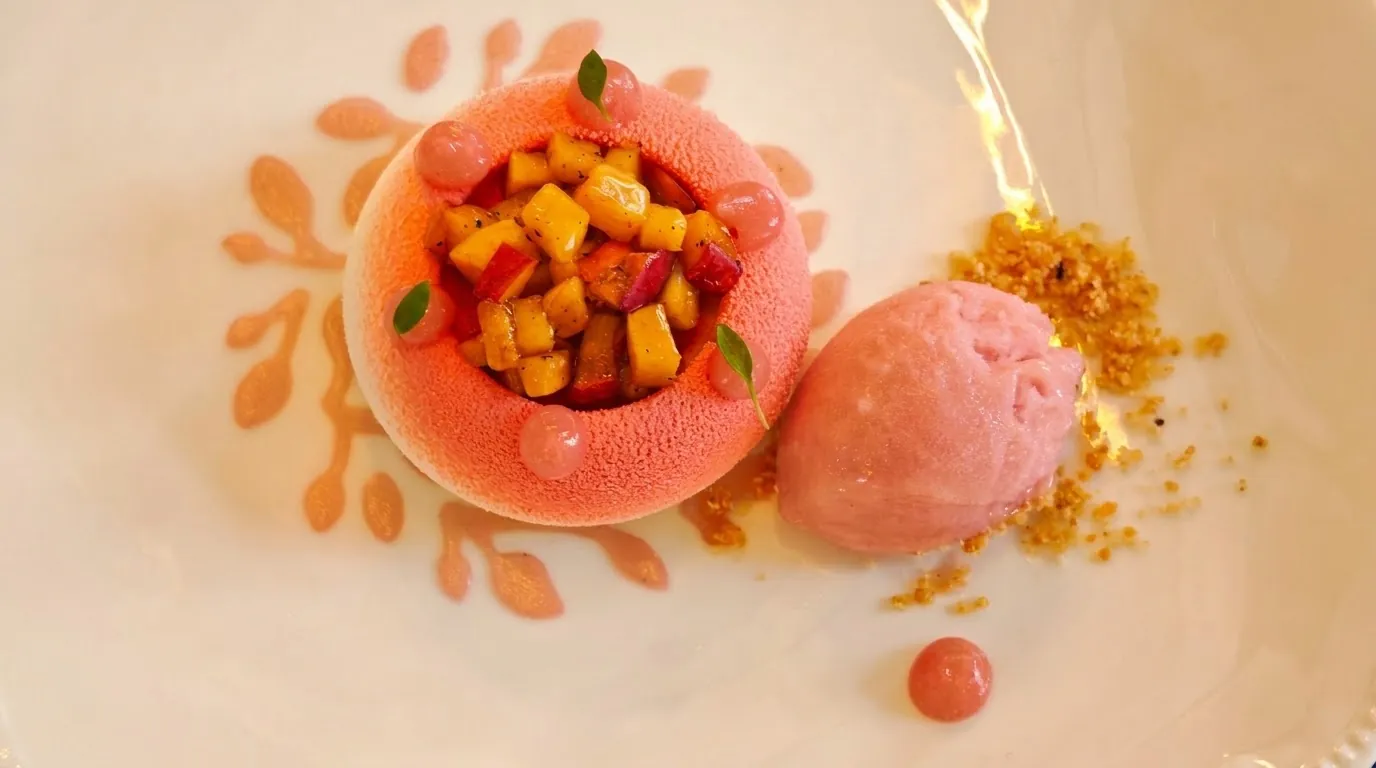
The dessert from the same menu, “The Orchard” (Le verger gourmand), was a pink dome filled with diced peach, with sorbet and crumbs, and according to the menu with “souffle de Kerala,” meaning Indian spices (the chef, as you may recall, was born in Mauritius).
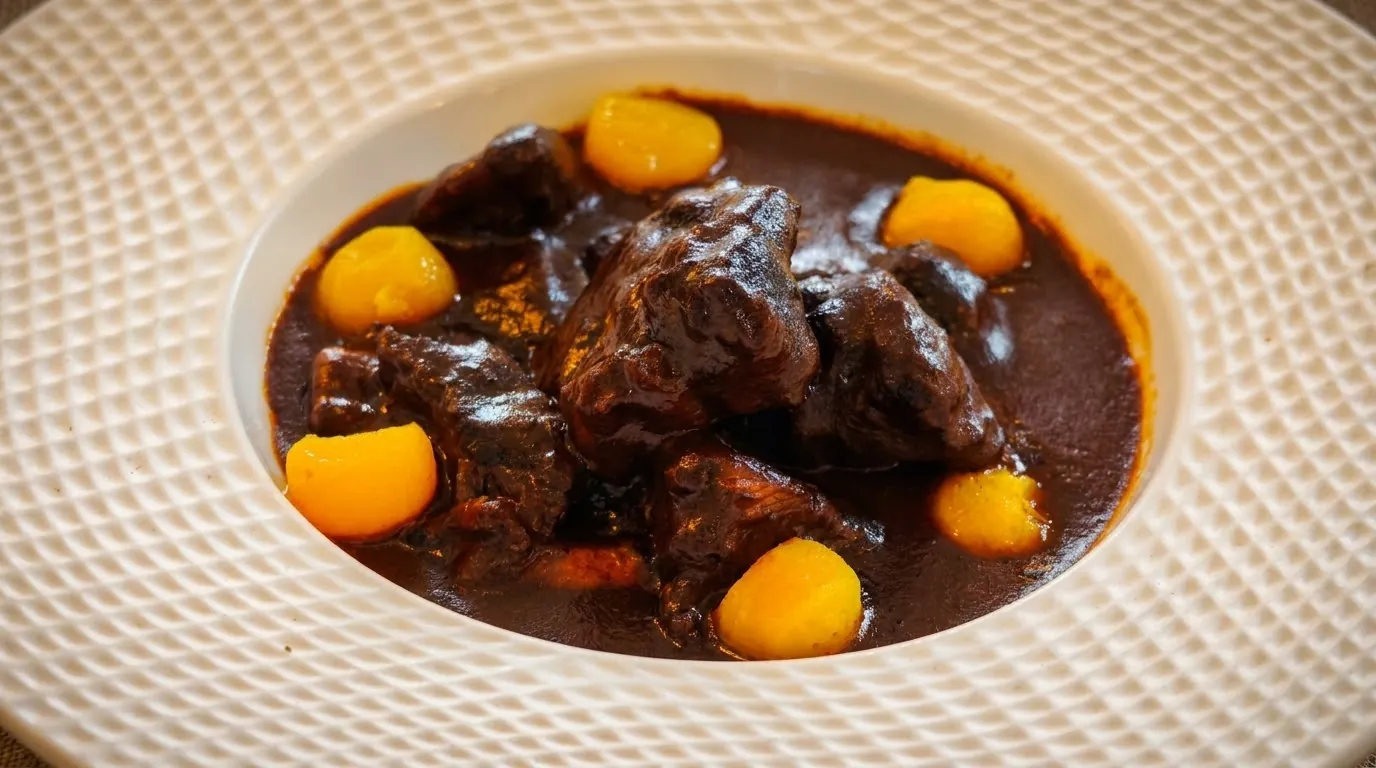
Today's menu was the most modest of the three, but its main course is exactly what you're looking for in Burgundy: beef bourguignon "in the style of 1815" (Bœuf bourguignon façon 1815), pieces of beef cooked in red wine until they fall apart, in a dark, glossy sauce, with carrot balls.
To summarize the prices, as of October 2026: Menu of the Day (weekday lunch only) 39 euros for two courses or 49 for three, Menu Découverte 59 euros, and Menu 1815 75 euros for seven courses or 105 euros with two starters. When ordering from the menu, a starter costs 20–39 euros, a main course 28–50 euros, and a dessert 12–18 euros. Prices include tax and service.
The antiques for sale, and the Napoleon Room
At Hôtel de la Poste, almost everything you see is for sale. The furniture and decorative objects were chosen by Julien Cohen, some from his private collection, and the selection includes mirrors, pictures, cutlery and even the chairs in the restaurant. If you fall in love with a piece of furniture in your room, you can buy it and take it home with you.
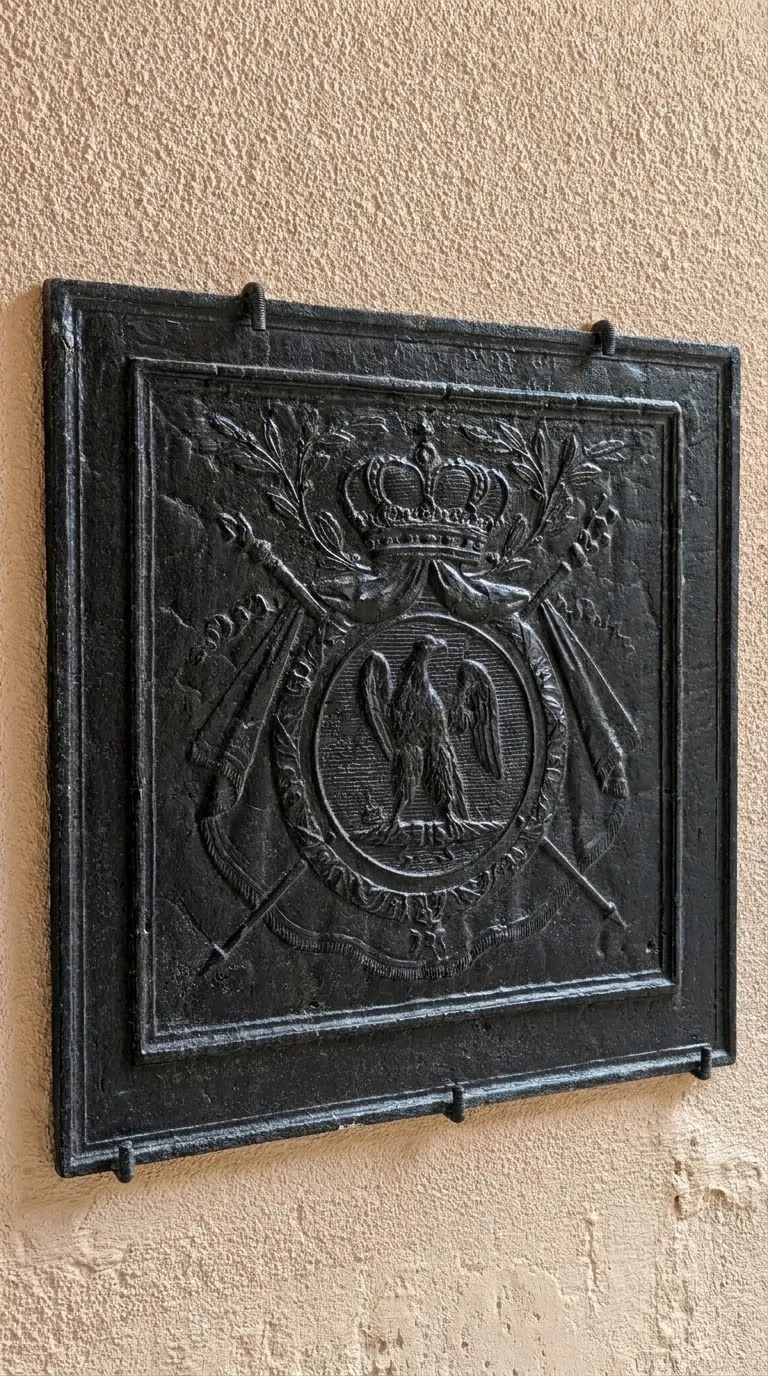
The house also doesn't forget who its most famous guest is. On one wall hangs a cast-iron panel, the kind that was once placed behind a fireplace to protect the wall and return heat to the room, and on it is the symbol of the Empire: Napoleon's eagle in a medallion, surrounded by a crown, scepters, flags and laurel branches.
This is a good example of the spirit of the place: not a museum with display cases, but a house where history hangs on the wall, and if you really want it, is also for sale.
The old furniture in the rooms was restored by the hotel’s master carpenter. This is not Cohen’s only business in the area: he has several “antique dealers’ houses” (maisons des brocanteurs), one of them in Avellaneda, and also a former church in Vezelay that has been converted into an antiques shop.
The room where Napoleon slept, on the first floor and with windows overlooking the square, is now one of the hotel rooms, and it can be booked. The room is small and only fits a single bed, and its original wallpaper has been preserved. Cohen himself does not hide who it is intended for: “It is a room for nostalgic people, who will surely rent it to say to themselves: I slept in the same room as Napoleon.” What do you think, would you sleep in it for a night?
Meeting with Julian Cohen
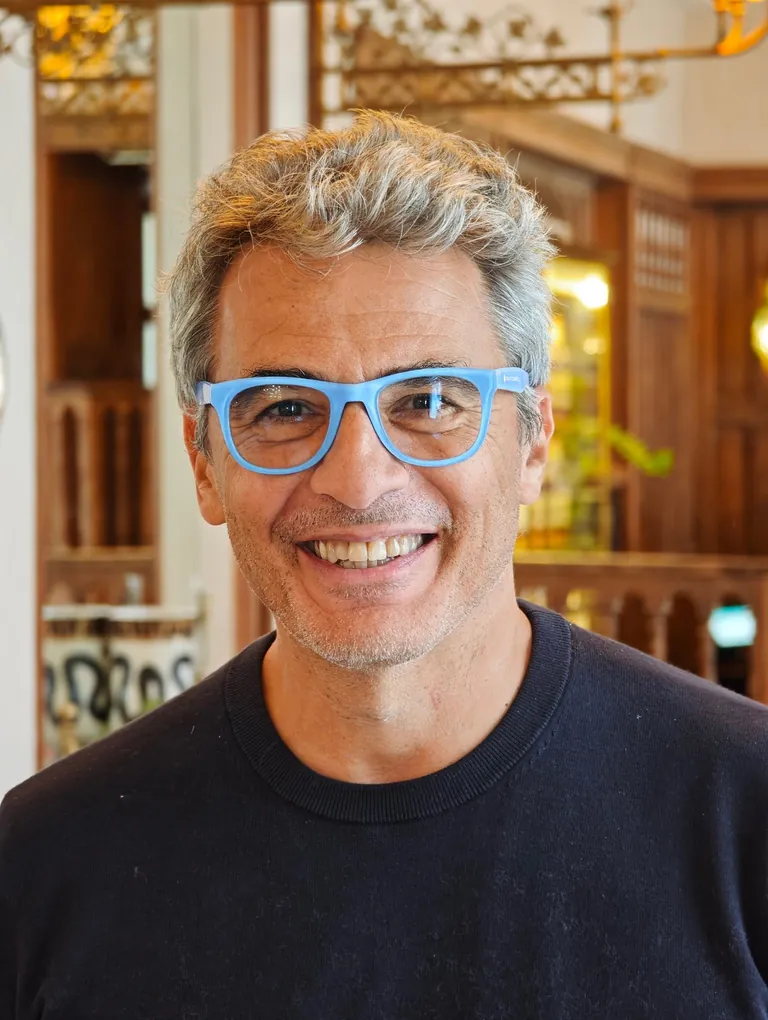
During my visit, I also had a little surprise: Julien Cohen himself was at the restaurant, and I met him. For those who don’t know, Cohen is an antiques dealer and TV presenter, one of the regular buyers on the French public television program “Affaire conclue,” in which people bring in old objects for appraisal and sale.
He turned out to be a very pleasant and curious person. He was interested in “Francophiles Anonymous” and what I was doing, we chatted for a few minutes, and he also agreed to be photographed for the article (as you can see). After this meeting, it’s easy to understand how he manages to convince people to buy the chair they’re sitting on.
What else to see in Avalon
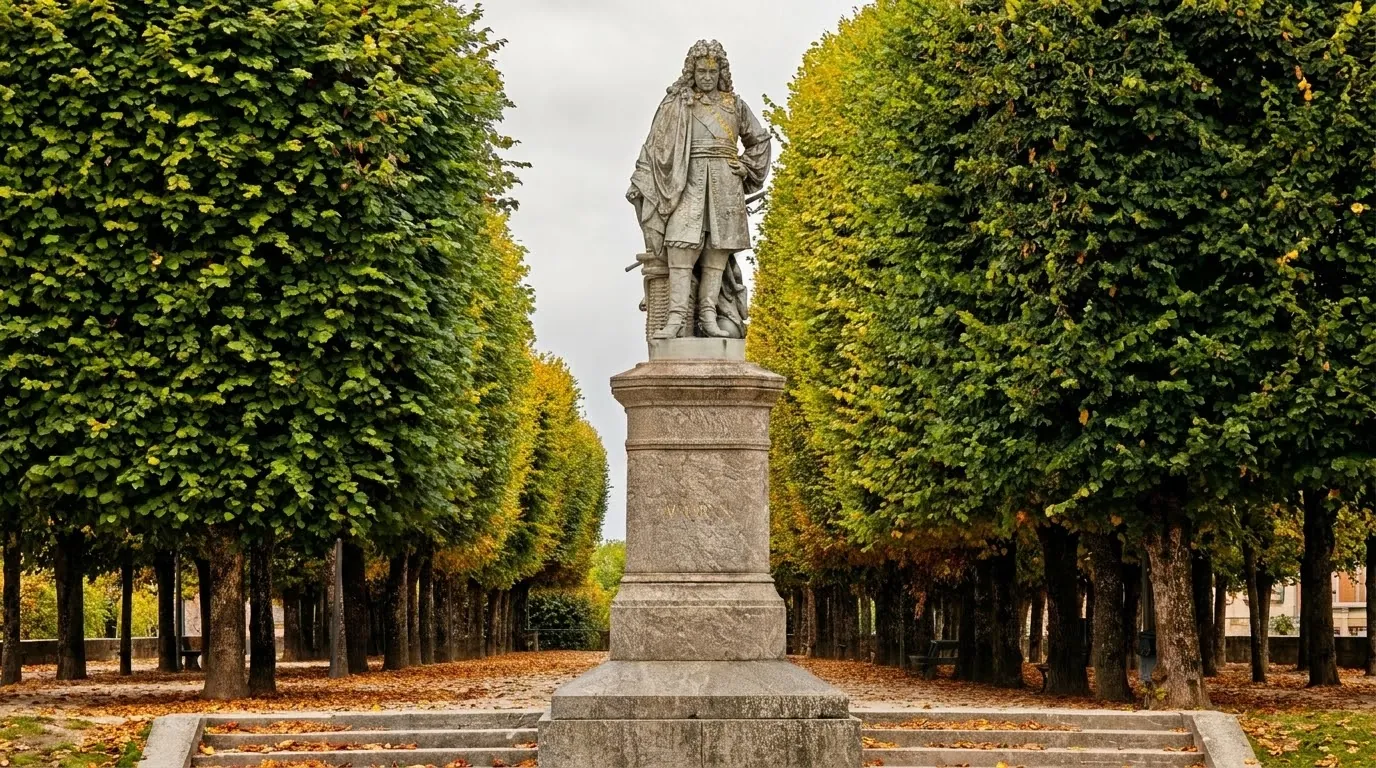
The first thing to see is right in front of the hotel: a bronze statue of Sébastien Le Prestre de Vauban (1633–1707), Louis XIV’s fortification engineer, who was born in the village of Saint-Léger-de-Foucheret, now called Saint-Léger-Vauban. Vauban died on March 30, 1707 (the same year the inn opposite the statue was founded), and I visited his home in Burgundy, Château de Buzaux, that morning.
The monument was created by Auguste Bartholdi (1834–1904), the artist who designed the Statue of Liberty in New York. The city council unanimously selected him in 1864, and the monument was dedicated on October 26, 1873, in front of about 10,000 people, who also came that day to inaugurate the railway connecting Avalon to Paris (one celebration, two reasons).
The statue stands at the edge of the square, in an avenue of pruned trees, and in the fall the leaves that fall around it make it a particularly successful photo subject. Vauban stands in a confident pose, one hand on his hip, in the long wig and coat of the Louis XIV era.
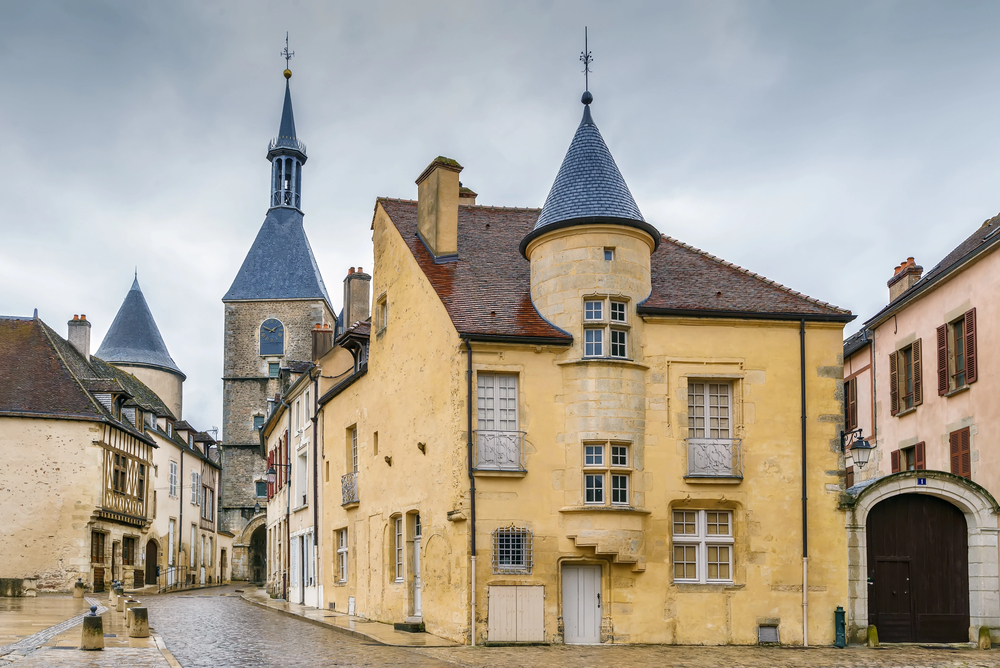
From the square you enter the old town, and inside it stands the Clock Tower (Tour de l'Horloge), a 49-meter-high tower built in 1456, with a bell from 1460. Under it runs an arch that was formerly called the Butcher's Gate (Porte de la Boucherie), and on the facade appears the city's coat of arms with the Latin motto Esto nobis, domine, turris fortitudinis, "Let us, Lord, have a tower of strength." The tower has been a protected heritage site (monument historique) since 1930.
Not far away is the Collégiale Saint-Lazare, inaugurated in 1106 by Pope Pascal II (reigned 1099–1118) and attracting pilgrims who came to see the relics of Saint Lazarus. Of the façade built in the 12th century, only two portals remain, after a storm in 1633 brought down the large tower, and they are worth a stop: statues, reliefs and twisted columns (colonnes torses), which the architect Eugène Viollet-le-Duc (1814–1879), who restored the Basilica of Vezelay and Notre Dame in Paris , among others, particularly praised. Inside, a small surprise awaits: the choir is 2.5 meters below the portal, and you descend 17 steps to get there.
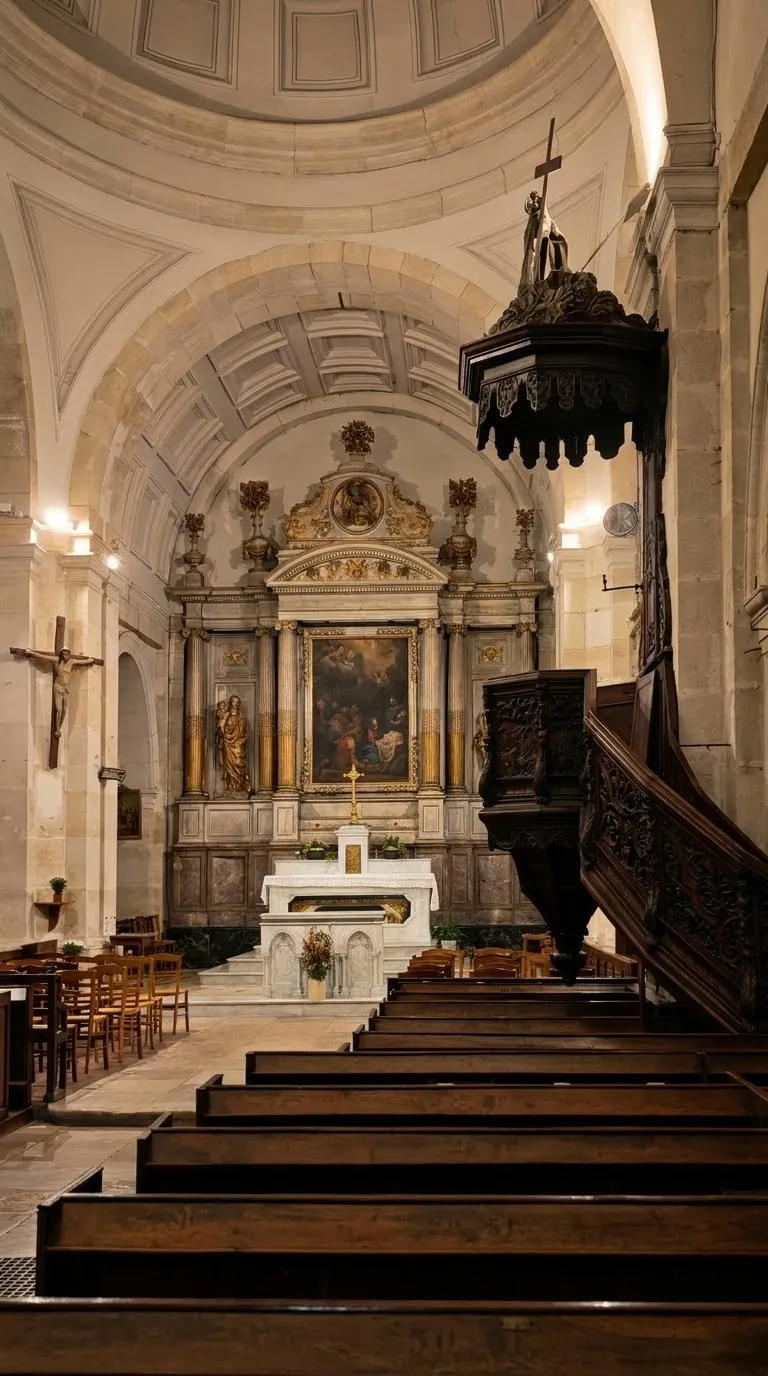
A second, smaller and less well-known church is located not far from the hotel: the Église Saint-Martin, built around 1650 and restored and expanded in 1848. I went in for a brief visit after dinner, and found a completely quiet space inside, with a classical altarpiece with gilded columns and a painting in the center, and a carved wooden pulpit with a figure with a cross on its roof. Above the entrance is a stained glass window of Saint Martin, the saint after whom the church is named, riding a horse and sharing his red cloak with a poor man.
The history of the Hôtel de la Poste in Avalon
From 1707 to March 15, 1815: The Inn, the Kings, and the Regiment That Changed Sides
The Hôtel de la Poste was founded in 1707 on the main square of Avellaneda, now called place Vauban. Almost opposite it, on rue de Lyon, was the poste aux chevaux, where horse-drawn carriages were exchanged. In 1815, the square was named place Bourbon, after the royal house (and during the Empire, of course, place Napoléon).
Napoleon knew this road well. In May 1798 he passed through the area on his way to command the expedition to Egypt, and on the night of 6–7 May 1800, on his way to the Army of Italy, he slept in Avalon, but not in an inn but in the sub-prefecture (sous-préfecture), the building of the central government representative in the city. On 1 January 1808 he passed through the area without ceremony, on his way back from Italy, and the people of Avalon nevertheless erected a triumphal arch for him.
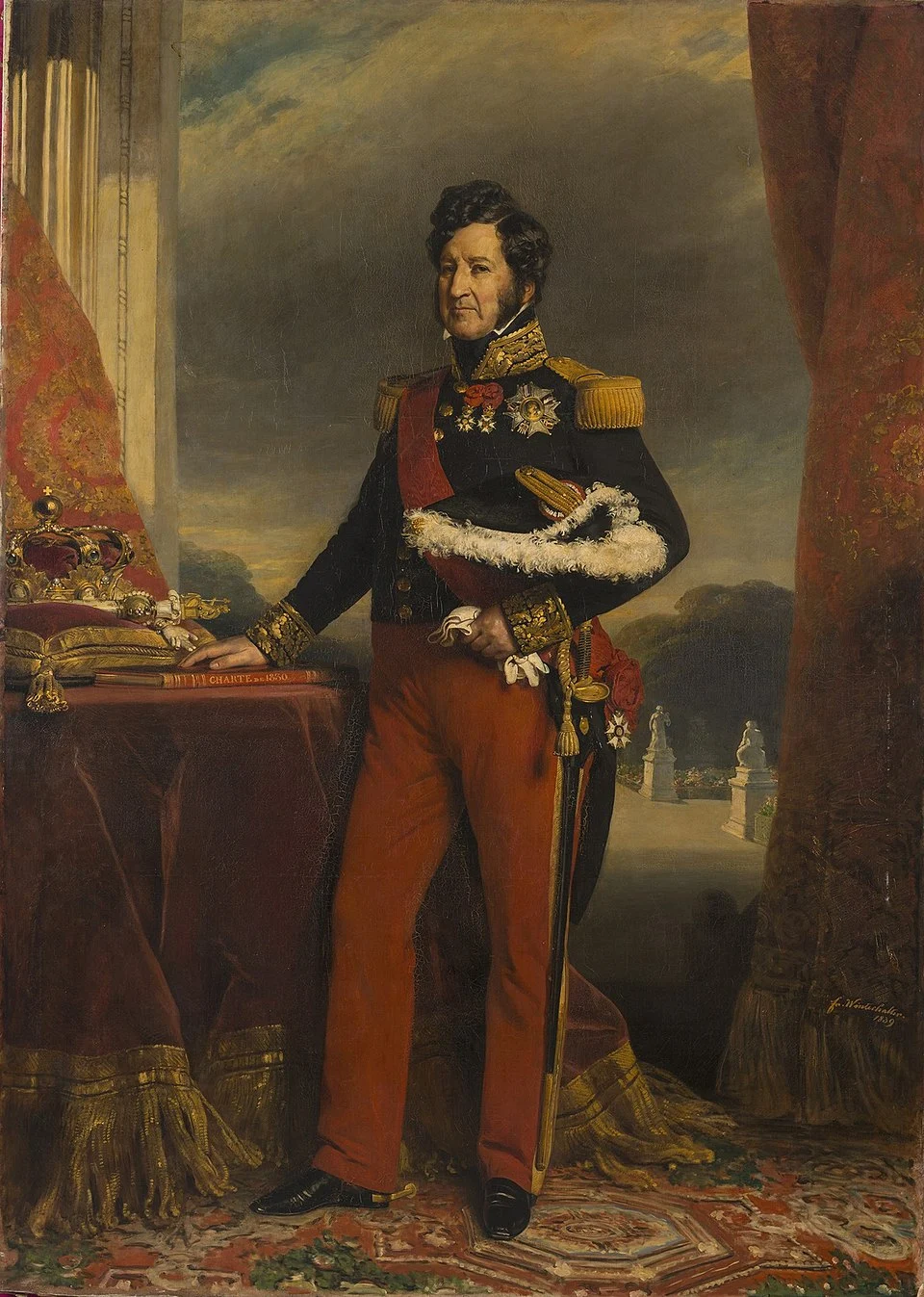
In 1814, the year of Napoleon’s defeat, the inn hosted two guests of a different kind: King Frederick William III of Prussia (reigned 1797–1840), who traveled under a false identity as “Prince Repnin,” and the Duke of Orléans, Louis-Philippe, who later became King of France (reigned 1830–1848). As you will see, the Duke’s name will appear here again a year later.
On March 1, 1815, Napoleon landed in the Gulf of Juan and began what would become known as the Hundred Days. He ascended north to Grenoble on the road now known as the Via Napoleon , entered Lyon on March 10, and from there continued towards Paris via Burgundy (you can read about the journey from Grenoble to Paris in Erez Lebanon's article). Avallon was then loyal to King Louis XVIII (reigned 1814–1824), and was headed by a mayor appointed by the king, Jean-Edme-Michel-Auguste Raudot (1775–1832).

On 13 March, at 9 pm, Rodeau wrote to the Minister of War that he feared that the soldiers of the 14th Infantry Regiment (14e de ligne) would be tempted to go over to Napoleon's side. On 14 March, two battalions of the regiment, 929 soldiers, arrived in the city under the command of Colonel Thomas Robert Bugeaud (1784–1849), later Marshal of France and Governor of Algeria.
They did not last long: on the night of 14–15 March, General Jean-Baptiste Girard (1775–1815), sent by Napoleon ahead of him, arrived in Avignon, and the officers of the regiment joined him. The white cockades (cocardes blanches), the cloth emblems of royalty worn by soldiers on their hats, were thrown to the ground, and the regiment headed back to Ausserre to proclaim the emperor there. Girard himself was mortally wounded three months later, at the Battle of Ligny, two days before Waterloo.
March 16, 1815: The mayor who said to Napoleon “Yes, sir”
On the morning of March 16, at nine, Girard sent Rodeau the proclamations Napoleon had published upon landing in the Bay of Juan, with orders to hang them in the city. Rodeau refused, because he had sworn allegiance to the king. One of the officers tried to convince him that for twenty-five years such an oath had been a ritual that had been repeated at every change of government, and counted on his fingers seven oaths that he himself had already sworn. Rodeau replied: “That is why an eighth oath is easier for you. I have sworn only twice in my life, once to the emperor, who released me from it when he abdicated the crown, and once to the king, and I do not know who could release me from it.”
The mayor did not budge, but not everyone was as stubborn as he was. An officer from Napoleon’s staff arrived at the town hall and persuaded Baron Claude Nérin (1756–1838), a retired colonel who lived in the city, to recognize the emperor’s authority, “half by threats and half by caresses.” Nérin mounted his horse and rode towards Napoleon, who from Saulieu onwards had preceded his vanguard and was traveling with only the Polish lancers (lanciers polonais) and the 13th Dragoon Regiment.
Napoleon made the last stretch of the journey in a carriage driven by Bizouard, the postmaster (maître de poste) of Rouvray, who had driven him several times before and remained an ardent Bonapartist. “Come on, Bizouard, my old and faithful friend, hurry up, I am waiting in Paris,” the emperor told him, and Bizouard and his two sons brought him to Avignon in less than an hour.
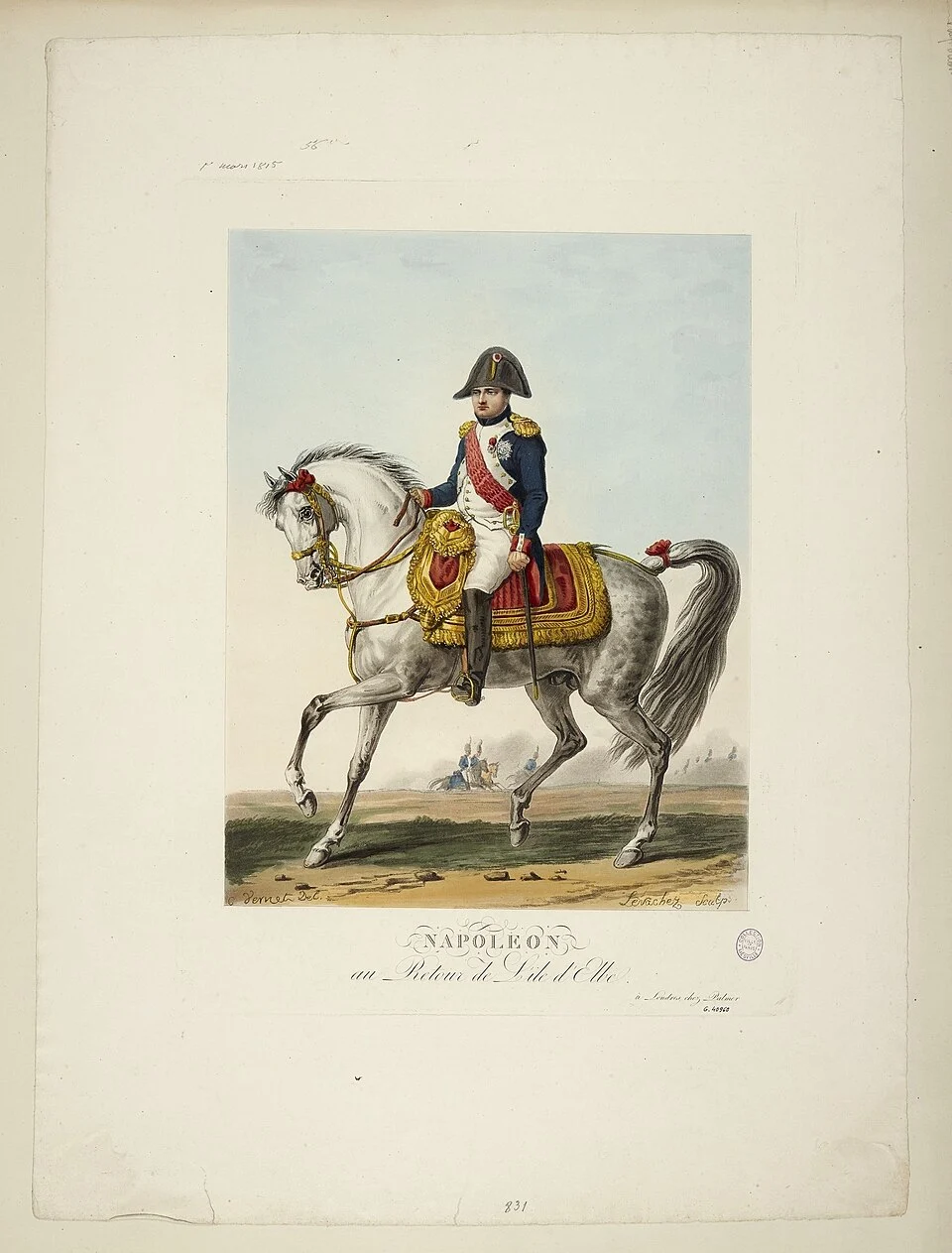
At four in the afternoon the carriage arrived in Avon. Napoleon knew from Rennes that the authorities were in no hurry to recognize him, so he did not go to the sub-prefecture where he had slept in 1800, but got off at the Hôtel de la Poste. It was a fair day, and a huge crowd filled the square, including many peasants from the area. The Emperor was given a room on the first floor, with two windows overlooking the square and a small living room with a balcony next to it, and he went out onto the balcony several times. The peasants waved their hats hung from the ends of the sticks with which they led their cattle, and the artisans and bourgeois of the city maintained restraint.
Veteran officers who had been transferred by the monarchy to half-pay (demi-solde) also flocked to the inn. Napoleon recognized among them a captain of the old guard, Eugène Gagniard, and threw at him: “Well, Eugène, are you still chewing tobacco? What are you doing here?” “Your Majesty, I am not wasting time,” replied the captain, who did everything he could to bring Avalon back to the Emperor’s side. Bizoir, the postmaster, said goodbye to the Emperor in tears. As payment for the trip, he asked only “the immense kindness of embracing him,” and accepted it without a problem.
However, the authorities still did not appear, and at seven in the evening an officer from the staff of Henri-Gatien Bertrand (1773–1844), the Grand Marshal of the Palace (grand maréchal du palais), came to Rodeau’s house and expressed his surprise that the mayor had not yet asked to be received by the Emperor. The officer reminded him of the authorities of Grenoble and Lyon, who had already received the Emperor, gave him the newspapers of both cities and offered him “in a friendly way” not to bring any unpleasantness to the inhabitants of the city. Rodeau replied: “I should not look for rules of conduct in the Lyon or Grenoble newspapers. I was appointed by the King, and I have neither the title nor the reason to appear before Napoleon.” Nevertheless, in order not to bring any trouble to the inhabitants, he agreed to go to the inn together with the sub-prefect (sous-préfet) and the police inspector (commissaire de police) and ask the Emperor to treat the city with leniency.
The three were ushered into the small drawing room, and Napoleon took a few steps towards them. “Your Majesty, we have come to ask you to treat the city with leniency,” the guests began. “Are you the mayor?” asked the emperor. “Yes, sir,” replied Rodeau. Napoleon showed no sign of anger at the “sir,” even though, according to the Treaty of Fontainebleau, he was at least the recognized ruler of the island of Elba. Then he asked how the city was taking care of its food supply and how many bakers there were, and only then did he turn to politics.
What followed was an hour-long monologue. “The king is a good man,” Napoleon said of Louis XVIII, “but he is surrounded by people who deceive him. The other princes are fools. The Duke of Orleans has more ability, he might know how to make something out of events, but he would work for himself” (the same Duke who had stayed at the same inn the year before, and who fifteen years later did ascend to the throne). He said that he had crossed the sea “in boats like those in which you transport goods on canals and rivers,” with 600 men, among the enemy fleets.
When shouts of “Long live the Emperor!” were heard from outside, and several voices shouted “Enough of indirect taxes!” (droits réunis), Napoleon responded: “Everyone says that. They asked me everywhere to abolish this tax, but I promised nothing. I do not flatter the people and I do not promise them anything.”
The three officials stood on their feet throughout the conversation, and Napoleon was never quiet for a moment, each time taking another pinch of snuff from his tobacco box or his waistcoat pocket. Ten times the guests tried to say goodbye, and each time he delayed them with yet another question. However, he did not convince Rodeau: on leaving the drawing room, the mayor handed his letter of resignation to Bertrand, and Napoleon appointed Narin in his place. On August 14, 1815, after the monarchy was restored, Rodeau was elected delegate for the department of Ion.
The night of March 16-17, 1815: A robe, a storm, and a sword on the floor
Pierre Alexandre Édouard Fleury de Chaboulon (1779–1835), one of Napoleon’s secretaries during the Hundred Days, later recounted that “the most distinguished women in the city” spent the day and night on the stairs and in the corridors to watch the emperor pass by. Three of them, tired from standing, asked to sit next to the entourage, on the mattresses spread out on the floor, and when they began to fall asleep they were told: “Go to sleep, we will guard the emperor.” In the morning, according to the same story, one of them was still standing guard at his door, and Napoleon heard about this and thanked her politely (there is a version that they were not exactly “the most distinguished women in the city”).
A storm raged during the night. Between eleven and midnight, a lieutenant named Lefol, who had been sent from Autun with a report to the emperor, arrived at the inn, soaked to the bone and covered in mud. He went straight to Bertrand, who was already in bed, and Napoleon, who was waiting for news, called him in. The water dripping from the lieutenant's coat flowed, he later said, down to the emperor's feet.
What the lieutenant saw in the room was a far cry from an emperor on his way to reconquer France. Napoleon lay on a shabby sofa, in a dressing gown, with a handkerchief carelessly tied around his head. In front of him stood a table covered with papers and two candles on it, on a chair by the window lay his coat and hat, and the sword, which someone had apparently leaned on the chair, had slipped and fallen to the floor. “The rest of the furniture,” he wrote to Paul, “was more simply modest.”
Napoleon received him courteously and heard the report, and Paul picked up the sword from the floor. Then the emperor sent him away: “Go and rest, and come to me tomorrow morning to receive my orders.” The lieutenant spent the night in the stable, near the emperor’s horses, and in the morning he was so stiff and numb from his wet clothes that he had to be carried to the kitchen, to the fire.
On the morning of March 17, a crowd gathered again under the windows, and Napoleon went out onto the balcony and greeted the people. According to a story that Paul heard from one of the townspeople, a man with a pistol was standing in the crowd at that moment, intending to shoot the emperor when he appeared at the window, but at the moment of truth he did not fire. Then the emperor went down to the courtyard, where the carriage was waiting for him among “people of all ages and classes, and especially veteran soldiers.” He distributed two or three more decorations, and the innkeeper brought her two little daughters before him, and the emperor, wanting to appear paternal, kissed them. Immediately afterwards he set off, to Osser.
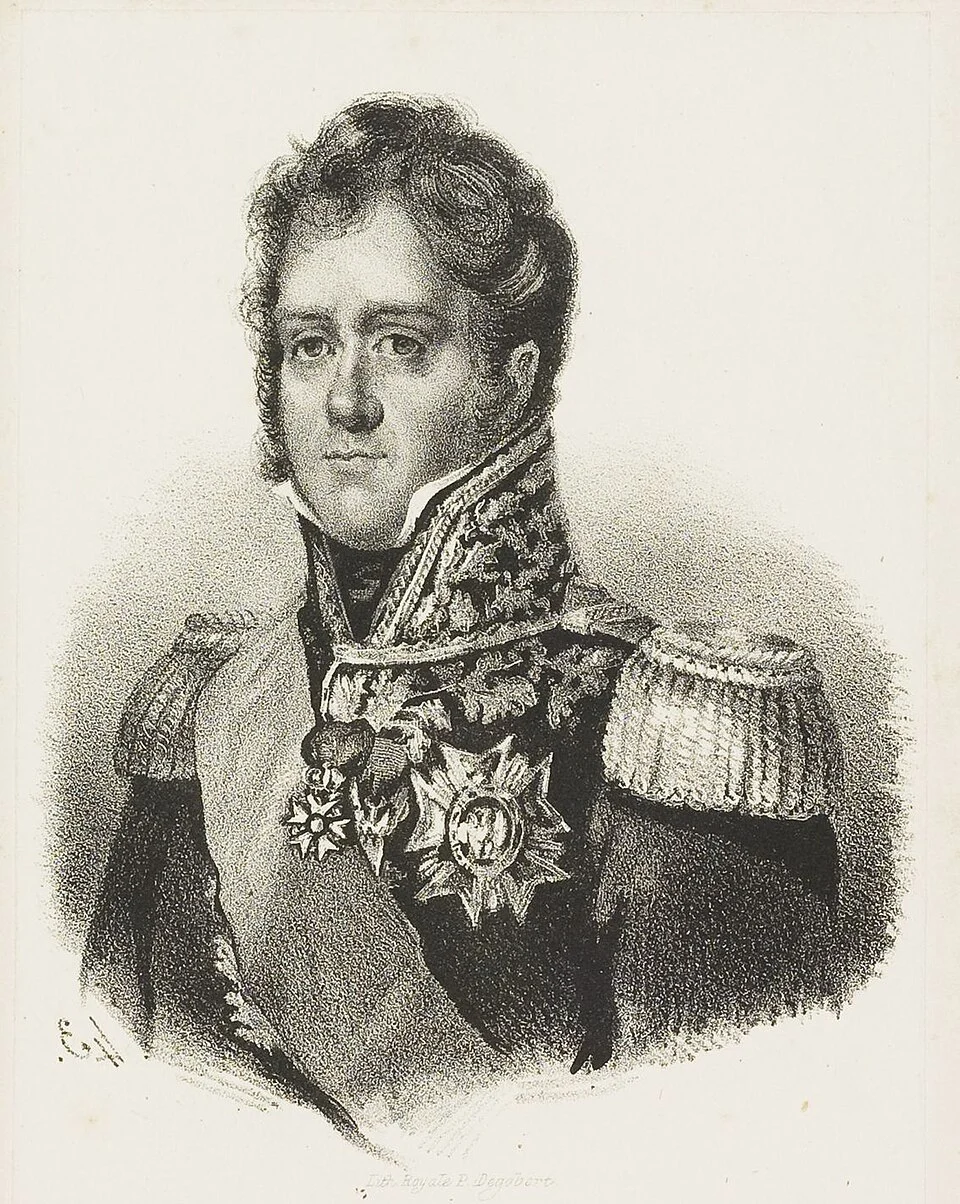
That evening, when Napoleon was already in Auxerre, “a general with a white feathered hat” stopped in front of the Hôtel de la Poste. It was Marshal Michel Ney (1769–1815), who earlier in the month had promised Louis XVIII that he would bring Napoleon to Paris “in an iron cage,” and now rushed to Auxerre to meet him. The meeting between the two took place on the morning of March 18 in the prefecture of Auxerre (you can read about the night when Napoleon made the marshal sweat in the article on the history of Auxerre ). Less than a year later, on December 7, 1815, Ney was executed.
From 1911 to the Present: The Board, the Three Stars, and Julian Cohen
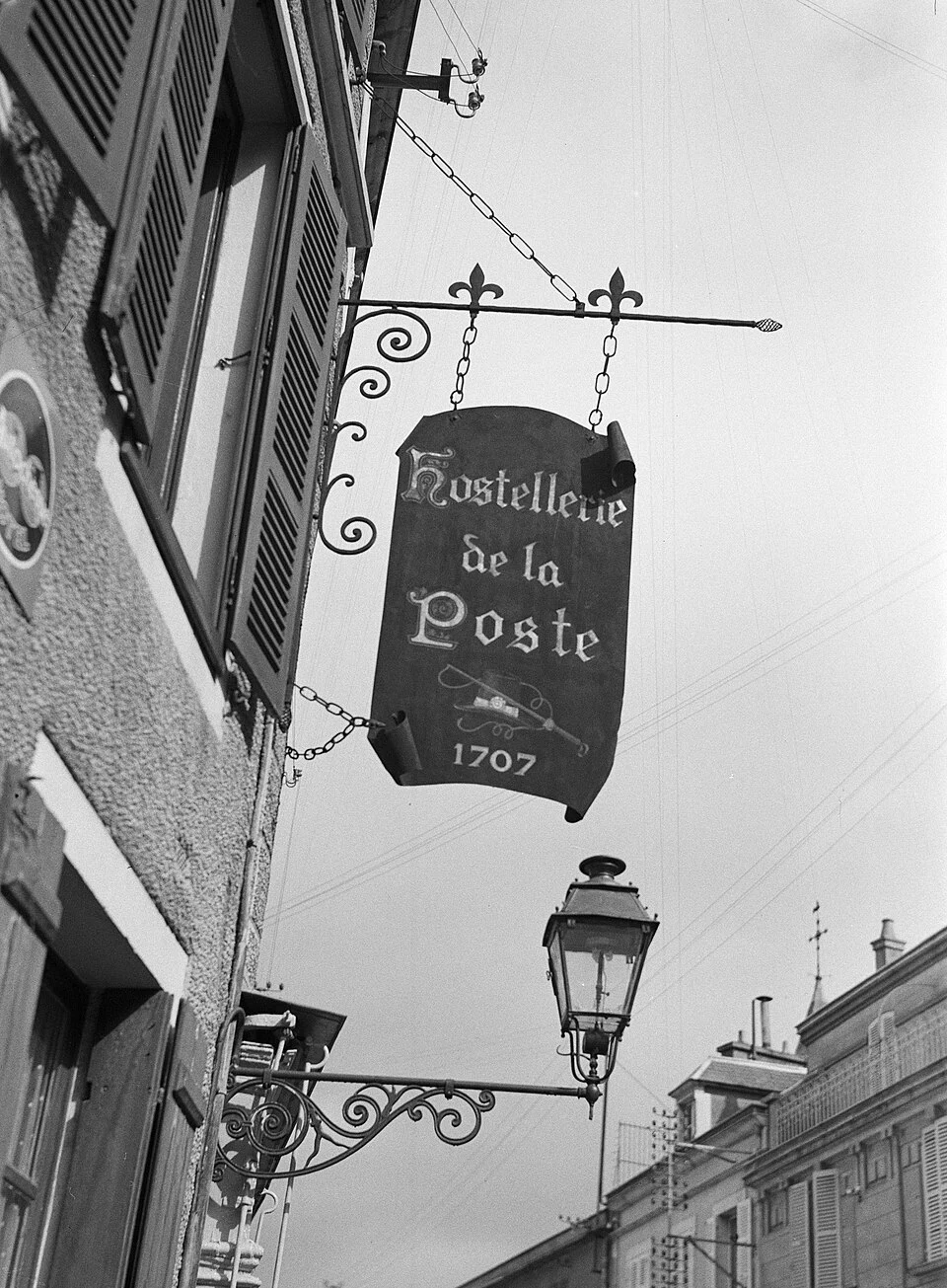
In August 1911, a plaque was placed on the house to commemorate Napoleon's visit. The furniture from that night was scattered over the years, and by 1935 the bed where the emperor slept, a mahogany bed decorated with bronze Minerva heads, was owned by another hotelier, the Hôtel du Chapeau-Rouge.
By those years, the house was already much more than a stopover on the way. According to the house's tradition, as early as 1935, the restaurant was among the first in France to be awarded three Michelin stars, and from 1953 to 1966 it held three stars, during the time of chef René Hure (1903–1989), who bought the house with his wife in 1944 and brought it to two stars in 1948.
During these years, they came to a guest house that he still remembers today. According to the hotel's tradition, among them were:
- The Duke and Duchess of Windsor, i.e. the former King Edward VIII (reigned 1936) and his wife Wallis Simpson (1896–1986), for whom he abdicated the crown.
- The painter Pablo Picasso (1881–1973).
- The painter Salvador Dalí (Salvador Dalí, 1904–1989).
- the writer Ernest Hemingway (1899–1961).
- The singer Édith Piaf (1915–1963).
- The singer and dancer Josephine Baker (1906–1975).
- Actress Elizabeth Taylor (1932–2011).
- The singer Serge Gainsbourg (1928–1991).
In 2016, the hotel and restaurant closed, and the house remained closed for eight years. Around 2022, it was bought by Julian Cohen, for an investment of 2.5 million euros. “To buy this building and say to myself that Napoleon, Elizabeth Taylor, Picasso and Gainsbourg walked on these paving stones, that was an extraordinary opportunity for me,” he explained in an interview. The restaurant reopened on April 5, 2024, and the hotel on May 1.
Around the opening, Chef Persand said he hoped to receive a Michelin star the following year, and Cohen himself talked about four stars for the hotel and a Michelin star for the cuisine (“That would be great”). As of 2026, the restaurant has been selected in the Michelin Guide, but still without a star.
On the square in front of the house, a bronze Vauban still stands today, and on the first floor you can sleep in the room where Napoleon lay on a shabby sofa and received a lieutenant wet from the rain.
Where to stay: Hôtel de la Poste and other hotels in Avalon
I myself did not sleep at the Hôtel de la Poste, but at the Hôtel Relais de la Côte d'Or in Semur-en-Auxois, about 43 kilometers from Avalon and about a 35-minute drive (you can read about the town and the hotels there in the Semur-en-Auxois guide ). If you want to sleep in and around Avalon, these are the three options I chose:
-

Hotel de la Poste
The Inn of 1707, with about 30 rooms and suites furnished with restored antiques, including the small Napoleon room with a single bed. The hotel houses the restaurant Le 1815 and the 1707 bar, and guests have private parking and an accessible room. Pets are not allowed.
-
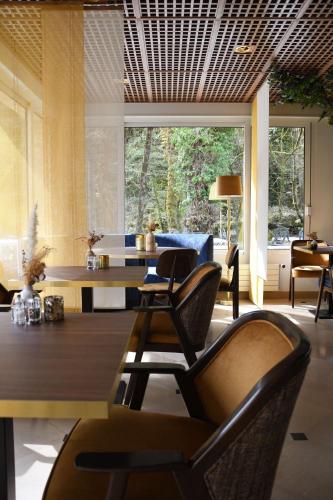
The Moulin des Ruats
An 18th-century mill in the Cousin River valley, near Avon, with a riverside terrace and its own gastronomic restaurant.
-
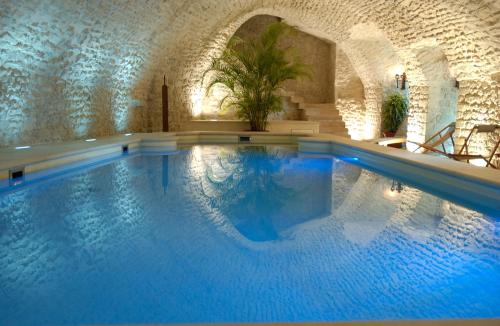
Chateau de Vault de Lugny
A moated castle in the village of Vault-de-Lugny, about 6 kilometers west of Avignon, with 16 rooms and suites, an 8,000-square-meter garden and an organic vegetable garden that supplies the restaurant (as at Le 1815, here too the chef is a native of Mauritius).
Frequently Asked Questions about Hôtel de la Poste in Avalon
Did Napoleon really sleep at the Hôtel de la Poste in Avalon?
Does Le 1815 have a Michelin star?
How much does lunch cost at Le 1815?
Can you really buy the furniture at the hotel?
How do you get to Avalon from Paris without a car?
When are the restaurant and hotel closed?
More on the subject