
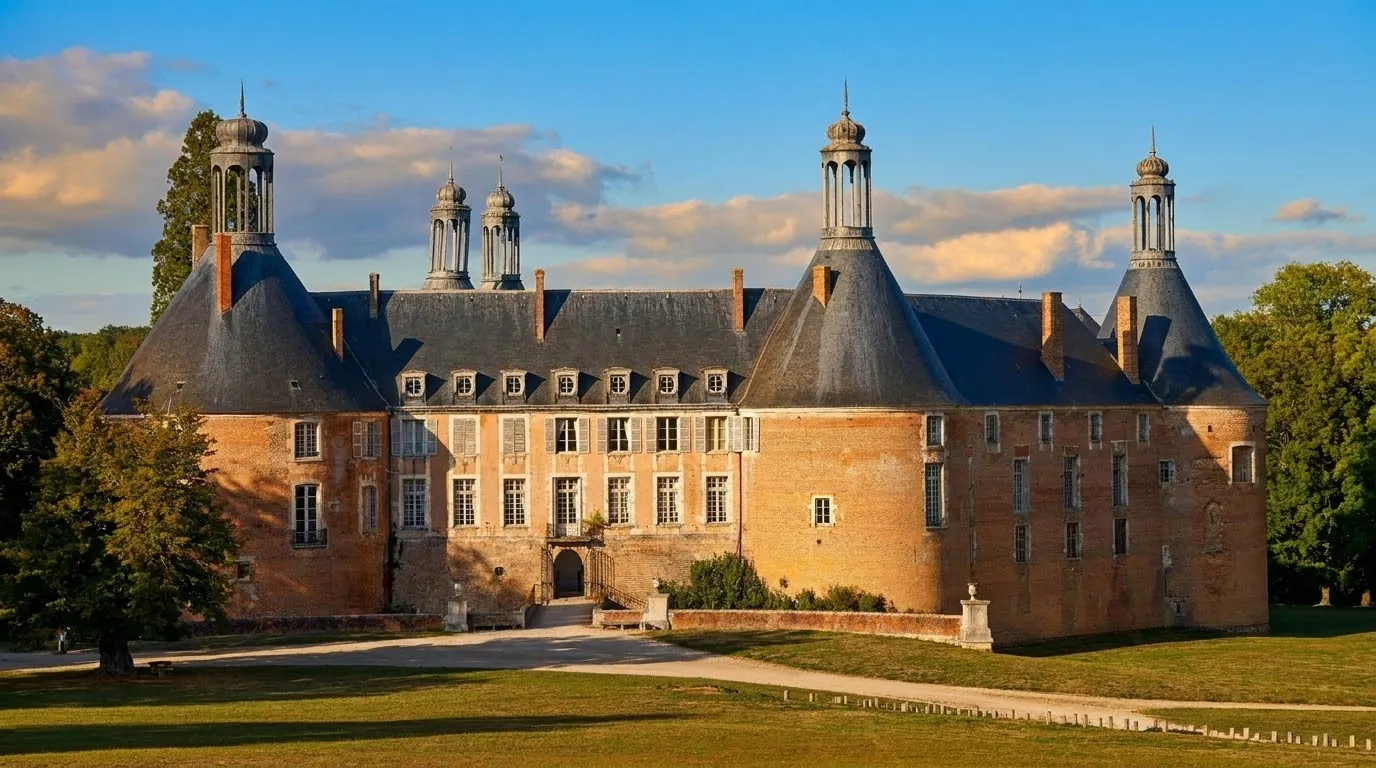
in short
- What's there: A pink brick polygon with six towers, furnished apartments, a guardhouse, an attic with 15th-century beams and a 120-hectare park.
- status: A privately owned, protected heritage site that has been renovated since 1979 with money from tickets and the historical show.
- How to get there: About two hours by car from Paris via the A6 and D965, or 45 kilometers from Oss. By public transport: train to Oss and infrequent regional bus 806.
- How long: About two hours for a free visit, and half a day with the guided tour and the castle farm.
- When: Open from March 28 to November 11, 2026, from 10:00 to 12:00 and 14:00 to 18:00. In July and August, a night show and a candlelight visit are added.
- How much does it cost: 12 euros for adults and 8 euros for children aged 5 to 17. Ticket for the historical show: 22 euros.
- And bonus: According to family tradition, a lost painting by Jacques-Louis David is imprisoned within the castle walls, and the 1979 sales contract refers to it.
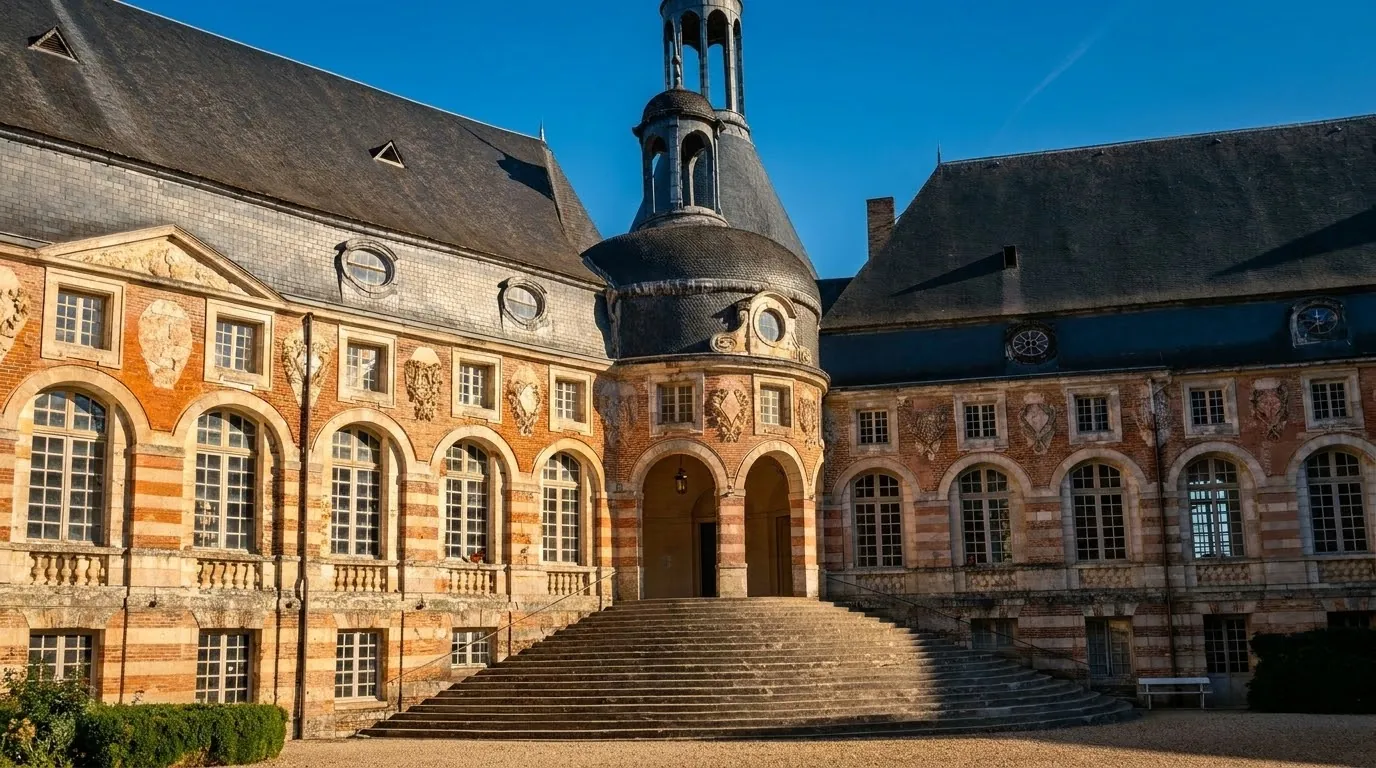
Saint-Fargeau sits on the western edge of Burgundy, in an area called Puisaye, and you could drive past it without knowing it was there. From the road you see a small town, a square and a church, and then a pink brick wall opens up in front of you, enclosing an asymmetrical polygon with six round towers.
What makes Saint-Père-de-Louise a place worth the trip is not just the palace, but who lived there. Anne-Marie-Louise d'Orléans (1627–1693), cousin of Louis XIV and the richest heiress in France, was exiled here in 1652 after ordering the firing of the Bastille's cannons to cover the rebel soldiers. She lived in this castle for five years, transforming a neglected fortress into a modern residence, and wrote some of her memoirs here. Years later, she would give the entire estate to the man the king forbade her from marrying.
The castle is still in private hands, and it shows. The family that bought it in 1979 received a ruin with collapsed roofs, and since then they have been financing the renovation with ticket sales and a summer show attended by hundreds of volunteers from the town. The result is a site that lacks the polish of the Loire castles, and has something different: an attic with 15th-century beams that you can walk around in, an inner courtyard designed by an architect who worked for the king, and a farm with animals that runs right at the foot of the towers.
So before we set off and visit Saint-Père-de-Luz, let's talk about what you'll find in this article. I'll start with the practical information: hours, directions, prices, and how much time to allocate. Then I'll move on to what you shouldn't miss inside and around the castle, and from there to the full history, from the 10th century to the present day, including the love story that the king tried to eliminate and a nobleman who was murdered during the French Revolution for one vote. At the end, you'll find accommodation recommendations and answers to questions I receive from travelers planning a trip to Burgundy.
By the way, Saint-Père-de-Luz Castle was part of my Burgundy itinerary , and there you will find all the days of the trip, hotels, and restaurants.
Practical information for visiting the Saint-Père-de-Luz Castle
Opening days and hours at Saint-Père-de-Luz Castle
The visiting season at Saint-Père-de-Luz runs from March 28 to November 11, 2026, and the castle is open every day. The hours are 10:00 to 12:00 and then 14:00 to 18:00, and in July and August the closing time is postponed to 19:00. Pay attention to the lunch break, because it is not symbolic: the castle closes for a full two hours in the middle of the day, and anyone who arrives at 11:40 will find that they have twenty minutes left.
The visit itself is free, and in addition to it, a guided tour of the furnished apartments is offered daily, lasting about half an hour. I recommend combining the two: the guided tour gives the story of the rooms, and the free visit gives you time to wander around the attic, the stables, and the park without anyone waiting for you.
Two additional routes open in the summer that only take place at night. The candlelight visit takes place in 2026 on Thursdays only, between July 9 and August 20, and the grand historical show takes place on Fridays and Saturdays between July 10 and August 22. Full details for both can be found below.
One important point to know in advance: There are many stairs inside the castle, and the building is not accessible to wheelchairs and strollers. The historical show in the park is accessible, and those who need it are asked to notify us in advance by phone, as there is a shuttle that comes from the road to Saint-Amand. Dogs are allowed in the park and outside on a leash, but not inside the building.
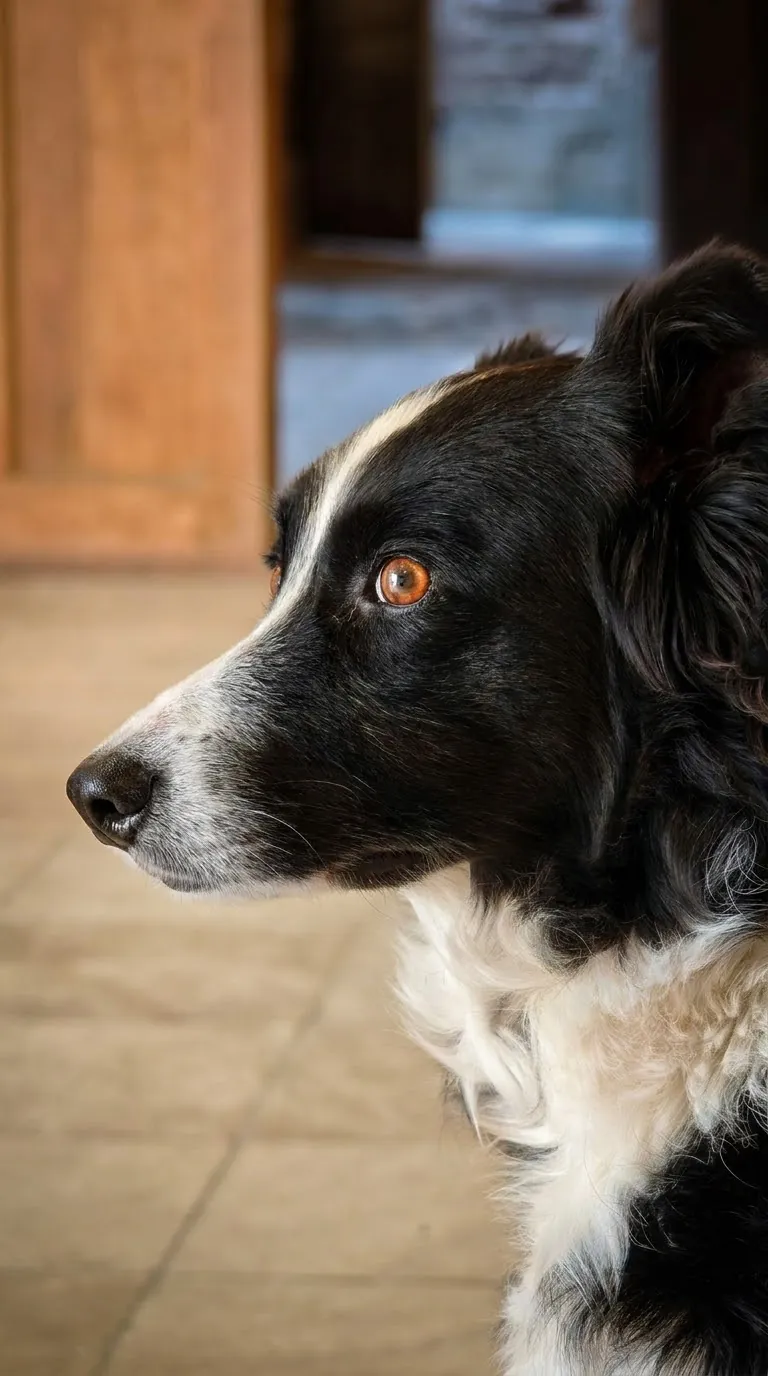
There is also a dog named Ya Ya in the castle, and she is very friendly. Of all the people I met in Saint-Père-de-Lac, she was the most welcoming host (and the only one who didn’t ask to see a ticket). If you meet her, give her my regards.
How to get to San Parejo by public transportation
Saint-Pargeau does not have a train station, and this is the starting point for any planning. The most likely route from Paris is a train from Paris-Bercy station to Auxerre , which is the regular train to northern Burgundy, and from there overland west. It is convenient to book tickets in advance via Omio , which centralizes the train operators on one screen and saves you the hassle of dealing with the French website.
A regional bus line of the Mobigo network, line 806 towards Bléneau, departs from Mausser, stopping in Saint-Pargeau at the Promenade du Grillon stop, a short walk from the castle. The journey takes less than an hour. The problem is not the distance but the frequency: this is a rural line with very few trips per day, so it is essential to check the booking schedule on viamobigo.fr before planning a whole day on it.
My bottom line is that Saint-Père-de-Luz is a car destination. You can get there by public transportation, but then the entire day is built around two bus trips, and the farm, the park, and the nightly show are out of the picture. Anyone who is traveling in Burgundy for a few days anyway will find that the car solves both Saint-Père-de-Luz and everything around it.
How to get to Saint-Père-de-Luz by car
From Paris, the distance is about 180 kilometers. Take the A6 towards Lyon, get off at exit 18, marked Auxerre-Sud, and continue on the D965 towards Clamecy and Saint-Père-de-Lyon. The journey takes about two hours. From Lyon, the distance is about 250 kilometers, the exit is 19, marked Auxerre-Nord, and from there continue on the D965.
If you're already in Burgundy, the distance from Oss is a pleasant 45-kilometer drive on the D965, about three-quarters of an hour. This is the route I took, and it passes through small villages that remind us that Poiseuil was always a relatively poor area, of clay, forests and fish ponds, rather than vineyards.
Parking in Saint-Père-de-Luz is free, and there are more than 200 spaces near the castle, including space for buses. On show nights, it is worth arriving about half an hour in advance, because the parking lots fill up and entry to the stands is on a first-come, first-served basis. It is best to book a car from Israel through Auto Shai , which has a special booking page for “anonymous Francophiles.”
Tickets and prices at Saint-Père-de-Luz Castle
A day ticket costs €12 for adults and €8 for children aged 5 to 17. There is a reduced price of €10 for students, families with children, job seekers and people with disabilities, upon presentation of a permit, and the same price applies to groups of 20 people or more. Tickets are non-refundable, and you can add €2 to the ticket for the option to change the date.
The candlelight tour is priced separately: €15 for adults, €11 for children aged 5 to 18, and €14 for a reduced price. The historical show is the most expensive of the three, €22 for adults and €16 for children aged 5 to 17, with children under 5 entering for free and sitting on the lap. Here too, the reduced price is €18.
Tickets can be purchased at the box office near the entrance during opening hours, or in advance at the official website 's online store , where packages that combine a visit and a show are also sold. On show nights, the box office is open continuously until 22:00 PM. ANCV vouchers are accepted, and it is also a good idea to bring cash, as some of the food stalls on show nights do not accept credit cards.
How much time to allocate, and when should you come?
For a full free visit, which includes the apartments, chapel, guardhouse, attic, stables and park, you need to allocate about two hours. If you add the guided tour, you get to two and a half hours, and if you add the castle farm with the children, it's already half a full day. Anyone who plans to combine Saint-Père-de-Gauze with the Guédelon construction site on the same day, needs a full day and nothing less, because Guédelon is a visit in itself and not an additional hour. Yossi Drori wrote about it in my article on the unknown Burgundy , and there is also the story of its connection to Saint-Père-de-Gauze.
The recommended months are May, June and September, when the park is green and the place is relatively empty. July and August are the only months when the historical show and night visit are operating, so those who come for them pay the price of the town being busy. From November to the end of March the castle is completely closed, and this includes the Christmas holidays.
If you are coming with children, the right combination is a morning at the castle, lunch at the farm and an afternoon in the park or at the nearby lac du Bourdon. If you are coming for the history, take the first guided tour of the morning and plan your afternoon outside the castle, as it is closed anyway.
What to see at Saint-Père-de-Luz Castle in half a day
The Court of Honor and the Facades of François Le Vaux
From the outside, Saint-Père-de-Luz looks like what it originally was, a fortress. Six heavy towers, thick walls, and a moat that was only drained in the 19th century. The pink bricks soften the impression, but no one built this thing to host banquets.
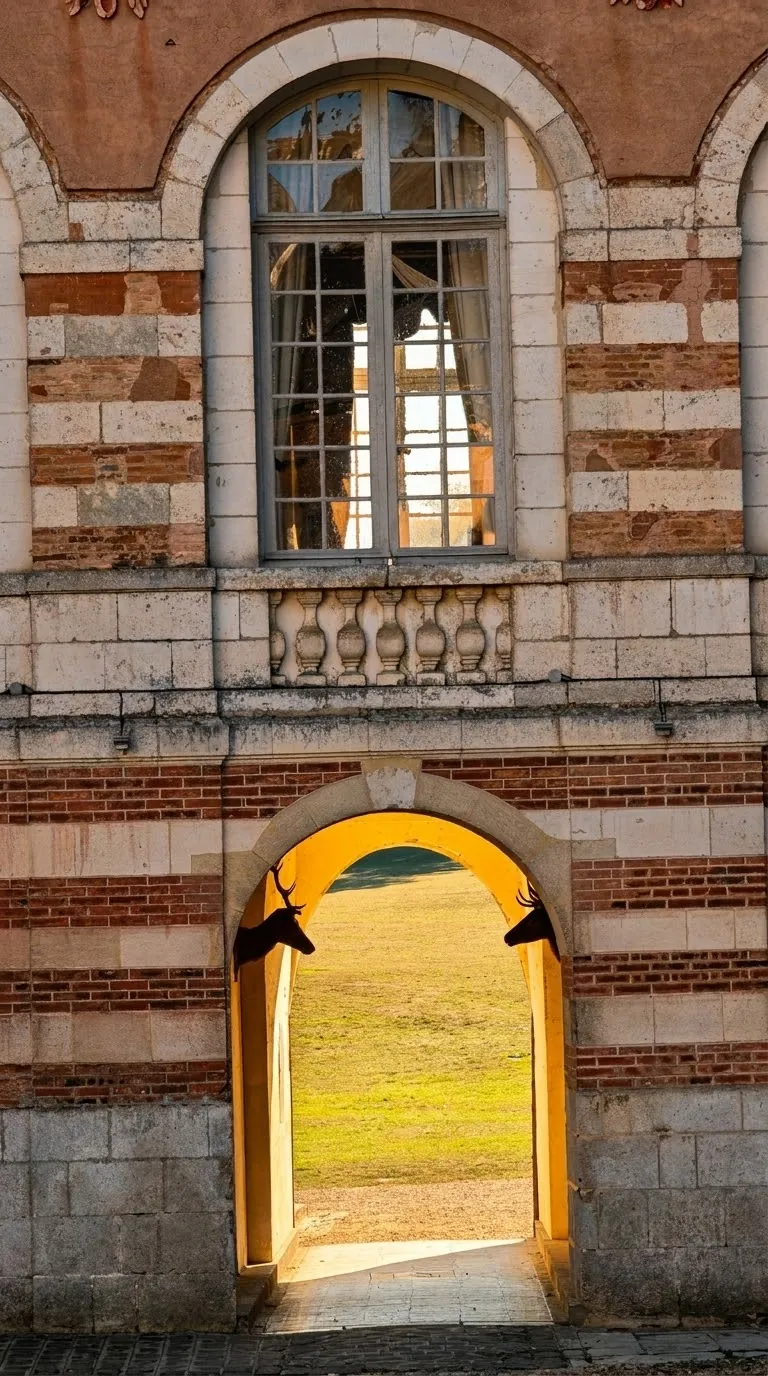
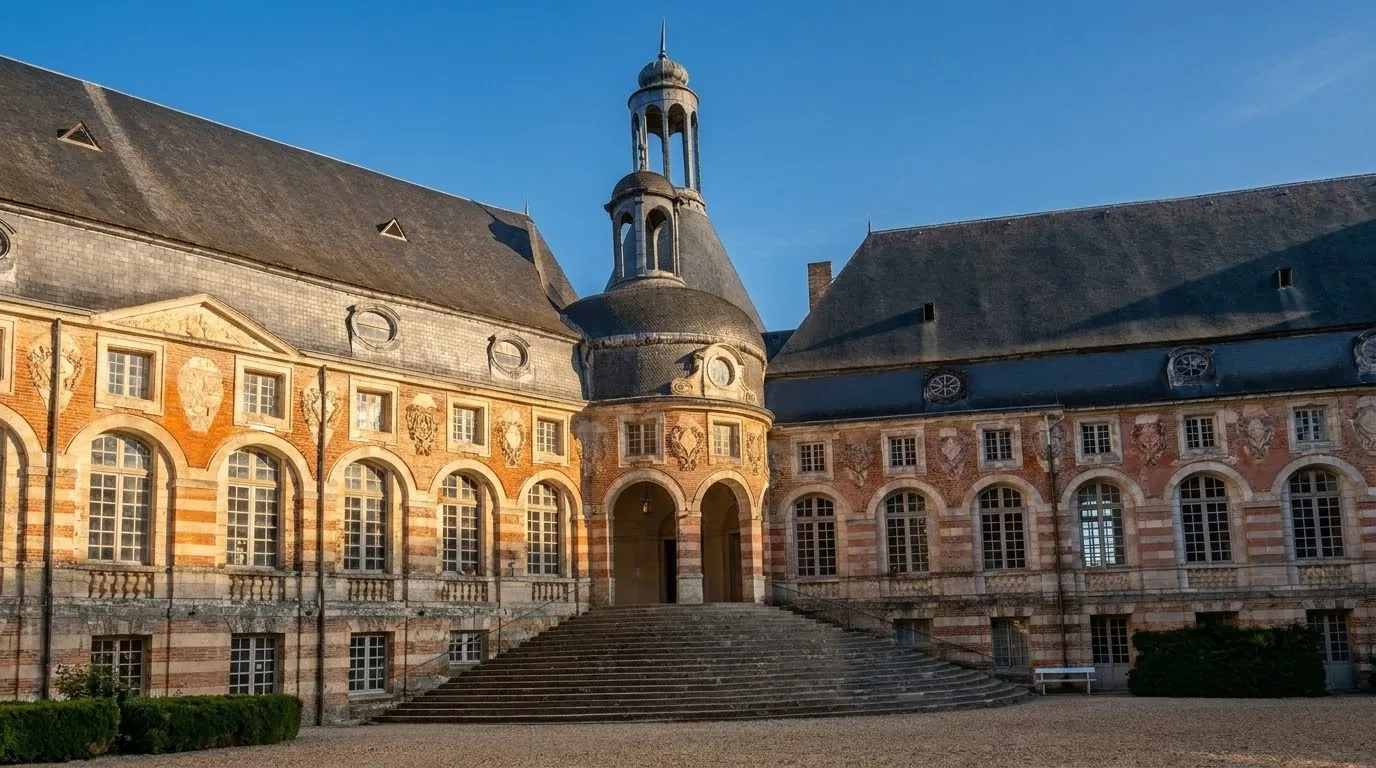
After passing through the entrance gate, the surprise is revealed. The inner courtyard is a classic 17th-century courtyard, neat and symmetrical, with four facades designed by François Le Vau (1624–1676), the younger brother of Louis Le Vau (1612–1670), who built Vau le Vicomte and the central parts of the Palace of Versailles . Between the outer wall and this courtyard there is a gap of three centuries and two worldviews.
Pay special attention to the staircase that opens into the courtyard and the opening that opens into the gardens. These two details are exactly what the Grand Mademoiselle ordered: not to strengthen the fortress, but to open it to the outside. A fortress closes in, a residence looks out onto the landscape, and the difference between them is clearly visible here.
The apartments, the Grand Mademoiselle's bedroom and the Guard Hall
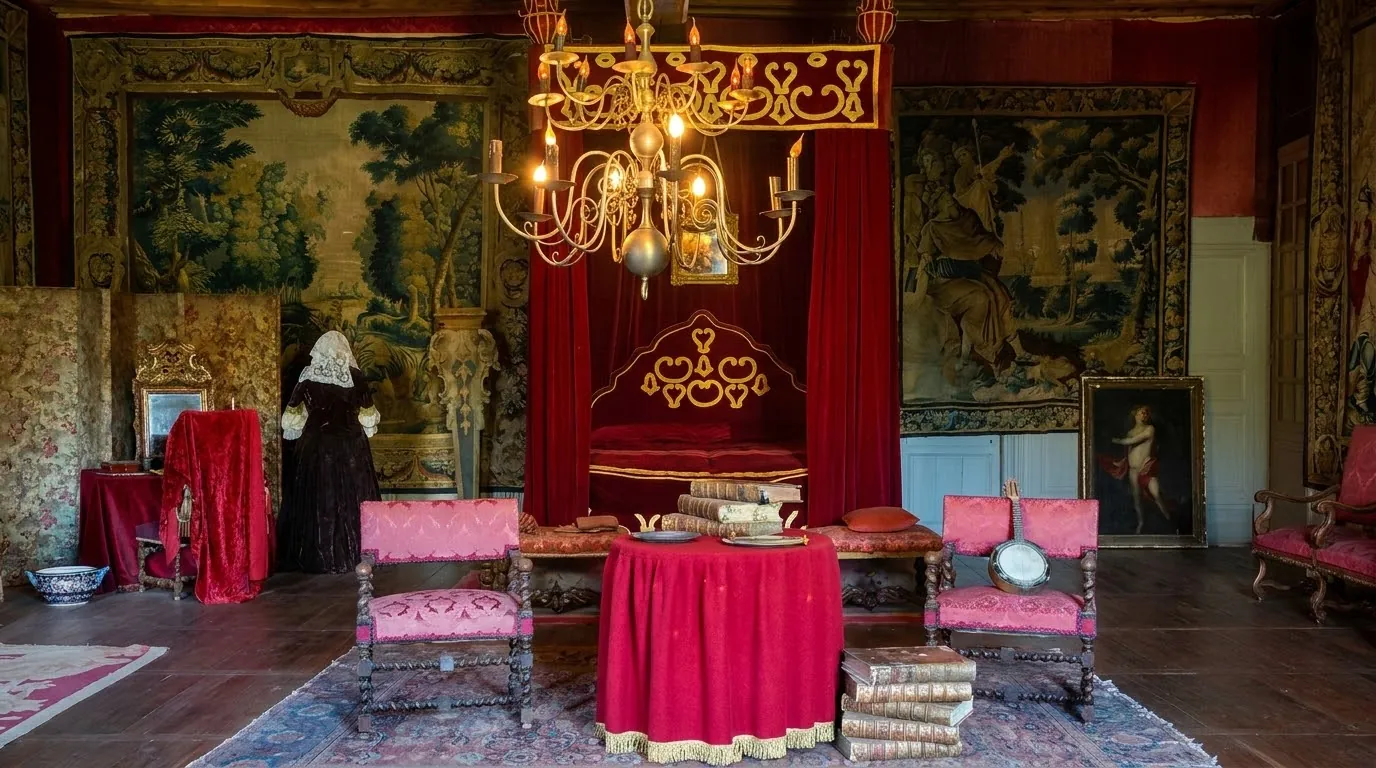
The tour inside takes you through the Montpensier wing, the furnished apartments, the large living room, and the dining room that was installed in the 19th century inside one of the towers. The furniture is not a uniform museum collection but layers of generations, and that is precisely the charm of a place that continues to be a private home.
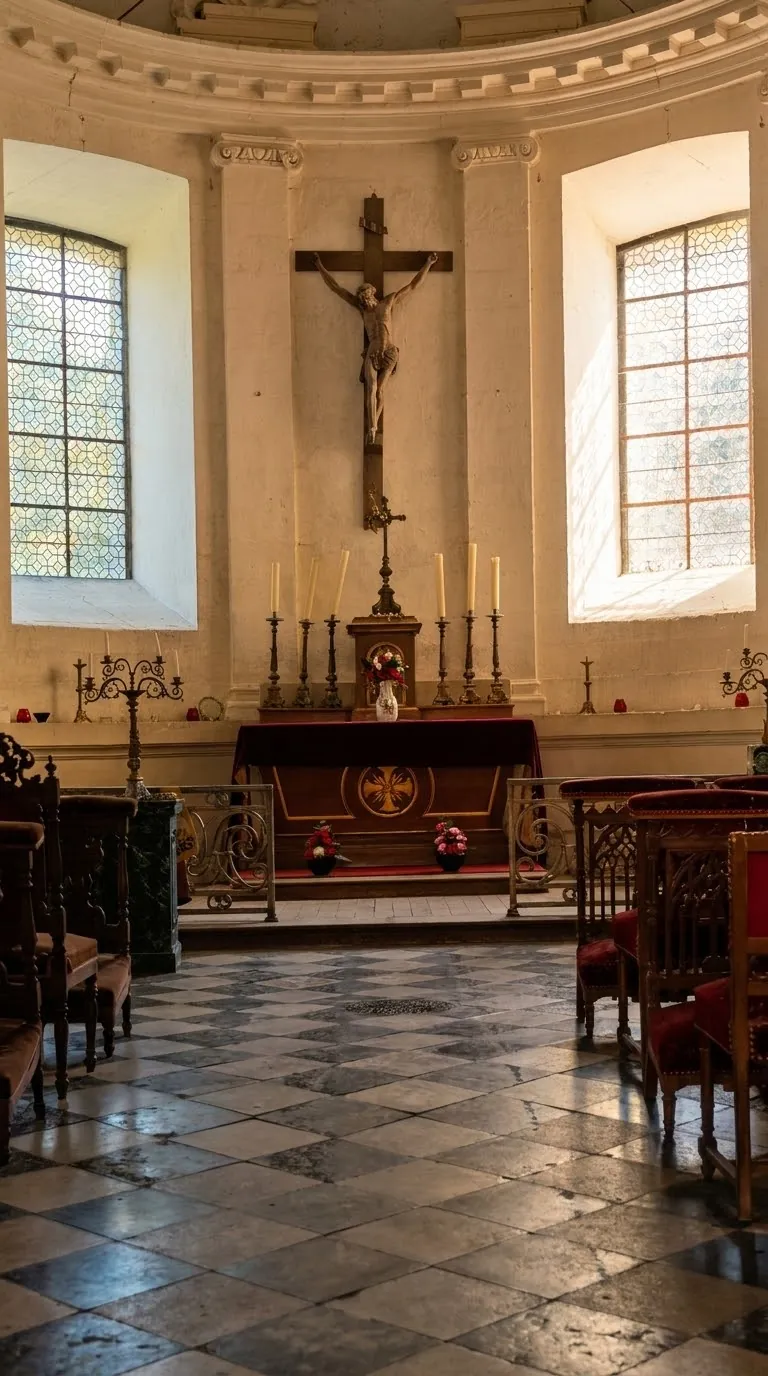
The Grande Mademoiselle's bedroom has been specially restored for the visit. It is important to note that what you are seeing is a reconstruction and not the original room, as her apartments burned down in 1752 and nothing remains of them. The Guard Room, which at the time was considered the largest of its kind in France, was also lost in the same fire and had to be rebuilt.
The chapel is small and worth a stop, partly because of the family motto engraved above the doorway. In the same chapel lie the remains of Louis-Michel Le Peltier de Saint-Père, the deputy who voted for the execution of Louis XVI and was murdered the next day. You can read his full story in the history section.
Attic: 15th century beams and playground
If there's one thing I'd go back to Saint-Père-de-Luz, it's the attic. It's a full tour around the entire perimeter of the building, inside a system of wooden beams that was built in the 15th century and still supports the roofs. There's no glass here, no railing separating you from the woodwork, you just walk inside it.
The roof area of Saint-Père-de-Luz is about two hectares, and that's the number that explains the entire modern history of the place. When the current family bought the castle, the most expensive part of the renovation wasn't the wallpaper, but exactly what you're standing under.
Also on the same floor is the playground, a collection of old toys displayed in the attic, and it is the item that the children remember at the end. To me, this is the beautiful moment of the visit: you arrive there after magnificent halls, and discover that the most impressive space in the castle is the one that no one intended to show to guests.
If you have more than half a day in San Parejo
The park, the stables and the locomotives
Surrounding the castle is a 120-hectare English-style park, with a lake, old trees and paths. It was created in the early 19th century, after the moats dried up and the old geometric layout disappeared, and is included in the admission ticket.
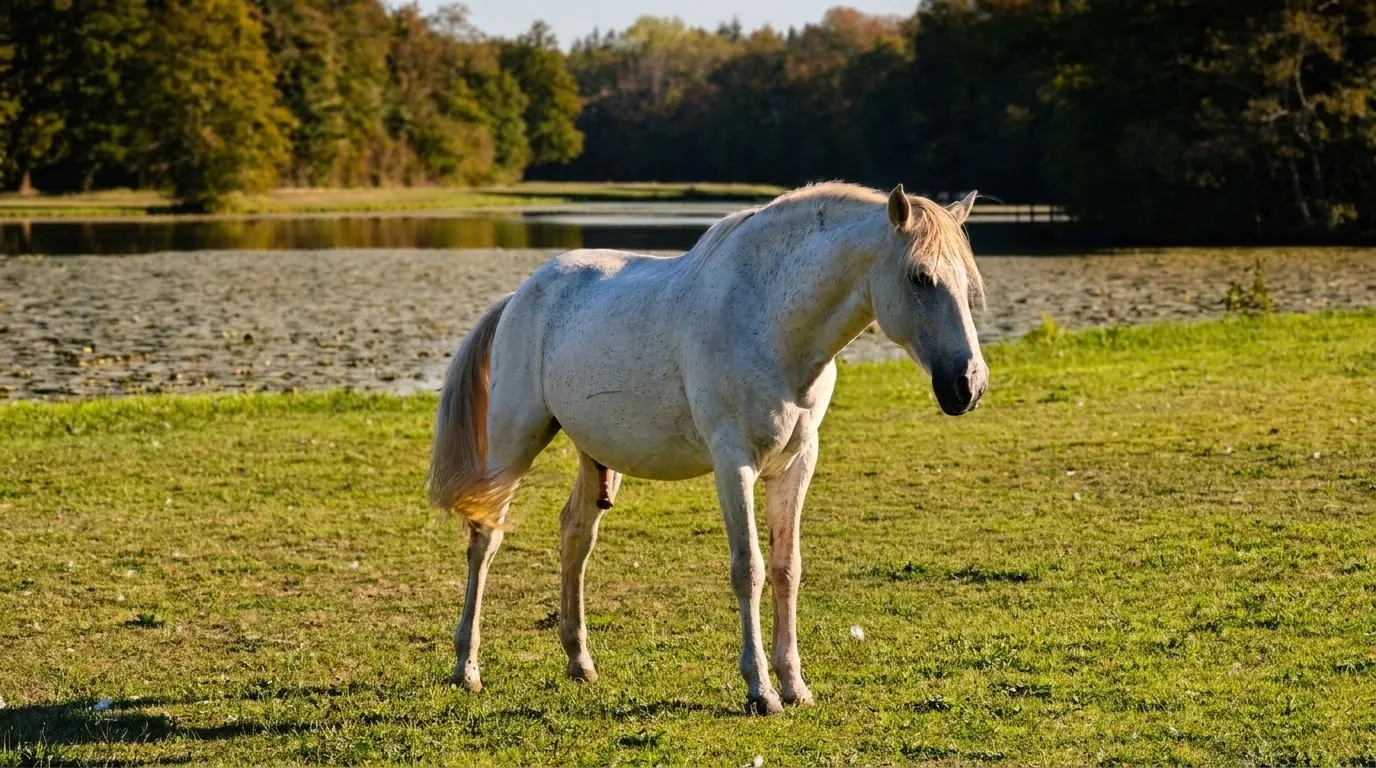
There is a white horse roaming the park all by itself, and he is very nice. If you are coming with children, there is a good chance that he will be the thing they remember from the visit (with all due respect to the Grand Mademoiselle).
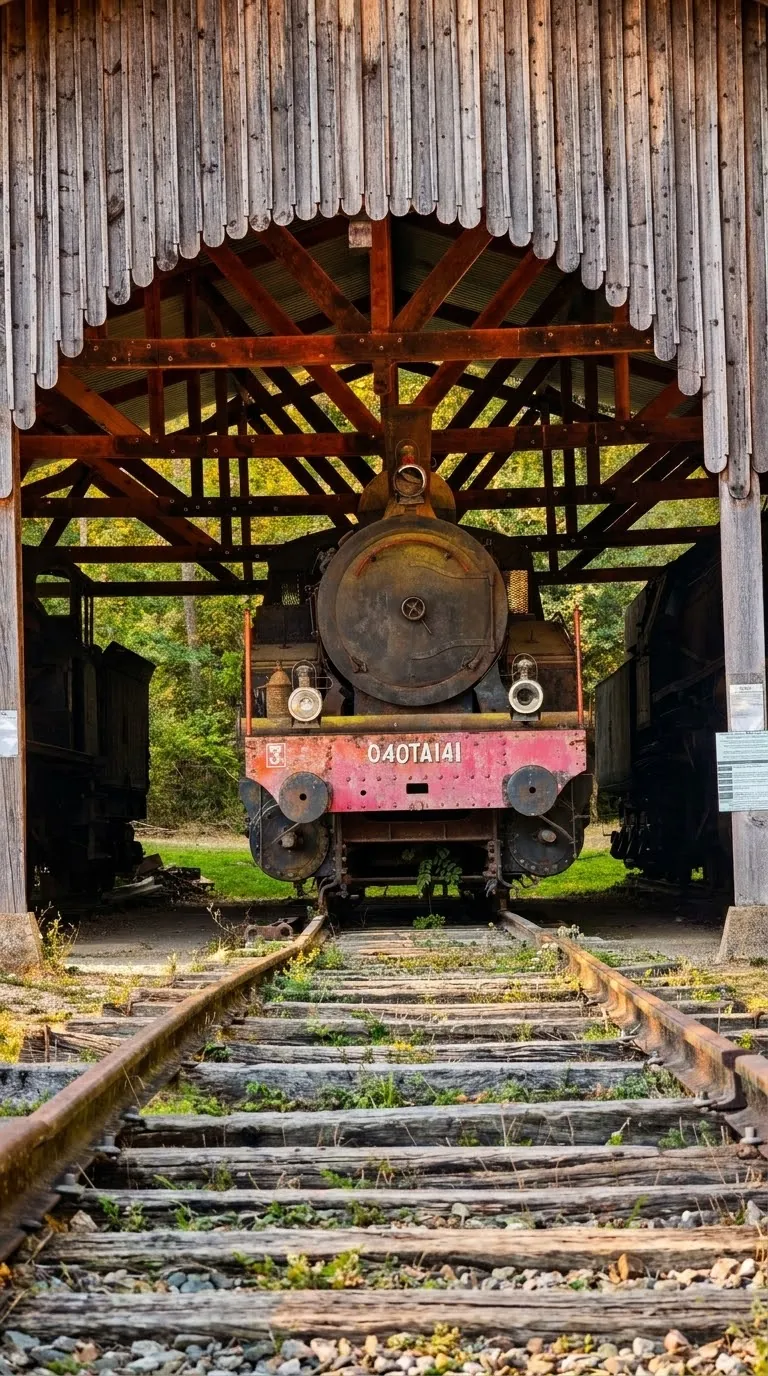
On the way there, you pass by the stables, which are part of the free visit, and old steam locomotives are also displayed on the grounds. This combination of horses, ducks, and locomotives on the same track sounds strange in writing, but in the grounds it works, because everything is on the same walking line.
On show nights, picnics are allowed in the park, which has tables and benches. This is the cheapest and most pleasant option for eating in San Parejo, especially if you have arrived with children and are waiting for 22:00 PM in the summer, when the show starts.
The Castle Farm (La Ferme du Château)
About 800 meters from the castle, on Allée des Platanes, there is a farm belonging to the same estate. It has cows and calves, goats, sheep, donkeys, foals and horses, pigs, and a whole coop of chickens, ducks, geese and rabbits. Visiting it is free and does not require a reservation.
What makes the place successful is the schedule of demonstrations throughout the day: animal care, goat milking, bottle feeding, bread baking in a wood-fired oven, and pony rides. There are also old crafts like horse shoeing and rope weaving.
The farm is open from April 4 to November 1, on Wednesdays, Saturdays, Sundays and public holidays, and every day during French school holidays, from 10:00 to 18:00 (until 17:30 in September and October). Admission to it is sold with a separate ticket from that for the castle, and up-to-date details are on the farm's official website.
The historical show on summer nights
The historic Saint-Pargeau show is the reason the castle still stands, and the event that fills the town every summer. In 2026, it will take place from July 10 to August 22, on Fridays and Saturdays only. Gates open at 19:00 PM, entry to the stands begins at 21:00 PM, and the show itself begins at 22:30 PM in July and 22:00 PM in August, lasting an hour and a half.
On the stage, which is actually the entire park in front of the castle, more than 600 volunteers and dozens of horses take to the stage. The images span a thousand years of history: a hunt by the bishop who built the first structure here, a knight's tournament, the robber gangs of the 15th century, the arrival of the Grande Mademoiselle, the Revolution, and the passage of American soldiers through Poiseuil.
A few practical things before you buy a ticket. Seating is in open stands without a roof, the show takes place even in the rain, and the seats are determined by the ushers and not by free choice. It is forbidden to bring personal chairs, strollers or dogs. There are food stands on the grounds, and as mentioned, not all of them accept credit.
Those who are worried that their French will be a barrier can relax. It is a show of pictures, horses, fire and lighting, and the plot is readable even without hearing a single word. On the official website, you can also download an explanatory booklet in English and read it before the evening.
Here is a short video from 2024 about the show:
The candlelight visit
Alongside the big show, the castle offers a much quieter experience, and this is my favorite of the two. The candlelight tour takes place in 2026 on Thursdays only, between July 9 and August 20. In July, the gates open at 22:00 PM and the tour departs at 22:30 PM, and in August everything starts half an hour earlier. The tour lasts about an hour and a half.
The castle is lit only by candles, and about 50 costumed characters are scattered throughout the halls, portraying the characters who lived here. The evening's focus is on the two great stories of the place, that of the Grande Mademoiselle and that of La Peltier de Saint-Père.
This tour involves a lot of steps and is not accessible to people with mobility impairments. Space is limited by nature, so if you are planning a night like this, don't leave your ticket until the last minute.
Here is a short video (in French) that shows what awaits you on this trip:
The history of Saint-Père-de-Luz Castle
980 to 1453: A hunting lodge, a fallen banker, and the man of arms who got the castle
The first building to stand here was a fortified hunting lodge, built in 980. The man who commissioned it was Héribert (Bishop of Ausser from 971–996), the illegitimate son of Hugh the Great and therefore the half-brother of Hugh Capet, founder of the Capetian dynasty. Héribert loved hunting, and for this purpose he built two forts in Poiseuil, one at Saint-Pèrejou and one at Toucy. He died at Toucy in 996.
Between the 11th and 13th centuries, the Lords of Tusi transformed the hunting lodge into a real fortified castle. From there, the estate passed through marriage to the Counts of Bar, and later to other noble branches. These were relatively quiet centuries in the history of the place, during which it was mainly a rural property in a poor area of clay, forests and fishponds.
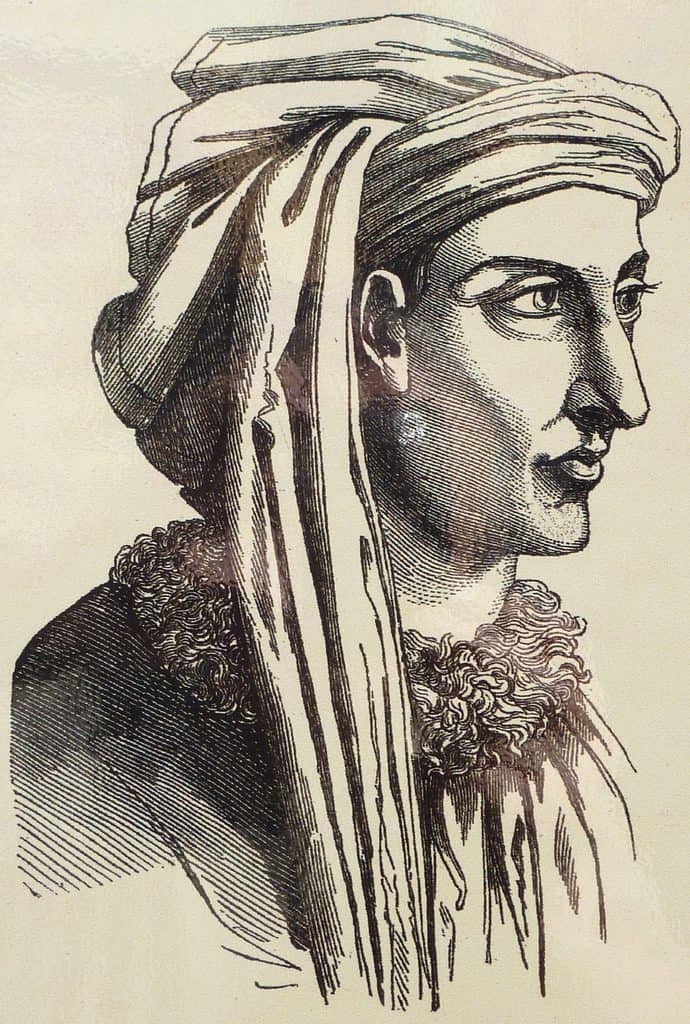
In 1450, Saint-Père-de-Luz was bought by the richest man in France. Jacques Cœur (died 1456) was a merchant from Bourges who became the treasurer of Charles VII (king from 1422 to 1461), financed the army that expelled the English, and amassed a fortune that no one could estimate. The château at Poiseuil was another asset to his collection.
Just a year after the purchase, Jacques Kerr was arrested. He was accused of many things, from poisoning the king's mistress to illicit trade, and all his property was confiscated for the benefit of the crown. He escaped from prison and died in 1456 on the island of Chios. It was this confiscation that put Saint-Père-de-Loire on the market.
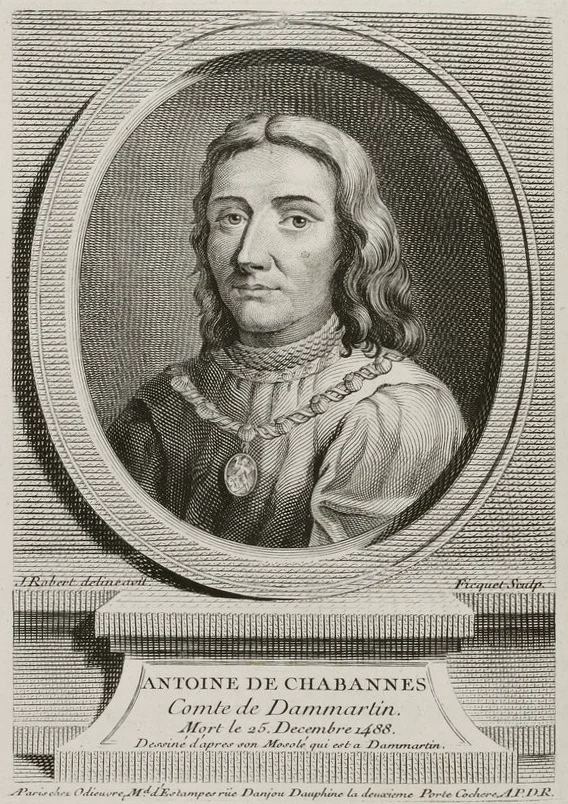
The buyer was Antoine de Chabannes (1408–1488), Count of Dammartin, and he paid 20,000 écu of gold. Chabannes was a professional soldier from a young age: he fought alongside Joan of Arc at Jerez and Bafta, and was present at the siege of Compiègne where it was captured. He later led gangs of deserters who plundered the villages between wars, and was also one of Jacques Ker's accusers.
From 1453, Chabanne built the castle you see today, on the foundations of the old fortress: an asymmetrical polygon of pink bricks with six towers at the corners. In 1467, he began with the large tower, which was intended to serve as a place of refuge until the entire work was completed. He died on December 25, 1488, his body was buried in Dammartin, and his heart was buried in Saint-Père-de-Luz.
His son, Jean de Chabannes (1462–1503), inherited the estate and settled his father's last accounts with the family of Jacques Ker. From here, Saint-Pargeau passed through marriage to the Angevin family, who in 1541 added the façade connecting the large tower to the two entrance towers, and from there to the Bourbon-Montpensier family. Thus, the castle eventually came into the hands of the heiress who would transform it from the ground up.
1652: The Night Visit of the Grand Mademoiselle
Anne-Marie-Louise d'Orléans (1627–1693), Duchess of Montpensier, was the daughter of Gaston d'Orléans (1608–1660), granddaughter of Henry IV and cousin of Louis XIV. Her mother died a few days after her birth, leaving her a vast fortune, making her a sought-after matchmaker in Europe. At court, she was simply called Mademoiselle, and later Grande Mademoiselle.
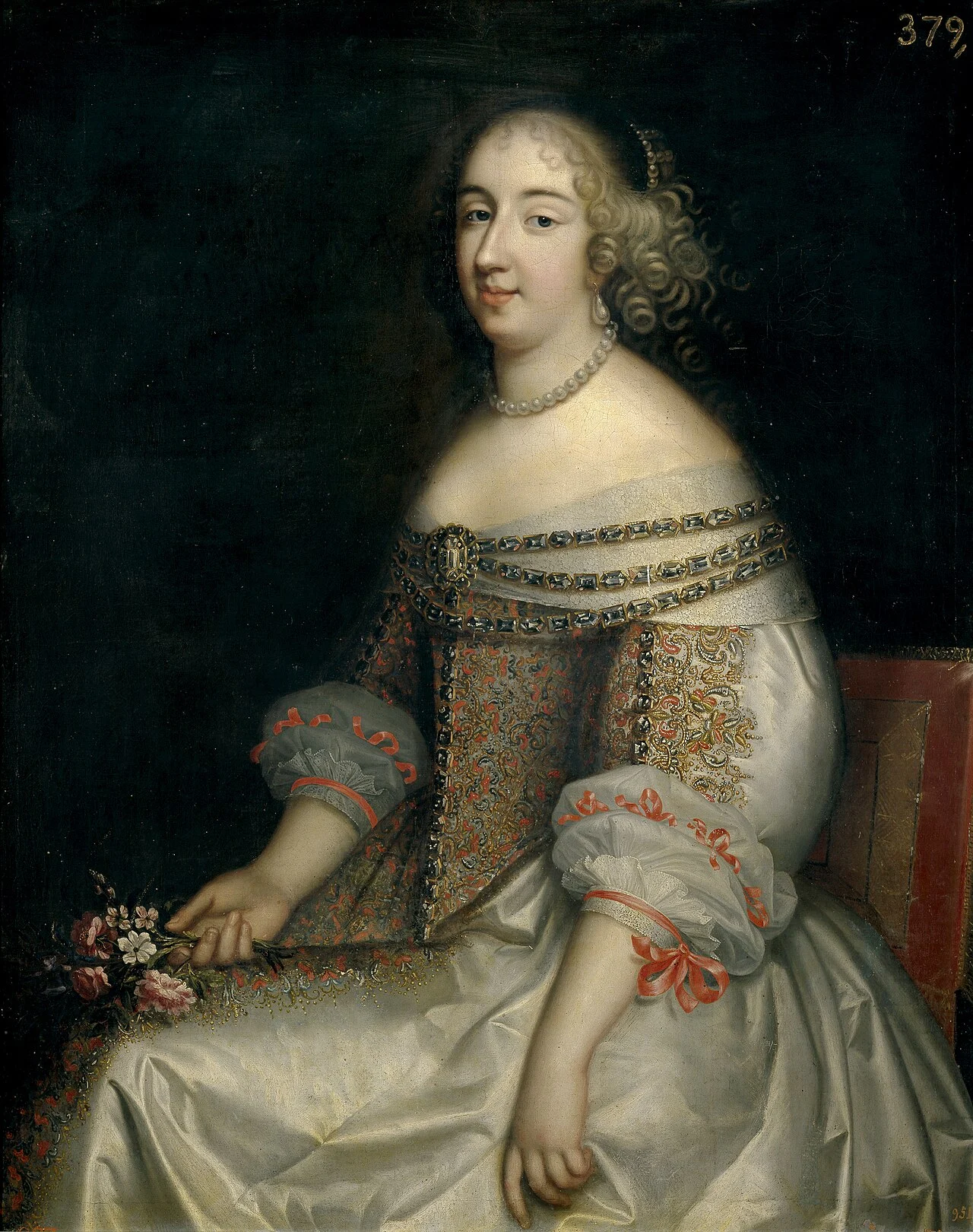
During the years of the Fronde, she chose sides, not the king's. In July 1652, as the rebel forces pressed against the walls of Paris at the Porte Saint-Antoine, she ordered the Bastille's gunners to fire on the king's troops to cover their retreat. This move saved the rebels, and destroyed her position at court.
The punishment was exile from Paris, and she chose to go down to the most remote estate she had, Saint-Père-de-Lac. She arrived at night, after a few days' journey by carriage, and found an old house with no doors or windows, a broken drawbridge, and knee-high grass in the yard. She wrote this description herself.
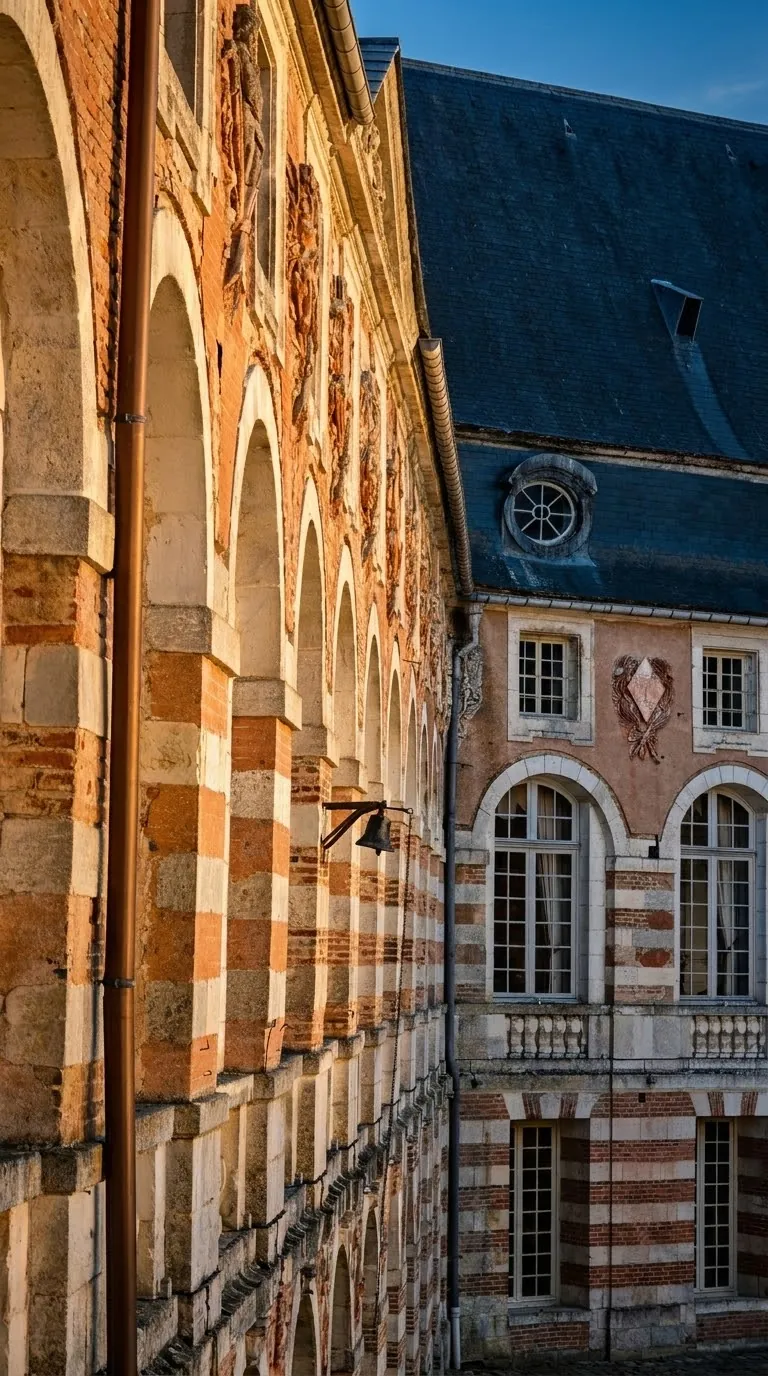
Another woman would have planned the return, but she began construction. She entrusted the work to François Le Vaux, who, as mentioned, was the younger but no less talented brother of Louis Le Vaux, who would later become the architect of the Palace of Versailles. Between 1653 and 1657, he redesigned the four inner facades of the courtyard, built the staircase to the courtyard, opened the building towards the gardens and installed new apartments.
Inside the old fortress, a theater and a huge guard hall were also built, which at the time was considered the largest of its kind in France. From the outside, the castle remained a 15th-century fortress, but from the inside it became a classic residence, and this is exactly the gap that can be seen in the courtyard today.
These five years were not just renovations. In Saint-Père-de-Luz, she maintained her own small courtyard, hosted literary figures, and began writing her memoirs, which are still one of the most fascinating sources on the period, partly because in them she tells what she felt and not just what happened. During those years, a trial also began between her and the estate's tax tenant, a conflict that lasted half a century and left behind a thick archival file.
In 1657 she was allowed to return to court, and she returned to Paris, to the Luxembourg Palace. Saint-Père-de-Luz remained hers, and there, as you will see immediately, the next chapter of the story was written, which has nothing to do with architecture.
December 1670: The marriage the king approved and then annulled

Antonin Nompar de Caumont (1633–1723), duc de Luzon, was a minor nobleman from Gascony who rose to prominence at court through his audacity, personal charm, and military talent. He was commander of the dragoons, a close associate of Louis XIV, and had a proven ability to quarrel with any person of influence. He was six years younger than the Grande Mademoiselle.
In 1670, at the age of 43, the richest heiress in France announced her intention to marry him. Paris was stunned. Madame de Sévigné (1626–1696) opened a famous letter dated December 15 by warning her recipient that she was about to hear the most amazing thing, and only then did she name names. The marriage contract was signed, and he transferred to Luzon the Duchy of Montpensier, the Principality of Dombes, and the Countship of Eu, property valued at millions of livres.
Louis XIV gave his consent, and after three days he withdrew it. The pressure came from the queen and the princes of the blood, who saw this marriage as an insult to the royal family. On December 18, he informed his cousin that the wedding was canceled. He is said to have cried when he did so, and it made no difference.
Less than a year later, Luzon was arrested in his room at the Château de Saint-Germain and transferred to the castle of Pignerol in the Alps. There he spent ten years, in the same prison as the former Comptroller of the Treasury, Nicolas Fouquet (1615–1680). There is a version that Luzon dug a tunnel from his cell to Fouquet's, and Fouquet refused to believe him that such a prisoner was really destined to marry the king's cousin. The movement against him was led by Madame de Montespan (1640–1707), whom he had insulted.
To free him, the Grande Mademoiselle paid a price. In 1681, she transferred the Principality of Dombes and the Countship of Oeux to the Duc de Mans (1670–1736), the illegitimate son of Louis XIV and Madame de Montespan, and only then did the gates of Pinadrille open. She gave Saint-Père to Lauzon himself, and he hardly lived there.
Did the two marry secretly? Contemporaries disagreed, and so did historians. There is a version that a secret wedding took place in the 1680s, and the one who firmly believed it was Voltaire, who claimed that it was enough to read her memoirs carefully. What is clear is that the relationship fell apart: Luzon went back to being what he had been, an ambitious courtier, and the two separated.
She died in Paris in 1693 and was buried in Saint-Denis. He outlived her by thirty years, married a woman decades younger than him, and died in 1723 at the age of ninety. You can see the palace that bears his name on the Île Saint-Louis, where he lived in Paris, in my article on the Hôtel de Lausanne . In 1714 he sold Saint-Pargeau, and a new family came into the picture.
1714 to 1793: A fire that destroyed the apartments, and a deputy who was murdered for one vote
The first buyer was Antoine Crozat (1655–1738), one of the richest financiers of the time, and he held the estate for less than two years. In 1715 he sold it to Michel-Robert Le Peletier des Forts (1675–1740), a councillor in the Paris parliament who later became Comptroller General of Finances. The Le Peletier family would own Saint-Pargeaux for more than two hundred and fifty years.
In 1752 a fire broke out in the town, according to tradition in a baker's oven, and it consumed three-quarters of the houses and the castle. The apartments of the Grande Mademoiselle, the gallery and the great guard hall were burned down, and of these wings only the outer walls remain. The family restored the building, so what you see inside today is largely a reconstruction from the 18th century onwards.
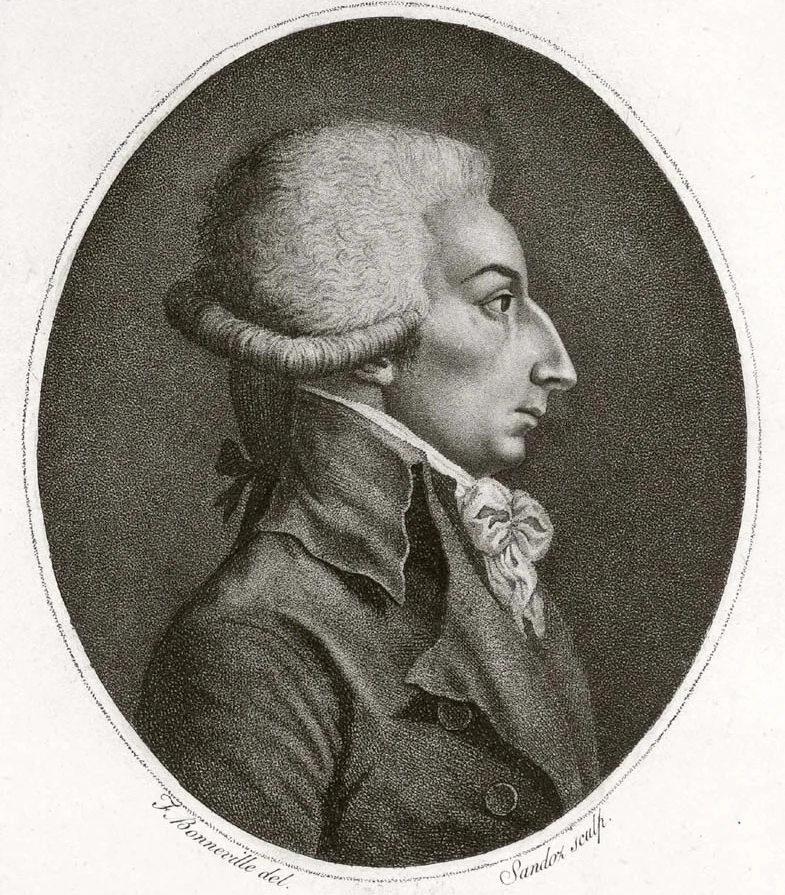
The most memorable figure among the estate owners was born in 1760. Louis-Michel Le Peletier de Saint-Fargeau (1760–1793) was president of the Paris parliament, and an exceptionally wealthy man. In 1789 he was elected to the Estates-General on behalf of the Parisian nobility, and within a few years he moved to the left of the revolution, was elected to the National Convention as a representative of the department of Hyères, and was mainly concerned with penal law reform and a program of public education.
In the trial of Louis XVI (king from 1774 to 1792), he was called upon to decide. La Peletier had previously opposed the death penalty, and in the vote on 20 January 1793 he voted in favour of the king's execution, and also against the appeal to the people and the postponement of the execution.
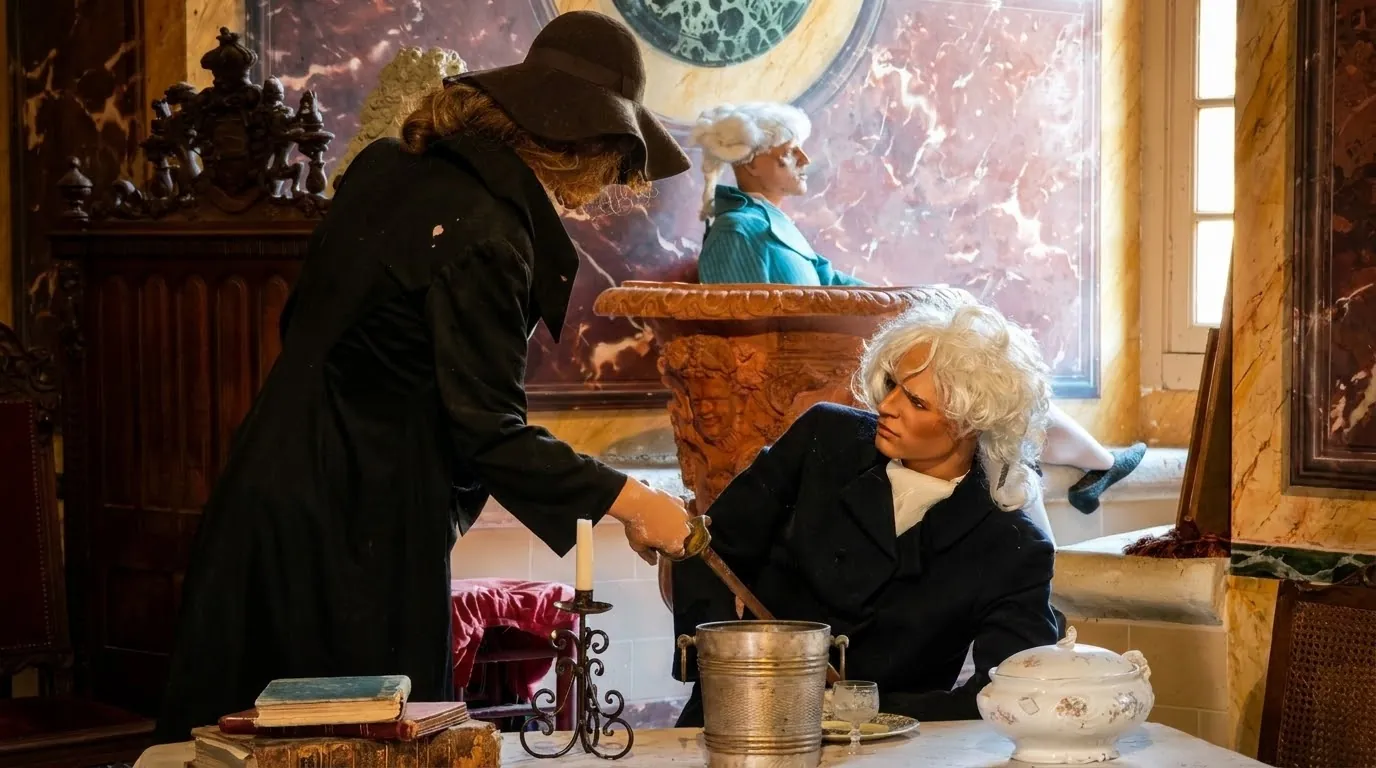
That evening he was eating in a restaurant at the Palais-Royal. A former bodyguard of the king named Pâris, who had hidden a sword under his coat, approached him and asked if he was the one who voted for the king's death. According to the testimonies, Le Peletier replied that he voted according to his conscience, and the assailant stabbed him in the side and fled. Le Peletier died of his wounds the next morning, the day the king was executed. Paris was found dead a few weeks later, before he was captured.

In the castle itself, a reconstruction of this moment is displayed in life-size puppets: Parry leans over the table with the sword, and La Peletier looks at him from his chair.
The Convention made the slain a symbol. His body was displayed in a mass ceremony, it was transferred to the Panthéon, and he was declared the first of the Revolution's martyrs of liberty. Jacques-Louis David (1748–1825) painted him on his deathbed, and the picture hung in the Hall of the Convention alongside Marat's death. La Peletier's remains were eventually transferred to the Chapel of Saint-Père, where they lie to this day.
As a result, the estate was not plundered in the Revolution. Elsewhere in France, entire monasteries and castles were destroyed in those years, while Saint-Père-de-Luz was the property of a martyr of the Republic, which is the simple reason why it survived.
1806 to 1968: The Daughter Who Imitated Her Father, an English Park, and the Childhood of Jeanne d'Ormesson
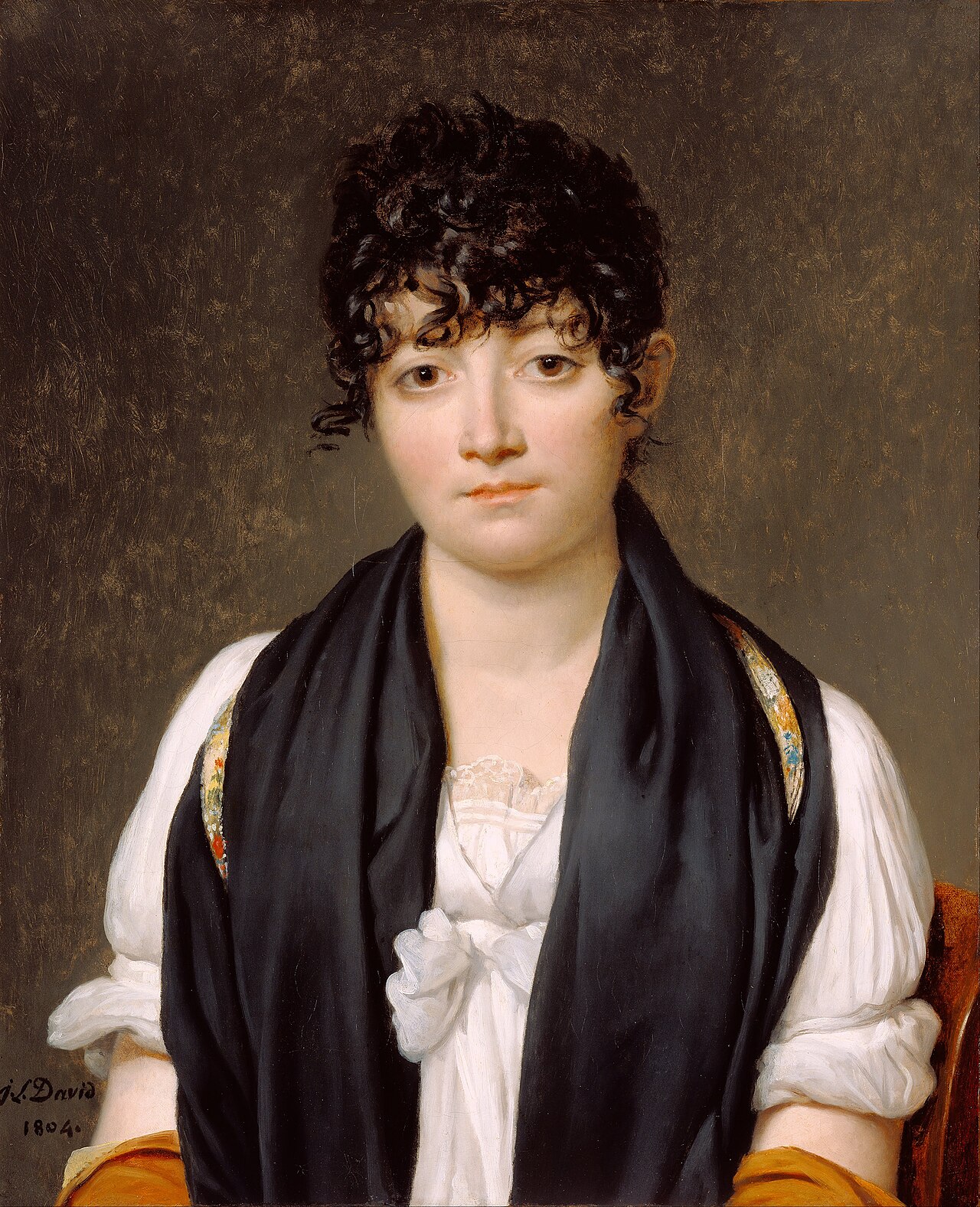
After the assassination, the National Convention adopted his only daughter, Suzanne-Louise Le Peletier de Saint-Fargeau (1782–1829), then 11 years old, and declared her a daughter of the state. The girl who had grown up as a revolutionary symbol became over the years a staunch royalist, investing much time and money in erasing her father's revolutionary past.
Her main target was the picture. David's painting was removed from the Hall of the Convention in 1795 and returned to the painter, who kept it for the rest of his life. In 1826, after his death, Suzanne bought it from his heirs, and from that moment on the picture disappeared. The engravings made from it were also collected and destroyed, and only one drawing and a single print of the work survive.
In 1806 she married her cousin, Léon Le Peletier de Mortefontaine (1771–1814), and from then on she spent long periods of time at Saint-Père-de-Loire each year. In 1809 her husband designed the park in the English style that still exists today. At that time the moats were drained, and the geometric layout of the gardens from the days of the Grande Mademoiselle disappeared.
At its peak, the estate covered three districts and some 15,000 hectares. In the 19th century, two entire wings were converted into guest rooms, which hosted hunters in the winter, and in one of the towers was installed the large dining room that can be seen today. Suzanne died in Saint-Père-de-Luz in 1829.
From her descendants, the château passed to the d’Ormesson family, and this is where the writer Jean d’Ormesson (1925–2017) came into the picture. He spent his childhood holidays in Saint-Père-de-Luz, and the place was the model for the family château in his book “At the Will of God” (Au plaisir de Dieu), published in 1974 and describing the decline of a French noble family throughout the 20th century.
The book was adapted into a six-episode, 90-minute television series, which aired in France from December 19, 1977 on TF1 and was filmed in Saint-Père-de-Luz. French viewers have since identified the pink facade as the castle of the fictional Plessis and Audroy family, giving the place unprecedented publicity.
But the family was no longer there. In 1968 the estate was sold, and over the next decade its condition deteriorated rapidly: roofs collapsed, wings open to the rain and a park overgrown with bushes. The series was broadcast at a time when the castle in which it was filmed was practically at the height of its neglect.
1979: Two brothers buy a ruin and invent a show
In 1979, Michel Guyot (born 1947) and his brother Jacques bought Saint-Père-de-Luz. What they got was about two hectares of roofs that needed replacing, wings that had collapsed, and a park that had to be cleared. The money they had was far less than the task.
The idea that saved the place was to produce a historical show that would fuel the renovation from within. The first show was staged in 1980, featuring 25 actors and 15 horses in just three performances. The town's residents volunteered, and it grew from there.
Forty-five years later, the show employs more than 600 volunteers and dozens of horses each summer, and it has become an economic engine for the entire region. The proceeds from it have financed the replacement of the roofs, which are the exact same 15th-century beams you walk under today.
In 1997, Michel Gio started a second project, which became no less famous. At the Gedalon site, a short drive away, construction began on a 13th-century castle using tools and materials of the period, after an examination of the foundations of Saint-Pèrejou revealed the fortified structure that preceded the pink bricks.
When they bought the castle, the brothers also heard about the legend that accompanied it. According to a family tradition that D'Ormesson himself told, Suzanne did not burn David's picture but hid it within the thick walls of Saint-Pargeau, and the secret of the hiding place was passed down from mother to daughter in each generation. According to that version, the chain of custody was broken during World War II, when the grandmother died before her daughter could reach her.
Michel Gio says that the 1979 purchase contract included a clause stating that the picture was to be locked up in the walls, and that if it was ever found, it should be transferred to a national museum. Searches for it were made with all kinds of experts and stopped long ago, and the picture was not found. The walls, as we know, do not speak.
Today, the family manages the site in its three parts: the castle, the farm, and the show. Saint-Père-de-Luz remains privately owned, it is declared a protected heritage site (monument historique), and it lives off what visitors pay at the box office. To me, this is why the place feels alive and not showcased.
Accommodation in and around Saint-Père-de-Luz
I myself lived in Auxerre, and this is the option I recommend for those traveling in Burgundy for a few days: a city with restaurants, a cathedral, and a train to Paris, and a three-quarter hour drive from Saint-Père-de-Luz. My hotel there was Hôtel Les Maréchaux , an intimate three-star hotel with a beautiful garden and pool, where each room is decorated in the Empire style and named after one of Napoleon's marshals. Those who want to sleep near the castle itself, mainly because of the nightly show that ends after midnight, will find three good options in and around the town.
LA FERME DU CHATEAU
The closest accommodation to the castle is within the estate itself, at the farm on Dolvim Avenue, about 800 meters from the gate. It offers guest rooms and gites in an authentic agricultural building, meaning simple accommodation in a rural setting with animals outside, rather than a boutique hotel.
This is the right choice for families with children, and also for those who are coming to the historical show and don't want to drive in the middle of the night. You can also order picnic baskets for lunch at the same place, which solves the castle's closing time.
For more information and to book a room
The Relais du Château
This hotel sits on the Promenade du Gryon, about 200 meters from the castle and in the heart of the town, and has 28 rooms for 1 to 4 people. The standard is that of a simple, clean country hotel, with a bar, and breakfast that can be eaten on the terrace on nice days.
Its main advantage is its location. From here you can walk to the castle, the square, and the restaurants of Saint-Père-de-Luz, and you can forgo the car for an entire evening. The regional bus from Mauser also stops at the same stop.
For more information and to book a room
Hotel les Grands Chênes
A three-star hotel located outside the town, in a 4-hectare park with old oaks, with rooms and small guesthouses, a seasonally heated outdoor pool, a garden, a terrace and a bar. It is closed in winter and open during the visiting season.
Its location is especially convenient for those who combine Saint-Père-de-Gaudens with Gedlon and Lake Bourdon, because it sits exactly in the middle between them. In return, you need a car for every outing, including for dinner in town.
For more information and to book a room
Questions and answers about Saint-Père-de-Luz Castle
These are the answers to questions I received from travelers planning a trip to Burgundy.
How long does it take to visit Saint-Père-de-Luz Castle?
Is it possible to get to Saint-Père-de-Luz without a car?
When is the historic show taking place, and how much does a ticket cost?
Is the show understandable even to those who don't know French?
Did the Grand Mademoiselle really marry the Duc de Luzon?
What else is there to see around Saint-Père-de-Luz?
More on the subject