
in short
- What's there: More than three hundred painted portraits, thirty-eight symbols of the conquest, a hall with 65 warlords, the golden tower, and gardens on 12 hectares.
- status: A protected heritage site since 1862, state-owned since 1929, managed by the National Monuments Center and labeled “Houses of the Illustrious.”
- How to get there: By car on the A6, exit 23, then the D980 and D954, or by train to Montbard (20 km) or to La Lumière-Alzette (8 km) and from there a taxi or electric bicycle.
- How long: An hour and a half inside, another hour in the park, and half a day for those who read the inscriptions.
- When: Open every day except January 1, May 1, November 1 and 11, and December 25, with a lunch break and last admission one hour before closing.
- How much does it cost: Nine euros for the castle and park, four euros for the park only, free for under 18s and 18–25s from the European Union.
- And bonus: Anyone who holds a ticket to the Alesia Museum Park or the Fontenay Abbey pays 7.50 euros, and the opposite is also true.
There are castles I want to visit because of their beauty, and there are castles I want to visit because of who lived there. Château de Bussy-Rabutin is clearly of the latter type, and I have been waiting to visit there for many years.
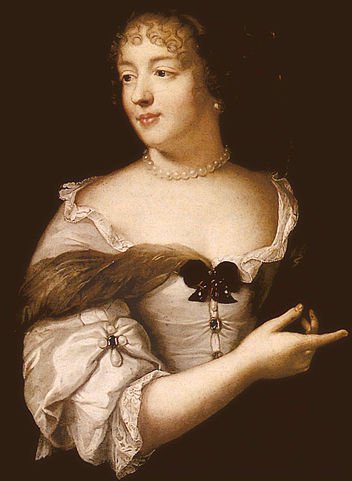
It all started with Madame de Savigny. Marie de Rabutin-Chantal (1626–1696), the Marquise de Savigny, is one of the characters I keep coming back to: a twenty-five-year-old widow who turned the freedom she had inherited into a profession, and wrote hundreds of letters that are still the most vivid description of 17th-century France. I built a walking tour of the northern Marais district that follows the addresses where she lived, and Danny Ashkenazi wrote on the website about her Roche Castle in Brittany . What is interesting is that the voice with whom she corresponded for forty years, the one who pushed her to publish, the one who invented an entire writing style with her, lived in Burgundy. He was her cousin, Roger de Rabutin, comte de Bussy (1618–1693).
So I read some of his adventures, and every page of his biography made me want to know him better. A man who went to the Bastille because he left his regiment to woo a young countess, who missed out on the Marshal of France baton because of a joke from his commander, who participated in an Easter Week orgy that ended his career, and who, when exiled to his Burgundian estate, decided to cover the walls with three hundred portraits of the courtiers who had exiled him, each with a sarcastic sentence underneath. Do you know many more fascinating historical figures?
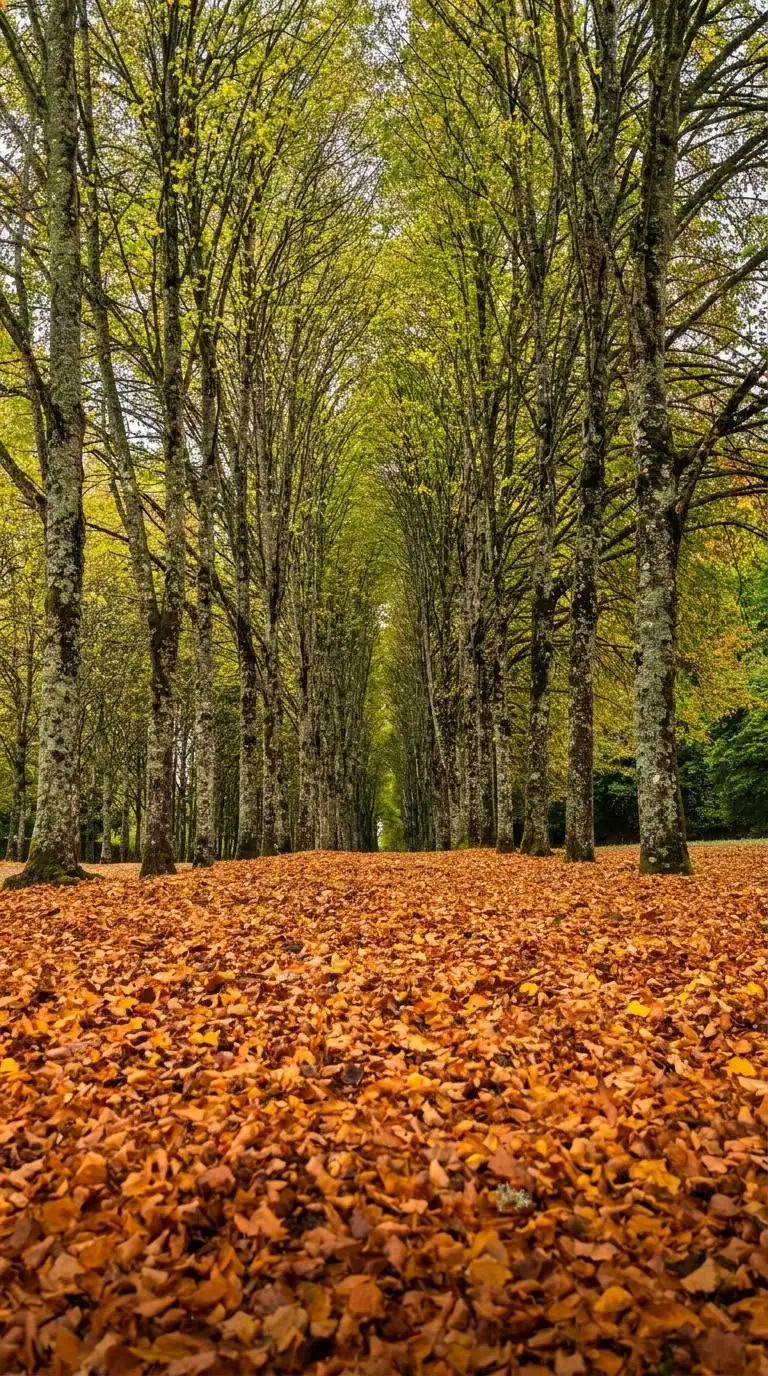
So when I started planning my trip to Burgundy with my parents for October 2026, Bussy-Rabutin wasn’t one of those “we’ll visit if it works out” castles. It was on my schedule before I had hotels, and entire sections of the route were built to make it easy and stress-free to get to. The castle sits in the village of Bussy-le-Grand on the Côte d’Or, in a corner that’s not exactly on the main tourist trail, so it’s worth knowing in advance how to get there and what’s open when.
In this article, you will first find all the practical information (hours, arrival, tickets, and what not to miss inside the castle and in the gardens). Then we will get to the main course and learn about the fascinating history of the place from the 14th century to the recent renovation, and for dessert you will receive a recommendation for an excellent restaurant opposite the castle and some recommendations for accommodation in the area.
By the way, Bossey-Raboutin Castle was part of my Burgundy itinerary , and there you will find all the days of the trip, the hotels, and the restaurants.
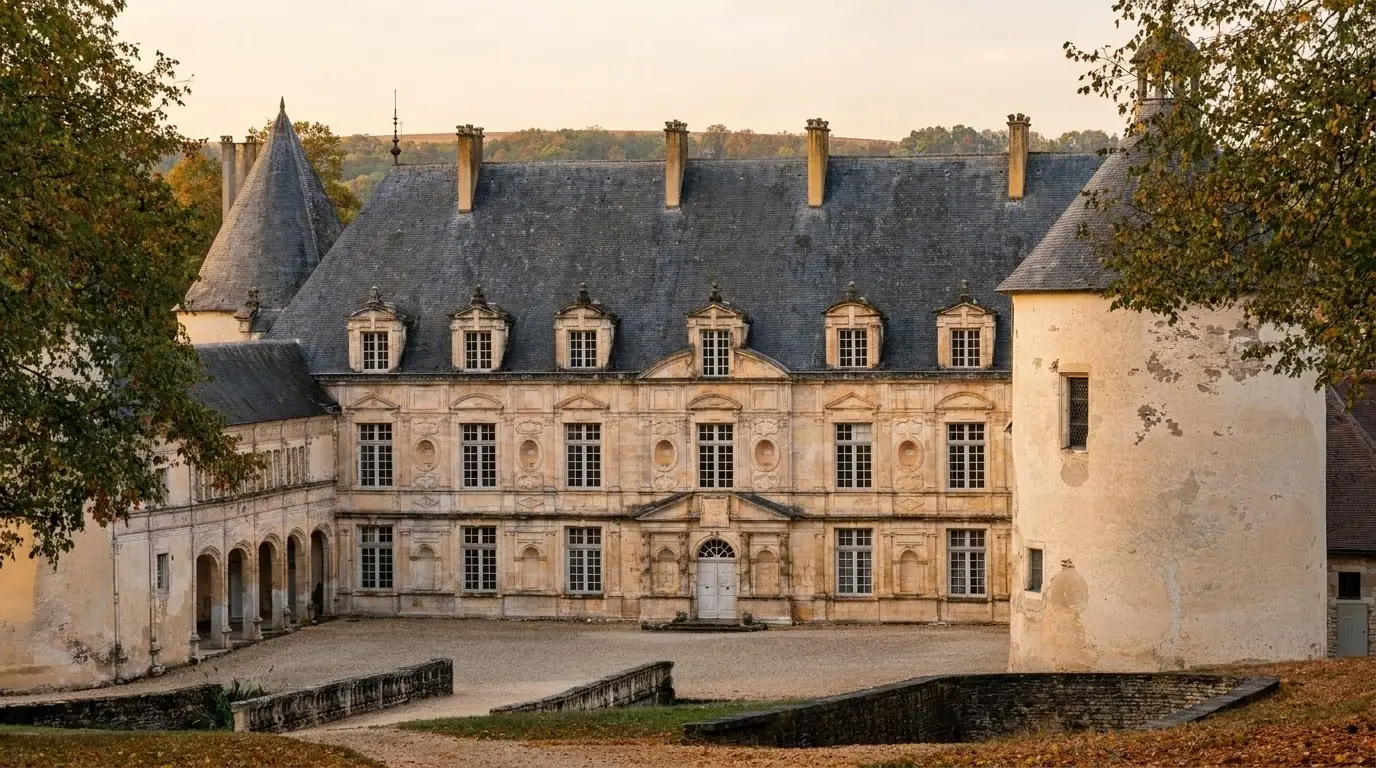
Practical information for visiting Bossey-Ravoten Castle
Opening days and hours
The castle is managed by the Center for National Monuments (Centre des monuments nationaux), so the hours are organized and stable according to two seasons (according to the official website , August 2026):
- From May 15 to September 14: 09:15 to 13:00, and then 14:00 to 18:00.
- From September 15 to May 14: 09:15 to 12:00, and then 14:00 to 17:00.
Pay attention to a detail that may put off quite a few visitors: there is a lunch break , one hour in the hot season and two hours the rest of the year, and the complex closes completely during it. The last entrance is one hour before closing, so in the winter anyone who arrives at 16:15 PM will no longer be allowed in. I recommend using the lunch break for a meal at La Pause Rabutin, which is located right in front of the castle gate (you'll read about it later).
The castle is closed on January 1, May 1, November 1 and 11, and December 25. The rest of the year it is open every day, including Mondays when many French museums are closed.
According to the region's tourist sites, guided tours in French are also offered: during the school holidays of All Saints' Day (Toussaint), Christmas and winter, as well as from April 1 to May 31 at 10:15 AM and 14:30 PM, and from June 1 to September 30 at 10:30 AM, 14:30 PM and 15:30 PM. Anyone arriving in October, like me, should check with the castle to see if the visit falls during the All Saints' Day holiday.
How to get to the castle
The address is rue du Château, Bussy-le-Grand 21150.
By car. This is the most convenient way, and in a village like this, the most logical. From Paris or Lyon, take the A6 and exit at exit 23, continue on the D980 towards Semur-en-Auxois and from there on the D954 towards Venarey-les-Laumes and Bussy-le-Grand. From Dijon, take the N71 and then the D6 and D954. Dijon is 65 kilometers from the castle. There is parking 150 meters from the reception, and there are no electric vehicle charging stations at the castle: the nearest are at the Super U parking lot in Venarey-les-Laume, eight kilometers away, and in Baigneux-les-Juifs (I wonder what connection the place has with Jews), ten kilometers away. It is best to book a car from Israel through Auto Shay , which has a special booking page for “anonymous Francophile” surfers.
By train. The official website describes the castle as “partially accessible” by train, which is an accurate description. There are two relevant stations: the TGV station in Montbard, twenty kilometers from the castle, which takes about an hour and a quarter on the express lines from Paris Gare de Lyon; and the TER station Les Laumes-Alésia in Vénère-les-Lômes, just eight kilometers from the castle. It’s easy to book tickets in advance through Omio , which brings together train operators on one screen and saves you the hassle of dealing with the French website.
The last kilometer. This is where the challenge begins, so it’s worth planning ahead. There is no direct public transportation from the station to the village. The official website offers two options: a taxi, or an electric bike that can be rented at the Super U in Vénère-les-Lômes or at the tourist office. The Mobigo on-demand shuttle service in the area (TAD 151) connects Samore en Auxois to Montbard and does not reach Bussy-le-Grand, so there’s no point in relying on it. The Montbard tourist office publishes a list of local taxi drivers, and the taxi can be booked in advance. You can also combine it: The TER network in Burgundy-Franche-Comté has a “on-demand taxi” service that travels between towns and the nearest station in coordination with a train ticket, at a cost of 3.50 euros per person if the trip is not included in the ticket, with advance booking up to the day before the trip.
The village is also connected to the cycle paths of the Canal de Bourgogne, and the monument has a bike rack, the option to leave some luggage at reception, and even charging an electric battery on request. Cycling in Burgundy? This is the kind of destination built for you.
Tickets and prices
Prices on the official website are valid from January 1, 2024 (checked August 2026):
- Castle and park ticket: 9 euros.
- Park and garden ticket only: 4 euros.
- Free: Under 18; 18 to 25 years old European Union citizens and non-European permanent residents in France; a person with a disability and an accompanying person; and for everyone on the first of November, December, January, February and March.
- 7.50 euros: By presenting a TGV Inoui ticket from the last five days; By presenting a Cezam ticket; and as part of “Visitez Malin”, i.e. by presenting a ticket for MuséoParc Alésia orFontenay Abbey.
- 6 euros: For SNCF Grand Voyageur members.
- Free: For Dijon City Pass holders.
- Groups: 7.50 euros per person from twenty paying.
A few more details worth knowing in advance: free visitor brochures at reception in French, English, German, Dutch, Italian and Spanish (there is none in Hebrew, so what can you do); photography is permitted without flash; baby strollers are prohibited in the castle rooms and a carrier is recommended; dogs are allowed inside only in a carrying bag or on your hands, and outside on a leash; a rest area with tables near reception where eating is permitted during opening hours.
What not to miss at Bossey-Ravoten Castle
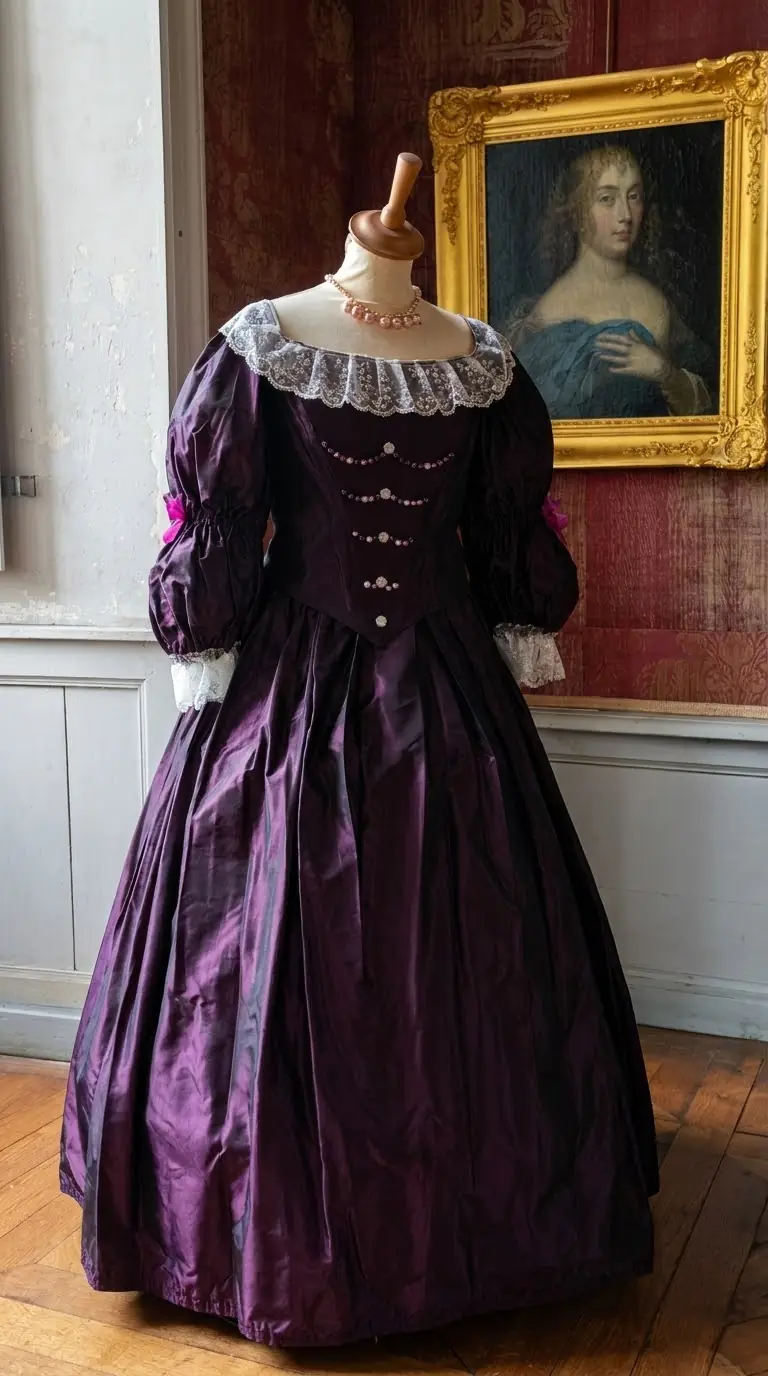
A visit here is not a visit to architecture, but a visit inside one person's head. Almost everything you see inside is the project of a bored, damaged, and very smart expat, and that's what makes the castle so interesting to me.
Even before you go inside, it's worth lingering in the courtyard. The 14th-century manor house was fortified, and an outer wall enclosed the courtyard from the bridge side until it was demolished in the 16th century. In 1520, Renaissance-style galleries were built along the courtyard, with flat arches and decorations of scrolls, grotesques, angels, and aristocratic coats of arms. Also note the facade of the main body of the building, completed in 1649: its niches are empty, and there have never been statues in them.
Hall of Symbols
The Hall of Symbols (salle des Devises) is the first room on the ground floor, and also the strangest of them all. A “symbol” here is a single painting and a single sentence that interprets it, an aristocratic fashion of the 17th century, and there are thirty-eight of them in the Bossuet. Roger, who received a Jesuit education, reproduced his teachers’ end-of-year exercises here, and he wrote the sentences in four languages: French, Latin, Spanish, and Italian.
Above the fireplace hangs a portrait of him in armor. At the entrance, a shadow awaits you, and beneath it a promise: Whoever bites me will cry. Note that on the lower level of the room, panels of symbols remain without portraits, meaning the work is unfinished. On the upper level of the walls, 18 buildings are painted, evidence of the interest that Bossi showed in the luxurious residences of his time.
Men of War and the Gallery of Kings
In the antechamber of the men of war (antichambre des Hommes de Guerre) hang sixty-five portraits of generals, all of similar size, all on a dark background, all aligned in rows. The result is festive and a little funny, because the faces resemble each other. At the base of the walls lies an interesting detail: the monograms of Roger and Madame de Monglat, his mistress, intertwined. Bossy was not content with the role of host: one of the portraits in the room is his own, hanging among the generals to the left of one of the windows.
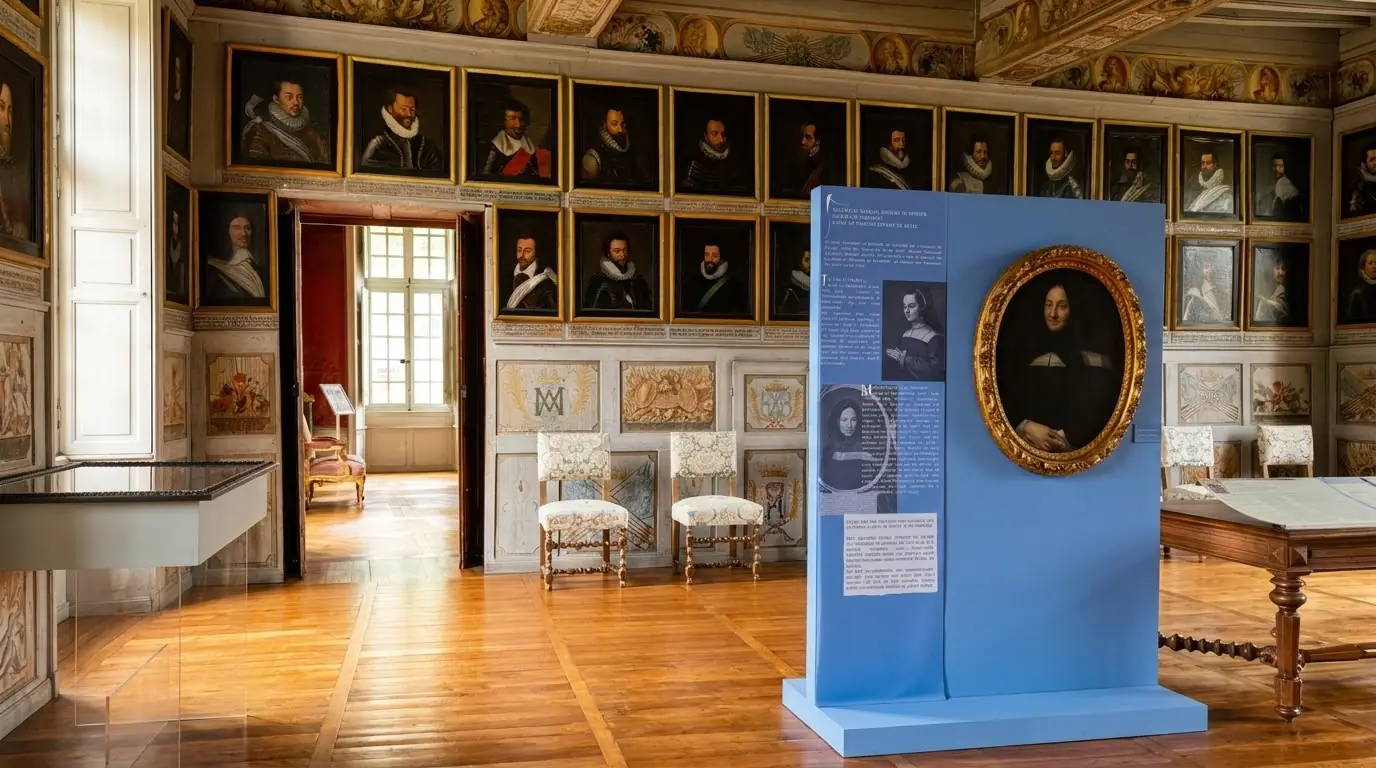
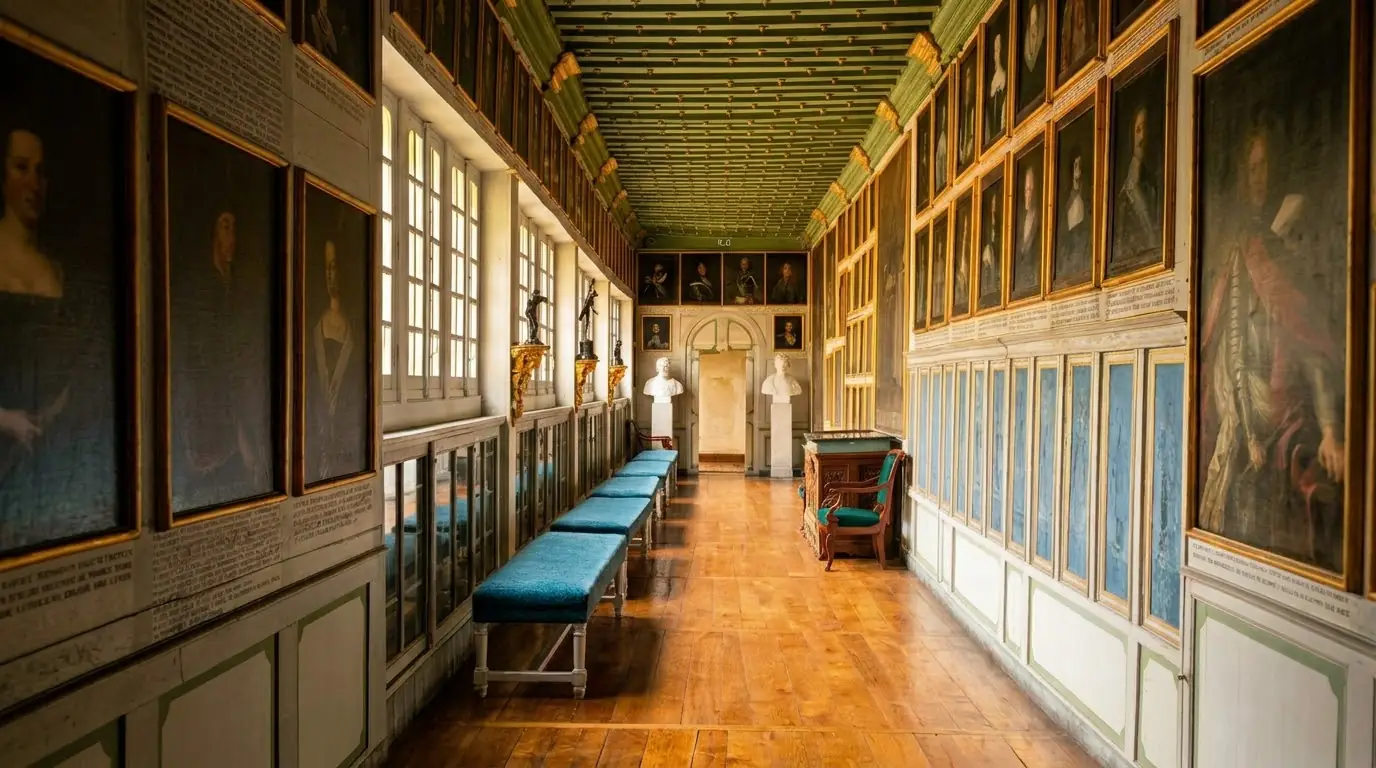
The Galerie des Rois (Gallery of Kings) had seventy-eight portraits of rulers and statesmen, from Hugo Cafe to Charles X (king from 1824 to 1830). Some of these have been replaced by portraits of the Dukes of Burgundy, the Bourbons, cardinals, and philosophers, and there are also sibyls. Opposite the row of kings hang the members of the Rabotain family, so that Bussy’s ancestors stand face to face with the kings of France. This gallery is largely a 19th-century creation, and you can read about it in the chapter on the history of the place.
Bossy's Room and the Golden Tower
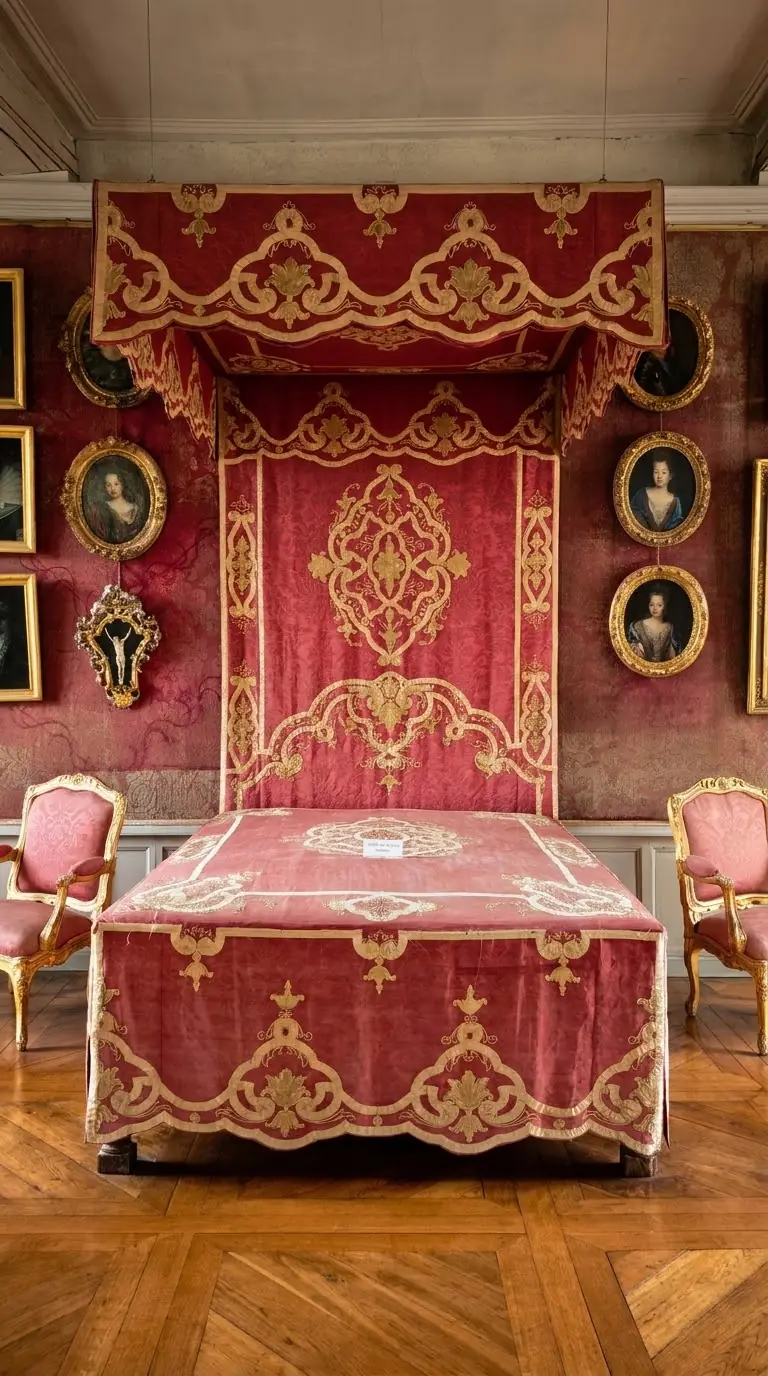
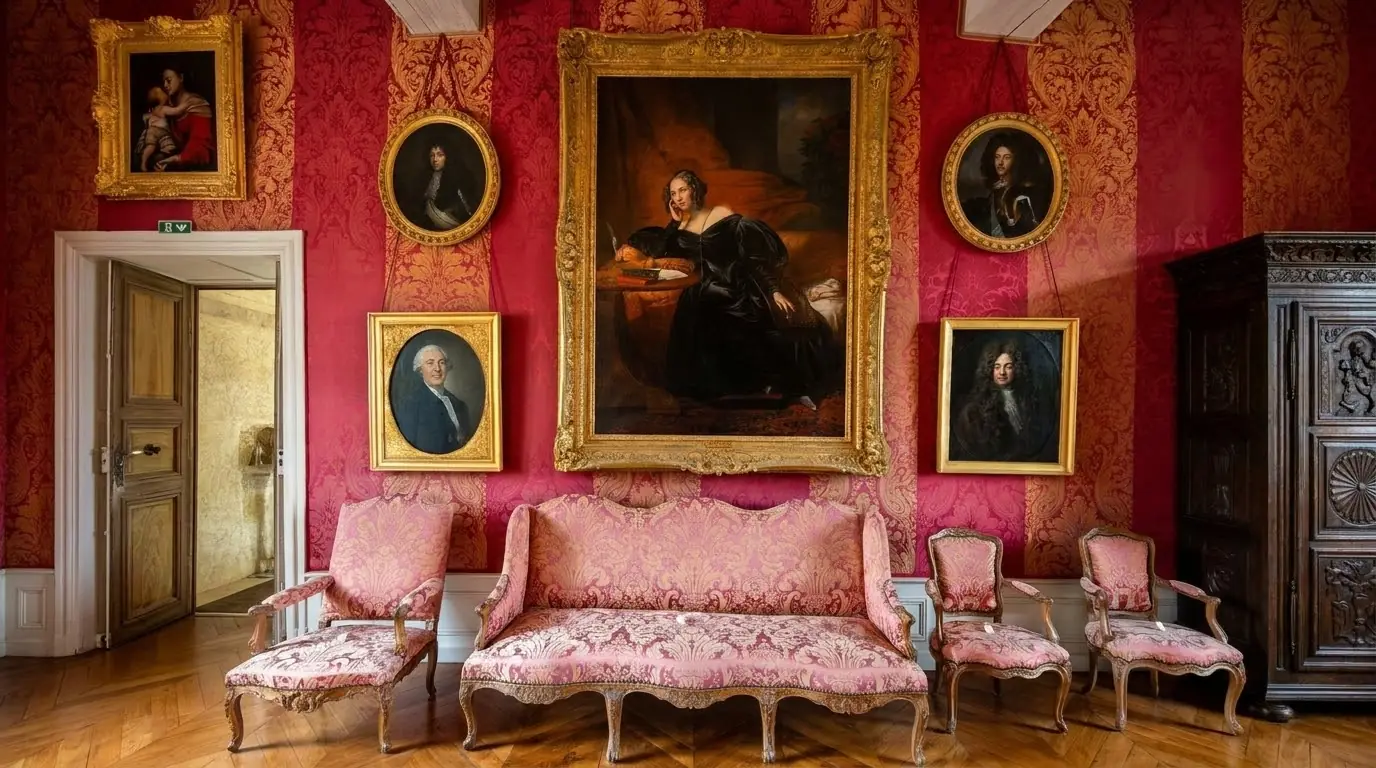
The Chambre de Bussy is home to twenty-five portraits of the court ladies of Louis XIV, including the king’s mistresses. This room was once called “Madame de Savignier’s Room,” because of the portraits of the Marquise and her daughter that hang there. They appear here in a triptych, which shows, from right to left, Madame de Savignier, her daughter Madame de Grignan (1646–1705), and Bussy’s second wife, Louise de Rouville. Look for the portrait of Madame de Montespan (1640–1707) in the lower left corner of the mantelpiece, which is considered unflattering, and that of Madame de la Savilliere.
If there is one room in the castle that makes a statement, it is the Golden Tower (Tour Dorée). The salon in the northwestern tower was Count Bussy’s study, and it is filled with portraits of what he called “my beautiful friends,” each with a note. In the center is himself dressed as a Roman emperor. On one of the tables in the room is an underground copy of “The History of the Loves of Gaul,” the book that brought Bussy here in the first place.
But the thing worth raising your head to is the ceiling: the four seasons are painted on the faces of the women of the Rebitan family (the grandmother is winter, the mother is autumn, his first wife is summer and the second is spring), alongside warriors carrying the family's coat of arms, his and Mongla's monograms alternately with flags of lily flowers, and in the center is one symbol: an eagle attacking a partridge. The eagle is the king. The partridge is the count.
The Chapel and Circus Wing
The chapel occupies the southwest tower, lit by three tall windows, and the dome is in the Gothic style. Above the altar is a relief of the Raising of Lazarus, and to the right is a picture of the Holy Family and John the Baptist bearing a seal of 1797. Above the relief, which is from the 16th century, hangs a large painting of Saint Francis of Paola by Bartolomé Esteban Murillo (1617–1682).
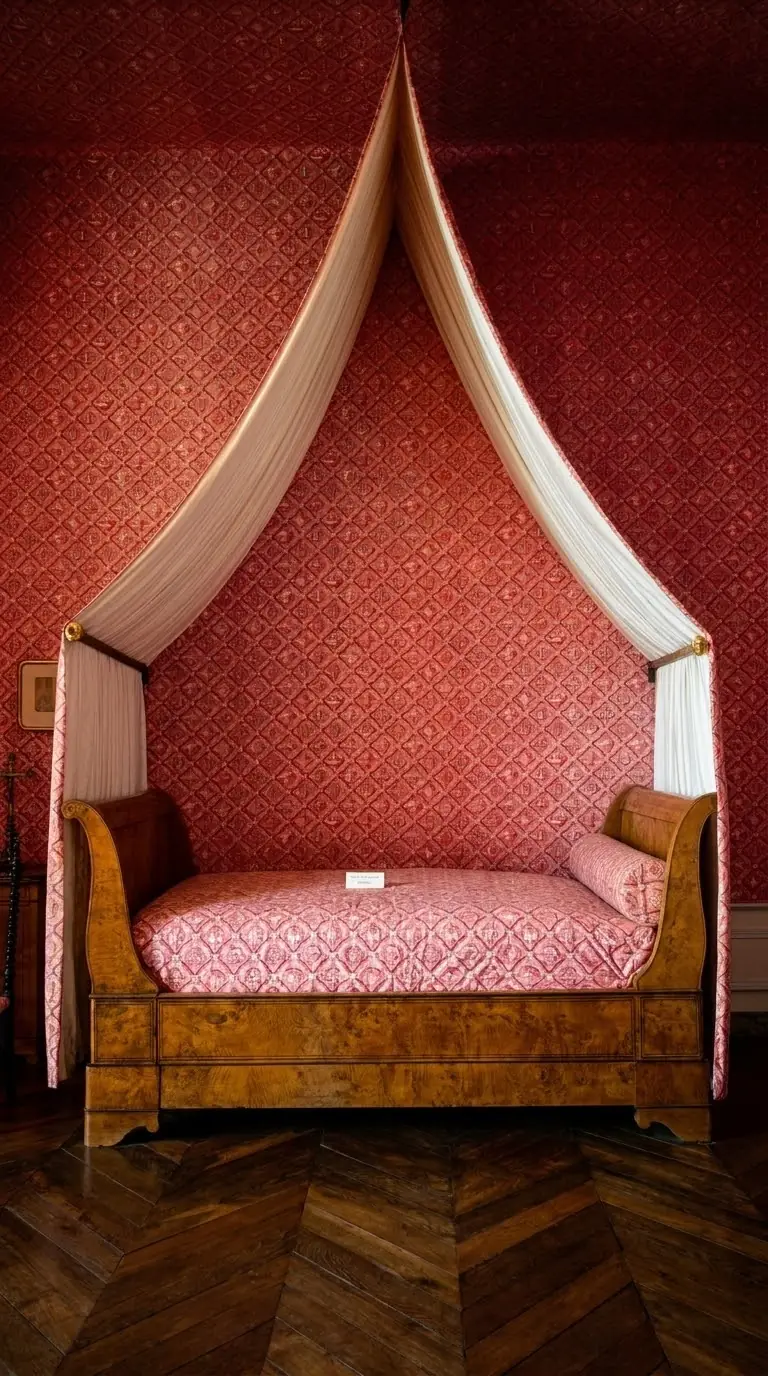
The Sarcus Wing (aile Sarcus) is the new part of the visit, opening to the public in 2023 after renovation. On the ground floor, the early 19th-century layout has been restored, with a boudoir, a living room and an octagonal dining room, and on the floor above, the apartments of the Counts of Sarcus in the style of Charles X, with libraries and a copy of “The Beautiful Pronière” painted by the owner himself in 1810.
In the Sarkos family's apartments, it is worth looking for a few items:
- In the waiting room hangs “The Man with the Gray Gloves” (L'homme aux gants gris), a portrait by Hyacinthe Rigaud (1659–1743), the painter who painted the famous portrait of Louis XIV in his coronation robes.
- The lady's room is furnished in the Empire style and covered with an Indian print of the Tree of Life, made by the weaving house Bracquenié. Above the fireplace hangs a portrait of Marie Leszczynska (queen from 1725–1768), wife of Louis XV, by Pierre Gobert (1662–1744).
- In the study hangs a portrait of Count de Buffon (1707–1788), the scientist from neighboring Montbard, sitting in his study, surrounded by a library with books from the Sercos family collection.
- In the dining room, the walls are painted with imitation marble, and above the tiled stove stands a statue of Hebe, the goddess of youth who poured the drink for the gods.
From the courtyard you also enter the kitchens, built in the 18th century, with a huge Renaissance fireplace with a roasting spit, a washing room and a bread oven. Next to them is a bathroom covered in imitation marble, which received hot water directly from the kitchen, and a small corridor leads from there to the fruit cellar, where the harvest was stored.
The park and gardens
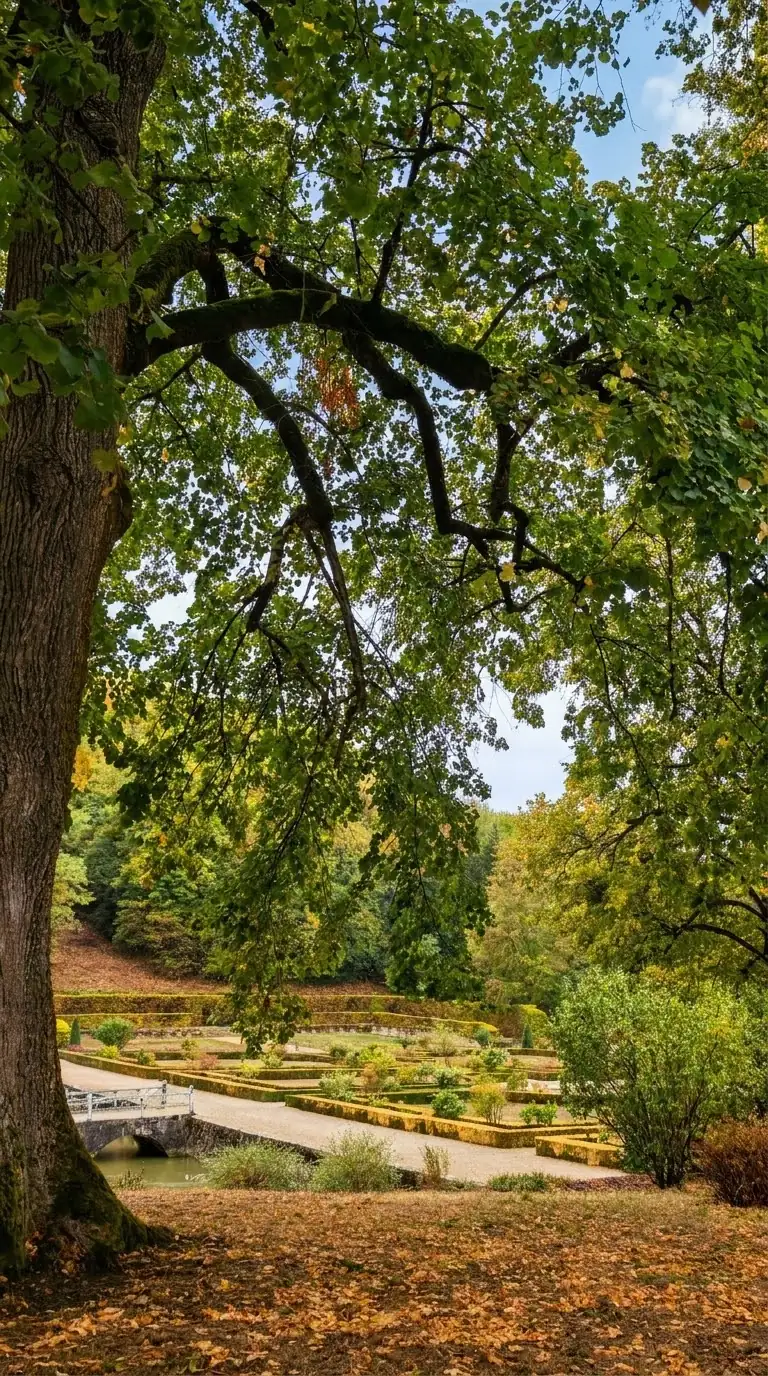
On the terrace are the geometric gardens with flowerbeds and yew trees in the corners and a circular pond in the center. From there, continue to the grove avenue trimmed in a star-shaped plan, with “garden rooms” hidden between the rows, and to the English-style park where stands a group of statues depicting the abduction of Prosperina by Pluto.
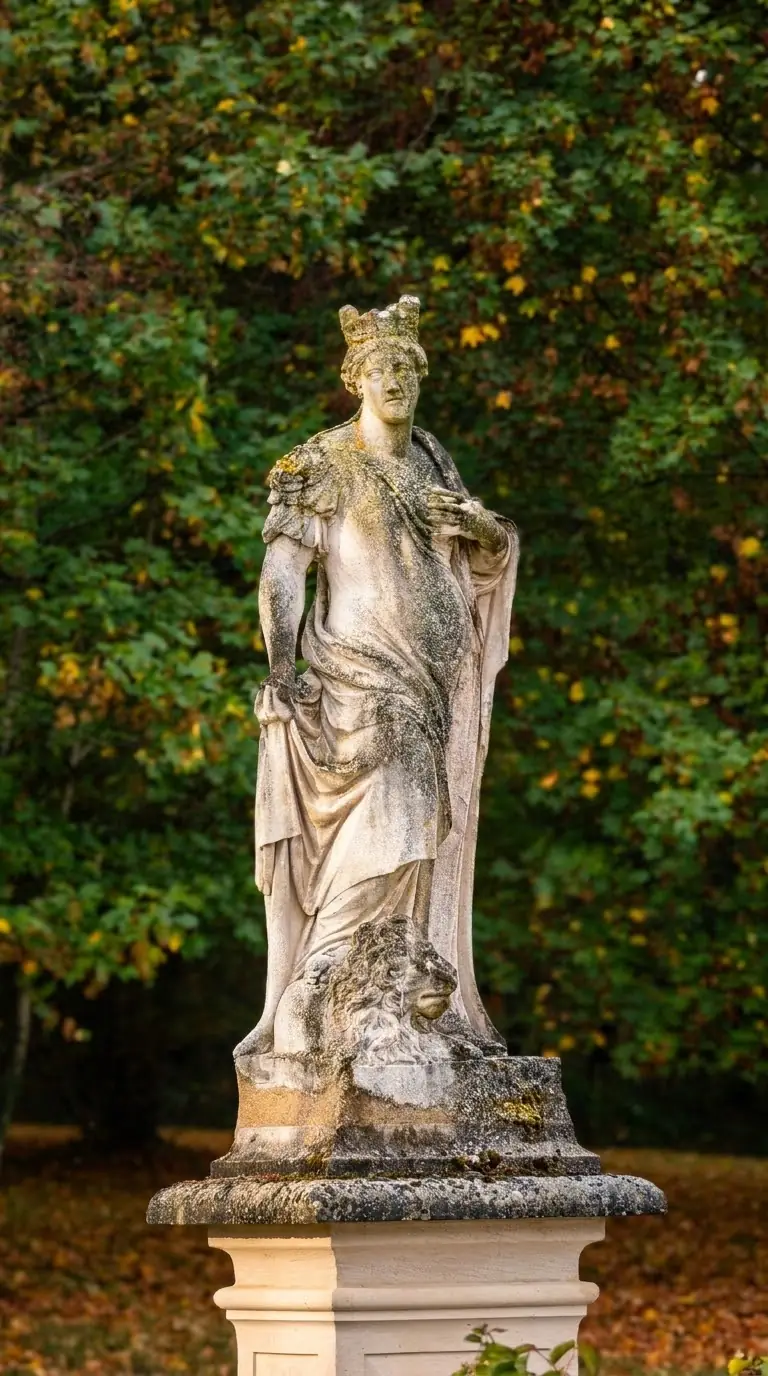
There is also a plant maze with a Ginkgo biloba tree in the center, a dovecote with a revolving ladder that allows access to the higher cells, and two semi-submerged ice pits in the north of the park. The dovecote was not only an agricultural structure: the right to own a dovecote was reserved for the nobility, and therefore it was also a status symbol. In the front courtyard, where the paths diverge as in Versailles , there is also a basin where the horses' feet were washed. In total, the estate covers thirty-four hectares, of which about twelve hectares of park and garden are open to the public.
The history of Bossey-Ravotin Castle
From Fortified House to Renaissance House: 14th to 16th Centuries
Local tradition says that a lord named Renaudin de Bussy built a fortified house here in the 12th century, around the same time as the village's Romanesque church. It's a nice version, but the clear archaeological evidence begins later.
The land is mentioned in a marriage deed at the beginning of the 14th century, and in 1346 it originally appears as “a manor house sitting on the stream”. At that time, it was a fortified house with square towers, a defensive wall around the courtyard and a moat surrounding the estate. Ownership passed from one hand to the other between major Burgundian families, including the House of Chastillon and the House of Rochefort. One of them, Jean de Chandio (1450-1501), a knight and minister in the government of Louis XI (king from 1461-1483), adopted the name Rochefort when he married Jean de Rochefort in 1499.
His descendant, Antoine II de Chandio, was the one who transformed the place between 1535 and 1555 into a Renaissance house with Italian influence. He demolished the protective wall that separated the courtyard from the landscape, and in its place built two galleries resting on five basket arches, and decorated the entrance above the arches with carved friezes: warriors, grotesques, poti and vegetation. You can still see them today, and they are the oldest part that has been preserved intact. His son Claude de Chandio managed the estate poorly, and at the end of the 16th century he left the building in a very neglected state.
1602: The family that gave the castle its name
In 1602, a distant relative of the family, François de Rabutin, bought the estate for 12,300 écouses. He did something that forever established the name of the place: he added his family name to the name of the village, and thus “Bossy Rabutin” was born. He also had to work quickly, because the building he bought had almost become a ruin due to neglect.
François designed the main body of the building with a symmetrical and regular facade, on three levels: ground floor, first floor and attic. Its light stone against the dark tiled roofs is exactly the contrast you see when you approach from the road below. His son Léonor de Rabutin (1587–1645) continued the work, and the restoration of the body of the building was completed in 1649.
When Roger’s mother, Diane de Cugnac, died in 1650, the château passed to him. He did not consider it his main home: he already had a château in Chazeu, and Bussy was his “summer home.” As you will see, all of this changed when Bussy became his main home in Roger (and not entirely of his own free will).
Roger de Rabat: A Brilliant Career and a First Visit to the Bastille
He was born on April 13, 1618, at the Château d'Afrique in Saint-Émilion, not far from Autun, on Friday the 13th, and it is impossible to ignore that his life did indeed oscillate between glory and disaster.
He was the third son, and therefore destined for the church. The Jesuits educated him at the college of Autun and later in Paris. At the age of twelve his brother died, he became heir to the family throne, and his parents brought him home to train him for his new position. His father, the viceroy of Navarre, decided that the boy should also learn the art of war. As a result, Roger entered the army in 1633 and in 1636 he distinguished himself at the siege of Dôle when he was eighteen.
At the age of twenty-three he was given command of a regiment. He abandoned it to woo a beautiful young countess. When he returned, the viceroy was waiting for him and sent him to the Bastille , where he spent five months, accused of allowing his soldiers to smuggle salt, a commodity on which the state levied a heavy tax. In prison he met Marshal François de Bassompierre (1579–1646), who was there at the time himself, and who introduced him to the world of libertinism. So those who hoped that a stay in the Bastille would cool Bossy-Rabbott's spirit a little, quickly discovered that they had achieved the opposite result. A few years later, during the Fronde, the uprising of the nobility against the monarchy during the childhood of Louis XIV, he initially supported the rebels, but soon switched to the king's side.
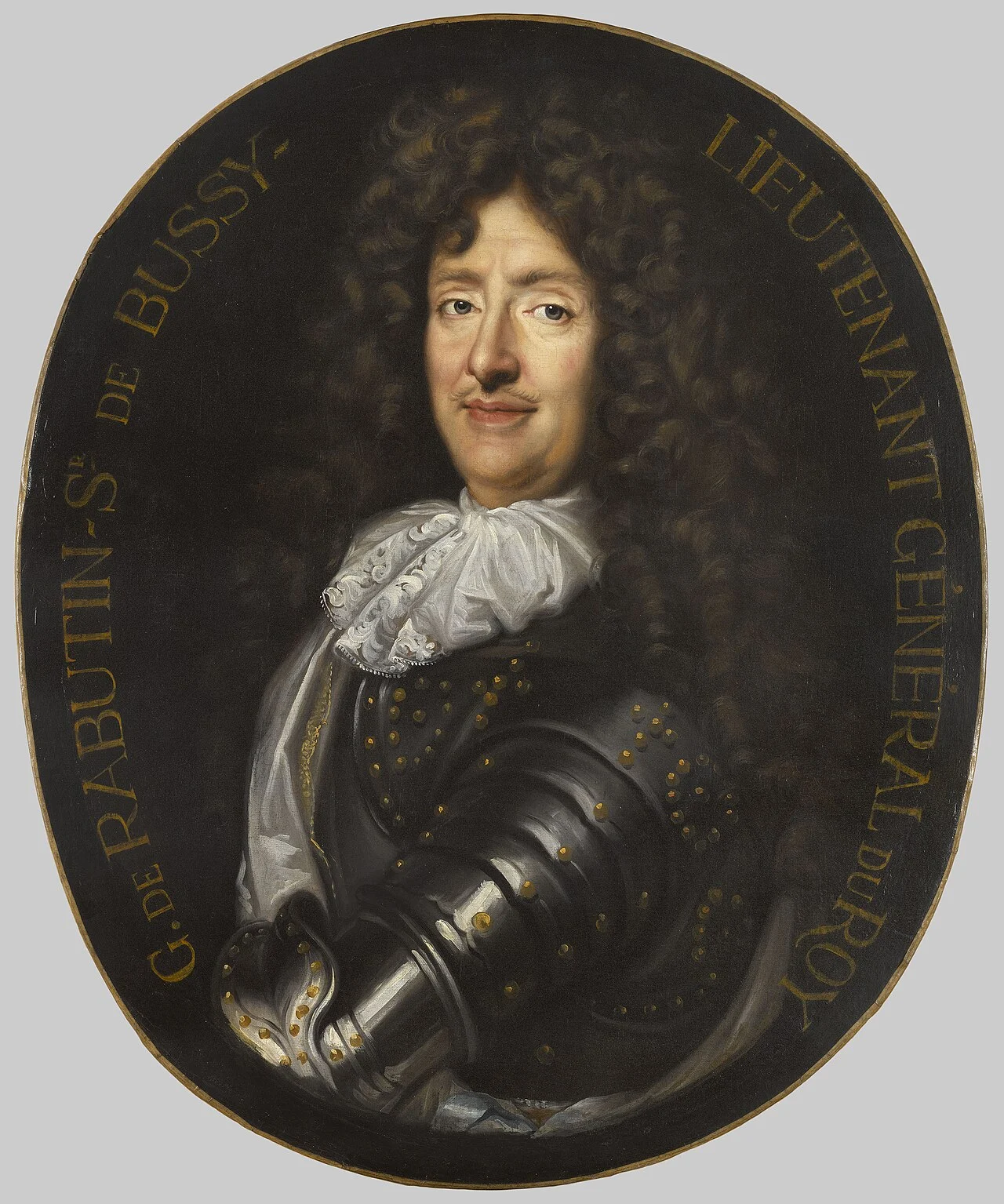
Roger continued his military career and at the age of thirty-five reached the rank of field marshal (maréchal de camp). He did not receive the baton of Marshal of France, and one of the reasons was that his commander, Marshal de Turenne (1611–1675), prevented his promotion because he believed that his character and talents were suited to amusements and writing satirical poems rather than to a responsible and high military command. Turenne testified that he was indeed a brave and talented officer, but he told King Louis XIV the famous statement that sealed his professional fate: “Bossy-Rabotin is the best of my officers, only for poems!”
Easter Eve 1659
During Easter week in April 1659, Count Bussy attended a party, which, according to many testimonies from the time, turned into a real orgy at the Château de Roissy. During the party, songs were composed and sung that mocked the morals of the court, the king, and the royal family, including Marie Mancini, the niece of Cardinal Mazarin (1602–1661) and the young king's first lover. The scandal was great, and the repercussions were immediate: Mazarin banished him from Paris for six months and from court for about eighteen months.
He was sent to his Burgundian estates, and here the event that would decide his fate occurred. His lover, Madame de Mongla, fell ill. To amuse her, he wrote her a satirical collection of stories in 1660 about the court’s love affairs, which he called “The Love History of Gaul” (Histoire amoureuse des Gaules). In a similar vein, he also drew, following the “Map of the Land of Tenderness” (Carte de Tendre) by his friend Madeleine de Scudéry (1607–1701), a satirical map of his own, “Map of the Land of Debauchery” (Carte du pays de Braquerie), which mocks the court’s love affairs. The book was not intended to go beyond private circles, and certainly not into print. However, as you will see, he would pay a huge price for this book.
The Betrayal of Madame de la Baume
Monglatt persuaded him to lend the manuscript to her good friend, Madame de La Baume. This was a mistake. La Baume, whose advances he had rejected more than once, copied the book, added chapters on the king, his family, and his mistresses, and had it printed in 1665 in Liège under the name of Roger.
The timing was cruel. On January 1, 1665, Roger de Revitin was admitted to the Académie française, thanks to his collection of “Maximes d’Amour.” Three months after the ceremony, everything fell apart.
Why was the king so furious? Not because of a collection of love stories, but because it was a plaster manuscript. In a court whose entire mind is based on secrets, especially shameful ones, being kept quiet, Bussy did exactly the opposite: he knew everything and revealed everything. He tried to save himself, showing the king the original manuscript to prove that the additions were not his, and it worked for a moment. Then a meeting was held behind closed doors, and his fate was sealed.
On April 17, 1665, he entered the Bastille and remained there for thirteen months. At the same time, he was stripped of all his positions, and was released in 1666, sick, on one condition: he must return to his lands and remain there. Louis XIV decided to make an example of him to anyone who even thought of writing similar works.
16 years in Burgundy, and 300 portraits
From 1666 to 1682, Count Bussy lived in his castle, and during this time he did the thing that made the place what it is. He built for himself the courtyard from which he was expelled. He himself wrote about it: “Bussy is not a large house, but it is built with luxury, and its interior is beautiful with a rare beauty that is not seen anywhere else.”
More than three hundred paintings hang on the walls. Quantity trumped quality: there is no famous painter here, no painting is signed, and it is likely that a large regional workshop worked on the project throughout the years of exile. The painters never saw the people they painted and relied on engravings, more or less accurate. These are copies of copies, hence the feeling of déjà vu that accompanies the visitor to the castle.
The exceptions are the women of the Golden Tower, whose portraits were created in the workshops of Versailles. How did an exile who was forbidden to approach the court get hold of them? He sent a message to the great gossip of the court (whose name, of course, he did not bother to publish) that he was building a magnificent study, in which he would hang portraits of the women who would be kind enough to send him one. This was not true, but all the women fell for the trap and brought him engravings of portraits especially, for free.
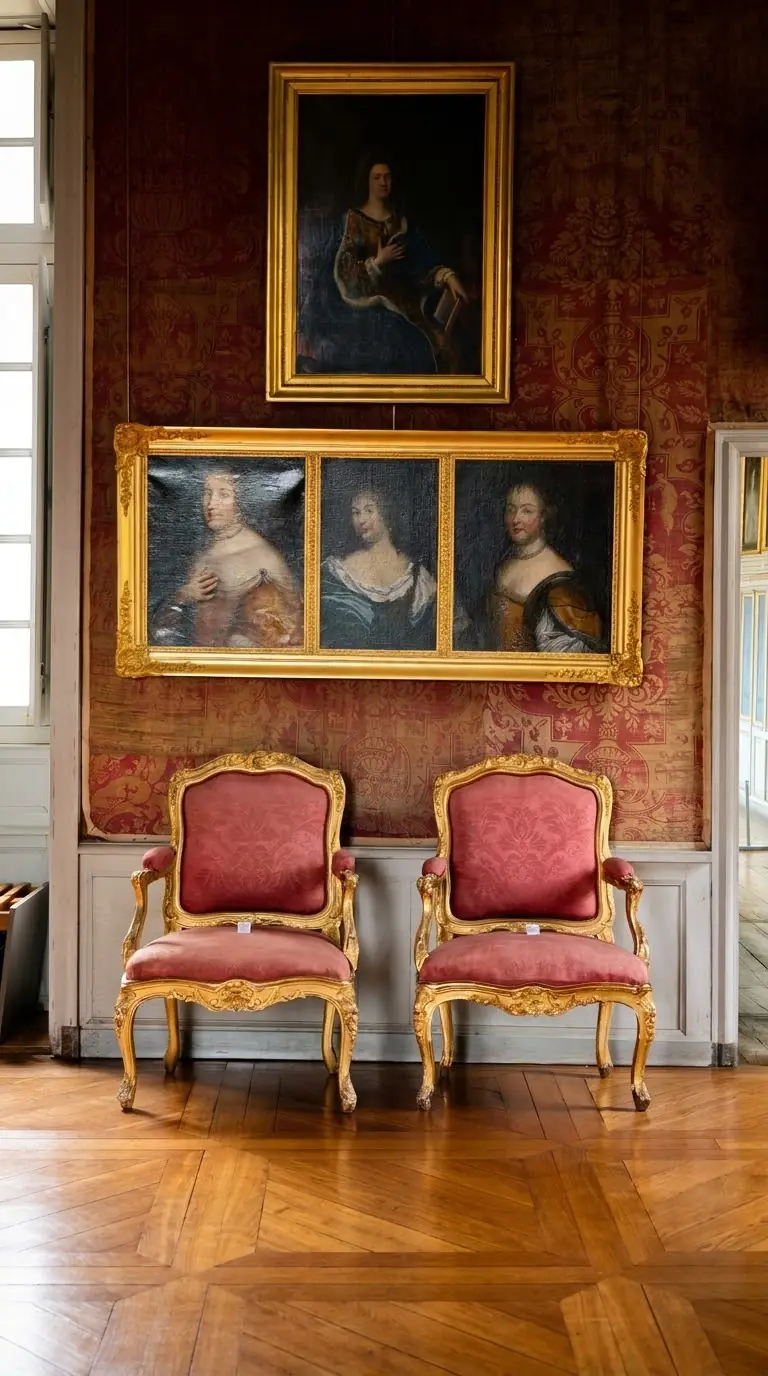
Then, of course, he wrote a sentence under each one. The Countess of Olon, Catherine d’Angennes, received the line “the most beautiful woman of her time, but known less for her beauty than for the use she made of it.” His relative Guy de Rabatt was given a note about a neglected waistline. What’s interesting is that you’ll also find portraits of people the Count didn’t know at all, like this one of Oliver Cromwell (1599–1658), under which it is written that he was the one who beheaded Charles I (king from 1625–1649).
The real rage was reserved for Mongella. She left him after the scandal, and he has called her “the traitor” ever since. In the symbols he dedicated to her, he compared her to a siren and the wheel of fortune, and in one of them he wrote that her infidelity had restored to fame all the famous adulteresses of antiquity. He broke the only rule of the symbol genre, which is that it is forbidden to include a human figure, in her case, explaining: If it is permissible to put monsters there, look at her as a monster.
Two other symbols tell his mental state without a word about exile. The orange tree bears the phrase that spring and winter mix their gifts, that is: One day you are at the top of the court, and tomorrow everyone has forgotten you. The pitcher of water, which in the center of the national monuments identifies him with Madame de Savigny, is poured onto quicklime, which is Bussy himself, and underneath it is written that the more she cools him, the more he gets excited.
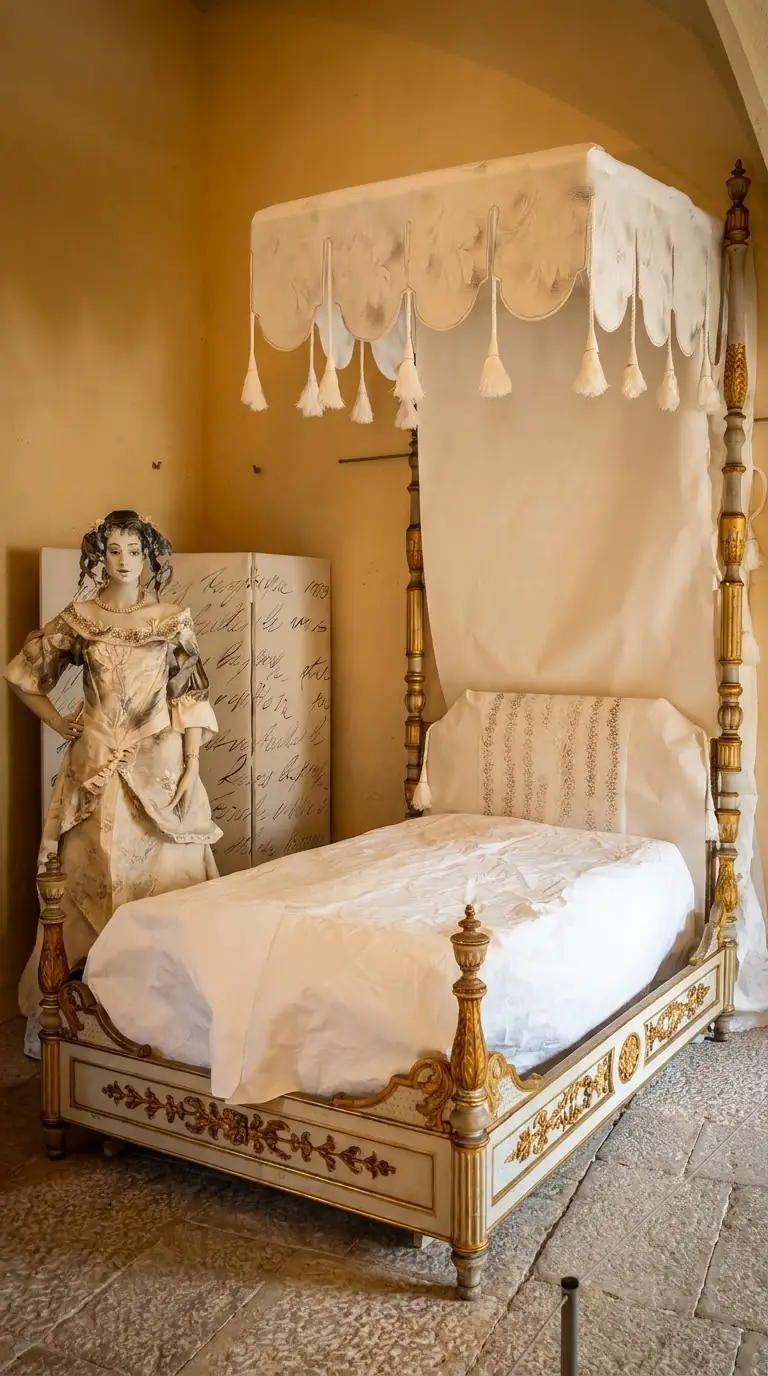
And speaking of Savigny, this is the place to say that the relationship between the two cousins was complicated and wonderful at the same time. They corresponded for more than forty years, loved each other from afar, and competed with each other for the best wording and the sharpest anecdote until they invented an entire style named after the family name: “rabutinage,” the art of elegantly biting the recipient’s heel. Roger recognized a real talent in her before anyone else, copied her letters in four copies, and urged his children and grandchildren to keep them and publish them after her death. A significant part of the Marquise’s fame comes from the advice of the exile from Burgundy.
He summed up the entire project in two lines attributed to him: His house is “a house with a unique interior,” and if you don’t come to Bossy, Bossy will come to you.
Reply on the tips of your fingers
In 1682, Louis XIV allowed him to return to court. Roger was then sixty-four years old. The permit did not include a position or income, and the court to which he returned was not the one he knew: different fashions, different codes, different people. He understood the obvious and returned to Burgundy on his own initiative. In 1691, the king granted him an allowance, but it was too late. He died on April 9, 1693, in Autun, four days before his seventy-fifth birthday.
In 1694, his four children took over the estate and continued to work it. One of them, Michel-Celse-Roger de Bussy-Rabutin (1669–1736), made an ecclesiastical career and became Bishop of Lissons, and he, like his father, was elected to the French Academy. His other son, Amé-Nicolas (1656–1719), remained without descendants, as did Michel-Celse. As a result, the Raboutin family held the castle that bears its name for less than a century.
18th century: The woman who designed the park
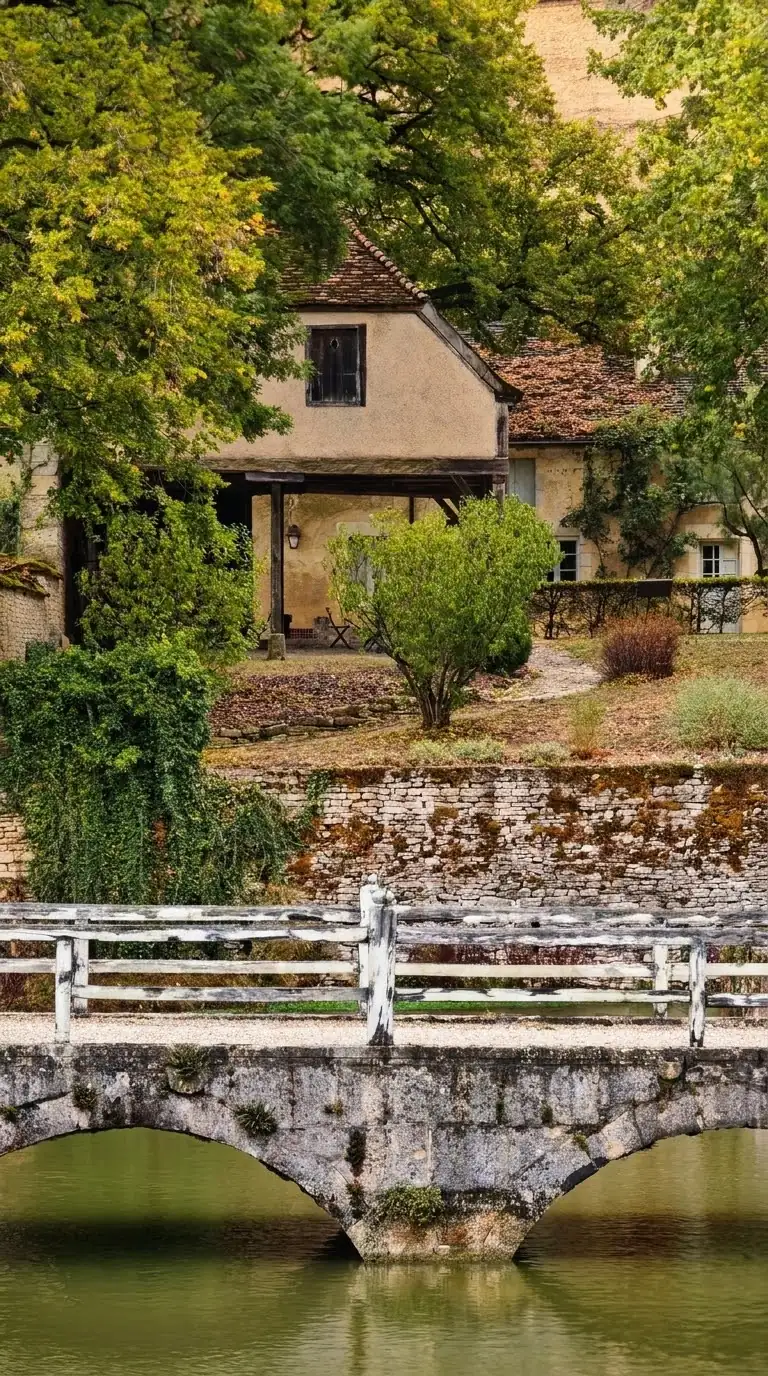
In 1733, the estate was sold to a Burgundian nobleman, Étienne Dagonneau de Marcilly, a councillor in the Dijon parliament. He died in 1738, and from then on the protagonist is his wife, Geneviève Alexis de Salins, who kept the estate for her two sons. She renovated the house, rebuilt the moat and the bridges leading to the courtyard and garden.
Her major work was done between 1755 and 1758. She marked out the park's avenues, planted the cypress trees, created the pruned alder grove with the garden rooms within it, expanded the terrace of the geometric gardens and added beds of yew trees in the corners, installed a circular pond with a fountain in the center of the gardens, and also established a new vegetable garden and orchard. Her alder grove, incidentally, functions as a transition: from the geometric and orderly garden of Rogé to the English-style park that would come in the next century. A garden that appears to be wild nature, and is actually fully planned.
Dagono's widow bequeathed the estate to a relative, Denis Prévost, a churchman from Marouane. She did not know that the revolution was coming and that he would choose to emigrate.
1792: Confiscation and dispersion of the paintings
In 1792, the castle was seized. The furniture was sold, and the many paintings were removed from the walls and scattered. This was the moment when the entire project of Roger de Rabotain was supposed to disappear. After that, the estate passed from hand to hand and steadily deteriorated.
A better period came between 1818 and 1832, when the castle was owned by Jacques Dornau, postmaster, speculator, village head and member of the district council. He did the really important thing: bought back the portraits that had been scattered throughout the area, and carried out rescue work on the building. He died in 1832, and his family held the place for another three years.
And speaking of the village itself, it is worth stopping here for a moment for fans of the Napoleonic era. In Bossy-le-Grand, Jean-Andoche Junot (1771–1813), who was Napoleon’s secretary and later first aide-de-camp, was born in 1771. He was nicknamed “Junot the Storm” by his friends, rose to the rank of general of division, served as military commander of Paris and received the title of Duke of Avranches. He never received the marshal’s baton, which he wanted more than anything else. His mental state gradually deteriorated (once he appeared at a ball almost completely naked except for his decorations), he was discharged from the army and died in 1813 in Montbard, after throwing himself out of a window and dying of his wounds.
Interestingly, two people from Bussy-le-Grand, a village of about 400 people, almost succeeded in obtaining the marshal's baton and both failed. Does this mean that the village produces good officers or unlucky officers?
1835: The Count Who Saved Bussy
On 5 August 1835, the estate was put up for auction by order of the court of Semur-en-Auxois, to resolve a dispute over joint ownership. The buyer was Count Jean-Baptiste César de Sarcus (1781–1875), a nobleman from a Picardy family who had been a cavalry officer in the army of Louis XVIII (king from 1814–1824) in Belgium, served the Duke of Brie, and came to Burgundy following his marriage in 1817.
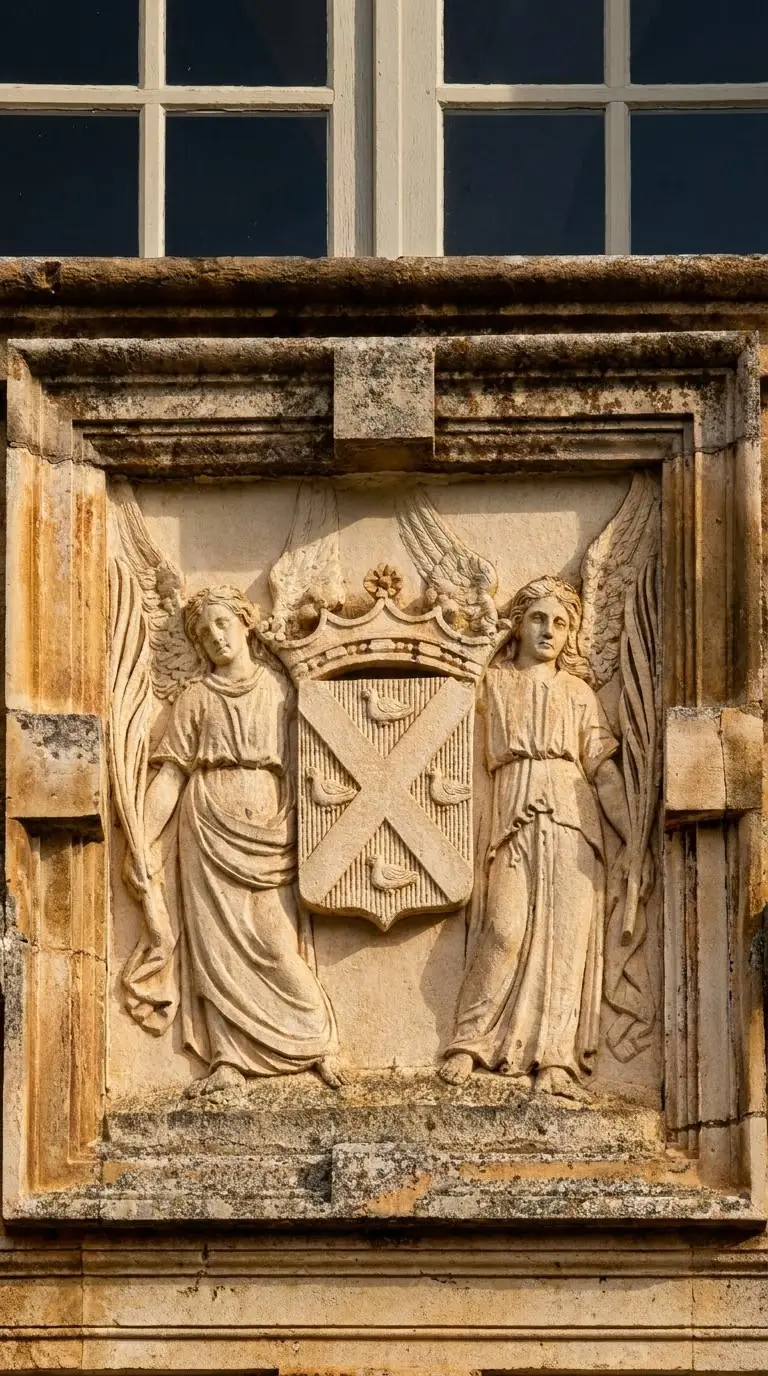
Sarkos was an amateur painter, a historian and archaeologist in his spare time, and an educated collector. He fell in love with the monument and its 17th-century owners, and devoted more than twenty years to it. He restored the facades, installed the family crest above the entrance, completely restored the Kings' Gallery and completed it with paintings, reworked the decorations of Bossi's room, and also added his own symbols and inscriptions, while adhering to the style of his predecessor. In 1854, he even published a historical essay on the castle.
Thanks to him, the château was classified as a protected heritage site (monument historique) in 1862, one of the first private houses in France to receive this protection. His son, Félix-Hyacinthe de Sarcus (1818–1887), continued to enrich the collections.
From the state to the heritage lottery
In 1929, the French government bought the estate, and it is now managed by the National Monuments Center. The castle also bears the title of “Houses of the Illustrious” (Maisons des Illustres).
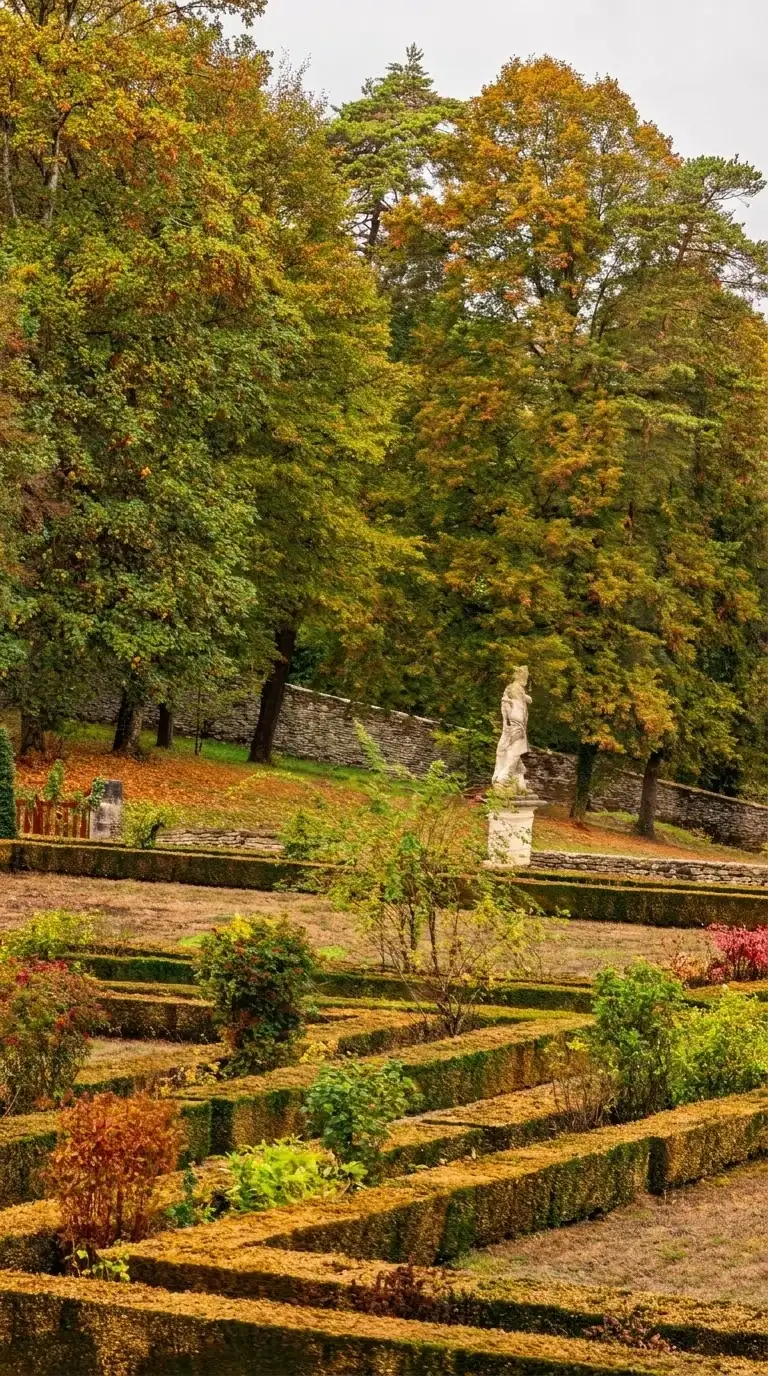
The gardens were restored between 1991 and 1993 as part of the historic gardens restoration program. The landscape architect based himself mainly on the plans of Genevieve Alexis de Salin, but also retained some of the gestures of the Sercos House, hence the contrast seen today between the geometric garden on the terrace and the free park beyond. The labyrinth is actually a modern fantasy: it is an idea of the landscape architect from the 1990s, and there is no evidence of a labyrinth in the days of Roger de Rabat or even in the 18th century. On March 29, 2005, the entire estate was also classified.
The final phase began in 2018, when the castle entered the Stefan Bern Heritage Lottery. The funds allowed the National Monuments Center to restore the 19th-century wing, restore the ground floor to its original layout with the boudoir, the drawing room and the octagonal dining room, and renovate the apartments of the Counts of Sarkozy on the floor above. The wing opens to visitors in 2023, and as such, anyone who visited the castle before that date has essentially seen another visit. The decorations and furnishings that have returned according to several 19th-century inventory lists.
Where to eat near Bossey-Ravoten Castle
La Pause Rabutin
Right across from the castle gate is La Pause Rabutin, and I highly recommend it. It's run by an Italian retiree who loves to sit with his guests, joke with them, and tell them stories about the food he serves, and the food is just as excellent as the service.
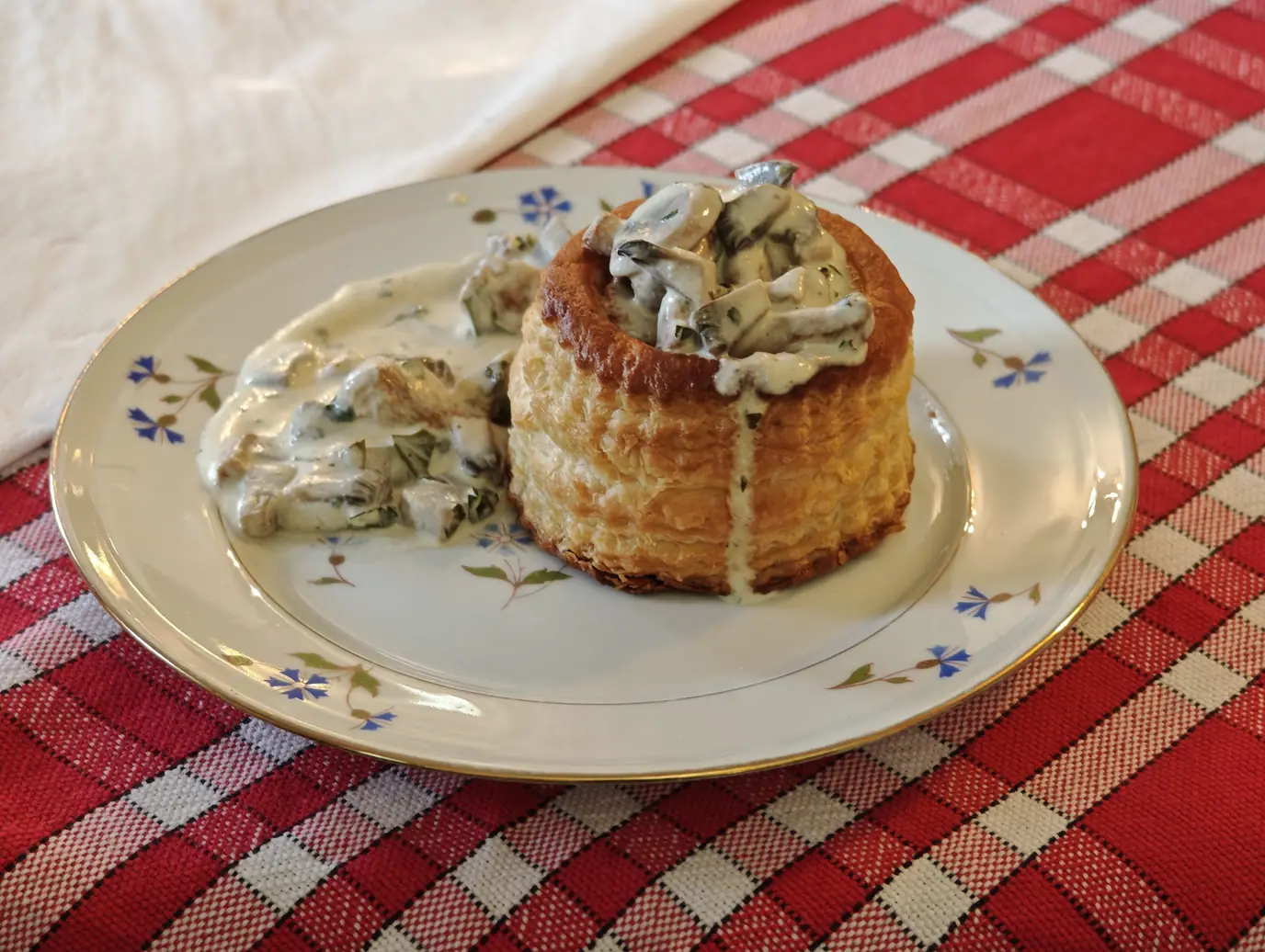
I ate there a Flemish pastry (flamiche) from Burgundy, escargots (escargots) with a snail made from potato dough, and a bouchée à la reine (bouchée à la reine), a puff pastry filled with mushrooms in a cream sauce, which you can see in the picture. The prices were also very, very affordable. In short, this is one of the best folk restaurants I have eaten at.
La Pause Rabutin is located at 13 rue du Château, right opposite the entrance to the castle. You can book a table by calling 03 80 96 18 56, and you can find the exact location on Google Maps.
Accommodation near Bossey-Ravoten Castle
Bussy-le-Grand itself has fewer than four hundred inhabitants, so there is no hotel. I myself stayed at the Hotel Relais De La Cote D'or in Semur En Auxois, and not by chance. Semur is about twenty-one kilometers from Bussy-le-Grand, the road between them is the D954 via Venera-les-Loumes, and it is a medieval town on a pink granite cliff with four towers, fortified gates and cobbled streets. From a practical point of view, it is an ideal base town for a trip around the area: it has restaurants, it has hotels, and from there you can easily reach both the Parc d'Alysées and the Fontenay Abbey. I wrote a complete guide about it, and you are welcome to read about visiting Semur en Auxois before you book.
Looking for more destinations in the area? Everything is concentrated on my Burgundy for Travelers page.