
in short
- ETIAS: The electronic entry permit for Europe is expected to begin operating in 2027, and currently there is no need to issue it before the flight.
- How many days: Three to five days in the big cities, or seven to ten days of stargazing in the rural provinces with a rental car.
- The districts covered: Paris and Ile de France, Normandy, Lorraine, Alsace, Brittany, Loire Valley, Burgundy, Lyon, the Alps, Périgord, Bordeaux, Provence, Occitania and Corsica.
- What to order in advance: Flights, accommodation, tickets to sites, rental car and public transportation tickets.
- Practical information on the page: Weather and recommended seasons, transportation and moving between districts, and currency and budget.
- Why France: The largest country in the European Union by area, with culture in Paris, history in Normandy, castles in the Loire Valley and beaches in Provence.
France is the largest country in the European Union by area. You will find magical landscapes, ancient cities and picturesque villages that seem to have come out of fairy tales. Add to this a magnificent culinary tradition, a fascinating history, a rich culture and a vast territory, and you will discover an inexhaustible source of pleasure.
It's no surprise that you chose France as your next vacation destination (otherwise you wouldn't be reading this article right now, would you?).
Welcome to my guide to traveling in France. This guide was created out of my immense love for this wonderful country and its culture. Its main goal is to help you plan your trip by gathering all the relevant information in one place.
France is a huge country and it is impossible to write a guide that will cover it all. However, as you will see, this fact does not deter me, and like a person following the rainbow, I will probably never stop in my journey to discover the secrets of France.
And what does this mean? You may well find that I have a lot of information about some of the regions of France (for example, the region of Brittany ), while I have less information about others. But don't worry, I don't stop traveling and I don't stop writing, so if you come back to this article in the future, there's a good chance you'll find the information you were looking for.
And how is this guide structured? I started with a map of the regions, so you can choose where to travel, and from there I continued with a list of all 18 regions of France, the ten largest cities, and the five rivers that every French child recites (and you'll soon understand why five and not fifteen). Then I compiled what's new for travelers in 2026, practical tips for planning your vacation, and everything you should book in advance before you leave.
After this brief introduction, let's get started, and I'll help you plan a trip to France, the most charming country in the world.
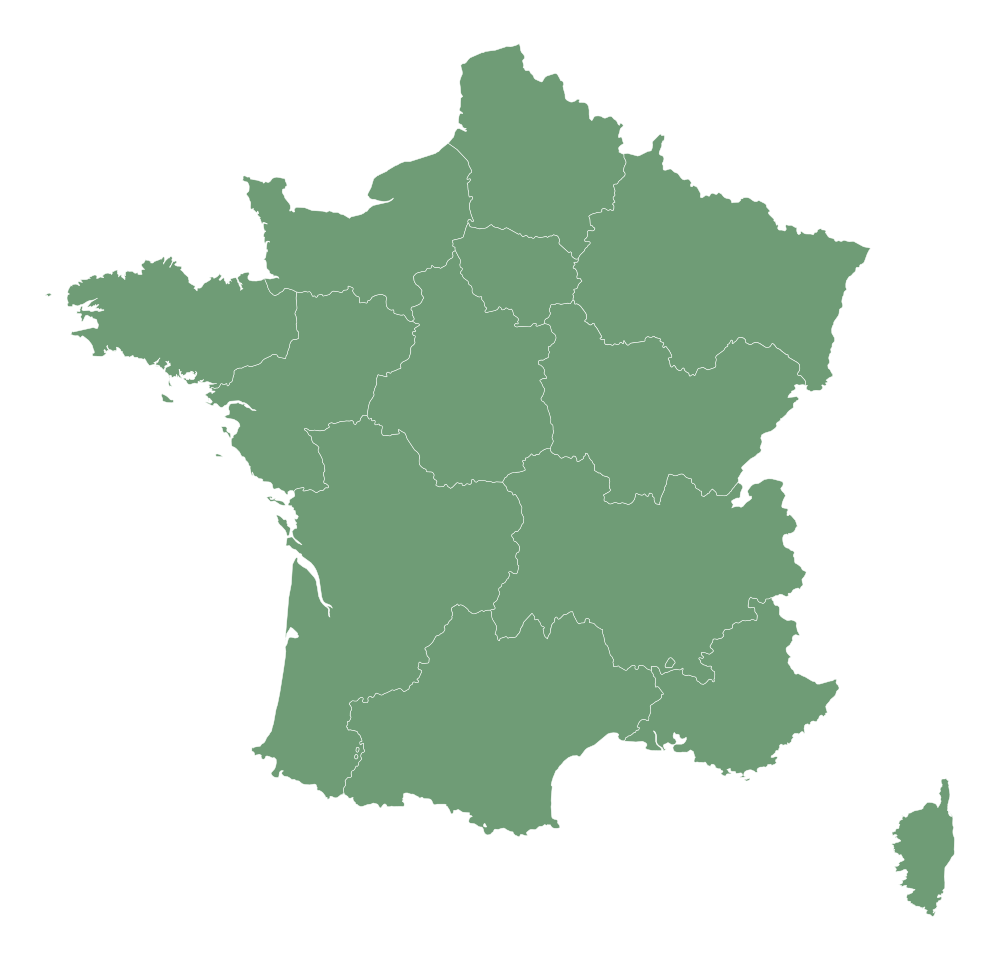
Map of France and the regions: Where would you like to travel?
The first step in any trip to France is choosing which region to visit. On the map above, you can click on each region to access its full guide.
 Normandy
Paris
Lauren
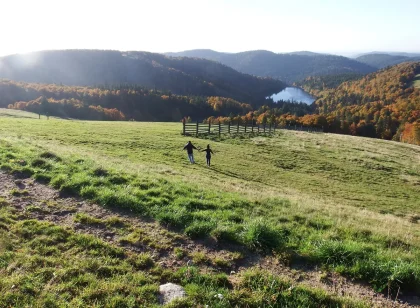
Alsace
Ile de France
Brittany
Loire valley
Burgundy
Lyon
French Alps
Périgord
Bordeaux
Provence
Don't know what to choose? Here is a summary of the recommended districts:
- Paris and Ile de France: When looking at the French tourism map for 2026, the Île-de-France region, centered on Paris, continues to establish itself as the perfect destination for city breaks, both for first-time visitors and returning travelers. In addition to its exceptional concentration of historical monuments and famous palaces, the region is a magnet for many families from all over the world, who choose it thanks to the presence of Disneyland Paris Park as one of the popular attractions And the most central in the country. Whether you are planning a star trip or a focused vacation, it is recommended to spend time planning in advance the prominent destinations in this province.
- Normandy and Brittany: A winning combination of wild beaches (including the historic landing beaches), fine seafood and cider cuisine, and breathtaking heritage sites like Mont Saint Michel.
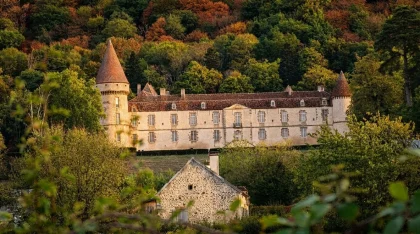
- Loire Valley: A classic family vacation. An area packed with fairytale Renaissance castles, wineries, and vineyards, which are great fun to experience on a mounted “star tour.”
- Provence and the Alps: The sunny south offers cliff-hanging villages, colorful markets and lavender fields in summer, while the French Alps are an ideal destination for a ski holiday in winter.
All regions in France: 13 on the mainland, 5 overseas
The map above shows where each region is located, but it doesn't answer the question I get asked a lot: how many departments are there in France, and what are they called? The territorial reform that came into effect on January 1, 2016, reduced mainland France from 22 departments to 13, and added 5 overseas departments: Guadeloupe, Martinique, Guyane, La Réunion, and Mayotte. A total of 18 departments, divided into 101 departments.
| The district | The provincial capital | What's there for you? |
|---|---|---|
| Ile-de-France | Paris | The most populated province in France, and within it Paris Versailles. The complete guide to the district |
| Auvergne-Rhône-Alpes | Lyon | The French culinary capital and the largest ski area. Lyon and surroundings, French Alps |
| Provence-Alpes-Côte d'Azur | Marseille | Lavender, markets, clifftop villages and Riviera beaches. Hiking trails in Provence, The French Riviera |
| Occitanie | Toulouse | Fortified Carcassonne, the Pyrenees, and the Canal du Midi that crosses the south from the Atlantic to the Mediterranean Sea |
| Nouvelle-Aquitaine | Bordeaux | The largest province in mainland France. Bordeaux and surroundings, Périgord and the Dordogne |
| Grand Est | Strasbourg | Alsace, Lorraine and Champagne, and in Strasbourg the institutions of the European Union. Alsace, Lorraine |
| Hauts-de-France | Lille | The Flemish North, the battlefields of World War I and the shores of the Channel |
| Normandy | Rouen | The landing beaches, Mont-Saint-Michel, Étretat and the cider villages. The Guide to Normandy |
| Brittany | Rennes | Rocky coast, medieval towns and Celtic identity. Brittany region |
| Pays de la Loire | Nantes | The Loire estuary, Angers and Les Sables-d'Olonne. Some of the Loire castles are located here. |
| Centre-Val de Loire | Orléans | The heart of the Loire Valley: Chenonceau, Chambord, Amboise. Loire valley |
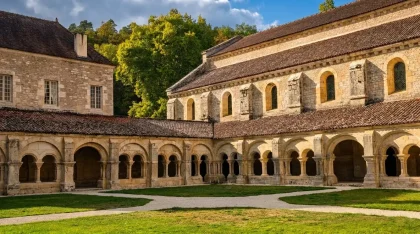
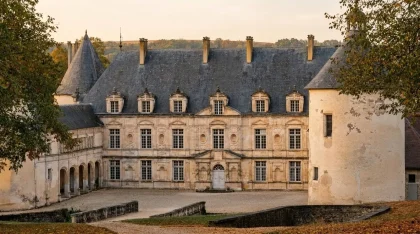
| Bourgogne-Franche-Comté | Dijon | The world-famous wine route, monasteries and quiet towns. Burgundy |
| Corsica (Corse) | Ajaccio | The island where Napoleon was born, with mountains that descend straight to the sea |
Note the difference that confuses many travelers: a region (région) is the larger administrative unit, and a department (département) is the unit below it. The names you know from travel planning, such as Loire Valley, Provence, or Périgord, are tourist and historical regions and not necessarily administrative regions. Périgord, for example, sits entirely within Nouvelle-Aquitaine.
The largest cities in France: the top 10 by population
When I'm asked what the largest city in France is, my first question is again what they measure it by, because the answer varies. The table here counts residents within the city limits themselves, what is called in France population municipale, and this is the official measure by which cities are compared. The data is from the 2023 census of the National Institute of Statistics (INSEE), which came into effect on January 1, 2026. And if what interests you is which city in France is suitable for a trip and not just which is the largest, the last column in the table indicates why they stop in each one.
| # | The city | residents | Why are you stopping there? |
|---|---|---|---|
| 1 | Paris | 2,119,412 | It alone is more populated than the nine cities that follow it, each individually. Everything I have about Paris |
| 2 | Marseille | 892,391 | The largest Mediterranean port, the oldest city in France, and the gateway to the Calanques. The guide to Marseille |
| 3 | Lyon | 523,314 | The food capital, an entire Renaissance quarter and Bouillon on every corner. Lyon and surroundings |
| 4 | Toulouse | 519,940 | The Pink City, the space industry, and a convenient base for Carcassonne and the Pyrenees |
| 5 | Nice | 360,710 | The unofficial capital of the Riviera, with an old town and a long promenade. The French Riviera |
| 6 | Nantes | 332,515 | The Palace of the Dukes of Brittany and the island's mechanical elephants |
| 7 | Montpellier | 313,712 | The fastest growing city of all metropolitan areas in France, and an ancient medical university |
| 8 | Strasbourg | 296,552 | The cathedral, Petite France district and the Christmas market. Alsace |
| 9 | Bordeaux | 271,552 | A city center that is entirely a World Heritage Site, and wine routes all around. Bordeaux and surroundings |
| 10 | Lille | 240,109 | An hour by train from Paris, a Flemish atmosphere and a huge second-hand market in September |
Two notes that explain why this table is sometimes misleading. First, Lyon and Toulouse are separated by less than 4,000 inhabitants, so third place may change hands in the next census. Second, the index only counts the boundaries of the municipality: Lille appears here in tenth place, but the cluster of municipalities around it exceeds one million (1,063,720 inhabitants in 2023) and is in fact the fifth largest urban area in France. Bordeaux also climbs many places when measured as a cluster rather than a municipality.
The main rivers in France: 5 that flow into the sea
In French, a distinction is made between a fleuve, a river that flows directly into the sea or ocean, and a rivière, a river that flows into another river. This distinction is why a French child recites five rivers rather than fifteen: in mainland France there are five fleuves, and all the others, including the Marne, the Saône, the Cher and the Allier, are their tributaries.
| The river | Length | From the source to the estuary | Cities on its banks |
|---|---|---|---|
| Loire | 1,020 km | From the Massif Central to the Atlantic Ocean | Nevers, Orléans, Blois, Nantes. The longest of all, and also the one on which the castles sit: Loire valley |
| Seine | 776 km | From Burgundy, not far from Dijon, to the English Channel | Troyes, Paris, Rouen, Le Havre |
| Rhône | 812 km, of which 522 are in France | From the Swiss Alps to the Mediterranean Sea, in the Camargue Delta | Lyon, Valence, Avignon, Arles. The strongest of the rivers of France in terms of flow |
| The Garonne | 650 km | From the Pyrenees in Spain to the Atlantic Ocean, via the Gulf of Gironde | Toulouse, Agen, Bordeaux |
| Rhine (Rhin) | 1,320 km, of which 180 are in France | From eastern Switzerland to the North Sea, on the French-German border | Strasbourg |
What's new for travelers in France in 2026?
To make your trip as up-to-date as possible, here are the main events and innovations in France for the coming year:
- The Centennial of Impressionism: France is marking the 100th anniversary of the death of Claude Monet. Paris and Normandy will be at the center of the celebrations with special art exhibitions and tours in the footsteps of the great painters.
- ETIAS Entry Permit: The European Union is about to launch an electronic travel authorization system, which will also require Israelis to fill out an online form before flying. The system is expected to go into operation in2027, and currently there is no need to issue the certificate. For more information, read the full guide on France Visa and ETIAS Approval.
- Metro Expansion – Line 18: Part of the new “Grand Paris Express” line 18 has opened, significantly improving accessibility from the south of Paris and facilitating day trips outside the city.
- The Year of the Normans: Extensive historical celebrations are taking place in the Normandy region to mark a thousand years of Norman heritage.
Practical information: Tips for planning a vacation in France
Weather and recommended seasons in France
France is suitable for travel in all seasons, but the ideal seasons for sightseeing and city trips are the transitional seasons (spring: April-June, autumn: September-November). Summer is warm and perfect for coastal areas, while winter is particularly suitable for ski holidays or visiting the Alsace Christmas markets.
Transportation and mobility for travelers
For travel between large cities – the high-speed train network (TGV) is the most convenient and efficient way. For in-depth trips to the rural regions (Dordogne, Provence, Loire Valley), renting a car is a must to reach the hidden gems.
Currency, budget and costs
The currency is the euro. France is very advanced in digital payments, but it is recommended to carry some cash for local markets or small towns where there is sometimes a minimum for credit card payments.
A trip to France – what should you book in advance?
-

✈️ Flights to France
Compare prices and book direct or connecting flights to major destinations in France.
-
🏨 Hotels and apartments
A collection of the most recommended hotels and apartments in Paris and the various regions of France.
-
🎟️ Order tickets
Secure your spot at the most popular attractions and save the long lines.
-
🚗 Car rental
Everything you need to know about renting a car in France, comparing prices and driving tips.
-
🚆 Public transportation
Booking train tickets (TGV), information about the metro and smart transportation methods.
-
✉️ Newsletter subscription
Subscribe to the newsletter and receive the exclusive guide to Paris as a gift and regular updates.
All articles about France

FAQ
Why rely on the information of anonymous Francophiles?
Because this is the only website in Hebrew written by a person who has been in love with France for decades and has researched its culture in depth. Here you will find only quality content based on personal experience.
For more information, visit the Who Am I page.
How long does the flight from Israel to France take?
It depends on the destination, but it is usually a direct flight of about 4.5 hours.
What are the recommended months for traveling to France?
For skiing – December-March. For the sea – the summer months in regions like Brittany . For general travel – spring (April-June) and autumn (September-November) are the most ideal.
What is there to do in France besides Paris?
A whole world! From the castles of the Loire Valley to the beaches of Normandy and the lavender fields of Provence, my guide to each region will give you all the answers.
Is it true that the people of France are antipathetic and really not nice?
Absolutely not. Basic courtesy, a smile and a word in French will open any door for you. Read more in the article How Not to Annoy the French.
Traveling around France: by car or public transportation?
For a city trip – public transportation. For a trip to the rural regions (like the Loire Valley or Périgord) – a car is necessary for a full experience.
what time is it in france
The time in France is always one hour less than the time in Israel.
Is it possible to easily combine France with a trip to Europe?
Absolutely. Thanks to its central location, you can easily combine a visit to Belgium, Germany, Switzerland, Italy and Spain.
How many regions are there in France?
18 departments: 13 in mainland France and 5 overseas (Guadeloupe, Martinique, Guyana, La Réunion and Mayotte). This number has been in effect since January 1, 2016, when mainland France was reduced from 22 departments to 13, and the departments are divided into 101 departments.
What is the largest city in France?
Paris, with 2,119,412 inhabitants according to the 2023 INSEE census that took effect on January 1, 2026. It is followed by Marseille (892,391), Lyon (523,314), Toulouse (519,940) and Nice (360,710). The official index counts inhabitants within the municipal boundaries only, so Lille appears relatively small even though the cluster of authorities around it exceeds one million.
How many rivers are there in France and what are their names?
In mainland France, there are five rivers that flow directly into the sea or ocean: the Loire (1,020 kilometers, the longest), the Rhine (1,320 kilometers, of which 180 are in France), the Rhone (812 kilometers, of which 522 are in France), the Seine (776 kilometers) and the Garonne (650 kilometers). All the others, such as the Marne and the Saône, are tributaries that flow into another river.