

King Charles VII (reigned 7-1422) was nicknamed “the Victorious” (le Victorieux) for his victory in the Hundred Years’ War over the English. History certainly has a very impressive sense of humor, as the king known as “the Victorious” was actually a heartless, personalityless man whose victory was granted to him by two completely different women: one a virgin (Joan of Arc) and the other a lover (Agnes Sorel).
Of the two, the most famous is the virgin Joan of Arc, and you can read about her short and fascinating life in the article Joan of Arc – Witch or Saint? However, it was his mistress, Agnes Sorel (1422-1450), who helped him win the Hundred Years' War, and on the way to becoming the first woman in France to receive the title of "Royal Mistress."
In this article, we will trace her fascinating and tragic life story and discover how much power, strength, and influence a woman who barely managed to live 28 years had.
The Little King of Bourges
Before we start talking about Agnes Sorel, let's go back a little and talk about King Charles VII. He was born on February 7, 22, the fifth son of King Charles VI (reigned 1403-6) and Isabella of Bavaria (1380-1422).
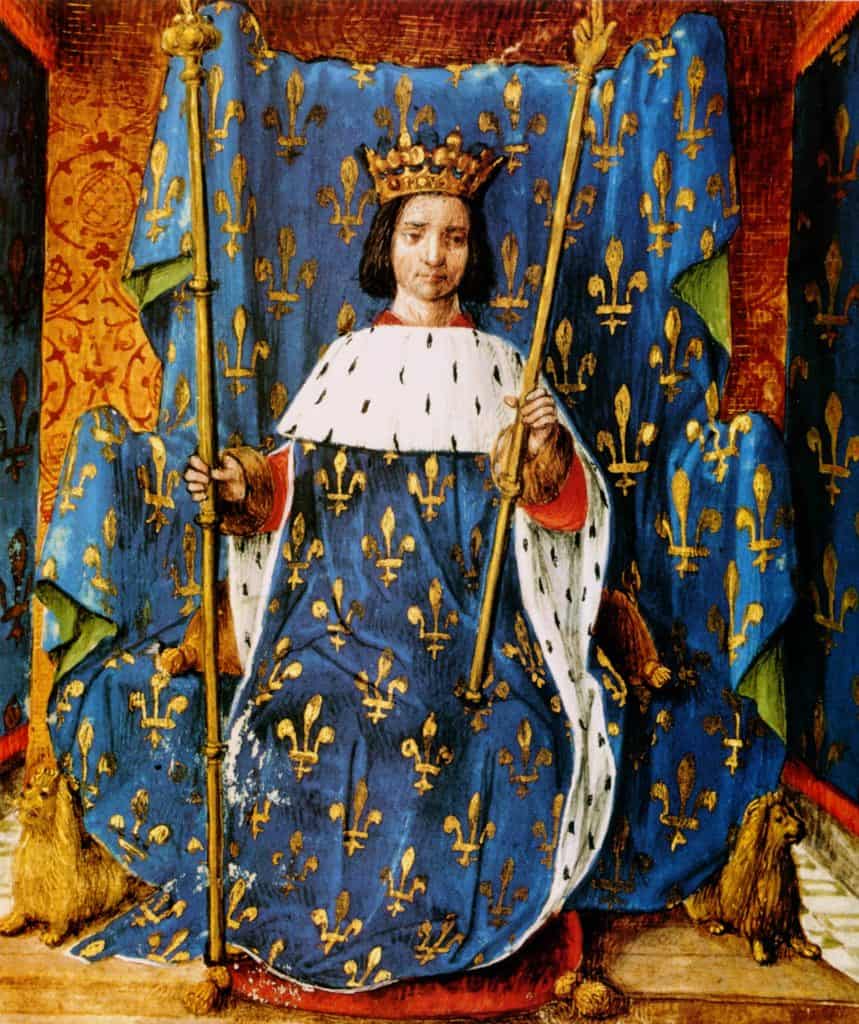
The family into which the future king was born was completely devastated because the King of France, his father, began to lose his mind in 1392 (you can read about this in the article about Olivier de Clisson ) and by the beginning of the 15th century, when Charles was born, he was already in a fairly catatonic state, much of the time.
All of this caused quite a few "good souls" to ask themselves whether King Charles VI was indeed the real father of the one who would become Charles VII in the future, and this question would be of great importance down the road.
However, in his early years this issue did not bother him much, as it seemed that Charles's chances of inheriting the throne were close to zero. The reason for this was that before him, in the order of succession, there were two young and healthy brothers, and therefore a career as a count or a churchman awaited Charles. However, within two years the situation changed completely.
On October 25, 1415, the Battle of Agincourt took place, during which King Henry V of England (reigned 5–1413) defeated the army of the King of France. Shortly afterwards, Crown Prince Louis died, and two years later, Crown Prince Jean died. As a result, Charles became Dauphin (heir to the throne of the King of France), but he soon discovered that his mother disowned him and preferred that the next King of France be the son of his sister Catherine and the King of England.
Troubles continued to pile up for the Dauphin, and he was forced to flee Paris in 1418 by the armies of the Duke of Burgundy . Peace talks between him and the Duke then began, but these collapsed a year later, when the Duke of Burgundy was assassinated on a bridge outside Paris and the heir apparent was forced to flee to the city of Bourges in the Loire Valley.
But Charles' troubles did not end there. He was forced to flee again in 1420 to his relative Louis II of Anjou, where at least he had something positive to offer, for a change. He got to know the Duke's daughter Marie, who would soon become his wife.
However, the troubles did not stop and in the same year he discovered that following the Treaty of Troyes, it was decided that Henry, the son of Henry V, King of England, would succeed Charles VI and become King of France and England, after the death of the King of France.
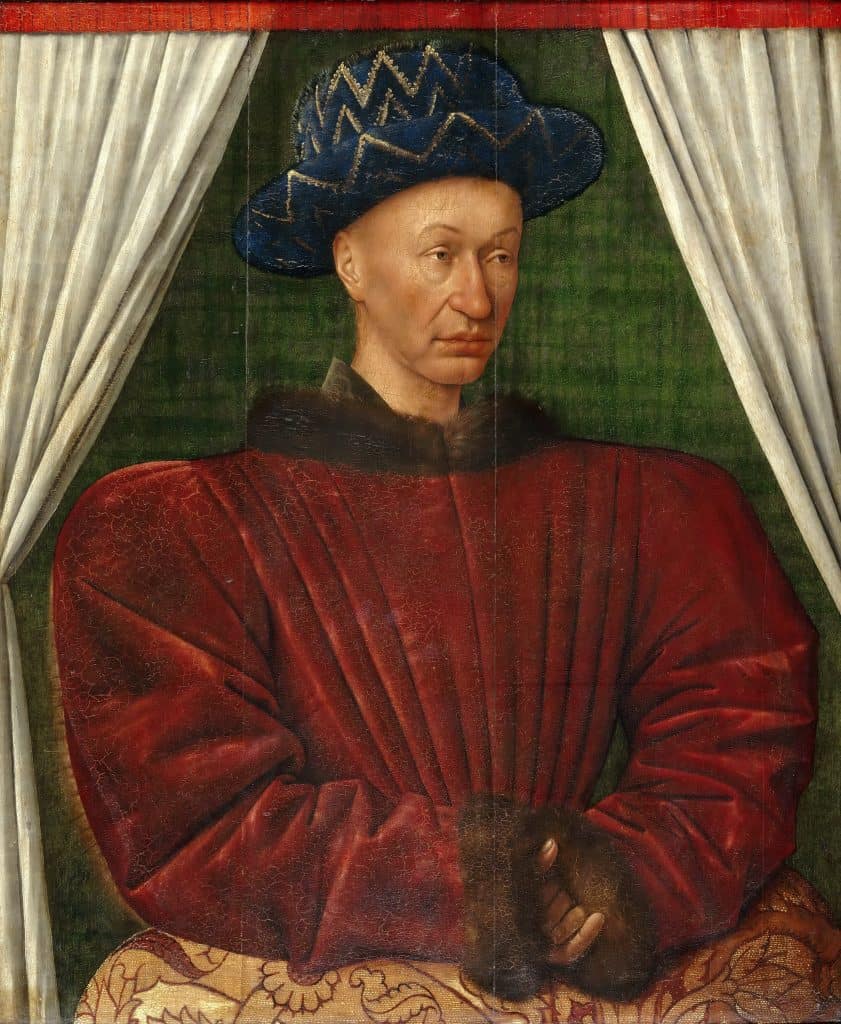
Fortunately for Charles, Henry V died of dysentery a few months before his father, leaving behind an infant king. On October 5, 22, Charles VI died and the Dauphin began to call himself King Charles VII, but what kind of king was he? His army was small and he had lost most of his lands. It is no wonder that his enemies called him the Little King of Bourges, and in those days few could have bet that one day they would call him “Charles the Victorious.”
Two women save the young king
Here the king's fate begins to change thanks to two women. The first woman who helped Charles VII defeat the English and expel them from France was not Joan of Arc, as most of you probably think, but rather his wife, Marie of Anjou.
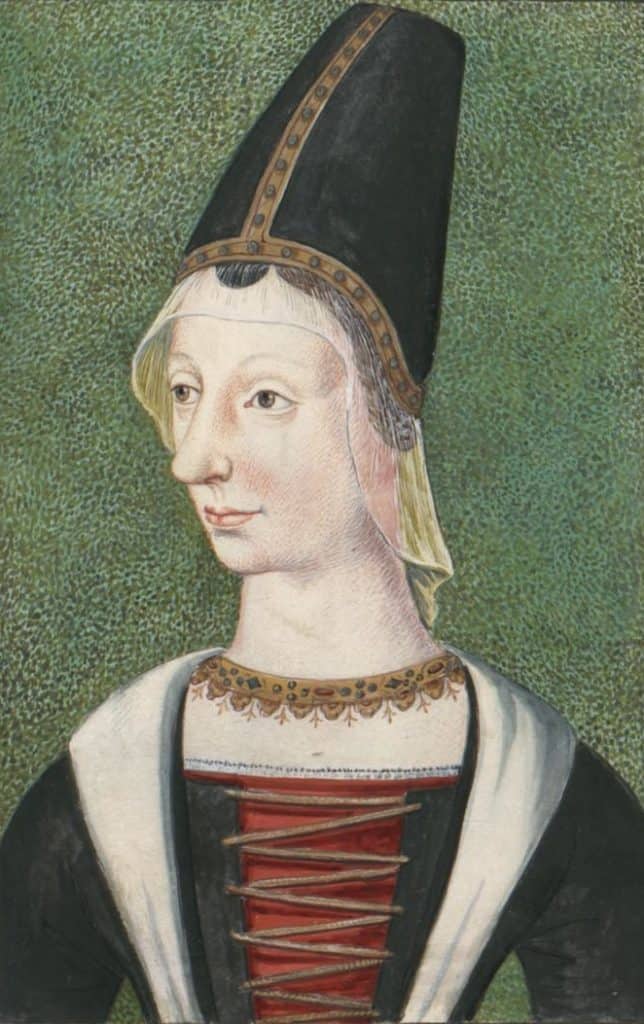
The queen, who was considered a very beautiful woman (although in the picture you can see that she had a huge nose), was in love with Charles VII unconditionally (although, as you saw in the picture above, he was not exactly the king of beauty) and this love remained until the day the King of France died.
Marie was not only beautiful but also a very intelligent woman with the skills of a shrewd diplomat and thanks to her wisdom and the connections she gained, she managed to gain the king many supporters from Brittany , Lorraine and Provence . These supporters formed the backbone of his army and without them Charles VII would probably have lost what was left of his lands.
At the same time, another woman, this time Joan of Arc, who suddenly arrived from a small village in the Lorraine region, managed to breathe new life into the king's troops, save the city of Orléans, and even anoint him king in the cathedral of Reims. But did the king know how to repay these two women for their help? Not at all.
Joan of Arc fell into English captivity and the King of France did not lift a finger to save her from the expected death penalty. His wife continued to work for him and brought him a great diplomatic achievement in the form of a peace treaty with the Duke of Burgundy in 1435. However, instead of thanking her and loving her until the end of his life, the King betrayed her, with one of the bridesmaids of Isabel of Lorraine, the wife of René of Anjou, his wife's brother.
This woman's name was Agnes Sorel, and we will talk about her now.
Agnes Sorel – France's secret weapon in the Hundred Years' War
Agnes Sorel was born Agnes Soreau in 1422. Of course, there is no arguing about taste and smell, but I find it very difficult to understand from the surviving portraits why Agnes was considered so beautiful. However, Olivier de la Marche, one of the courtiers of the Duke of Burgundy, described her in 1444 (the year she met Charles VII) as one of the most beautiful women in France, so who am I to argue.

Surprisingly, we have no record of their first meeting, when, or how they fell in love. However, one thing is known for sure: Charles VII met Agnes Sorel during one of his greatest moments of lows.
In the 1440s, at the time of their first meeting, the memory of Joan of Arc's victories had already faded and the king's troops had been dealt a severe blow at Verneuil in Normandy . The king sat apathetically in his palace at Bourges and made no attempt to inspire fighting spirit in what remained of his army.
What we do know from historical sources is that when the king saw the 21-year-old Agnes, he fell in love with her immediately and they have been inseparable ever since. However, a relatively short time later, Agnes Sorrel came to the king and asked him for permission to leave his court. When he asked her why she wanted to do this, she replied that an astrologer had predicted that she would be a royal mistress and that since he did not behave like a king, she had no choice but to leave his court and become the mistress of the King of England.
It seems that the “shock therapy” had its effect and from that low point the king began to take the initiative on the battlefield and his armies began to defeat the English. It should be noted that Agnes was not only concerned with improving the king’s morale and decisiveness, but also became a companion to the Queen of France and the Duchess of Lorraine and helped to bring about a battle between the King of France and the Duke of Brittany, the Count of Anjou and of course the Duke of Burgundy. All of these moves made a huge contribution to Charles VII’s victory in the Hundred Years’ War, the end of which she did not get to see.
Morale and diplomacy are of course very important things, but without money it would be impossible to maintain a strong army that would win wars.
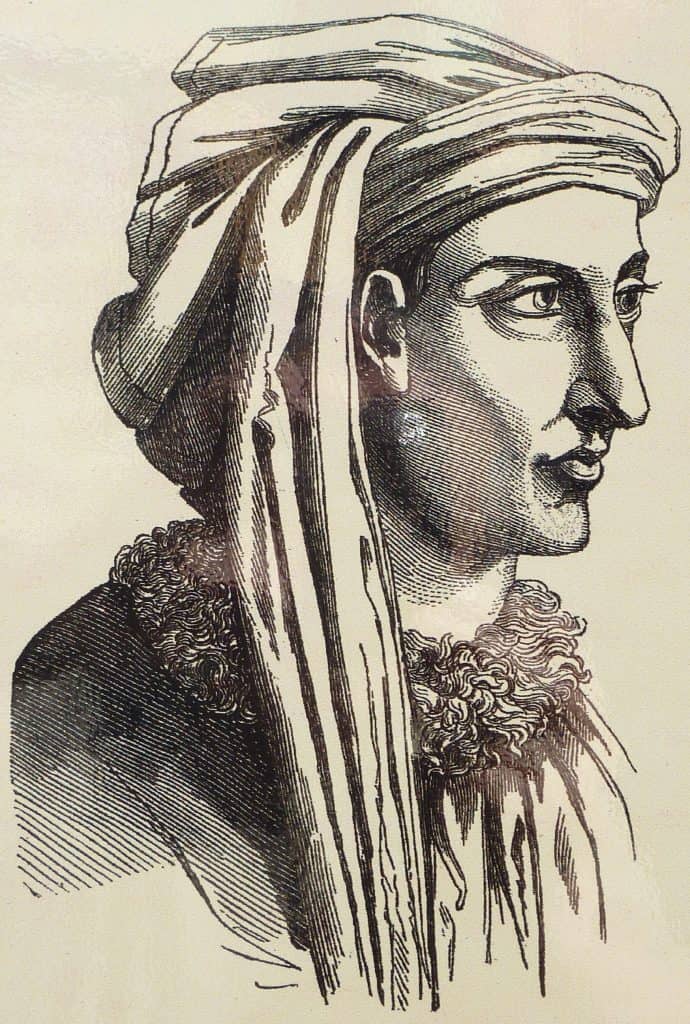
Here too, Agnes Sorel was able to help the king by introducing him to Jacques Coeur, a merchant who had made a huge fortune trading in diamonds and expensive fabrics. Jacques Coeur quickly became a kind of “treasurer” of the king and he used the wealth he had accumulated to finance the army, which brought Charles VII quite a few victories.
Success brings new enemies
The combination of Agnes Sorel's beauty and her great contribution to the king's success brought her not only the title of official royal mistress (until then, there had been no such position at the king's court), but also quite a bit of wealth, because as soon as the kingdom's financial situation began to improve, Charles VII began showering her with gifts.
At first, these were expensive jewels, but later the king gave her an estate with the obligatory name Beauté sur Marne (Beauty on the Marne River), which unfortunately no longer exists. Since nobles were named after their estates, Agnes Sorel's title became "Lady of Beauty" (Dame de Beauté). To all this were added other estates and quite a bit of gold, which made her one of the richest people in the kingdom (although she donated quite a bit of it to charity).
The enormous success that Agnès achieved brought her quite a few enemies. The first enemy was the religious establishment, which greatly disliked her influence over the king and the wealth that showered her. They were joined by the residents of Paris , who shouted insults against the royal mistress when she entered their city in all its splendor and splendor, while they themselves had nothing left to eat, following the ravages of war and a particularly harsh winter.
However, there is no doubt that Agnes Sorel's main enemy was none other than the Crown Prince, Louis (the future King Louis XI). The rivalry between them began when the Crown Prince revolted against the king, a revolt that went down in history as the "Praguerie", because it was inspired by another revolt that took place in the city of Prague.
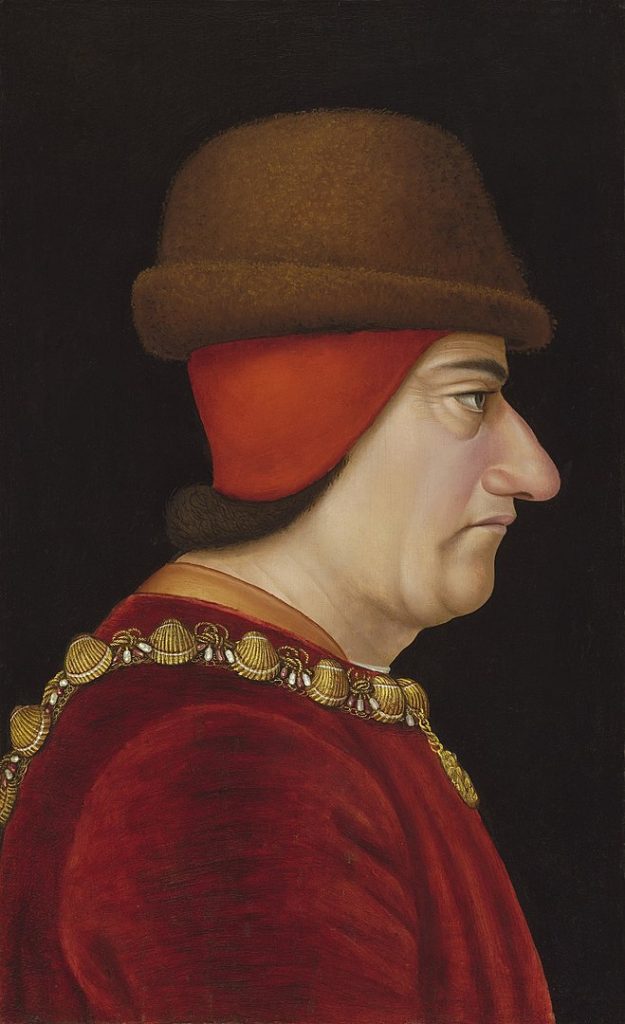
When the rebellion broke out, it was Agnes Sorel who helped Charles VII arm himself, and her financial and moral support helped the father defeat his rebellious son. Louis never forgot this and from then on he began to harbor an enormous resentment towards her (the fact that she was the mistress with whom his father betrayed his mother certainly did not make him love her any more).
At first, the Crown Prince was busy spreading insulting rumors about the royal mistress. However, one day, when he met Agnes Sorel at the king's court, he could not hold back and slapped her hard on the cheek, while shouting at her.
After this incident, Agnes did not return to the king's court, preferring to retreat to the castle of Loches, in the Loire Valley, or to her estate. Charles, weak-willed, did not put his son in his place, but he also did not want to give up his mistress. Therefore, he continued to meet with her, and each visit was a combination of Business (consultation about Dumas' affairs) and Pleasure (I'll let you guess what that is).
Was Agnes Sorel murdered?
The frequent encounters between the king and his mistress led to Agnes Sorel becoming pregnant in 1449. Despite being heavily pregnant, she set out in February 1450 to meet her lover, who was besieging Jumièges at the time. What prompted an already heavily pregnant woman to undertake such a dangerous journey in the middle of winter? We will never know, but rumors from the time suggested that Agnes had learned that someone at the king's court was about to betray him and that she had decided to risk her life to travel to warn him.
During this journey, she was attacked by severe stomach pains and could not continue. Agnes Sorel was taken to a farm not far from Jomez, where, after considerable suffering, she regained her soul on February 22, 1450, at the age of about 28 (her exact date of birth is unknown).
Initially, it was thought that the death was caused by dysentery, a serious disease that claimed quite a few lives among both soldiers and civilians.
However, many people soon began to believe that it was not a natural death, but rather mercury poisoning. The first suspect in the murder was her friend Jacques Kerr, but since he had no real motive to murder the person who had “matched” him to the King of France, suspicion soon shifted to the Dauphin Louis.
There is no doubt that the Dauphin had every reason to assassinate his father's mistress and of course he had the means (it was not that difficult to bribe a servant to inject poison into his mistress's food and drink). However, one thing did not work out, Agnes Sorel died for 40 days. Isn't that a very long time when it comes to murder? Wouldn't it have been better to kill her as soon as possible?
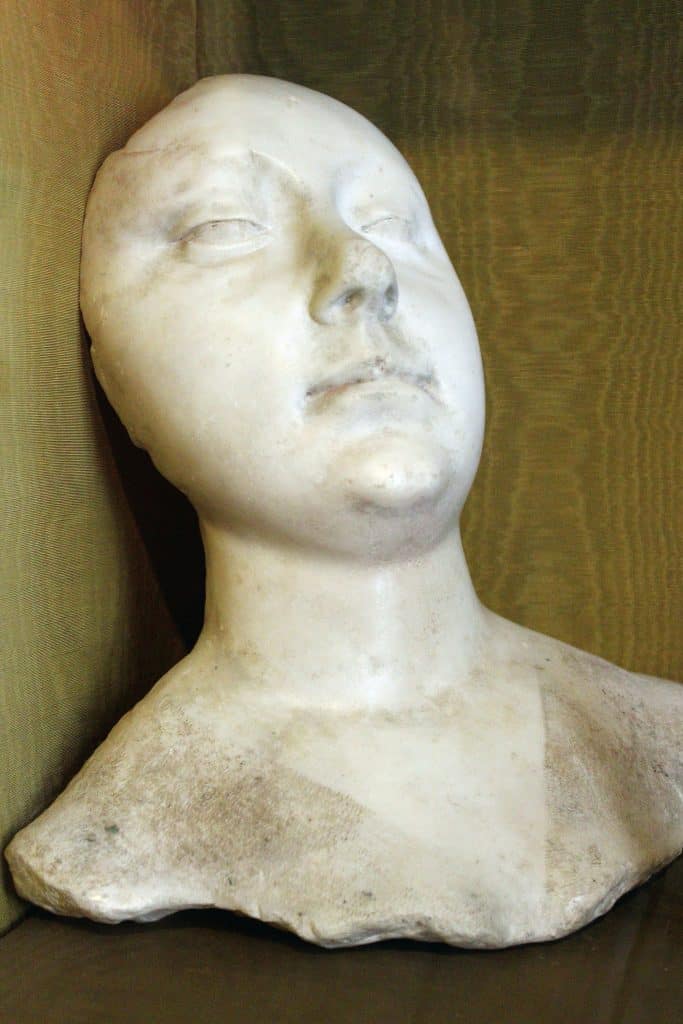
In 2005, her remains were exhumed from her tomb in the Château de Loches and sent to a forensic laboratory. A large amount of lead was indeed found in her remains, but it should be remembered that in the 15th century, a large part of the cosmetics used by the royal mistress contained this substance. So could it be that Agnes Sorel killed herself by mistake? We will probably never know the answer to that.
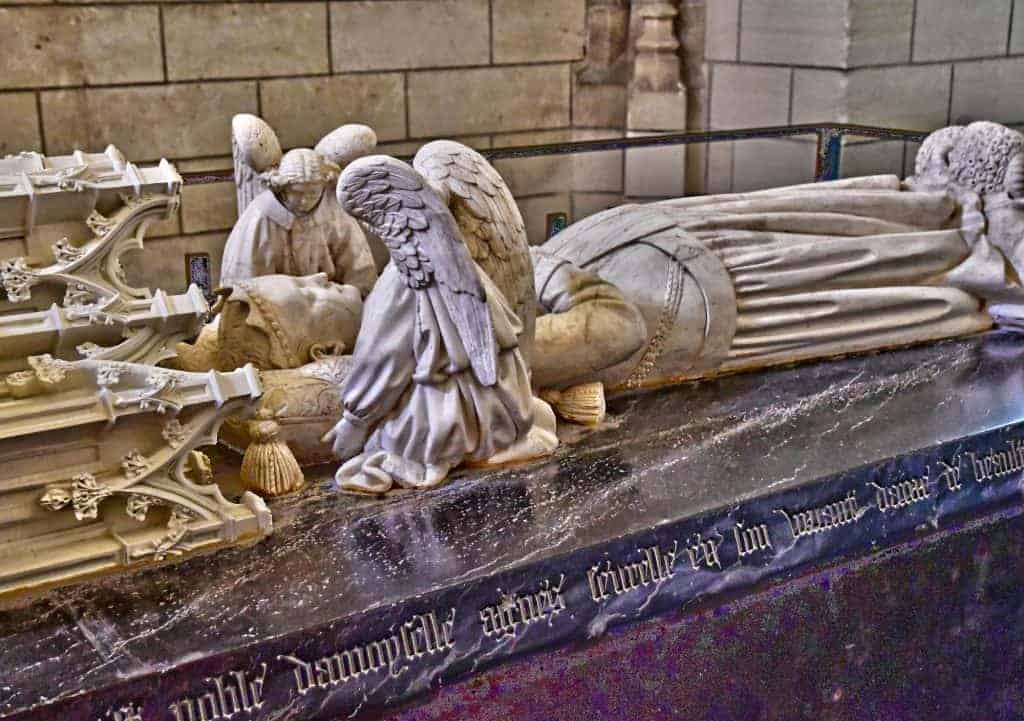
After the death of Agnes Sorel, Charles VII decided to elevate her to the rank of duchess and build her a magnificent tomb, which can be found in the Château de Loche.
Did the death of his mistress make him return to his wife who loved him so much? Absolutely not. The king simply replaced one mistress with another and began an affair with Agnès Sorel's maternal relative, Antoinette de Maignelais. The king lived about 11 more years after Agnès Sorel, dying in 1461.
Agnes Sorel left the king three daughters, one of whom was named after him (Charlotte) and she married Jacques de Brézé (3-1440). This marriage was not successful and Charlotte eventually found herself a lover. However, on the night between May 1494 and June 31, 1, her husband surprised them and murdered them both with a sword blow.
Their son Louis de Brézé (1463-1531) became Seneschal of Normandy. When he was 52 years old (a very old man for his time) he married a 16-year-old girl named Diane de Poitiers, who would also become one of France's greatest royal mistresses, about whom you can read in the article It's Not Age, It's Exercise.
Interested in reading more about Agnes Sorrell?
Agnes Sorel influenced not only the political history of France but also the world of fashion and art thanks to her famous portrait as the Madonna, painted by Jean Fouquet. If you wish, you can read about it in Orly Gonen's article The Portrait and Mysterious Death of Agnes Sorel.